Plant Features
- Size: Typically 50–200 cm (1.6–6.6 ft) tall as a climbing annual; vigorous varieties may reach about 240–300 cm (8–10 ft) with support.
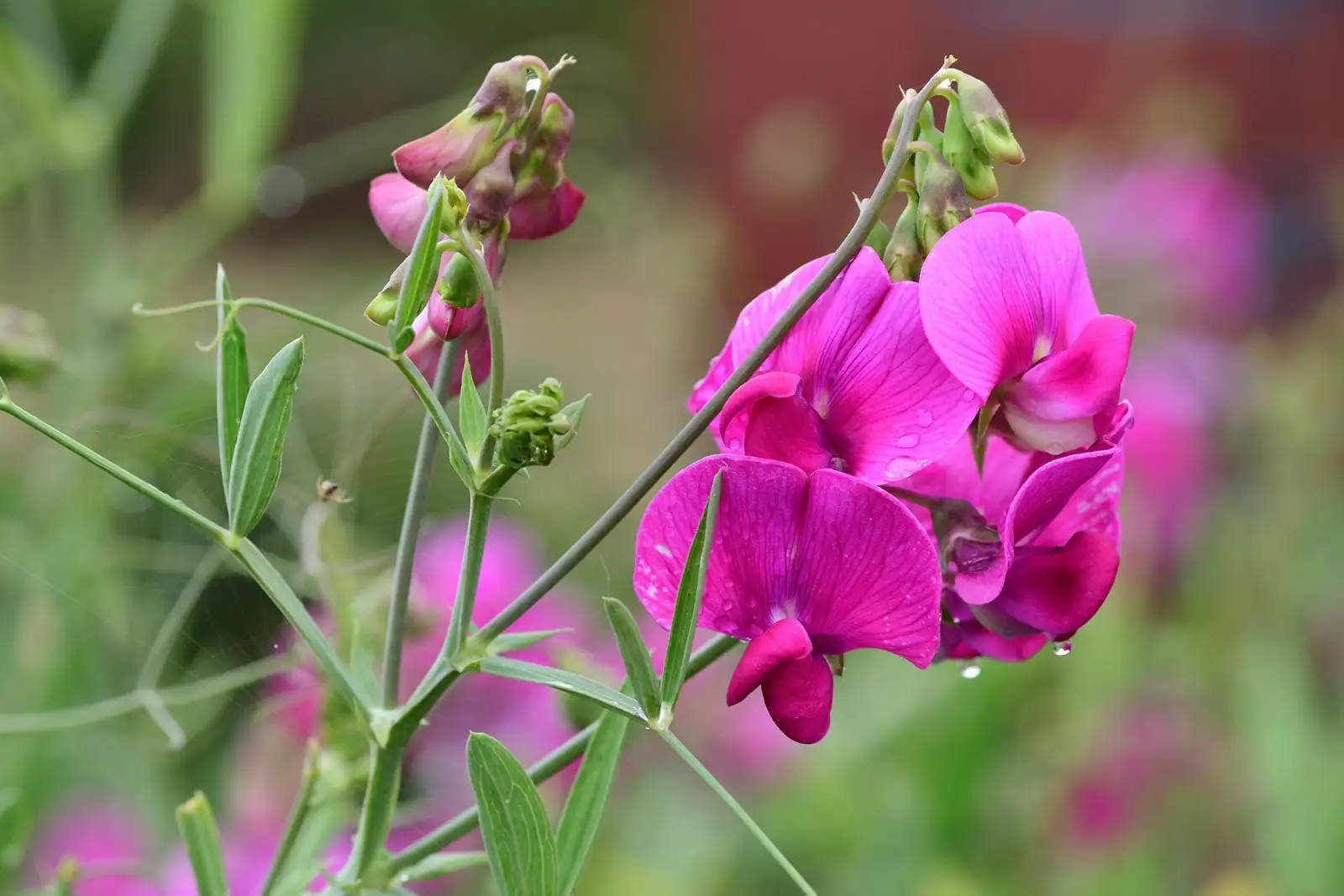
- Foliage: Leaves are compound with a single pair of ovate-to-elliptic leaflets, about 2–6 cm (0.8–2.4 in) long and 0.7–3 cm (0.3–1.2 in) wide. The leaf axis ends in branched tendrils that latch onto supports. Stems are four-angled and often winged; stipules are semi-sagittate (arrow-like) at the base.
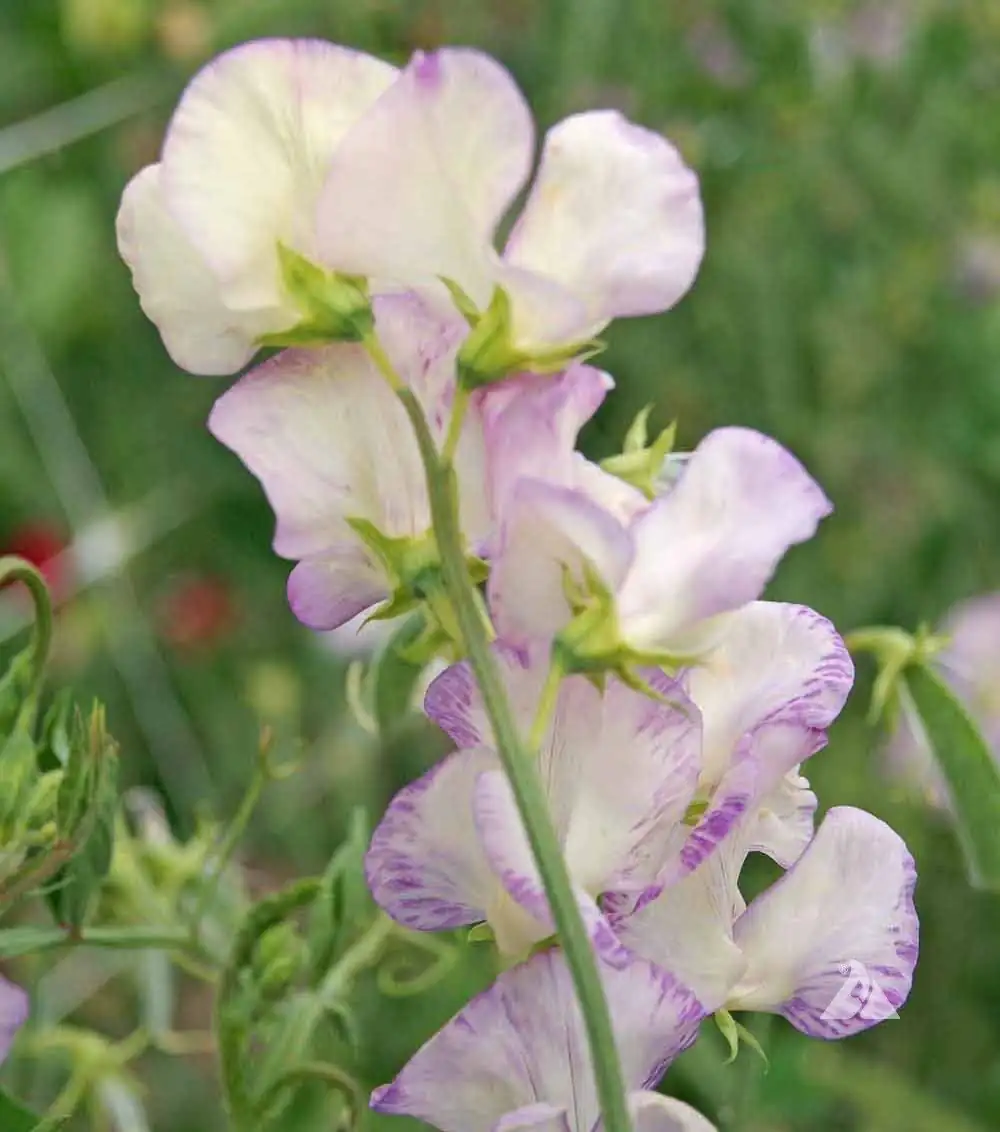
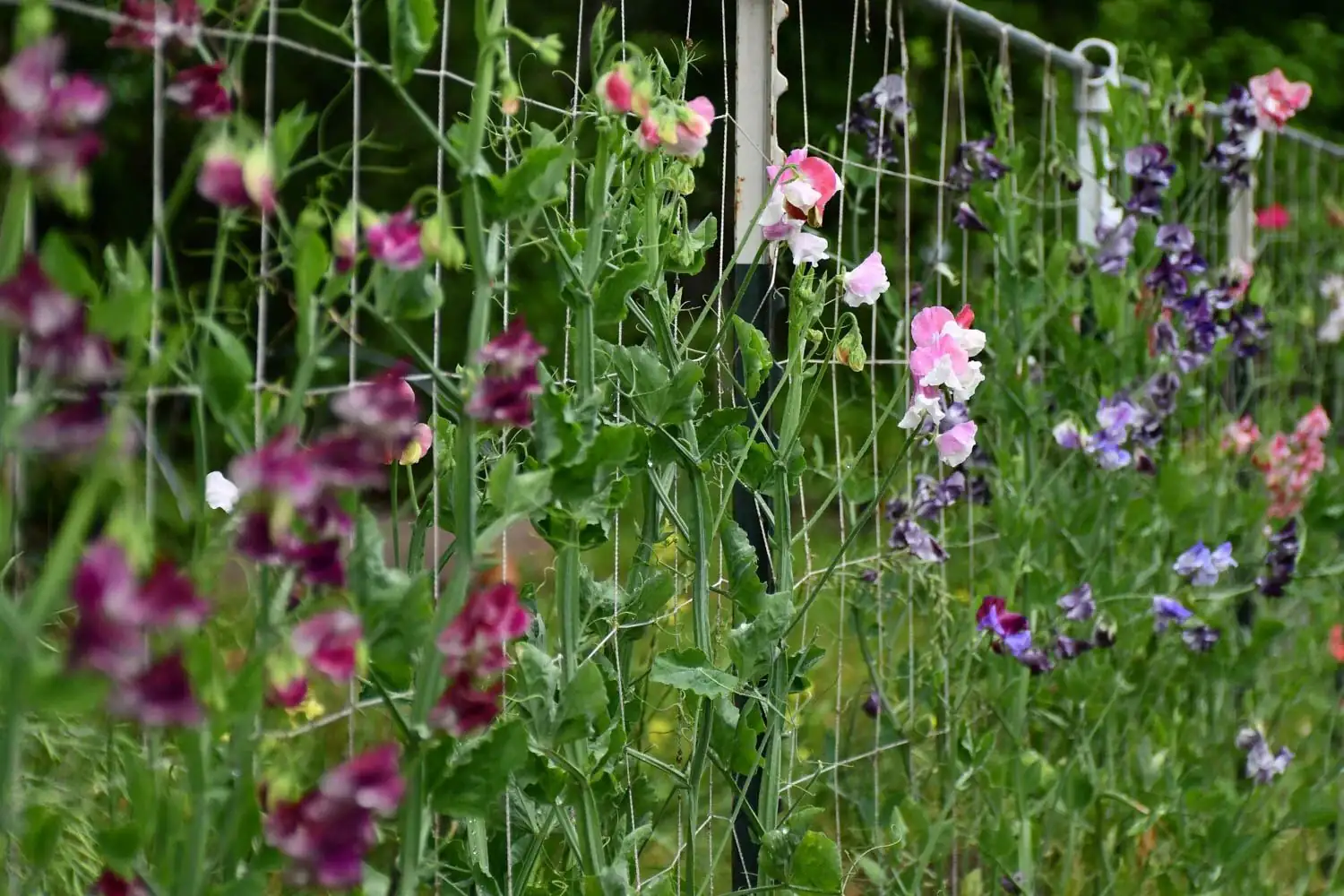
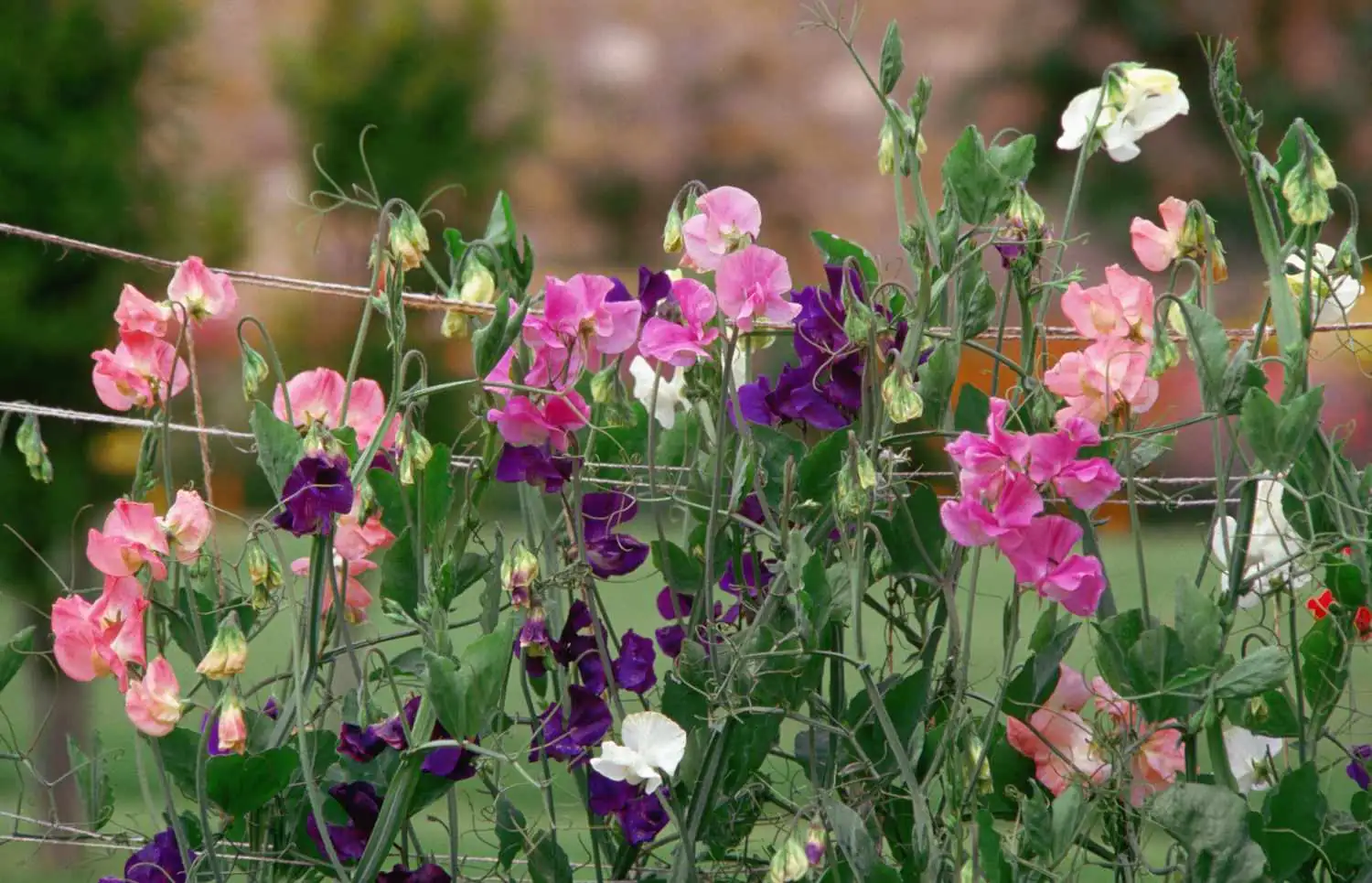
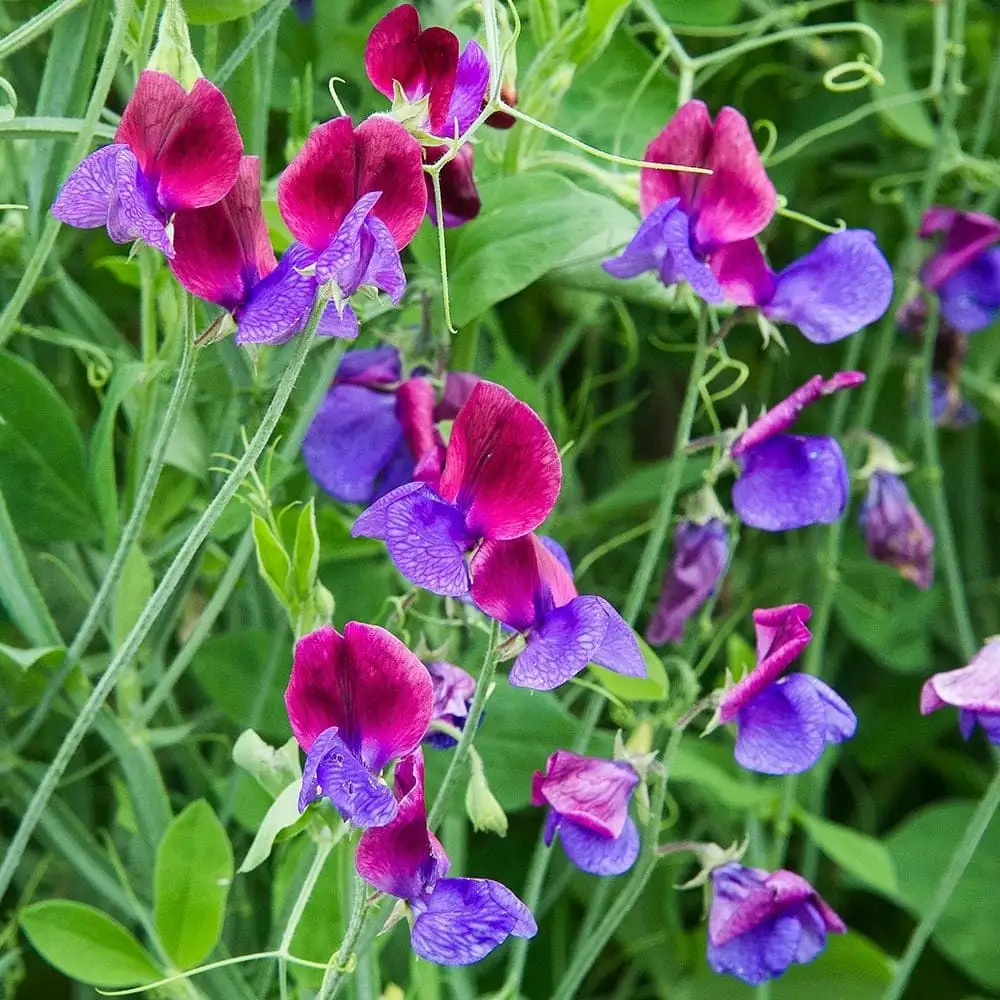
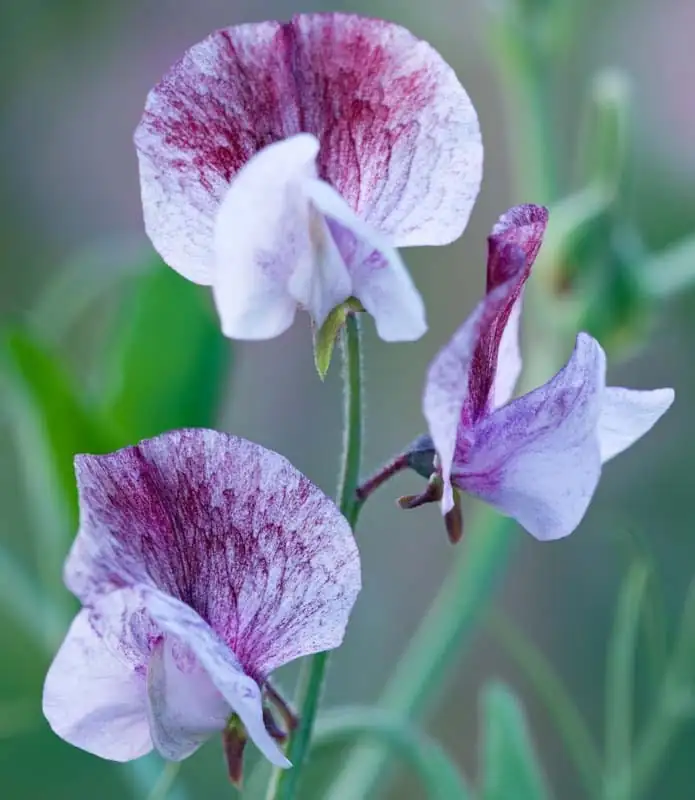
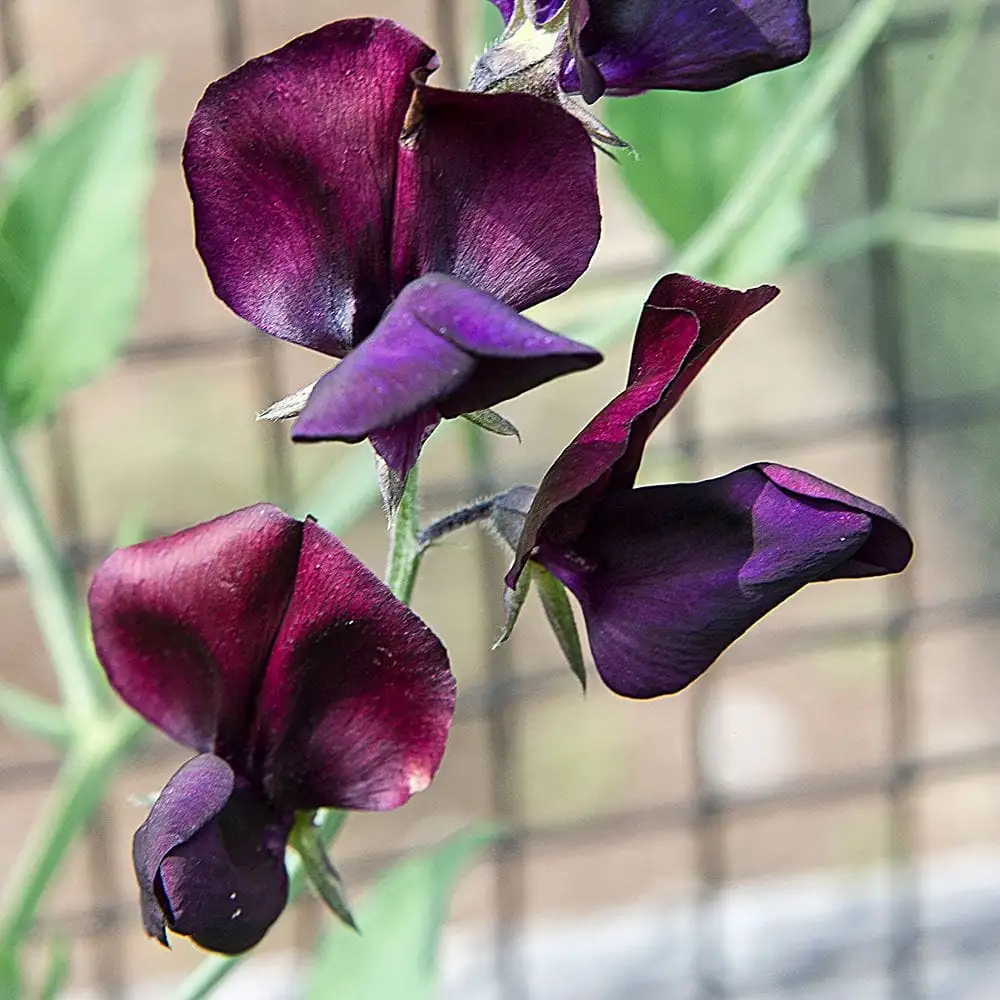
- Flower: Flowers are borne in short racemes, usually 1–3 blooms per stem, each about 2–3 cm (0.8–1.2 in) long. They’re pendulous, intensely fragrant, and classic “pea-flower” shaped (standard, wings, and keel). Colors span white, pink, purple, violet, magenta, blue, plus bicolors and striped forms; modern hybrids often have larger blooms and sturdier stems for cutting.
- Flowering Season: Spring to early summer (varies by climate and sowing time); in mild climates can bloom from late winter into early spring.
- Growth Habit: Herbaceous annual climbing vine with multiple branching stems; climbs by twining, branched tendrils.
Environment
Sunlight
Full sun is best in cooler/northern areas; in warmer/southern regions, give afternoon shade to protect blooms. Aim for at least 6 hours of direct sun daily.
Temperature
Prefers cool conditions: about 15–25°C (59–77°F) for growth, with best flowering around 10–15°C (50–59°F). Tolerates light frost. Performance drops as temperatures rise; prolonged heat above ~30°C (86°F) can severely stress or kill plants.
Humidity
Moderate humidity with good air movement. Likes consistent moisture, but hates soggy, stagnant conditions.
Soil
Deep, fertile, well-draining soil enriched with compost or well-rotted manure. Prefers neutral to slightly alkaline pH; lime may help if soil is acidic. Sandy loam is ideal.
Placement
Best on trellises, arches, fences, teepees, and other vertical supports in borders and cutting gardens. Dwarf/bush types work well in containers; place pots in bright, airy spots (balconies, patios) where you can water regularly.
Hardiness
Commonly grown as an annual; often treated as hardy in USDA Zones 2–11 depending on cultivar and climate. In mild regions (around Zone 7+), fall sowing and overwintering are possible; elsewhere it’s typically a spring-to-summer flowering annual.
Care Guide
Difficulty
Moderate. Sweet peas reward good technique but can be finicky: seeds may be slow to germinate, plants dislike heat, and the long taproot makes transplanting easy to botch if seedlings are cramped or disturbed.
Buying Guide
Choose plump, undamaged, pea-like seeds. Match varieties to your climate: early-flowering types suit warmer regions, while later types excel where springs stay cool. For top fragrance, try heirlooms such as ‘Cupani’ or ‘Old Spice’; for bigger flowers and stronger stems, modern hybrids are excellent.
Watering
Keep soil evenly moist, especially as plants grow fast and begin flowering. Water deeply about 2–3 times per week (more in hot, windy weather), rather than frequent shallow sprinkles. Drip lines or soaker hoses are ideal. Avoid overhead watering during flowering to reduce bud drop and fungal issues; water in the morning during warm spells and ease off during cold, rainy periods.
Fertilization
Feed generously but wisely. Prepare planting areas with compost or well-rotted manure—some gardeners dig a trench about 30 cm (12 in) deep and enrich it for deep roots. Use a bloom-boosting, higher-potash fertilizer rather than high nitrogen (which can make lush leaves and fewer flowers). Feed about monthly, or use a liquid feed every 2–3 weeks once blooming starts.
Pruning
Pinch out the growing tip when seedlings are about 10–15 cm (4–6 in) tall, leaving 2–3 leaf nodes to encourage bushier growth from the base. Train stems vertically on supports and thin/remove extra tendrils or crowded shoots so air can move through. Deadhead (or better: pick) often—preventing seed formation is the key to a long flowering season. If early flowers are small and short-stemmed, removing the first flush can encourage stronger later stems.
Propagation
Grown from seed. Soak seeds about 24 hours before sowing, or lightly nick/score the seed coat (avoiding the seed ‘eye’) to speed germination. Sow about 1.3 cm (1/2 in) deep. Start indoors in deep pots around 9 cm (3 in) deep to accommodate the taproot, or direct-sow as soon as soil can be worked. Typical timing: in warm/mild climates sow in autumn; in cold climates sow late winter/early spring, roughly 6–7 weeks before the last frost. Space plants about 20 cm (8 in) apart.
Repotting
Not a fan of transplanting due to the taproot. If starting indoors, use deep individual pots and move seedlings out before roots coil or tangle; transplant with the root ball intact. Direct sowing is often the simplest route.
📅 Seasonal Care Calendar
Spring (Mar–May): Sow or transplant, install supports, pinch tips, begin training; keep watering and start feeding. Summer (Jun–Aug): Peak bloom—harvest often, continue feeding and deep watering, and give shade/heat protection in warm climates. Fall (Sep–Nov): In mild regions, sow for early-season blooms; otherwise collect seed and clean up beds. Winter (Dec–Feb): Start seeds indoors in cold regions 6–7 weeks before last frost; in mild regions, continue caring for fall-sown plants.
Pests, Diseases & Safety
Common Pests & Diseases
Aphids are the most common pest, especially on soft new growth; also watch for slugs/snails on seedlings, plus thrips and spider mites in dry weather. Diseases include powdery mildew, rust, Botrytis (gray mold), leaf spots, anthracnose, root rots (often from poor drainage/overwatering), and occasionally viruses like spotted wilt. Prevention basics: strong airflow, clean watering at soil level, and avoiding waterlogged soil.
Toxicity
Poisonous if eaten. All parts—especially the seeds—contain toxic compounds that can cause serious illness in humans and animals (including dogs, cats, horses, cattle, sheep, birds). Symptoms may include vomiting, weakness, tremors, seizures, and in severe cases neurological problems (lathyrism). Do not confuse with edible garden peas (Pisum sativum) and keep seeds away from children and pets.
Culture & Symbolism
Symbolism: Sweet peas are classic “goodbye” flowers—symbolizing farewell, gratitude, friendship, kindness, and “thank you for a lovely time.” They also carry a sense of gentle pleasure and new beginnings. White sweet peas are often linked with innocence and purity, making them popular for weddings and spring celebrations.
History & Legends: The story begins in 1699, when a Sicilian monk, Francis Cupani, sent seeds of the intensely fragrant sweet pea to Dr. Robert Uvedale in England. From there it captured gardeners’ hearts, becoming a Victorian-era obsession for both borders and bouquets. Breeders—especially Henry Eckford in Scotland—helped transform it into the colorful, showier forms we know today, and by the late 1800s it was a major cut-flower and seed-catalog star in places like North America.
Uses: Grown mainly as an ornamental for trellises, arches, fences, and cottage-garden borders, and as a highly fragrant cut flower (often lasting about 4–5 days in a vase). Dwarf varieties are also popular for containers and edging. It’s widely used in spring events and is also known as an April birth flower in some traditions.
FAQ
Why aren’t my sweet peas blooming?
Most often it’s heat (they slow down above about 20°C/68°F), not enough sun (aim for 6+ hours), too much nitrogen fertilizer (lots of leaves, fewer flowers), not pinching early, irregular watering, or simply the wrong variety for your climate. In warm regions, switching to earlier types and giving afternoon shade can make a big difference.
Should I soak sweet pea seeds before planting?
Yes—soaking for about 24 hours can speed germination. You can also lightly nick the seed coat, but avoid the seed ‘eye.’ In consistently moist, cool soils, soaking isn’t strictly necessary, but it often helps.
Can sweet peas be grown in containers?
Yes. Choose deep containers at least 30 cm (12 in) deep for the taproot, use rich but free-draining potting mix, and provide support. Container plants dry faster, so water and feed more consistently than in-ground plants.
Are sweet peas edible?
No. Sweet pea (Lathyrus odoratus) is poisonous and is not the same as edible peas. Never eat the seeds, pods, or flowers, and avoid planting them where children or pets might sample them.
How do I make sweet pea cut flowers last longer?
Pick early in the morning, choose stems with a couple of unopened buds, cut stems at an angle, and place them straight into water. Use flower food (or a little sugar), refresh water daily, and keep the vase cool and away from fruit (ethylene shortens vase life).
Fun Facts
- “Lathyrus odoratus” literally means “fragrant pea.”
- The original ‘Cupani’ sweet pea from the late 1600s is still grown today for its strong scent and bicolored blooms.
- Sweet peas can grow very fast in cool, bright weather—vigorous plants may add around 30 cm (12 in) in a week.
- Despite the name, sweet peas are purely ornamental and should never be eaten.