If you’ve ever locked eyes with a Rose Grape (Medinilla magnifica) in full, chandelier-pink regalia, you know it’s love at first sight. But love can be fickle if you bring home a stressed plant that drops its buds by the time you set it on the table. Use this buyer’s checklist to choose a specimen with staying power—and get it home without cold shock so those dreamy blooms actually open for you.
Meet the showstopper you’re buying
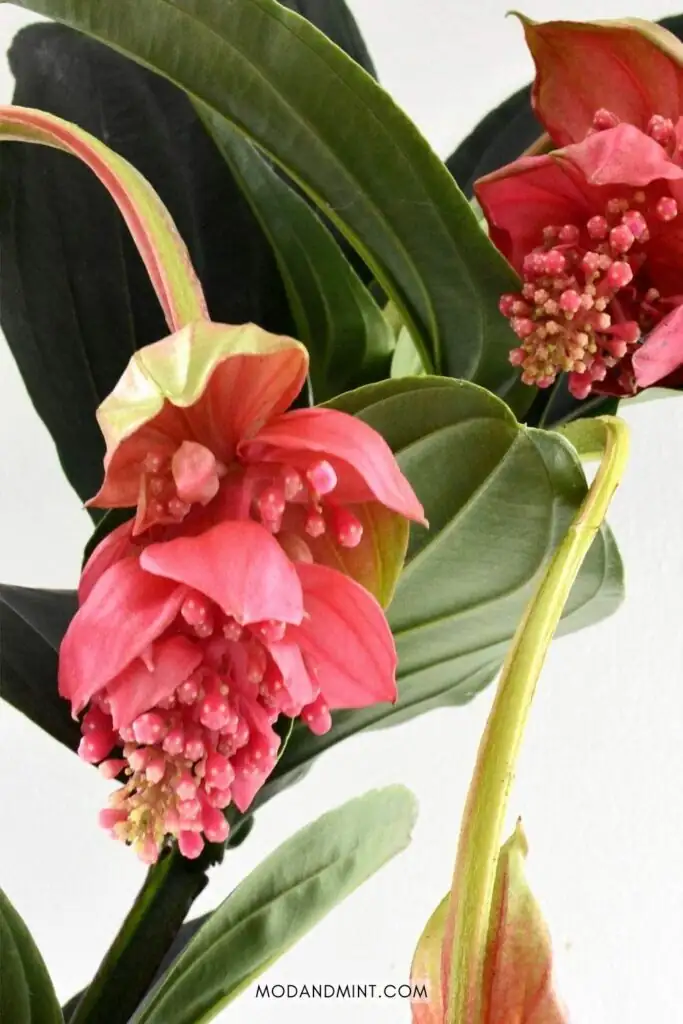
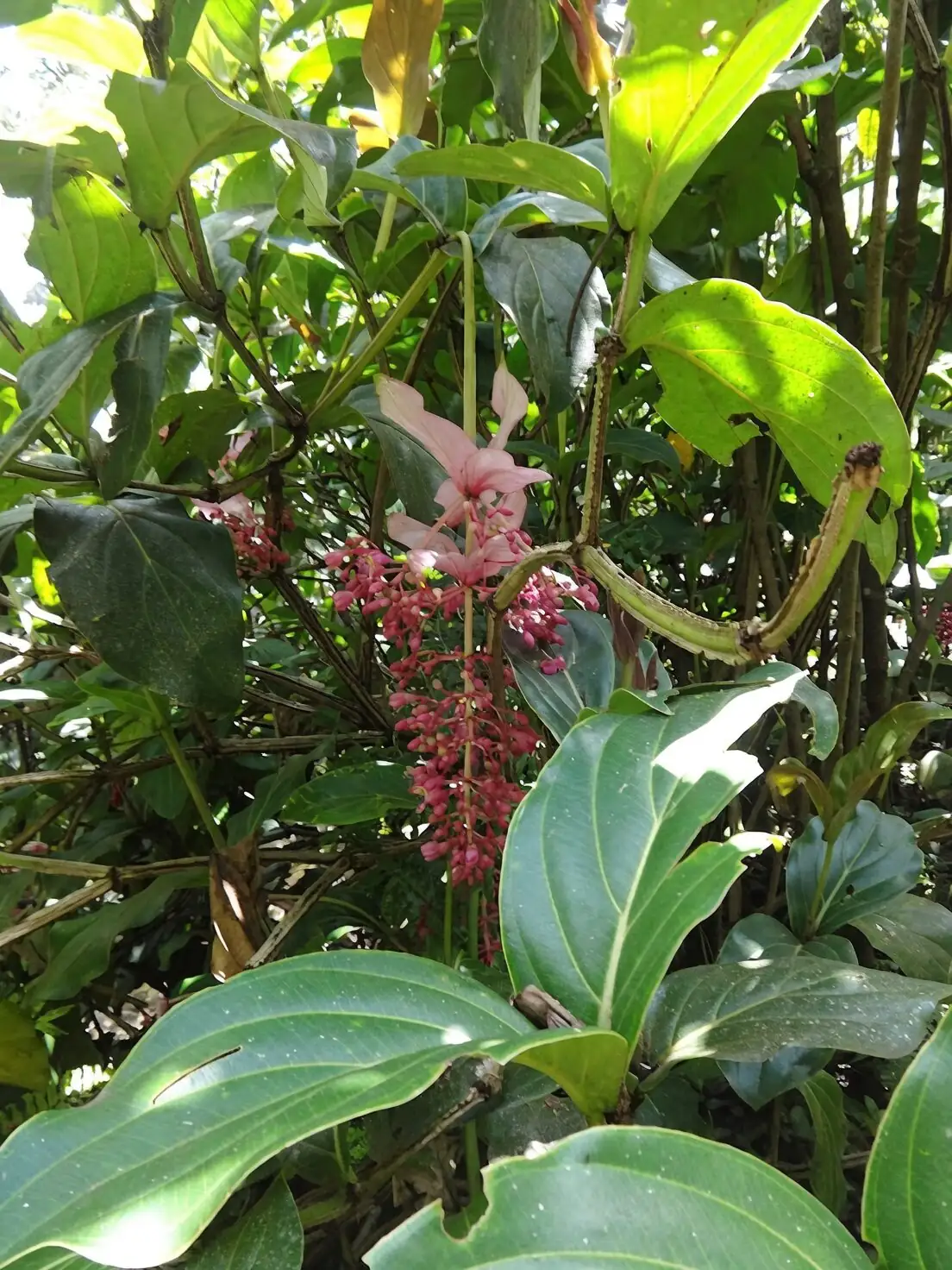
- What it is: A premium tropical shrub from the Philippines with thick, glossy, deep‑green leaves etched by prominent raised veins and jaw‑dropping, cascading clusters of rosy‑pink bracts (the true flowers inside are usually pink to purple).
- Best display: Let the “chandeliers” drape—place the pot high on a stand or in a tall planter. Stout stems may need gentle support when in bloom.
- Light and climate preferences: Bright, filtered light; warm, stable temperatures; generous humidity. It’s a warmth‑lover and a humidity fan, not a sun-scorch or draft survivor.
Aliases you may see: Magnificent Medinilla, Philippine Medinilla, Philippine Orchid, Showy Medinilla (it isn’t an orchid—more on that later).
The 60‑second in‑store checklist (stand in front of the plant and scan)
1) Leaves: thick, glossy, and firm
- Look for large, leathery, deep‑green leaves with bold, raised veins.
- Pass on plants with tears, brown/black spots, bleached patches (sun scorch), limp texture, or sticky residue.
- Flip a few leaves: check undersides for pests or webbing.
2) Stems: sturdy, never soft
- Stems should feel firm, not mushy. Avoid blackened sections or any collapse at nodes—these signal stress or rot.
- If heavy flower stems are drooping, that’s normal; you just don’t want bent, creased, or broken ones.
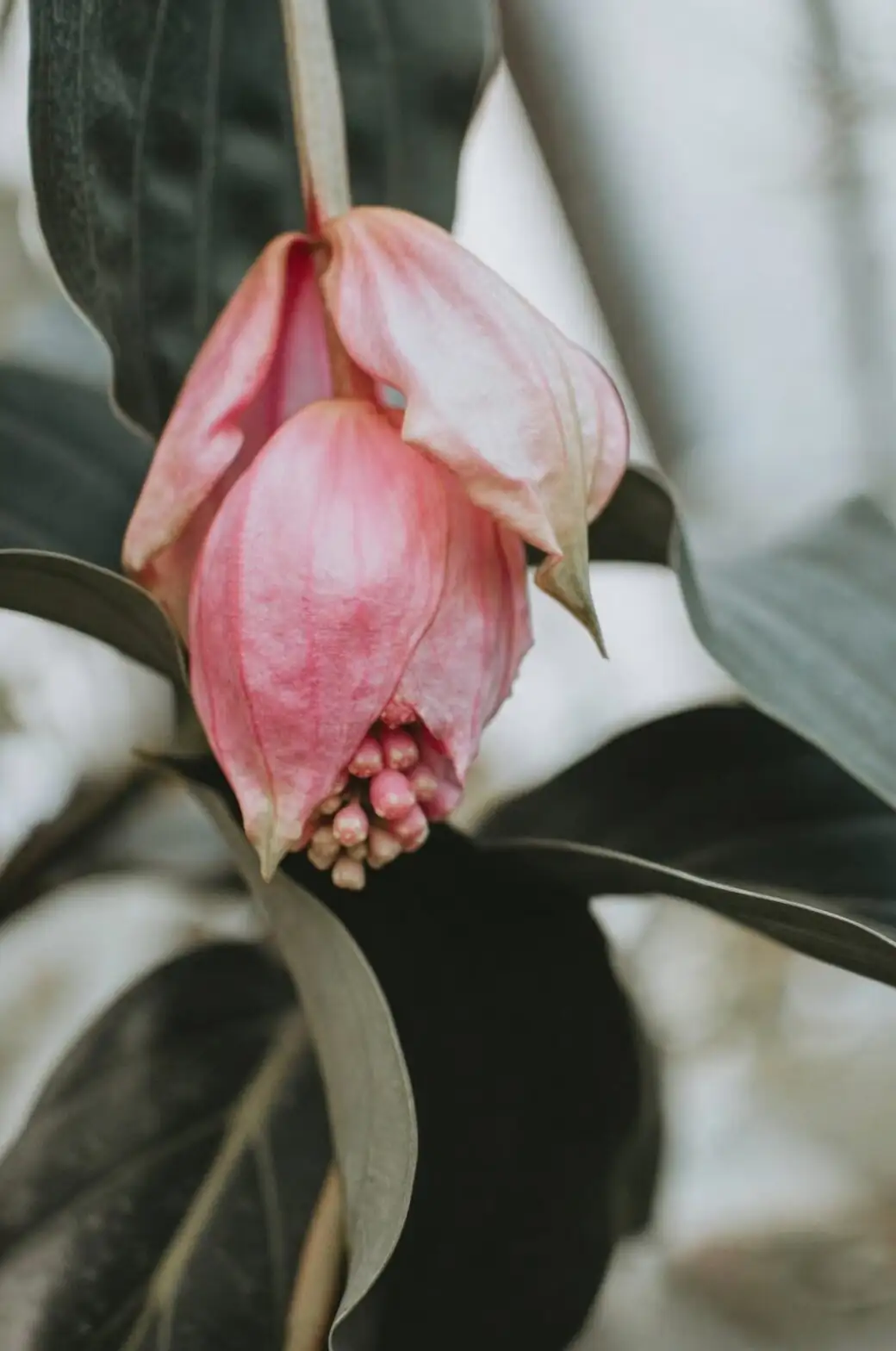
3) Bracts and buds: choose “just opening” for best results
- Ideal: 3–5 strong clusters with at least one beginning to hang and partially open so you can judge quality and color.
- Bracts (the showy pink parts) should be evenly colored and unblemished—no browning, bruising, or blackened edges.
- Buds should be plump and firm. Avoid clusters with shriveled or yellowing buds.
- Very gently jostle the pot—if several buds rain down, that plant is already stressed.
4) Pot and roots: free-draining and right-sized
- Container should drain well and feel appropriately weighted (not sopping wet).
- A deep pot is typical for quality stock—often around 20–25 cm (8–10 in) wide and 30–40 cm (12–16 in) deep; some growers combine 1–3 young plants per pot for fullness.
- Surface mix should look airy—not dense, sour-smelling, or waterlogged.
5) Form and fullness
- A well-shaped plant with even foliage and several developing flower stems is the sweet spot.
- It should look poised to cascade, not top-heavy and tipping.
Red flags—walk away if you see:
- Blackened or browned bracts, soft or collapsing stems.
- Sticky residue, white cottony tufts (mealybugs), tiny brown bumps (scale), fine webbing or speckling (spider mites).
- Leaf spotting plus stale, stuffy air (risk of disease).
- Soil that’s swampy or bone-dry—and a plant that looks stressed as a result.
How to transport it so the buds don’t abort
Flower clusters drop from stress. Your mission: keep conditions warm, steady, and gentle until it’s home and settled.

- Wrap before you wander: Ask for a sleeve or paper wrap that protects the bracts and shields from drafts. In cold weather, double-wrap.
- Temperature matters: Aim to keep it above 16°C (61°F); it thrives in 22–28°C (72–82°F). Pre‑warm the car in winter; in summer, cool the car but don’t blast cold air directly at the plant.
- Drive smooth and upright: Seatbelt the pot, keep it upright, away from doors and vents.
- No car sauna or freezer: Don’t leave it in a hot trunk or a cold car—even for a “quick” errand.
- At home: Unwrap in a warm, bright, draft-free room. Keep it away from exterior doors and radiators.
Why buds drop—and how to prevent it (the anti‑abort playbook)
Buds and blooms can drop if the plant is hit with:
- Cold drafts or chills (below ~16°C/61°F).
- Heat spikes combined with stagnant air.
- Harsh direct sun (especially midday).
- Watering extremes—swinging from parched to soggy, or letting the mix stay waterlogged.
- Poor ventilation or repeatedly wet flowers.
Prevention basics:
- Light: Bright, filtered/indirect (east window, or south with a sheer).
- Water: Keep evenly moist during growth and bloom, never swampy. Bottom‑water with lukewarm rain/distilled water; let excess drain. Avoid splashing the flowers.
- Humidity: Aim for 50–70%+; 70–80% is ideal for bud set. Use a humidifier or pebble tray; mist the air around the plant, not the blooms.
- Airflow: Gentle and fresh, not gusty.
- Stability: Keep conditions steady; sudden changes trigger stress responses.
First‑week game plan after purchase
- Placement: Bright, filtered light right away. No direct midday sun while acclimating.
- Watering: Check moisture on arrival. If the top of the mix is dry, bottom‑water with lukewarm rain or distilled water for ~20 minutes, then drain fully.
- Feeding: During active growth, feed monthly with a balanced fertilizer (e.g., 20‑20‑20 at label rate). When buds form, add 1–2 feeds emphasizing phosphorus/potassium—or use a half‑strength high‑potassium feed every 2 weeks from spring to late summer. Don’t overfeed.
- Support: If clusters are very heavy, discreetly tie or stake to prevent flopping or breakage.
- Don’t repot immediately: Give it a few weeks to settle unless the mix is clearly failing. Plan to repot in spring every 2–3 years with a fertile but very free‑draining, airy medium.
Size and display tips
- Typical indoor size: Often around 1.2 m × 1.0 m (4 ft × 3.3 ft) with good care; mature container plants can reach 1.0–2.0 m (3–6.5 ft).
- Best look: Elevate the pot so the pendant clusters can drape naturally. In bloom, it’s a perfect focal point in a bright living room or conservatory.
Bloom timing you can shop around
- Main season: Spring to summer (often late spring through summer indoors).
- Buyer’s edge: Snap up plants with several clusters in the “just opening” stage during this window for the longest home display.
Quick care refresher (post‑purchase essentials)
- Sunlight: Bright, filtered/indirect; partial shade is fine. Avoid prolonged harsh direct sun.
- Temperature: Warm and steady—ideally 22–28°C (72–82°F); protect from chills and drafts and keep above about 16°C (61°F).
- Humidity: 50–70%+ minimum; 70–80% is gold standard for bud set and bloom longevity.
- Soil: Airy, rich, and free‑draining—think chunky, oxygenated mixes that never stay waterlogged.
- Pruning: After flowering, remove spent clusters and cut back the shoots that flowered by about half to encourage fresh, bloom‑ready growth next cycle.
Pest-and-disease spotter’s guide
- Usual suspects: Spider mites (dry air risk), scale, mealybugs, whiteflies.
- Early action: Isolate, increase humidity/airflow, then treat with insecticidal soap or horticultural oil—repeat as needed.
- Disease watch: Leaf spot and stem/root rot link back to poor ventilation and wet or waterlogged conditions. Keep the mix airy and avoid wetting flowers; remove affected tissue promptly.
Safety note
Not widely documented as toxic to humans or pets, but as with many ornamentals, ingestion may cause mild stomach upset. Keep out of reach of curious chewers.
Flower language and the “orchid” myth
- Symbolism: Rose Grape is shorthand for tropical glamour, elegance, and abundance—the kind of “statement plant” that telegraphs refined taste.
- Origin of the vibe: Those oversized pink bracts and draping clusters read like couture on a hanger—dramatic and luxurious, yet poised.
- About that “Philippine Orchid” name: It’s a trade nickname inspired by the showy, exotic blooms, not its family tree. Medinilla magnifica belongs to the Melastomataceae, not the Orchidaceae—so think “orchid‑level wow,” different lineage.
Buyer’s mini‑FAQ
- Will it bloom again next year? Yes—if you keep it warm, bright (but indirect), and humid, with steady, even watering. After flowering, prune back the shoots that bloomed by about half to encourage new, bloom‑ready growth.
- Can I use tap water? It often does better with rainwater or distilled water. If using tap water, let it sit overnight and use it lukewarm—not cold.
- Indoor or outdoor? It’s frost‑tender. Outdoors year‑round only in roughly USDA Zones 11–12. Elsewhere, treat it as a houseplant and protect it from cold drafts.
Bring home a Rose Grape with firm, glossy leaves, clean stems, and blush‑pink bracts just starting to open; carry it like a VIP in warm, draft‑free comfort; then give it bright filtered light, steady moisture, and generous humidity. Do that, and your “living chandelier” won’t just survive the trip—it will reward you with a long, cascading show.