
If your Boston fern suddenly looks tired—tips crisping, fronds spotting, or the whole fountain going flat—don’t panic. Nephrolepis exaltata is forgiving once you quickly separate “pest problems” from “care problems,” take a few decisive rescue steps, and tune the environment for long-term health. Think of this guide as a fast triage chart followed by a simple treatment plan.
Know your patient: Boston fern at a glance
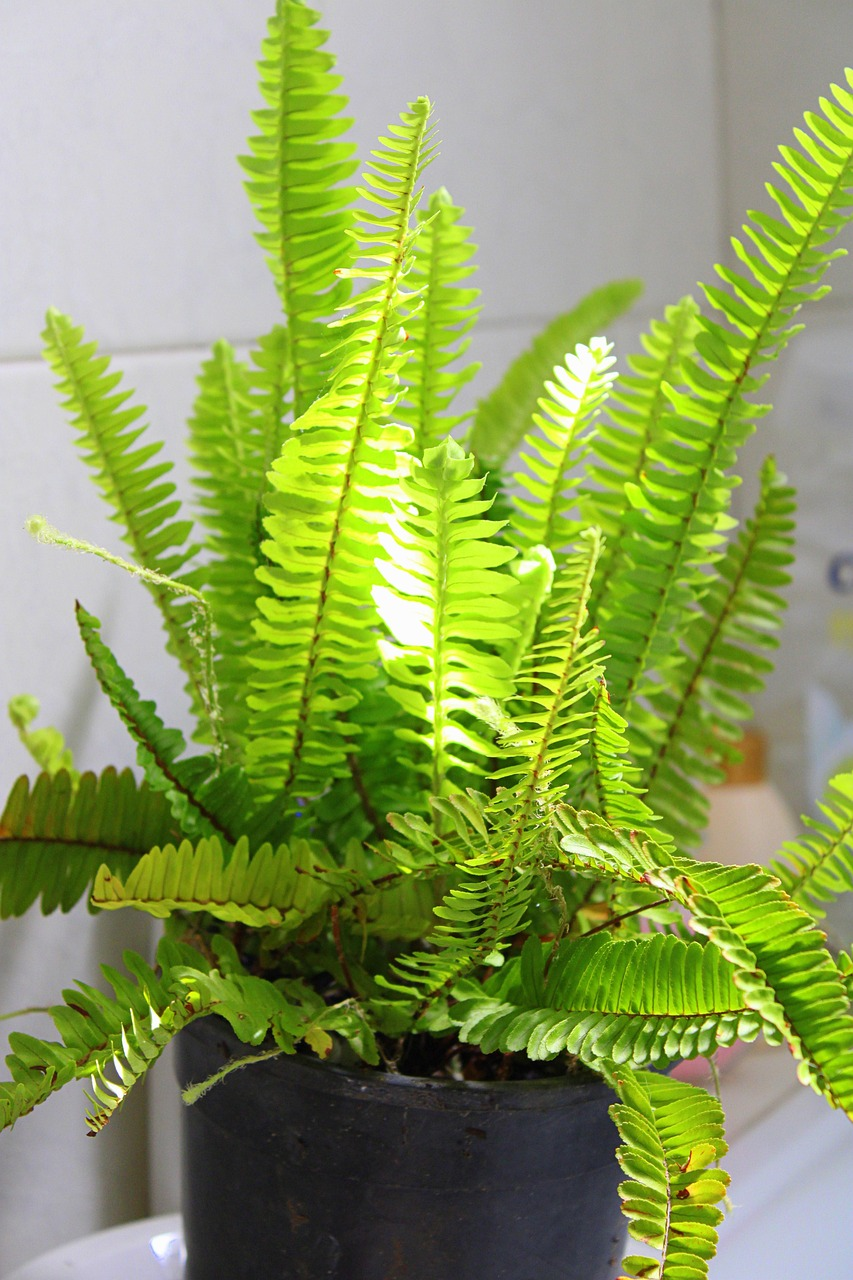
- Botanical name: Nephrolepis exaltata (family Nephrolepidaceae); also sold as Boston fern, sword fern
- Look: Soft, feathery, arching fronds that spill like a green fountain
- Size indoors: Typically 30–90 cm tall and wide; fronds can reach to ~120 cm in great conditions
- Light: Bright, indirect light; gentle morning sun is OK; avoid harsh midday/afternoon sun
- Water: Evenly moist, never bone-dry and never waterlogged
- Humidity: Loves 50–70%+ with some airflow
- Temperature: Best at 16–24°C (61–75°F); protect from frost and blasts of hot, dry air
- Reproduction: A fern—no flowers; makes spores and spreads by runners
- Pet safety: Generally regarded as non-toxic to cats and dogs
The 60‑second diagnostic flow: pests or culture?
Run through these quick checks; match what you see with the likely cause and jump to the right fix.
- Look closely under fronds (use a flashlight)
- Fine stippling and delicate webbing between pinnae → spider mites
- Cottony tufts in crevices/crowns → mealybugs
- Tiny white moths flying when disturbed, sticky leaves or sooty mold → whiteflies
- Brown, immobile bumps on stems/rachises → scale
- Feel the potting mix
- Bone-dry, pulling from pot edges → underwatering
- Soggy, sour smell, limp/graying fronds → overwatering/root issues
- Read the fronds
- Brown, crispy tips and edges (no pests) → dry air or salt buildup, or the root ball dried once
- Bleached/brown patches on the sunniest side → sun scorch
- Sparse, stretched growth → light too low
- Check the environment
- Near heater/AC vent or under strong sun? → environmental stress likely
- Humidity high but air stagnant and soil often wet? → fungal blight risk
Immediate rescue steps (Day 0–1)
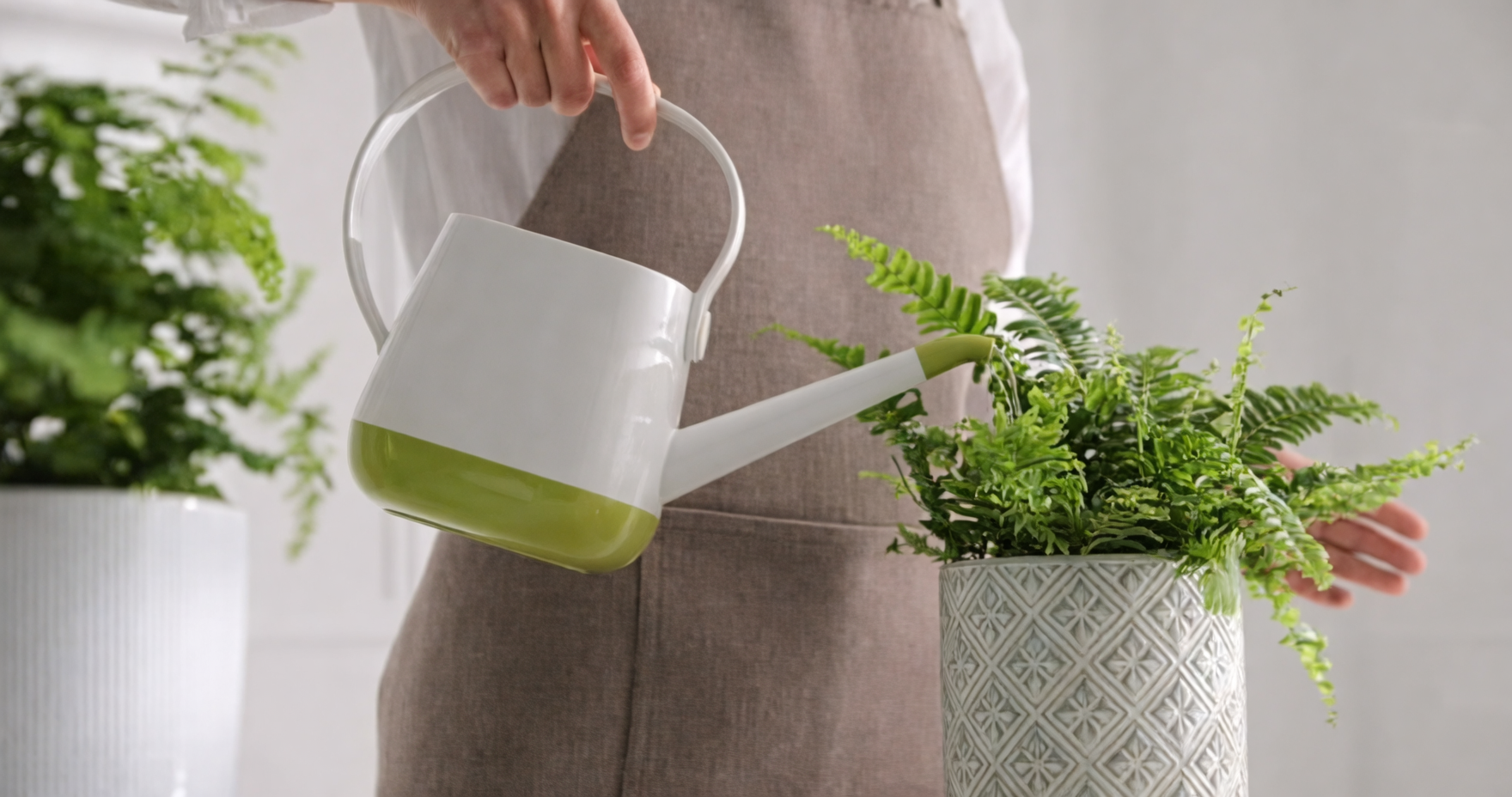
Do these first—whether it’s pests or culture, they help nearly every Boston fern bounce back.
1) Isolate and clean
- Move the plant away from others.
- Gently shake out dead litter; snip and discard badly browned or pest-covered fronds at the base.
2) Rinse the foliage thoroughly
- Take it to a shower/sink. Use lukewarm, gentle spray to wash upper and undersides of fronds (pests hate this; dust and salts wash off).
3) Rehydrate or drain, as needed
- If dry: Soak the whole pot in water for ~10 minutes, then let it drain fully.
- If soggy: Let excess drain completely; empty saucers and improve drainage/aeration.
4) Set the stage
- Light: Bright, indirect light (east/north window, or a bit back from a brighter window).
- Air: Humid but moving. Run a small fan nearby on low to keep air gently moving.
- Pause fertilizer for now.
5) If you suspect salt burn (brown tips despite good humidity)
- Flush the pot (see “Feeding and flushing” below) once the mix is moist and drain well.
Targeted pest treatments (repeat weekly for 3–4 weeks)
Ferns have delicate fronds; the secret is gentle coverage, repetition, and airflow.
Spider mites
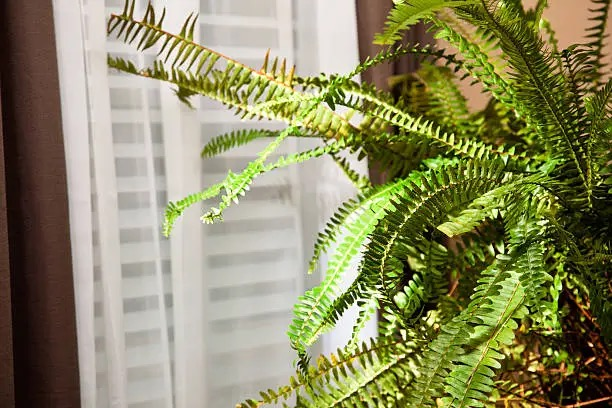
- Humidity + rinse: Keep humidity up (50–70%+) and rinse fronds weekly; mites thrive in dry, still air.
- Neem or insecticidal soap: Spray to wet all surfaces, wait 5–10 minutes, then rinse off to avoid residue buildup on delicate pinnae.
- Airflow: A small fan discourages re-infestation.
- Persistence: Repeat every 5–7 days for at least 3 cycles to catch hatchlings.
Mealybugs and scale
- Mechanical removal: During your rinse, use a soft brush or gloved fingers to dislodge cottony tufts or bumps.
- Neem/soap: Spot-treat clusters; wait a few minutes, then rinse off.
- Inspect the crown and runner nodes (favorite hiding spots) each week and remove any reappearing pests promptly.
Whiteflies
- Rinse undersides of fronds thoroughly.
- Yellow sticky cards: Hang near the plant to monitor and trap adults.
- Neem/soap: Weekly spray-rinse cycles for 3–4 weeks; remove heavily infested fronds.
When an infestation is severe
- Hard reset: Cut all foliage at the base, clean debris, and keep the crown warm, humid, and in bright, indirect light. Increase airflow and water modestly as new fronds emerge. Boston ferns often rebound impressively in a few weeks under good care.
Cultural corrections that stick
Watering rhythm
- Aim for “evenly moist.” Water when the top 2–3 cm (about 1 inch) feels slightly dry, then let excess drain fully.
- Pro move: Every week or two, bottom-water (soak the pot for ~10 minutes) and drain well to evenly rehydrate the root ball.
- Winter: Let the surface dry slightly more between waterings, but never let the root mass go bone-dry.
Light
- Best: Bright, indirect light; gentle morning sun is fine.
- Avoid: Strong midday/afternoon sun that scorches fronds.
- Rotate the pot every 2–3 weeks so all sides stay plush.
Humidity plus airflow
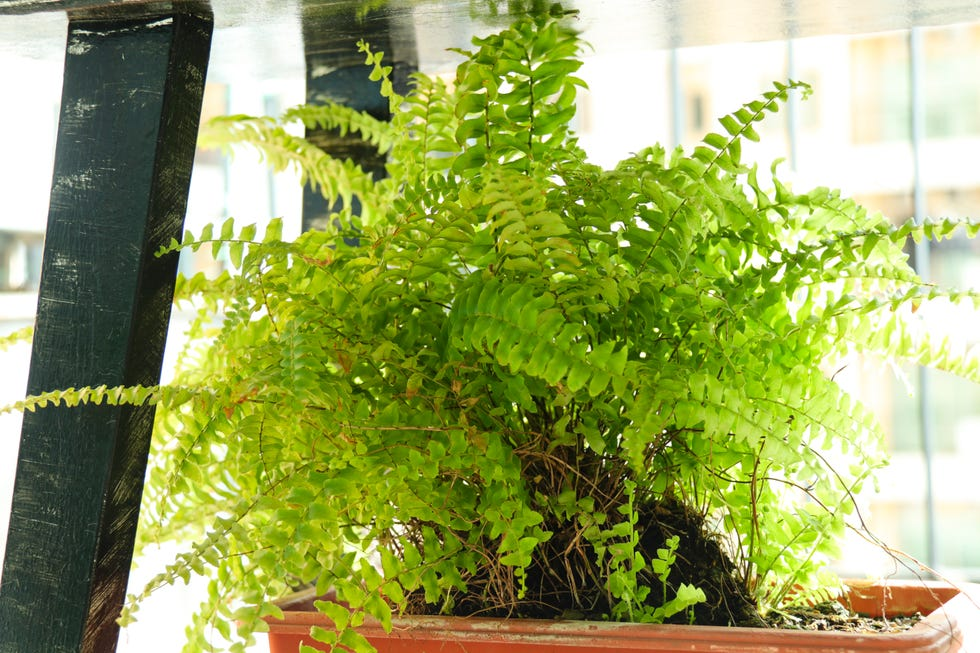
- Target 50–70%+ humidity with a humidifier, pebble tray (keep pot above waterline), plant grouping, or an occasional light mist in warm, bright rooms.
- Balance with airflow: a small fan on low prevents stagnant, damp conditions that invite fungal blights.
Soil and potting
- Mix: Moisture-retentive yet free-draining—think peat/leaf mold or coco + perlite/coarse sand; slightly acidic is ideal.
- Container: Plastic or glazed ceramic slows evaporation; ensure open drainage holes.
- Repot/divide every 2–3 years (spring is ideal) to refresh aeration and vigor.
Feeding and flushing
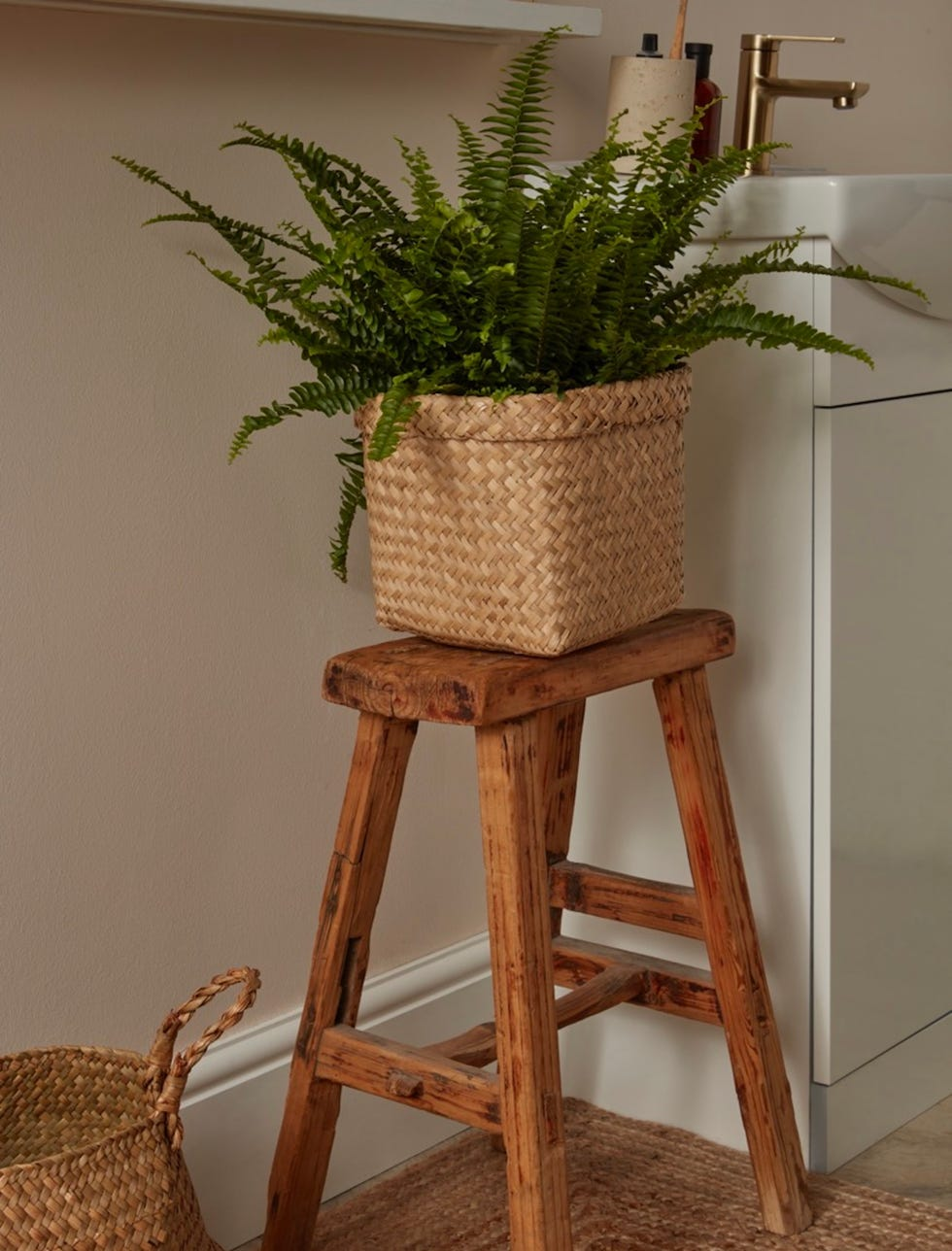
- Feed lightly during active growth: balanced liquid fertilizer at 1/2 strength about monthly (or more dilute every 2 weeks from spring to early autumn). Pause in late autumn/winter.
- Flush fertilizer salts:
- When: Every 2–3 months as routine maintenance, and anytime you see brown tips despite good humidity or a white crust on the soil.
- How: Water thoroughly, then slowly run 3–5 times the pot’s volume of plain, lukewarm water through the mix. Let it drain completely; empty saucers.
Preventing fungal blights in humid homes
Ferns love humidity, but fungi love stagnation. Keep moisture where the roots want it—and air moving where the fronds live.
- Water early in the day so fronds and crown dry before night.
- Keep the mix airy; never leave the pot sitting in water. Empty saucers promptly.
- Thin crowded, aging fronds to open the canopy and improve airflow.
- Space plants so fronds don’t stay plastered together; use a small fan on low in very humid rooms.
- Sanitation: Remove fallen fronds, sterilize shears, and quarantine new plants for a couple of weeks.
- If you spot patchy, spreading blights or a mushy crown: prune affected fronds at the base, refresh the top layer of mix (or repot, trimming any brown/rotting roots), then increase airflow and adjust watering to “evenly moist, never soggy.”
Rehab recipes
Crispy, drought-stressed fern
- Soak the pot 10 minutes; drain well.
- Trim browned fronds/tips for appearance.
- Move to bright, indirect light with higher humidity and gentle airflow.
- Resume even moisture; don’t let it dry to the core again.
Overwatered, sour-smelling fern
- Unpot, trim brown/mushy roots, and repot into a fresh, airy mix.
- Water once to settle; then water only when the top 2–3 cm dries.
- Boost airflow; keep warm and bright (no direct afternoon sun).
Salt-burned tips
- Flush as described above; pause fertilizer for 3–4 weeks.
- Resume feeding at half-strength and maintain periodic flushes.
Sun-scorched fronds
- Move out of direct midday/afternoon sun.
- Remove worst fronds; new growth will fill in under softer light.
Ongoing care snapshot
- Light: Bright, indirect (east/north windows or set back from brighter exposures).
- Water: Evenly moist; soak-and-drain is your friend.
- Humidity: 50–70%+, but pair with airflow.
- Grooming: Snip yellow/brown fronds at the base; lightly thin for air.
- Propagation: Easy by division or runner plantlets.
- Bonus: Those dots under mature fronds are spore clusters—normal fern biology, not pests.
With quick diagnosis, a good rinse, smart use of neem or insecticidal soap, periodic salt flushes, and humidity paired with airflow, your Boston fern will go back to being that fresh, arching green fountain that softens a room—and stay that way for years.