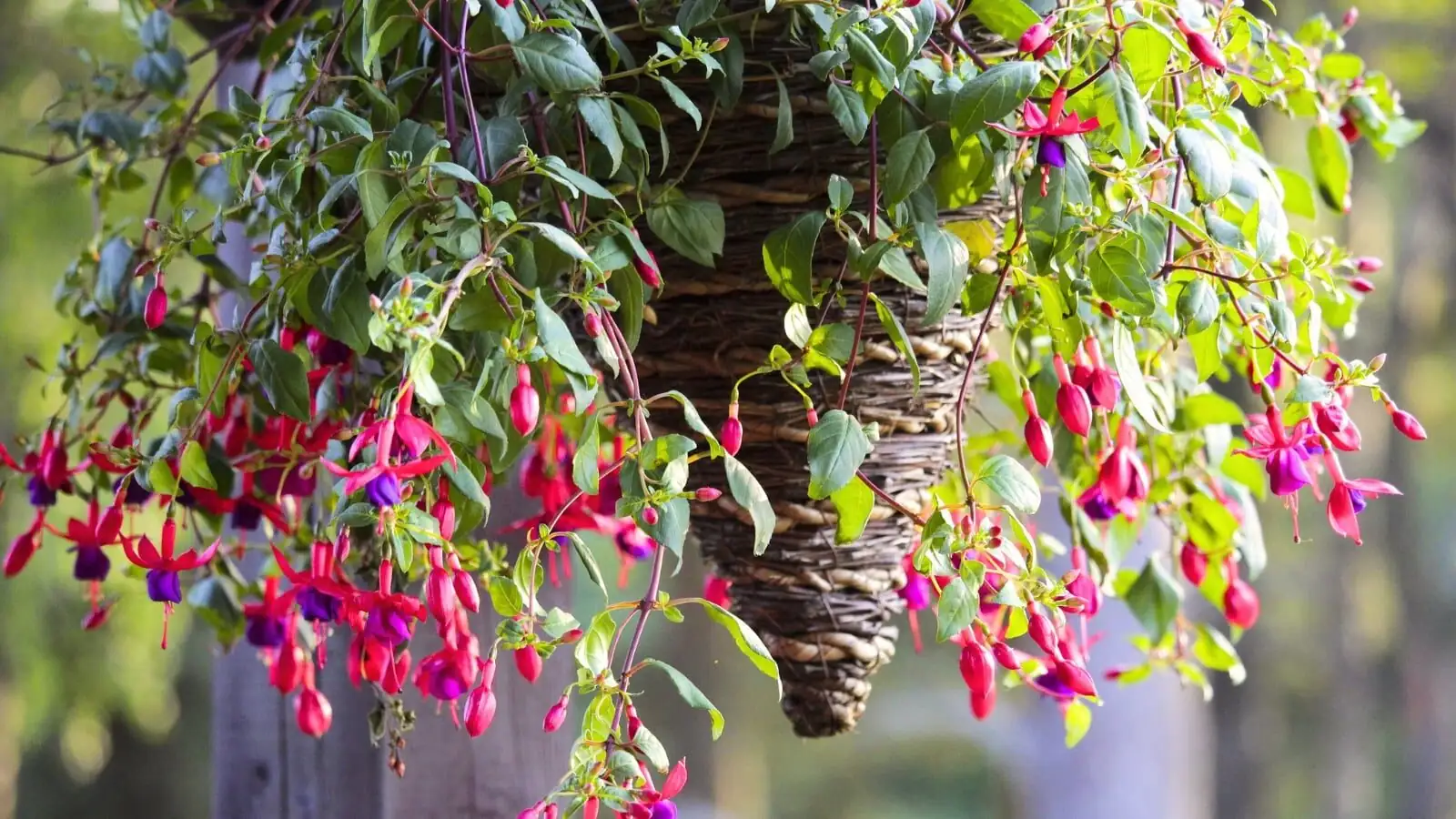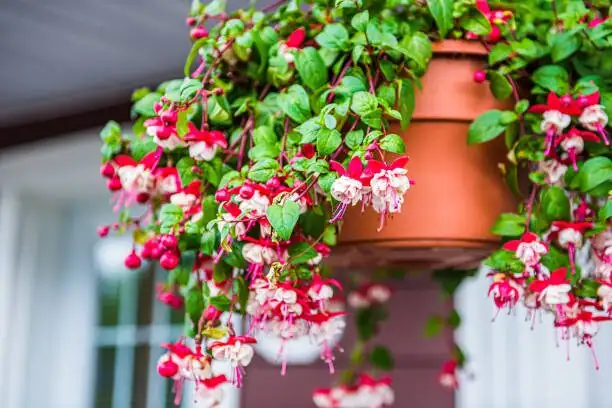
Fuchsia × hybrida is the classic “little earrings” plant—born to spill and sway. But that lush, cascading look doesn’t happen by accident. It’s built—deliberately—through timely pinching, smart pruning, and confident rejuvenation cuts. Here’s your step-by-step playbook for baskets and pots that brim with bloom from rim to trail.
Before you start: set the stage for success
- Light: Bright light with gentle direct morning sun is ideal. Shield from harsh midday/afternoon sun in summer.
- Temperature: Cool-loving—best around 15–22°C (59–72°F). Growth stalls above 25°C (77°F).
- Moisture and soil: Keep the mix evenly moist, never soggy. Use a fertile, airy, well-drained potting mix (peat/leaf-mold base + perlite/coarse sand).
- Airflow and humidity: High humidity helps, but always pair with good ventilation to prevent gray mold and rust.
- Basket trick: For a fuller display, plant 2–3 young fuchsias in a 15 cm (6 in) pot or hanging basket.
- Tools: Clean snips, sharp scissors, or your fingers for soft-tip pinching. Sanitize blades regularly.
The branching blueprint: how many stems to keep (and why)
Fuchsias bloom on the tips of new growth. More growing tips = more flowers. Your goal is a strong framework that supports a tangle of flowering laterals.
- Keep about 5–7 strong main branches as your framework.
- Remove thin or weak shoots early so energy goes to stout, bloom-ready wood.
- Use repeated tip pinches to force side shoots (these become the flowering drapery).
Step-by-step pinching plan for a full, cascading plant
Step 1: The first pinch (young plant, spring)
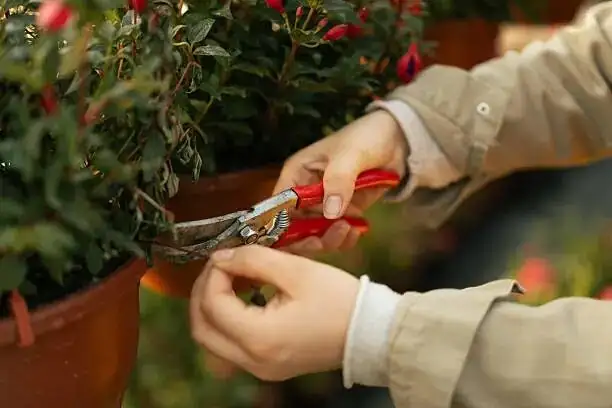
- When your plant has about 3 pairs of leaves on the main shoot, pinch the tip back to just above the second leaf pair.
- This kick-starts branching low and creates a dense “crown” that will spill elegantly.
Step 2: The second pinch (after the first break)
- When each new shoot has 3–4 pairs of leaves, pinch those tips back to 2–3 pairs.
- Repeat across the plant so growth remains balanced and dense.
Step 3: Optional shaping pinches (to perfect the cascade)
- Around the pot’s rim, pinch tips again where you want more fill so stems break right at the edge and begin to trail.
- Stagger your pinches (don’t do every tip on the same day) to create layers of growth for a natural waterfall effect.
- Keep the center slightly open by removing a few inward-growing tips—this improves airflow and reduces disease.
When to stop pinching: Once you like the fullness and have a curtain of trailing shoots, ease off. As you stop pinching, tips shift from making leaves to setting buds, especially in cool, bright conditions.
Training for the cascade
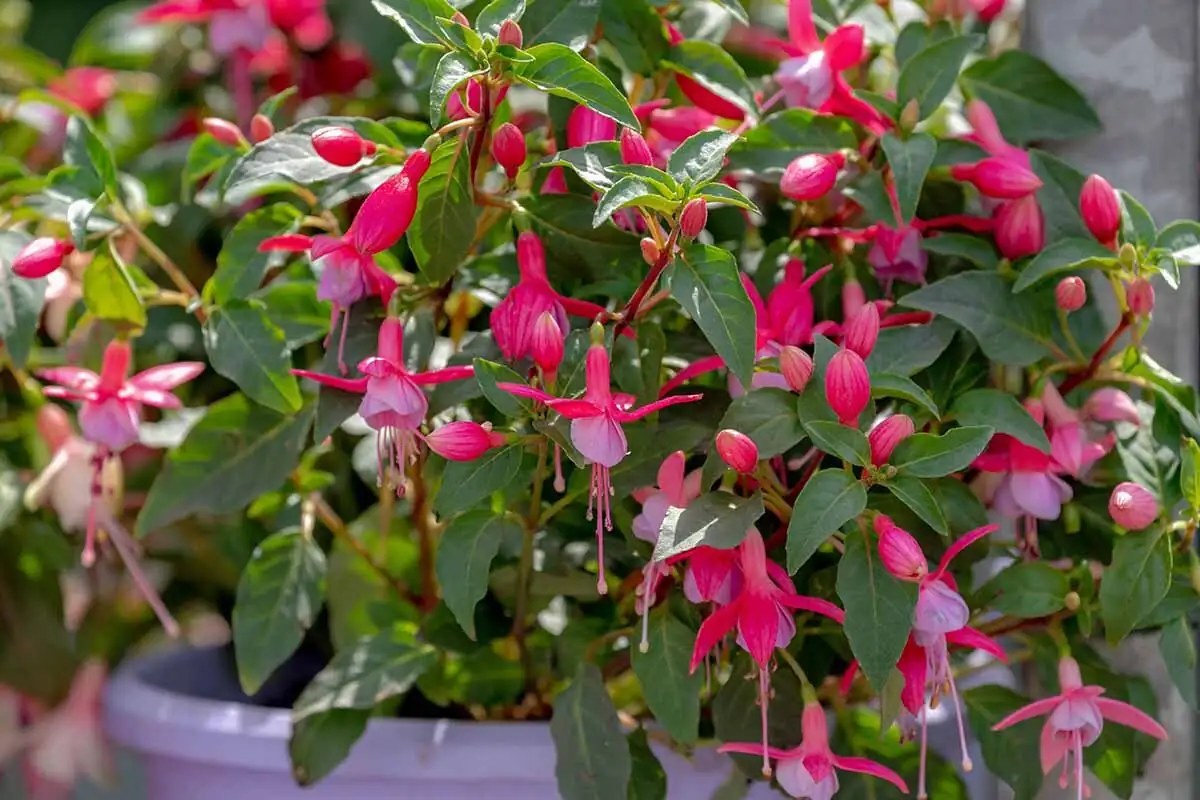
- Encourage stems to the rim, then gently down; rotate the pot weekly so all sides get light.
- If a stem shoots too far, shorten it to a leaf pair just above the point where you want branching to resume.
- Thin crossing or tangled stems so flowers hang freely (they’re meant to be admired from below).
Deadheading that really works
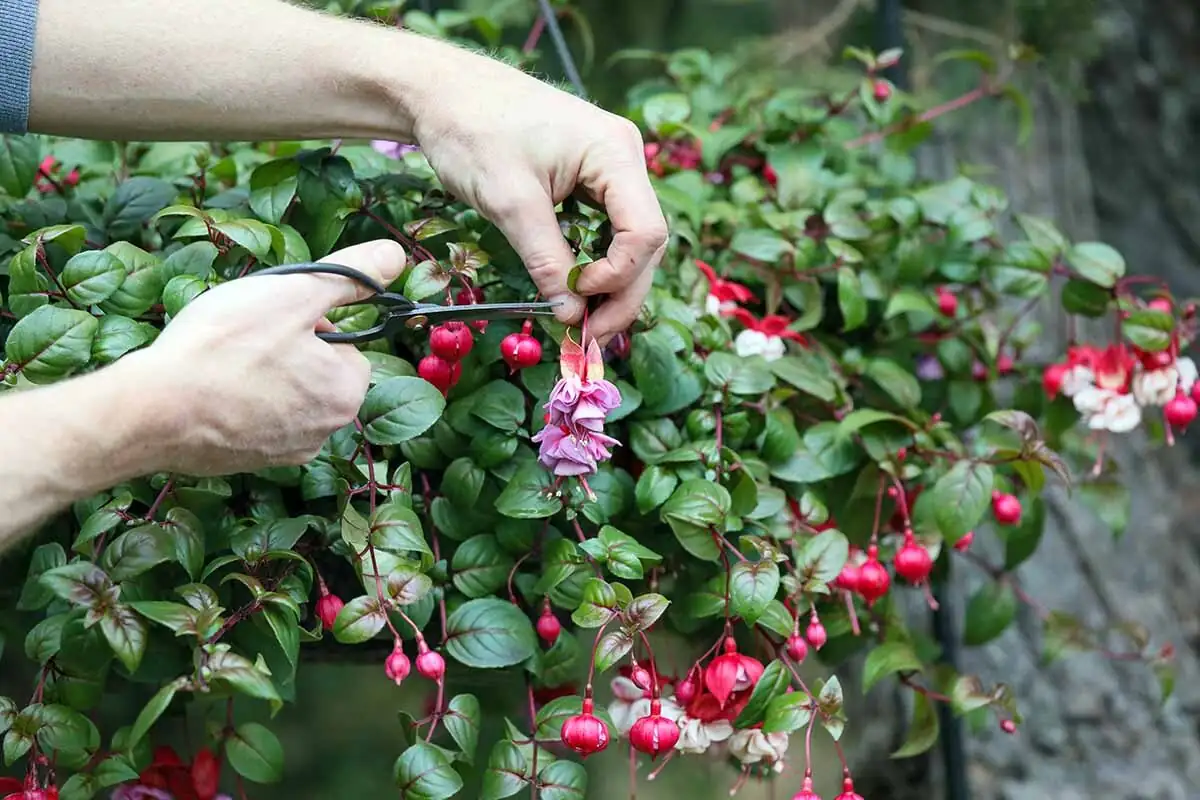
Fuchsia is generous—but only if it isn’t spending energy on seed.
- What to remove: The entire faded flower and the small swelling pod (the ovary) behind it.
- How: Snip or pinch back to a pair of leaves. Do this several times a week in peak bloom; at minimum, do a weekly clean-up.
- Why it matters: Regular deadheading keeps the plant in continuous “make more buds” mode and helps prevent gray mold on spent petals.
Mid-season management: trims that keep the show going
Even the best baskets can flag in summer—especially in heat.
After a big flush
- Shorten overly long stems to a leaf pair to keep the silhouette tidy and channel energy into fresh flowering tips.
Heat slump reset (mid-summer)
- If growth slows, plants look leggy, or flowering declines in warm weather, cut back by about 1/3–1/2.
- Move to bright shade, keep the mix lightly moist (not sodden), and ensure strong airflow. Resume feeding when temperatures ease.
Rejuvenation cuts when bases go bare
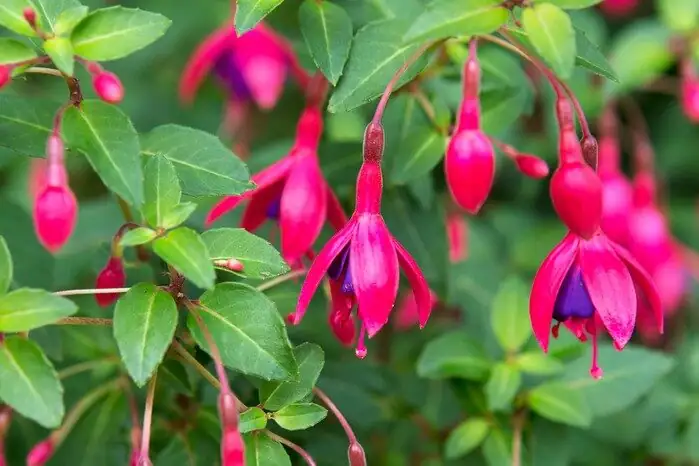
Older plants—and those stressed by heat—often thin out at the base. Don’t hesitate: fuchsia rebounds beautifully from a hard prune.
- Timing: Early spring is ideal; you can also do this when cooler weather returns after summer.
- How hard: Cut back hard to a low, healthy framework—often 10–15 cm (4–6 in) above the soil—or to where you see strong buds.
- One-and-done or staged: Robust plants handle an all-at-once cut. If the plant is weak, remove about one-third of the oldest, bare stems each week over 2–3 weeks.
- Aftercare: Repot in fresh, fertile, well-drained mix if needed, keep in bright, cool light, and water evenly. New, leafy shoots will quickly rebuild the plant.
Quick care cues that amplify your pruning work
- Feeding: In active growth, feed every 2 weeks with a balanced-to-blooming fertilizer (often around 15-15-30). Pause during peak heat.
- Watering rhythm:
- Spring: water thoroughly when the surface dries (commonly every 1–2 days to ~2× weekly depending on light and temperature).
- Summer: in heat, keep lightly moist; water can be frequent but never let the pot sit in water.
- Autumn: cooler temps = slower drying; reduce frequency.
- Winter indoors: bright, cool spot; water about weekly, above 5–10°C (41–50°F).
- Light and heat: Bright light with gentle direct sun; protect from midday/afternoon scorch. Heat above 25°C (77°F) slows growth; near 35°C (95°F) can be fatal.
- Indoors: Keep away from ripening fruit—ethylene gas can trigger bud drop.
- Pests/disease: Aphids, spider mites, and whiteflies love tender tips—treat early with insecticidal soap or horticultural oil. Remove dead flowers/leaves promptly and keep air moving to prevent gray mold and rust.
Troubleshooting your trim
- Leggy, few flowers: Increase light, pinch more in spring, and remove weak stems to focus energy on 5–7 sturdy mains.
- Buds drop in warm spells: Shift to bright shade, increase airflow and humidity, keep evenly moist but not wet, and consider a light reset cut (1/3–1/2).
- Bare base, green mop up top: Do a rejuvenation prune to rebuild the plant from low buds.
Seasonal cheat sheet
- Spring: Repot; first and second pinches; aim for 5–7 strong mains; bright light; feed every 2 weeks; water as the surface dries.
- Early summer: Optional shaping pinches; train the cascade; deadhead frequently.
- Mid-summer heat: Bright shade, strong airflow, steady but lighter moisture; pause feeding; optional 1/3–1/2 cutback.
- Autumn: Cooler weather often boosts bloom; continue deadheading; reduce watering frequency as growth slows.
- Late autumn to winter: Bring indoors to bright light if frosts threaten; aim for 12–15°C (54–59°F) for continued performance; keep above 5–10°C (41–50°F).
A brief note on symbolism
Fuchsia’s dangling, bell-like flowers have long suggested playful charm, fascination, and a gentle “warning bell” in European flower language traditions. Think of their lanterns as tiny signals—inviting attention while hinting at delicacy. These meanings are cultural rather than botanical, but they capture the plant’s personality perfectly: lively, elegant, and captivating from every angle.
—
With this pinching and pruning routine—build 5–7 strong mains, deadhead like clockwork, and be fearless about mid-season and rejuvenation cuts—you’ll turn Fuchsia × hybrida into a full, free-flowing cascade that performs from cool spring days through fall’s encore.