
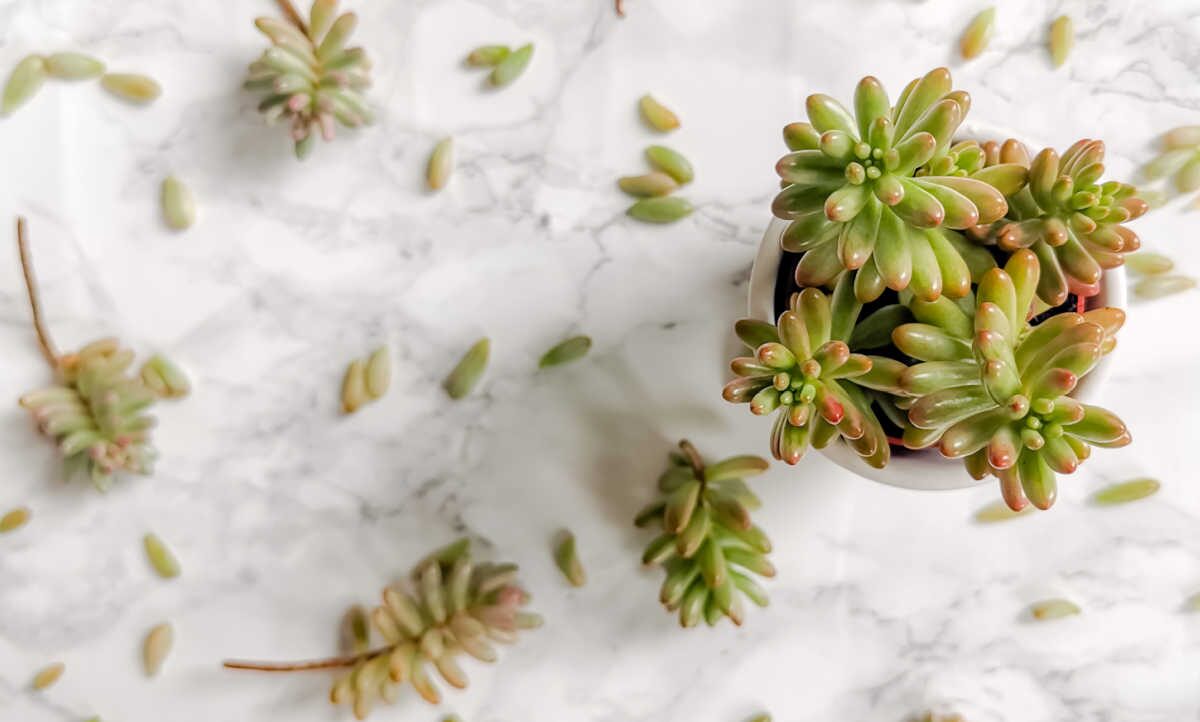
If you’ve ever brushed a pot and watched a tiny “jelly bean” leaf pop off, only to find it rooting days later and sending up a brave new rosette—then you already speak the language of Sedum rubrotinctum. This cheerful succulent, better known as Jelly Bean Plant or Pork and Beans, has become a quiet icon in modern plant circles: a small, shareable emblem of resilience, devotion, and easy companionship that fits in the palm of your hand—and sometimes starts from a single fallen leaf.
Meet the plant behind the meaning
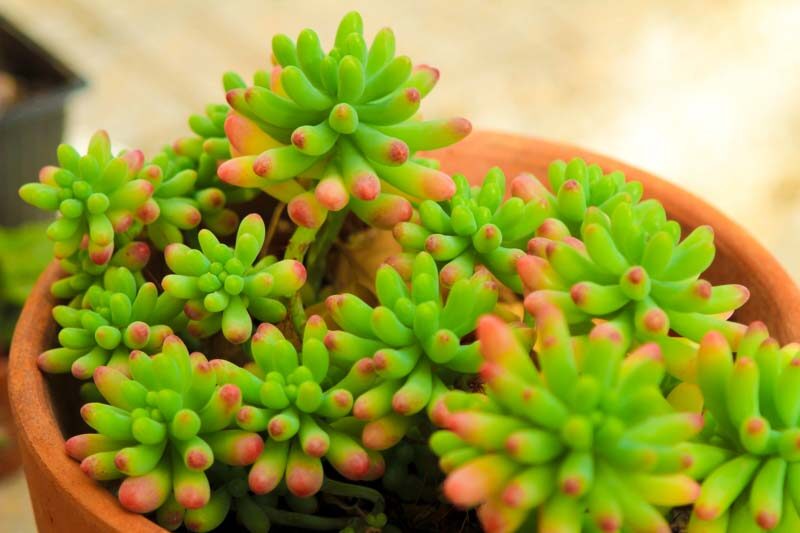
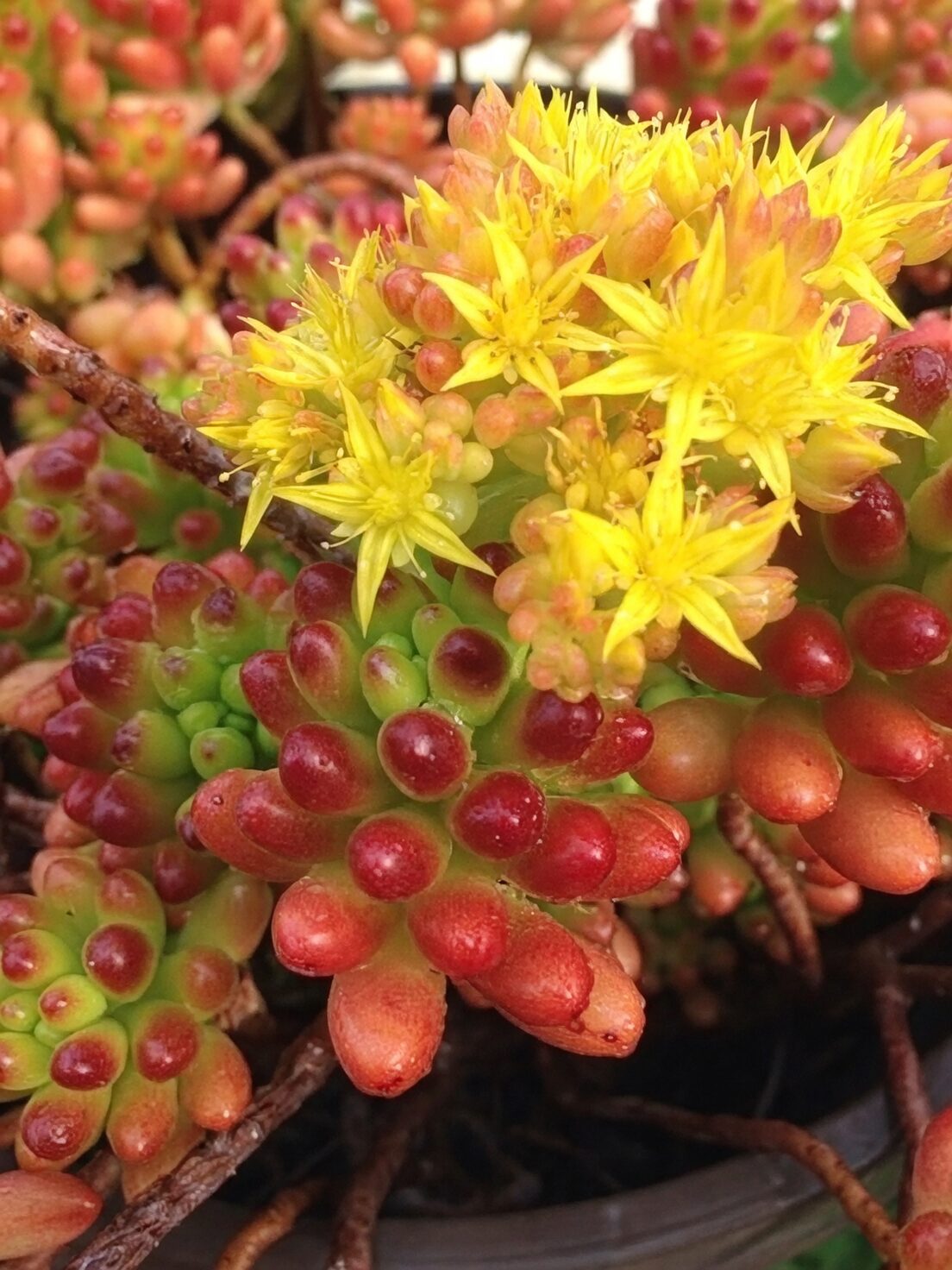
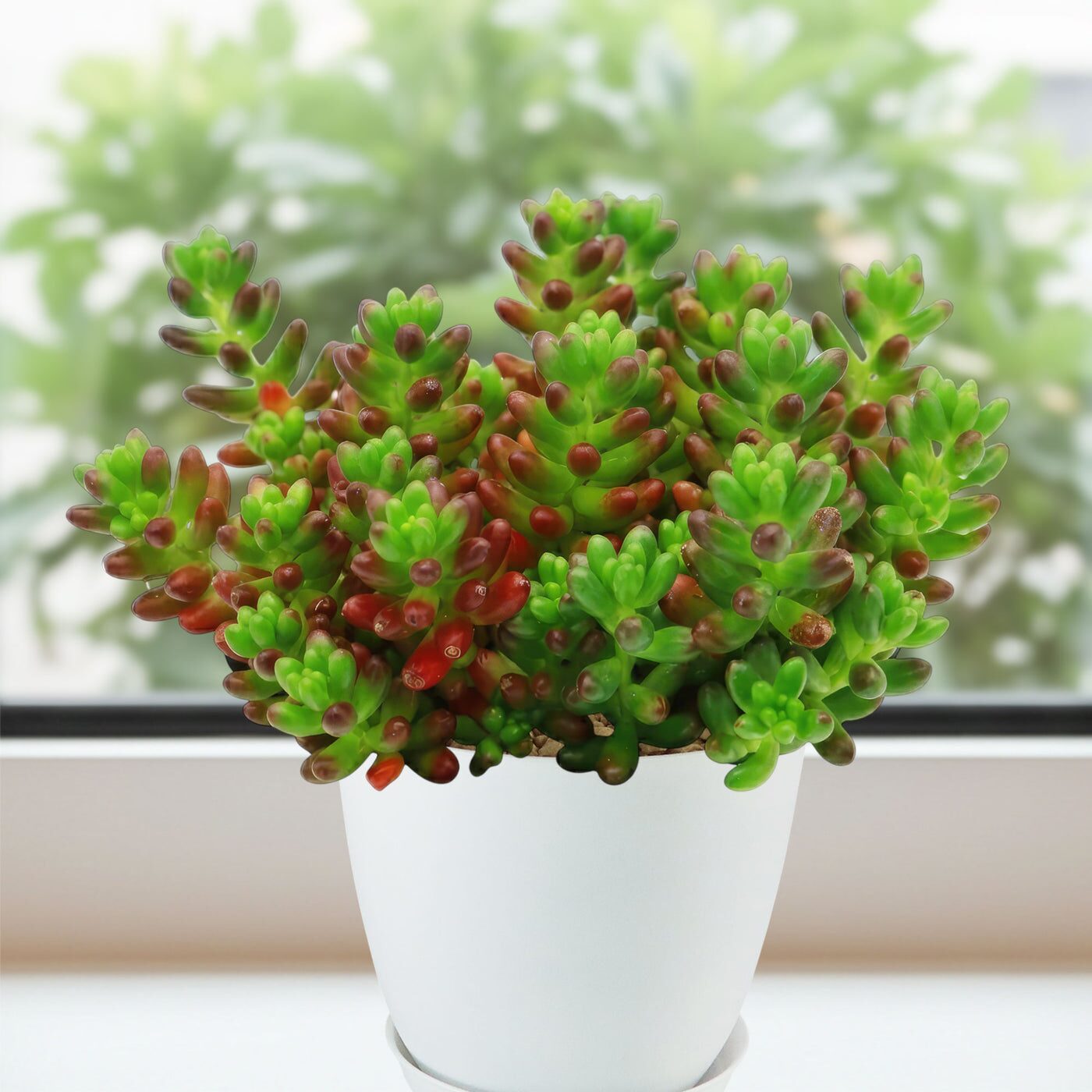
Sedum rubrotinctum hails from Mexico and forms plump, glossy, bean-shaped leaves packed along short stems. In strong sun—especially when warm days meet cooler nights—those green “beans” blush coppery red to reddish-brown. With age, stems can trail into a low, mounding spill. In the cooler season, it may surprise you with small, starry yellow flowers from winter into spring. It’s famously beginner-friendly and incredibly easy to propagate: leaves and short cuttings root readily, turning accidents into opportunities.
The modern “flower language” of Jelly Bean Plant
Today’s succulent communities often attribute a living vocabulary to this plant—less Victorian code, more crowd-sourced poetry grounded in how it grows.
- Resilience: One healthy leaf can root, sprout, and rebuild a whole plant. That bounce-back spirit makes Sedum rubrotinctum a mascot for starting over and thriving after a setback.
- Devotion: The tight rosettes cling closely along their stems, and many growers call it a “hearts in sync” plant—compact, steady, and anchored by a slow-and-true rhythm.
- Companionship: This is the archetypal “sharing plant.” A single pot can become a dozen gifts for windowsills and workmates, knitting a quiet network of care through cuttings.
Where this language comes from
- Leaf-to-life miracles: Drop a plump leaf on gritty mix, and it routinely roots and forms plantlets—no fuss, just patience. That simple transformation powers the symbolism of perseverance and hope.
- A tradition of giving: Because it multiplies so easily, fans routinely trade cuttings at swaps, tuck them into care packages, and pass them along to neighbors. The plant practically writes its own meaning: share one, grow many; share often, grow closer.
Crimson luck: how the red blush became a good-fortune gift
Jelly Bean Plant’s red flush is more than a pretty trick of sunlight; it’s an auspicious accent in the gift-giving imagination. Red—widely associated with luck, vitality, and celebration in many East Asian traditions—turns this succulent into a compact well-wish when it colors up.
- Why it reddens: Strong light and noticeable day–night temperature swings coax tips (and sometimes whole plants) from green to coppery red.
- When to gift: Housewarmings, a new job, the start of a school term, and year’s-end or new-year milestones. A red-blushed pot says, “May energy, success, and good fortune follow you.”
- A golden bonus: If it blooms, those starry yellow flowers in winter to spring read as friendly, joyful notes—perfect for cheering a friend through the darker months.
A simple feng shui placement for vitality
Think of this succulent as a tiny engine of bright yang energy that likes a sunbeam and fresh air. Let its care needs guide the placement—and let symbolism do the rest.
- Go bright to spark qi:
- Indoors, seat it at the sunniest window you have—often south- or west-facing. If midsummer sun scorches through glass, give light midday shade.
- Avoid persistently humid rooms or dim corners; this plant thrives on light, warmth, and airflow.
- Place with intention:
- East (health/family): a lively, red-tipped clump on a bright kitchen or living-room sill to energize daily routines.
- Southeast (wealth): a vigorous, well-branched pot in a bright home office or near the entry to invite steady growth and resourcefulness.
- South (visibility/fame): a sun-kissed, deeply blushed specimen to amplify recognition and momentum.
- Southwest (relationships): gift or place a pair of sibling cuttings in one pot to echo companionship and mutual support.
- Arrange in life-forward groups: When displaying multiples, group them in odd numbers to suggest movement and vitality.
- Practical guardrails for good energy (and good horticulture):
- Use a fast-draining succulent mix; keep it on the dry side.
- Ensure excellent drainage and airflow.
- Protect from cold; keep above about 5°C (41°F).
A gifting ritual that grows on
Because it propagates so readily, Sedum rubrotinctum is a gift that quite literally multiplies kindness. Try this simple pass-along:
- Leaf share:
- Choose a firm, unblemished leaf; let it sit a day to callus.
- Set it on dry, gritty mix in bright, indirect light; mist lightly now and then until roots and a baby rosette appear.
- Stem cutting:
- Take a 5–7 cm (2–3 in) tip, let it callus, then set into barely moist gritty mix. In warm, bright conditions, rooting often starts within 10–21 days.
Tuck in a card with a short blessing:
- “For resilience—may each leaf become a new beginning.”
- “For devotion—hearts in sync, growing steadier with the light.”
- “For companionship—one cutting today, a garden of friends tomorrow.”
Care that reinforces the message
Keep the plant healthy, and its symbolism sings even louder.
- Light: Bright light to full sun, acclimated gradually. Strong sun brings out the best red color.
- Water: Drench, then wait—let the mix dry almost completely before watering again. Much drier in summer heat; sparing in winter.
- Air and soil: Dry air, good ventilation, very fast-draining succulent mix.
- Temperature: Prefers warmth; protect from frost and keep above 5°C (41°F).
- Seasonal rhythm: Autumn’s bright light often deepens the red blush; winter to spring may bring those small, starry yellow flowers.
The quiet power of a “sharing plant”
Sedum rubrotinctum is living proof that generosity propagates. A single leaf becomes a plant; a single plant becomes a handful of gifts; and those gifts weave a friendly mycelium of support across windowsills and workbenches. Resilience, devotion, companionship—these aren’t abstract words here. They’re everyday gestures, rooted and real, unfolding one tiny jelly bean at a time.