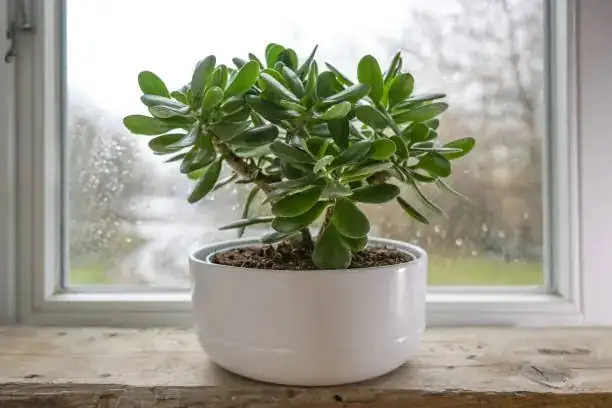
A jade-green miniature tree with coin-like leaves and starry winter blossoms—no wonder Crassula ovata became the world’s go-to plant for wishes of wealth, steadfast friendship, and a long, thriving life. Known in Chinese as 玉树 (jade tree) and in English as the Jade Plant, this classic succulent bridges southern African origins with Chinese feng shui and global floriography to carry a remarkably consistent message: may your prosperity grow, your bonds endure, and your years be many.
From jade and coins: where the meanings begin
Coin-like leaves = prosperity
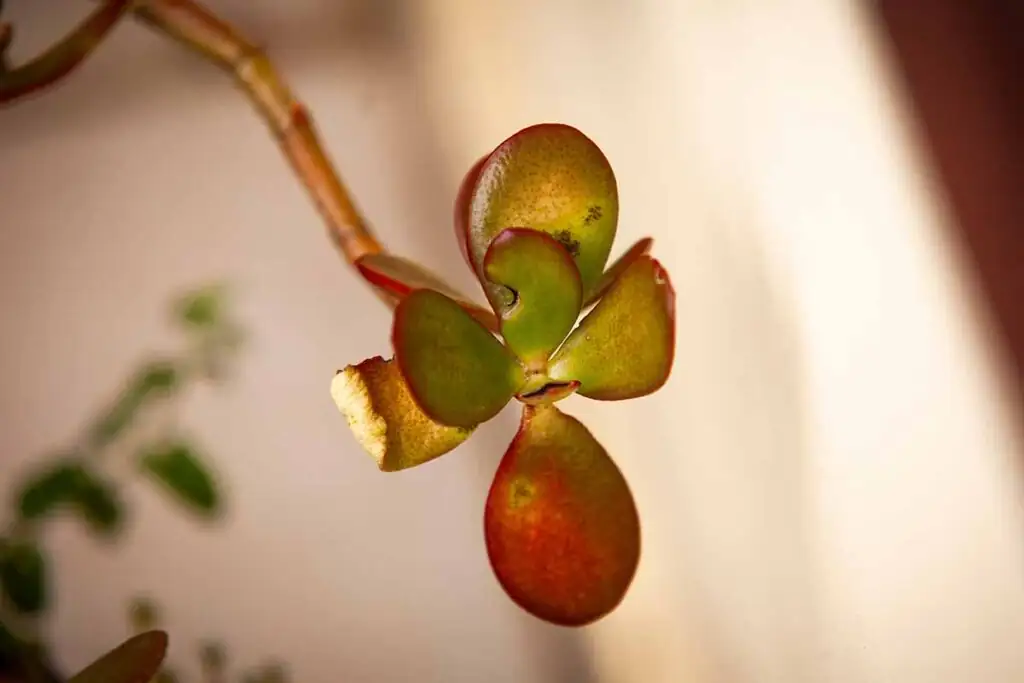
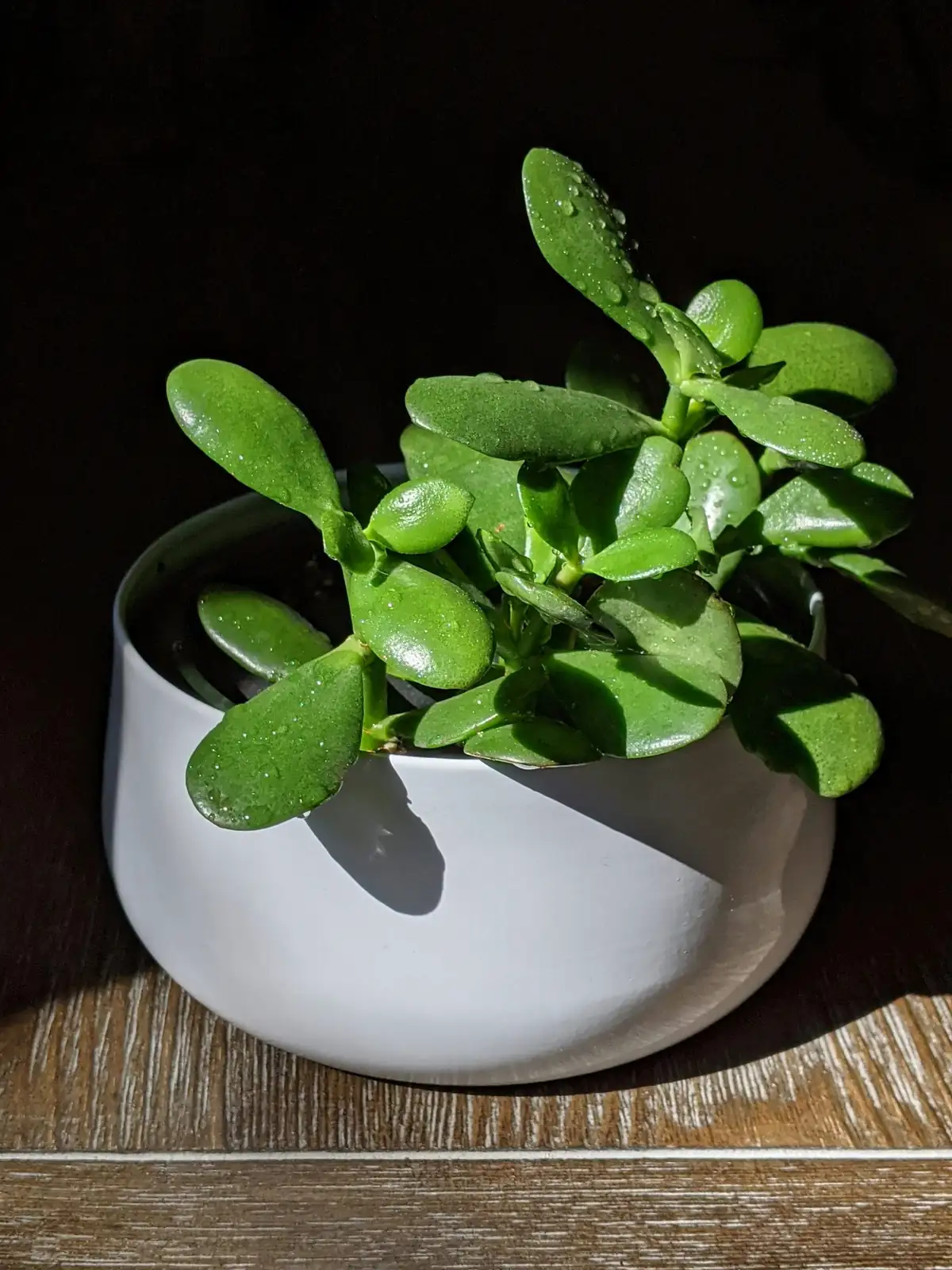
Run your fingers over the Jade Plant’s thick, glossy, oval leaves and you’ll see the symbolism: they read like a cascade of green coins. In traditional lore, round leaf shapes echo abundance; in modern gift-giving, that “money” look fuels many nicknames—Dollar Plant, Lucky Plant, Money Plant, Money Tree. When saturated with sun, red-edged leaf margins glow like lacquered seals on a ledger of good fortune.
The jade namesake = virtue and value
The plant’s Chinese name, 玉树 (yù shù), literally “jade tree,” draws power from the cultural weight of jade itself—long prized for beauty, virtue, and protective luck. The leaves’ lustrous, stone-like sheen evokes small pieces of polished jade, giving the plant an instant aura of value and well-being.
Long life = longevity and friendship
Crassula ovata is famously long-lived and forgiving—kept for decades and often passed down like a living heirloom. That durability underlies two of its most beloved meanings:
- Longevity: a wish that the recipient’s health and years be abundant.
- Friendship: its other nickname, “Friendship Tree,” nods to bonds that thicken with time, much like its trunk.
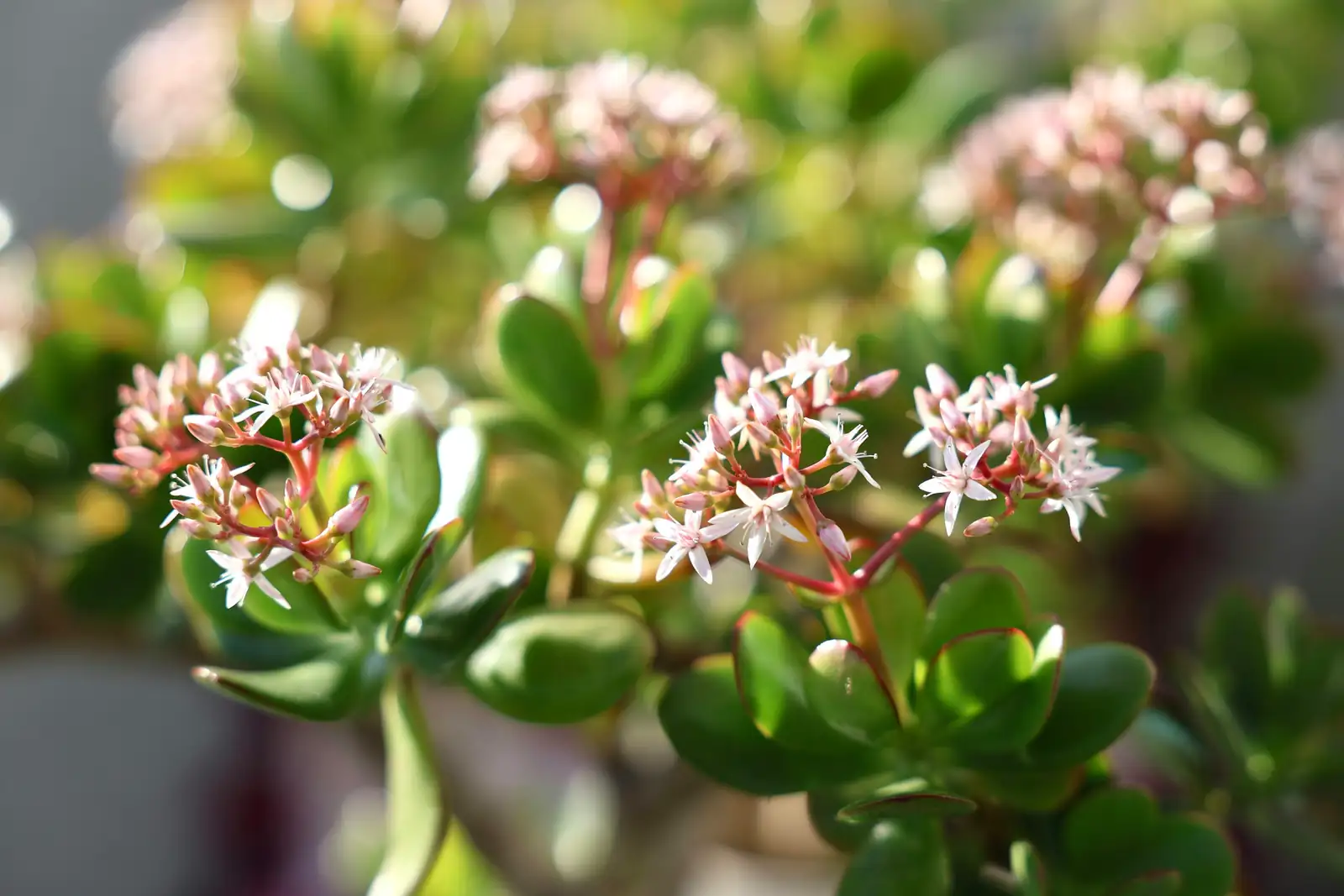
When conditions line up—bright light, cool winter nights, and drier soil—mature plants reward patience with sweetly scented, star-shaped white-to-soft-pink blooms in winter. Because indoor flowering is uncommon, a blooming jade is considered especially lucky.
Feng shui pathways: why the southeast “wealth corner” matters
In feng shui, the bagua map links the southeast sector to wealth, prosperity, and growth. The Jade Plant’s qualities make it a natural fit:
- Color and form: rich green foliage and a branching, “little tree” silhouette resonate with growth and the wood element associated with abundance.
- Symbolic leaves: those coin-like pads signal the steady accrual of resources.
How to place it with purpose
- Target the southeast: place a healthy Jade Plant in the southeast area of your home, office, or even the southeast corner of a single room or desk to “activate” wealth energy.
- Give it the light it deserves: prosperity thrives where the plant thrives. A sunny south- or west-facing window usually provides the 4–6 hours of strong light jade needs; if your southeast corner is dim, locate the southeast sector of a brighter room or position the plant where it’s vigorous and symbolically connect it to your wealth intentions.
- Keep it vibrant: in feng shui, vitality matters. A robust, well-cared-for plant invites auspicious energy more readily than a struggling one.

Gift-giving customs that carried its message
Across Chinese communities, Jade Plants are classic gifts for housewarmings, business openings, and milestone birthdays—gestures that wish the recipient prosperity that grows, friendships that endure, and a life that thrives. Around the world, that practice blossomed into a universal language of giving:
- Housewarming: “May your home be blessed with abundance.”
- New business: “May profits branch and compound.”
- Birthdays and friendships: “May your years—and our bond—be long.”
A charming tradition is to gift a small, rooted cutting. As that cutting plumps, branches, and eventually flowers, it mirrors the hoped-for growth of the recipient’s fortune and relationships.
Global floriography: how three meanings took root everywhere
- Prosperity: the coin-leaf motif and “money” monikers anchored financial symbolism from East Asia to the global houseplant scene.
- Friendship: tough, reliable, and generous with cuttings, the plant became a living emblem of steady companionship.
- Longevity: kept for decades and even generations, it naturally communicates endurance, resilience, and well-being.
Together, these themes form a tidy triad: wealth, warmth, and years—prosperity to enjoy, friends to enjoy it with, and time to enjoy both.
Bloom language: winter stars with a quiet promise
Jade’s winter flowers—tiny, five-petaled, and lightly sweet-scented—arrive when days are shortest. Symbolically, that timing reads as hope and continuation through lean seasons. Practically, it reflects good stewardship: bright days, cool nights around 13°C (55°F), and sparse winter watering. Because indoor flowering is rare, a blooming jade often feels like a nod of approval from the plant—and a double portion of luck.
A quick placement-and-care cheat sheet for auspicious energy
- Light
- Aim for 4–6 hours of strong light daily. A sunny south- or west-facing window is ideal.
- Low light leads to stretched, leggy growth (and weaker symbolism).
- Water
- Soak thoroughly, then let the mix dry out completely before watering again.
- In winter, water very sparingly—sometimes just once a month or less.
- Temperature and air
- Happy indoors at 18–24°C (65–75°F); enjoys cooler winter nights near 13°C (55°F).
- Prefers dry air; no extra humidity required.
- Soil and pot
- Use a fast-draining cactus/succulent mix, or amend potting soil with perlite (~2:1).
- Ensure drainage holes; never leave water sitting in the saucer.
- Pruning and shaping
- Prune in early spring to encourage branching and a mini-tree silhouette.
- Red leaf edges in strong light add visual “sparkle” to your prosperity symbol.
- Propagation for sharing
- Root a 3–4 inch stem cutting or a single leaf after the cut end calluses—easy, and perfect for gifting your good fortune forward.
- Safety note
- Mildly toxic to pets if ingested; keep out of reach of curious cats and dogs.
- Feng shui focus
- Place a thriving Jade Plant in your southeast wealth corner to underscore intentions of abundance.
- For businesses, a bright spot near the entrance or in the office’s southeast sector pairs symbolism with visibility.
Roots in the wild; branches in our lives
Native to the KwaZulu-Natal and Eastern Cape provinces of South Africa and to Mozambique, Crassula ovata traveled far to land on windowsills worldwide. In that journey, its coin-like leaves, jade-green luster, and long life braided together Chinese feng shui wisdom, time-honored gifting customs, and modern floriography. Keep yours bright, a touch cool in winter, and a little on the dry side—and let its quiet language do the rest: may prosperity take root, friendships thicken like a sturdy trunk, and your seasons be many and in full leaf.