
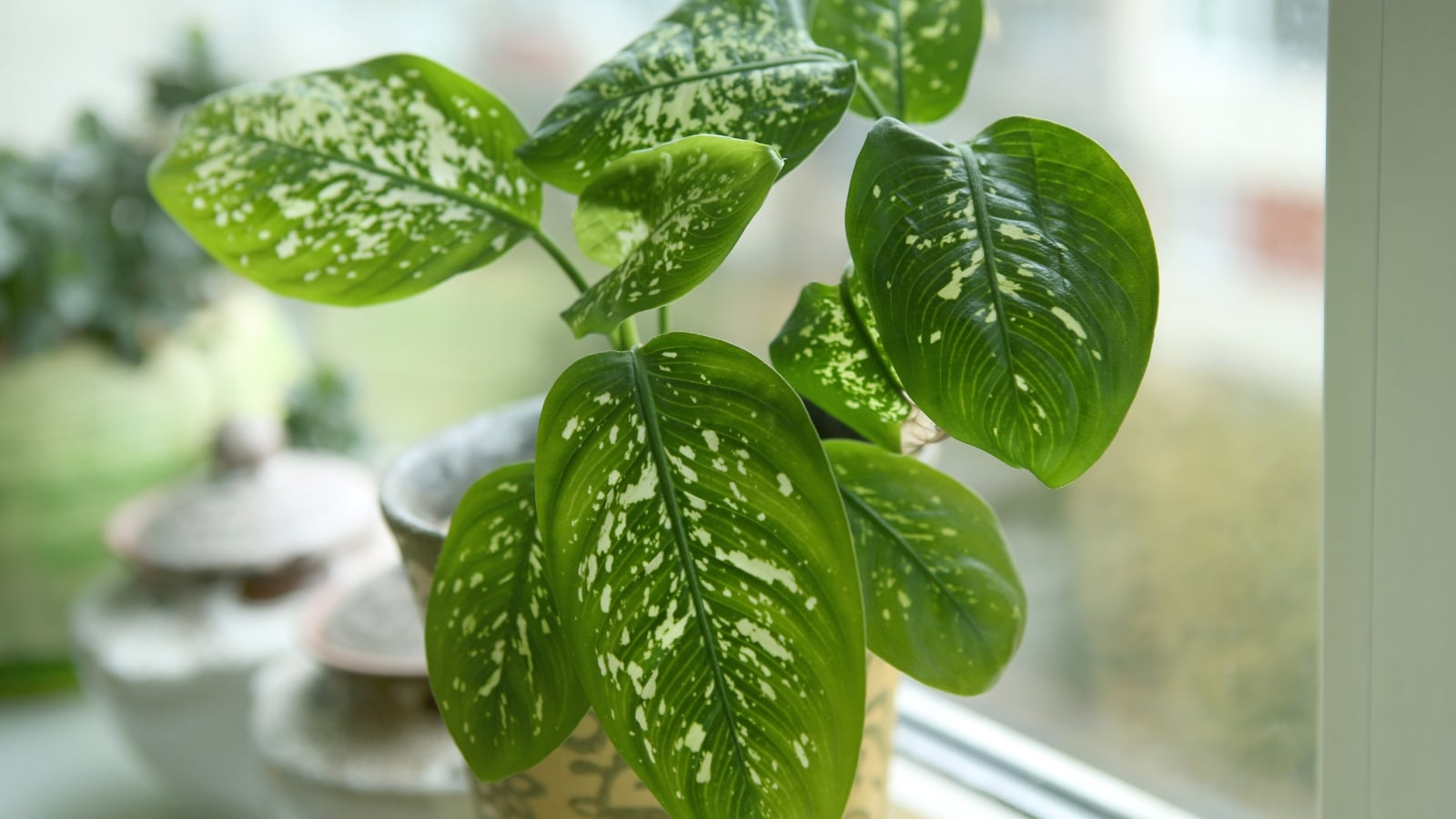
If you love Dieffenbachia seguine (aka Dumb Cane, Leopard Lily) for its bold, speckled leaves, here’s the secret to keeping those creamy patterns loud and proud: treat light like a dial you can tune. With a few pro lighting tweaks—sheer curtains, measured targets for “bright indirect,” a smart rotation habit, and feeding paced to your light—you’ll get crisp variegation without the scorch. And yes, old leaves won’t re-variegate, but new growth absolutely can respond.
Meet the plant, meet its light
- Native to the tropical Americas, Dieffenbachia seguine naturally grows in filtered, forest-floor light.
- Indoors, it thrives in bright, indirect light; it tolerates shade but patterns fade and growth slows if it’s too dim.
- Big leaves scorch in direct sun. Think “high brightness, low harshness.”
What “bright indirect” really means (with numbers you can use)
“Bright indirect” isn’t a vibe—it’s a measurable range.
- Targets for bold patterning:
- 200–500 foot-candles (≈2,000–5,000 lux) for much of the day
- Brief peaks higher than this can be okay if diffused by sheers, but avoid sustained, hot, midday sun on the blades.
- How to measure:
- Use a phone lux meter app or a handheld meter. Hold the sensor at leaf height, facing the window.
- Check at different times (mid-morning, midday, afternoon) and average your readings.
- Quick no-meter test: a soft, fuzzy shadow of your hand = bright indirect; sharp-edged shadow = too direct; barely-there shadow = too dim.
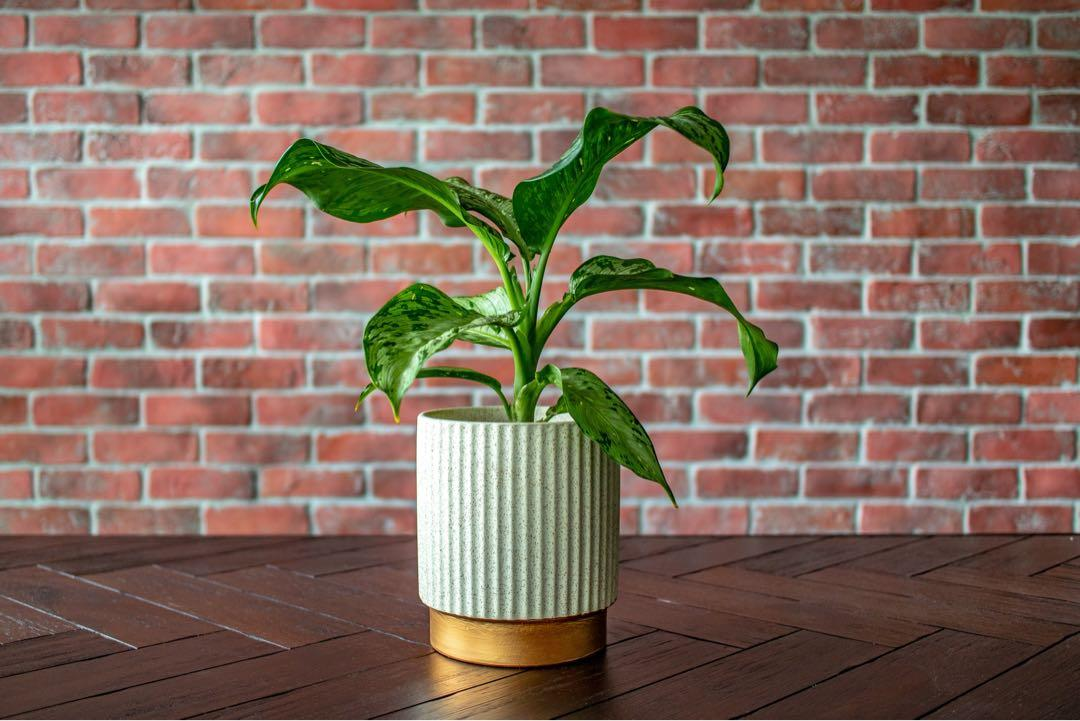
- Minimums and maximums:
- Can cope down to ~100–150 fc (≈1,000–1,500 lux) but expect slower growth and muddier patterns.
- Avoid sustained >800–1,000 fc (≈8,000–10,000 lux) from direct midday sun on leaves unless well diffused.
Boost brightness safely with sheers and distance
Think of window sheers as sunscreen and distance from the glass as a dimmer.
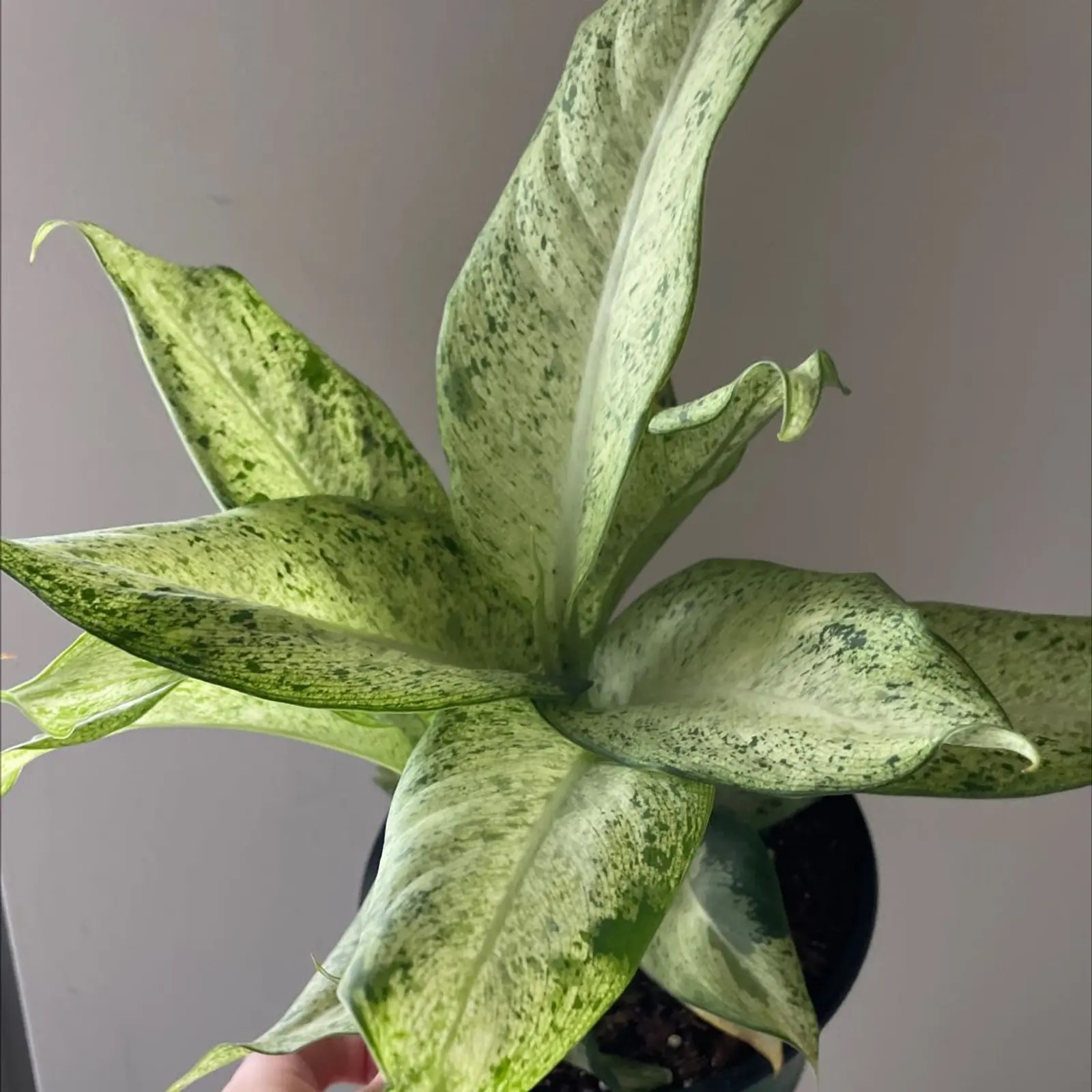
- Sheers:
- Single sheer often cuts intensity by roughly 30–50%; a double sheer can tame harsh west/south light without plunging the room into gloom.
- Choose plain white or lightly textured; tight weaves scatter light more evenly across leaves.
- Distance from glass:
- 0.3–1 m (1–3 ft) back from a bright south/west window with sheers = safe bright indirect for most homes.
- East windows often work without sheers (gentler morning sun). North windows are gentlest—move closer to the glass.
- Side-light trick:
- Place the pot just off to the side of a strong window so the leaf surface sees skylight, not a direct beam path.
- Reflect and brighten:
- Pale walls, a light rug, or a nearby mirror can bounce soft light to the shaded side of the plant.
- Bonus: LED supplement
- If your room can’t hit 2,000–5,000 lux reliably, add a dimmable LED grow light. Set 12–14 hours/day at ~2,000–5,000 lux at leaf level and keep heat off the foliage.
Rotation: the simplest variegation tool you’re not using
Dieffenbachia leans toward light. Without rotation, one side hogs the photons, the other side pales.
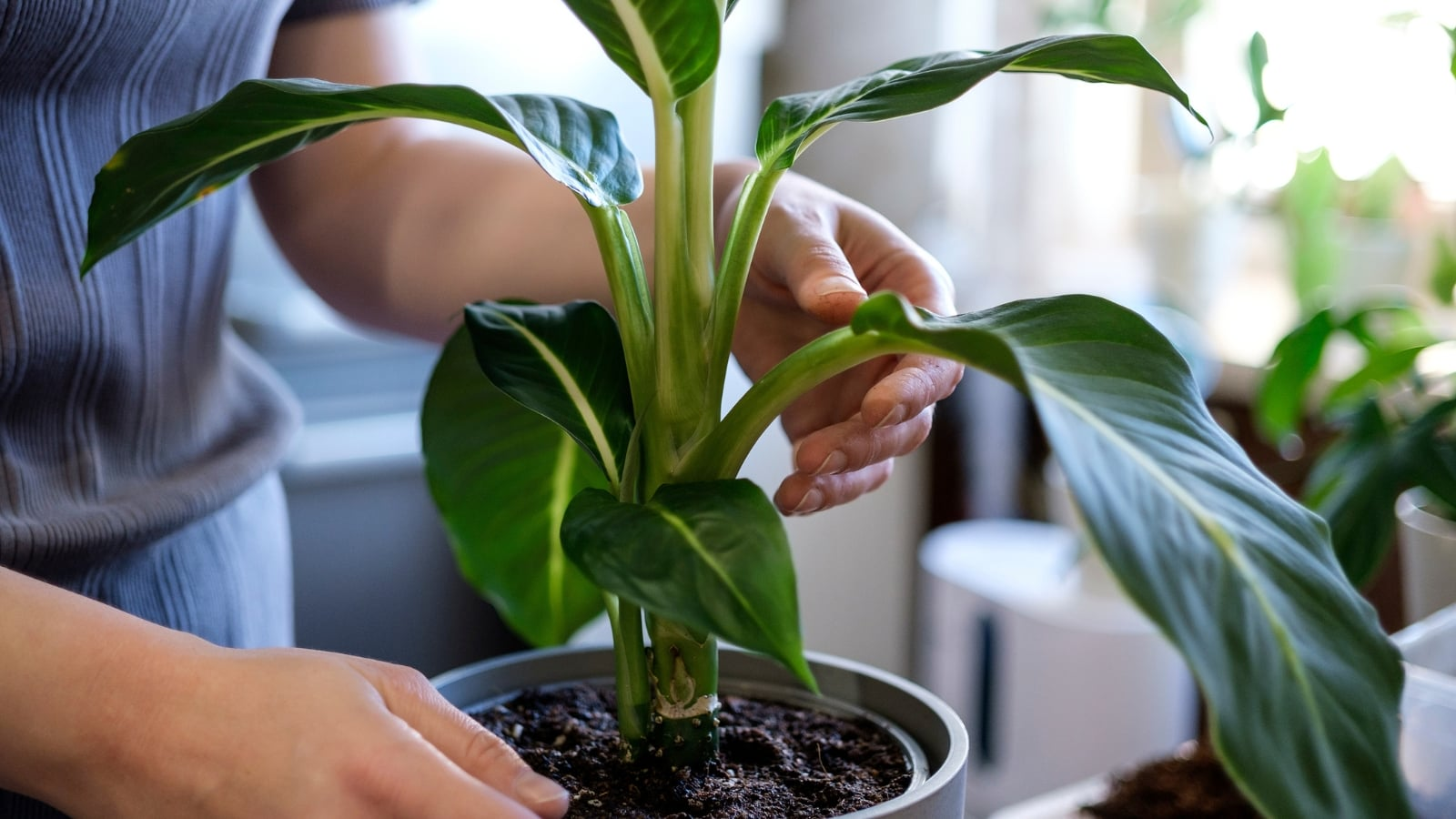
- Quarter-turn the pot every week for even growth and patterning.
- During rapid spring–summer growth, rotate on watering day (easy to remember).
- If a side starts to lag, aim it toward the brightest exposure for two weeks, then resume the regular quarter-turns.
Feed to match the light (and keep salts in check)
Light powers growth; growth drives nutrient demand. As you dial up brightness, let nutrition keep pace—gently.
- What to use:
- A balanced liquid houseplant fertilizer at label rate about every 4–6 weeks during spring through early autumn. If your plant is sensitive, use half-strength.
- When to pause:
- Hold fertilizer in winter or if temperatures dip below about 15°C (60°F), or if growth stalls.
- Pro tips:
- In brighter setups, a touch more frequent feeding is okay—but stay within the every-4–6-weeks cadence to avoid salt buildup and browning tips.
- Every 2–3 months, flush the pot thoroughly with plain water to rinse accumulated salts.
- More light = faster drying soil. Water when the top 2.5–5 cm (1–2 in) of mix is dry, aiming for evenly moist, never soggy. Always empty the saucer.
Why existing leaves won’t re-variegate—but new ones can
Variegation is set as each leaf forms. The pattern comes from a mosaic of cells—some rich in chlorophyll (green), some with little or none (the creamy patches). After a leaf unfurls, its basic pattern is fixed.
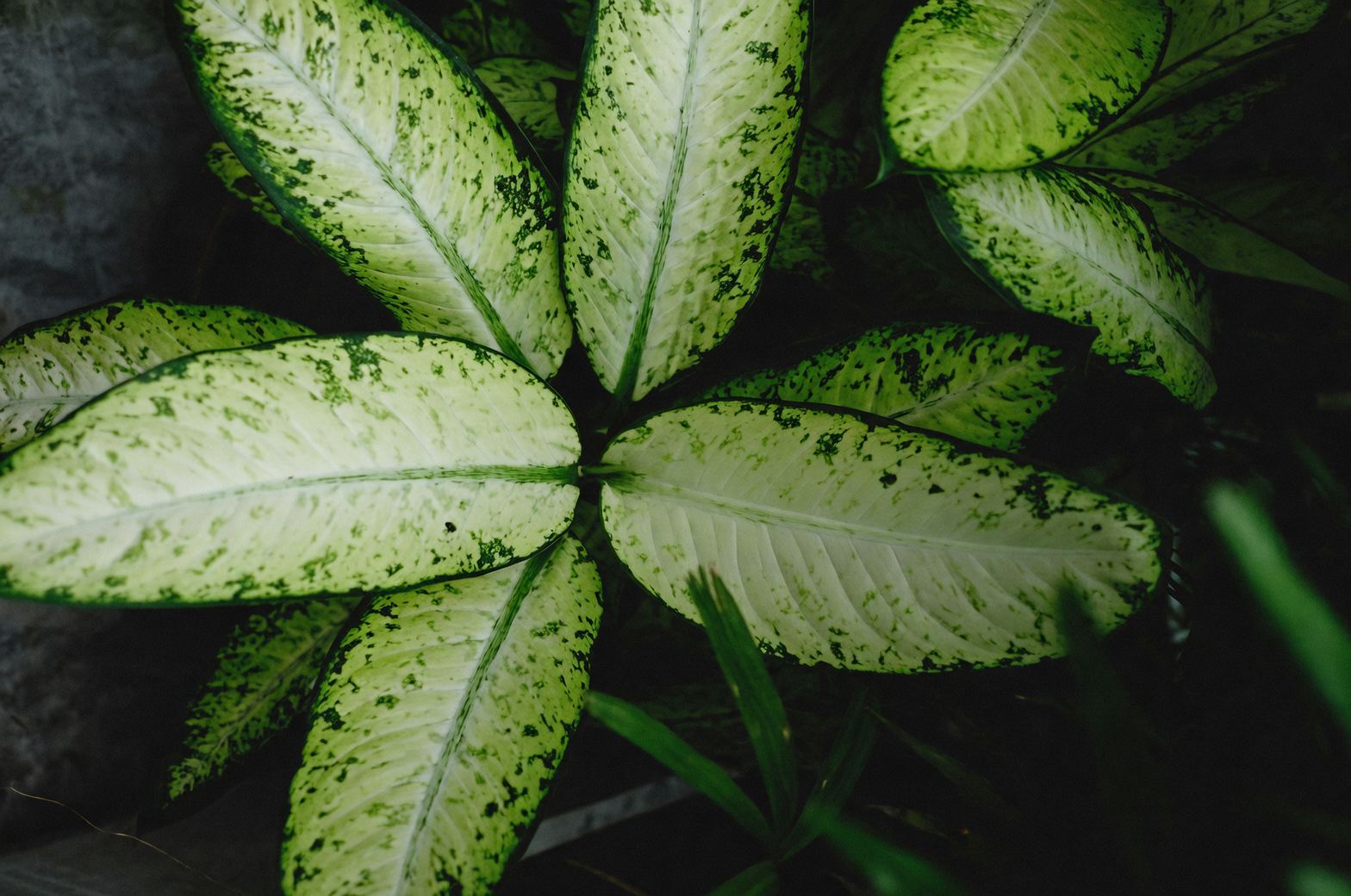
- What light can do to existing leaves:
- It can deepen green tissue or reduce stress fade, sharpening contrast a bit—but it can’t create new cream patches on that already-finished leaf.
- How to get bolder future leaves:
- Improve light to the 200–500 fc (≈2,000–5,000 lux) range.
- Keep the plant warm (18–24°C / 65–75°F) with moderate-to-high humidity (~50%+).
- Feed modestly during active growth.
- Encourage new shoots if the cane is leggy: cut back tall, bare canes in spring to prompt fresh growth (wear gloves; the sap can irritate skin).
Safe placements that make patterns pop
- Best windows: bright east; bright north; a few feet back from strong south/west with sheers.
- Great rooms: living rooms, offices, bright bathrooms (extra humidity helps keep leaf edges smooth).
- Avoid: right up against hot west/south glass without sheers; cold drafts; heat/AC blasts.
Seasonal light tuning
- Spring: Move closer to windows, repot if root-bound, start feeding. Rotate weekly.
- Summer: Double-check sheers; intense sun climbs higher—diffuse it. Keep moisture steady and humidity up.
- Fall: Light levels drop—nudge the plant closer to the window and maintain rotation. Taper feeding.
- Winter: Space is dim—consider LED support. Water less (keep just lightly moist) and hold fertilizer.
Reading the leaves: quick lighting diagnostics
- Too dim:
- Softer, less distinct variegation; smaller new leaves; long gaps between leaves; lean toward the window.
- Too harsh:
- Bleached or tan patches where sun hits; crisped edges; hot leaves at midday.
- Just right:
- Vivid cream splashes, sturdy petioles, steady new leaves that match the size of older ones.
Core care, briefly (because light isn’t everything)
- Water: Evenly moist, not soggy; let the top 1–2 inches dry first. Reduce in winter.
- Temperature: 18–24°C (65–75°F) is ideal; protect from prolonged exposure below ~12–15°C (54–59°F).
- Humidity: Enjoys ~50%+; group plants, use a pebble tray, or run a humidifier if air is very dry.
- Soil: Loose, well-draining potting mix that holds some moisture but doesn’t waterlog.
- Pruning/propagation: Remove yellowing leaves; cut back leggy canes to rejuvenate; propagate by cane cuttings or division. Wear gloves—sap can irritate.
- Pests: Watch for spider mites (especially in dry air), mealybugs, scale, thrips, and aphids. Treat early with insecticidal soap/horticultural oil and boost humidity to deter mites.
- Safety: Toxic if chewed (pets and people). Keep out of reach; avoid skin/eye contact with sap.
A quick lighting plan you can copy this weekend
- Day 1:
- Hang a sheer on your brightest window; place your dieffenbachia 0.6–1 m (2–3 ft) back, slightly off to the side.
- Take a midday lux reading at leaf height. Aim for 2,000–5,000 lux (≈200–500 fc).
- Day 7:
- Quarter-turn the pot. Check that the shaded side is filling in.
- Week 4:
- If growth is active, feed with a balanced liquid fertilizer (4–6 week interval). Flush the pot with plain water if leaf tips brown.
- Month 2–3:
- If the plant is still leaning, bring it a bit closer or increase diffusion for hot windows. Expect the next two to four leaves to show crisper patterning.
Dial in the light first, and Dieffenbachia seguine will reward you with those creamy splashes you bought it for—new leaf after new leaf. Old leaves won’t rewrite their story, but you’re the director of every leaf to come.