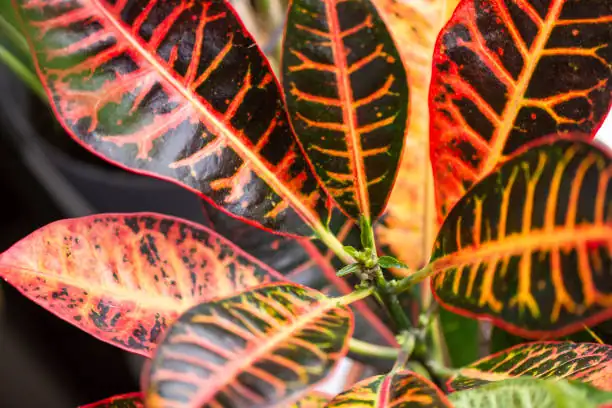
Picture a paintbox that learned to photosynthesize. That’s Codiaeum variegatum—better known as croton, Joseph’s coat, or the garden croton—a tropical evergreen whose leaves look hand‑painted in greens, golds, oranges, reds, and pinks. But those carnival colors didn’t appear in a vacuum. They rode monsoons, trade winds, and merchant routes from island rainforests to Dutch glasshouses, then steamships and rail to Gilded Age parlors—and finally into the mood boards of modern design.
Here’s the rollicking backstory of the world’s most audacious foliage shrub.
Where the colors were born: islands of light and heat
Codiaeum variegatum is native to tropical Asia and the western Pacific—think Malaysia and Indonesia, across the Philippines and New Guinea to northern Australia and Pacific islands. In its home range, it grows as a branching shrub (up to about 3 m/10 ft outdoors), evergreen and glossy, with leaves that naturally shift color depending on light. In bright, filtered sun, pigments fire up: veins outline in yellow, blades freckle red, margins blush orange to pink. In deeper shade, the same plant settles back toward green.
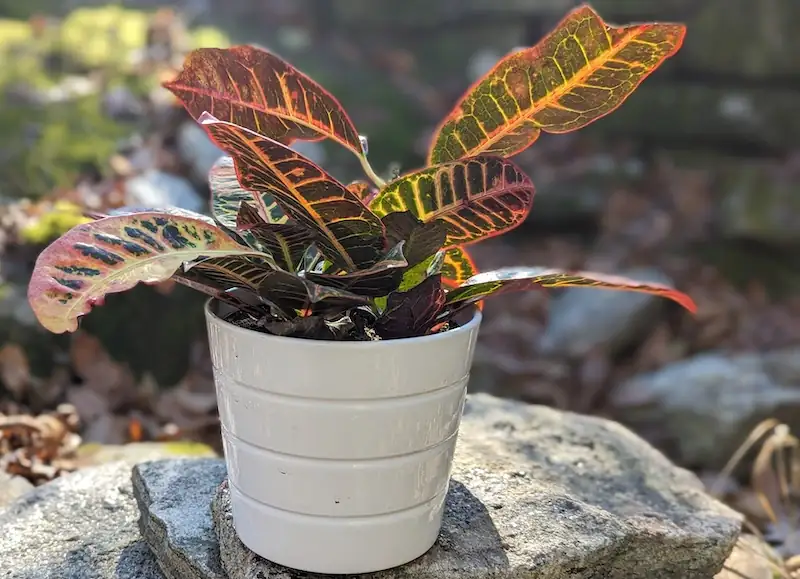
Locals noticed this long before botanists did. Across Southeast Asia and the Pacific, people selected and spread unusually colorful forms from village to village and island to island—plants for courtyards, temples, ceremonies, and cemeteries. The result was an early, living palette of clones that would later captivate collectors half a world away.
Names, kin, and a little taxonomic drama
- Botanical name: Codiaeum variegatum (family Euphorbiaceae).
- Common name: croton—an old misnomer that stuck, borrowed from a different euphorb genus (Croton). If you’ve ever called it “croton,” you’re in very good company.
- Cousins: poinsettia and other spurges, all with that telltale milky sap. It’s part of the plant’s charm—and a reminder that it’s toxic if ingested and can irritate skin and eyes.
First brush with Europe: notes, ships, and Dutch glass
European curiosity about the “croton” story shows up surprisingly early. By 1578, croton was noted in European writing, a breadcrumb that foreshadowed what the next century would bring: trade-fueled plant fever. In the late 1600s, the Dutch—masters of maritime routes and early glasshouse craft—funneled botanical novelties into collections in Amsterdam and beyond. Among the orchids, citrus, and oddities came this tropical shrub with changeable leaves, a perfect candidate for the era’s appetite for rarity and spectacle.

From one name to another—and why “croton” never left
- 1753: Carl Linnaeus publishes the plant as Croton variegatus.
- 1824: Adrien-Henri de Jussieu places it in Codiaeum, where it belongs.
- Culturally, though, “croton” had already embedded itself in horticulture. Two centuries later, gardeners still say croton, even as botanists say Codiaeum.
The Victorian kaleidoscope: selection, steam, and showmanship
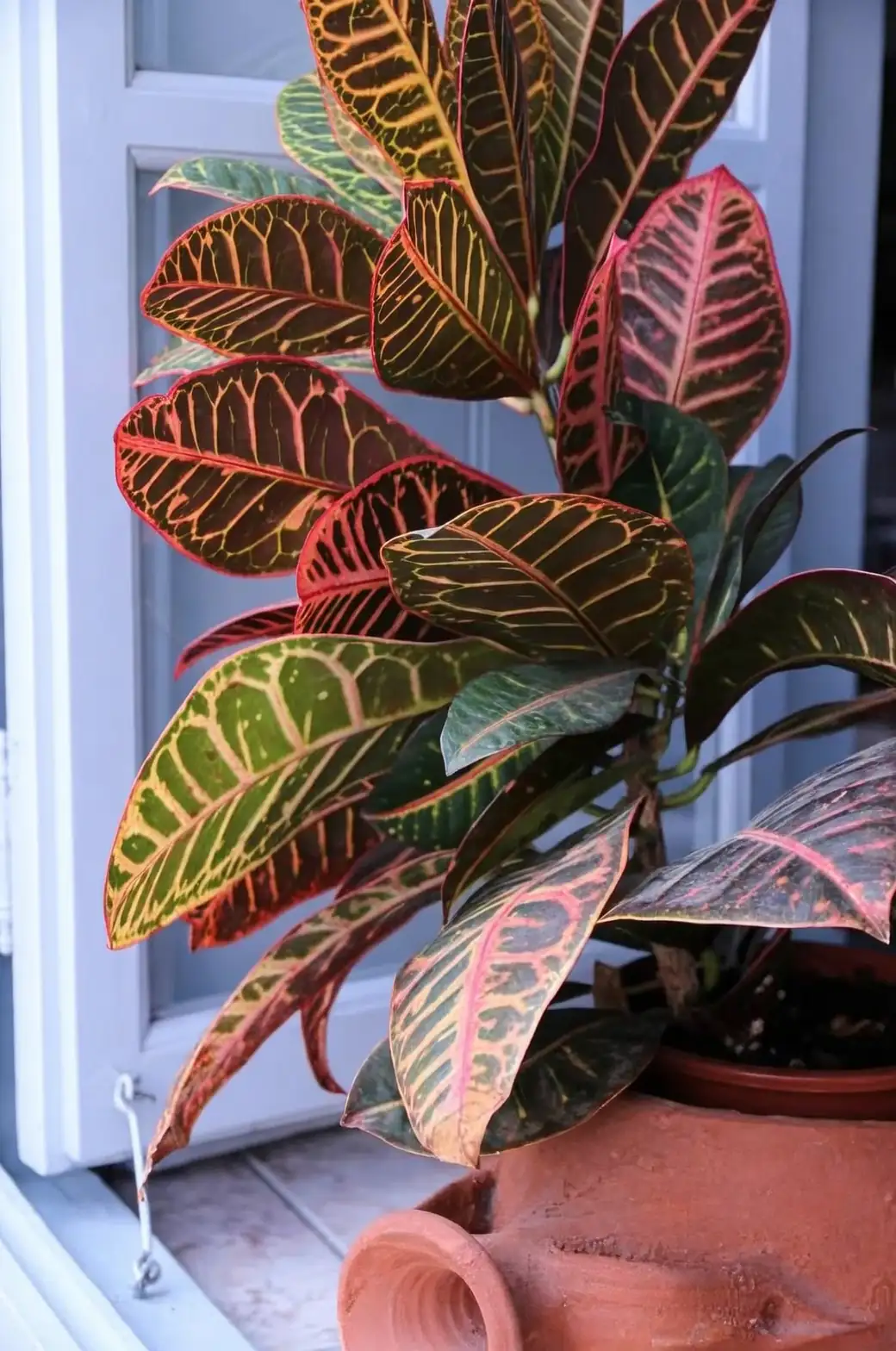
As Europe industrialized, its gardeners professionalized—and specialized. Heated conservatories met mass printing and global shipping. The plant trade boomed, and croton was a headliner: durable enough to ship, arresting on arrival, and endlessly mutable. Nurseries showcased variegated clones with brochures full of color plates; collectors compared leaves like philatelists compare stamps. Some cultivars were narrow and ribbon‑like, others broad and lobed, some even twisted into spirals—each a fixed, cloned personality from a naturally variable species.
The 1870s American moment
By the 1870s, the United States was deep into its own plant craze. Steamships and railroads collapsed oceans and continents into nursery catalogs. Croton leapt the Atlantic and took root in conservatories, hotel lobbies, and winter gardens—dramatic, tropical, and evergreen at a time when color indoors was otherwise the domain of carpets and drapery. In frost‑free parts of the country, it escaped the glasshouse altogether and became a landscape staple; elsewhere, it found its niche as a container star that could summer outdoors and winter by a bright window.
Why croton became a modern design icon
- Graphic foliage as architecture: Big, leathery, glossy leaves read like stained glass in natural light.
- Color that performs: Strong, filtered light deepens reds and yellows; a plant that literally shifts mood with placement.
- Endless personas: Hundreds of named cultivars—lance‑leaf, broad‑oval, lobed, wavy, or spiraled—let designers “cast” a plant the way they’d choose a fabric.
- Evergreen presence: Unlike fleeting blooms, croton’s color is all leaf, all year.
- Tropical minimalism’s rebel: In sleek, neutral spaces, it’s the unapologetic pop; in maximalist rooms, it’s the exclamation point.
Design note: Indoors it’s a bit of a diva—warmth, steady moisture (never soggy), and higher humidity keep the paintbox vivid. A bright bathroom or any warm, humid room with filtered light is famously perfect.

Symbolism, “flower language,” and living folklore
Croton’s “language” isn’t Victorian floriography so much as a contemporary reading of what the plant actually does: transform. Its leaves change color with light and age, so modern symbolism naturally leans to transformation, creativity, passion, abundance, and upbeat energy. Across its native and adopted ranges, it also picked up protective and good‑fortune associations—temple and cemetery plantings in parts of Indonesia, garden guardians in the West Indies, ceremonial use where golds and whites carry spiritual meaning. In other words, its folklore is lived, not literary: a bright, changeful presence placed where people wanted beauty, luck, and a bit of chromatic power.
A quick visual timeline
- 16th century (1578): Croton noted in European writing—curiosity kindled.
- Late 1600s: Dutch trade networks usher tropical novelties, including croton, into European collections.
- 1753: Linnaeus names it Croton variegatus.
- Early 1800s: Codiaeum variegatum becomes the accepted botanical name; “croton” remains the popular moniker.
- 1870s: Croton explodes in American horticulture—conservatories, parlors, and frost‑free gardens.
- 20th century to today: From verandas to living rooms to boutique hotels, croton evolves from colonial curiosity to global design staple.
What makes the plant itself so collectible?
- A single species, countless looks: Most cultivars are just different selections of Codiaeum variegatum, fixed and propagated by cuttings or air‑layering.
- Light as a paintbrush: Brighter, filtered light intensifies variegation; low light nudges leaves greener.
- Indoors vs outdoors: Indoors it’s typically 30–90 cm (12–36 in), sometimes to about 1.5 m (5 ft) over time; outdoors in the tropics, a full‑on shrub to about 3 m (10 ft).
The traveler’s coda
From island forest edges to baroque conservatories to mid‑century lobbies and today’s sun‑splashed bathrooms, croton has always rewarded adventure—first the sailors and naturalists who ferried it across seas, and now the home growers who give it bright, warm, humid perches. Handle with a little respect (it’s a spurge, with irritating sap and toxic parts), and it answers with its signature gesture: leaves that turn light into color, and color into story.