Sun-glared rock, a sky of brass, and a rosette of steel-blue blades bristling at the horizon—this is the stage where Agave americana became legend. Known as Century Plant, maguey, American agave, and American aloe, it’s a living sculpture forged by drought and time, steeped in myth, and carried by people to nearly every warm, dry corner of the world.
Birth of a desert icon
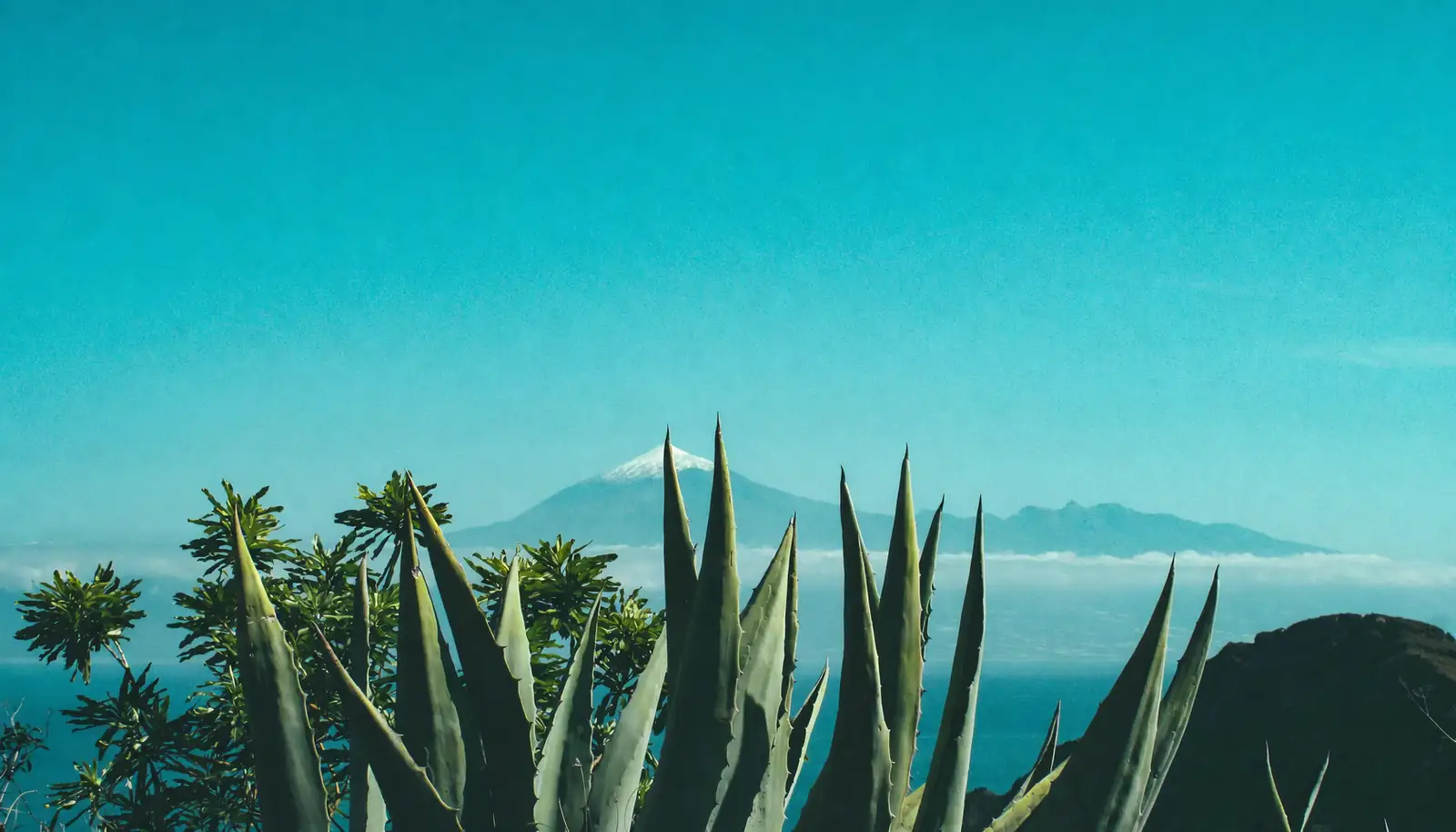
Long before botanists took notes, Agave americana anchored Mexico’s arid and semi-arid landscapes. Its silhouette—an evergreen rosette of thick, blue-gray to gray‑green, sword-like leaves edged with hooked teeth and finished with a rigid terminal spine—reads like a skyline of armored sails. The plant stays low and architectural, but everything about it feels monumental.
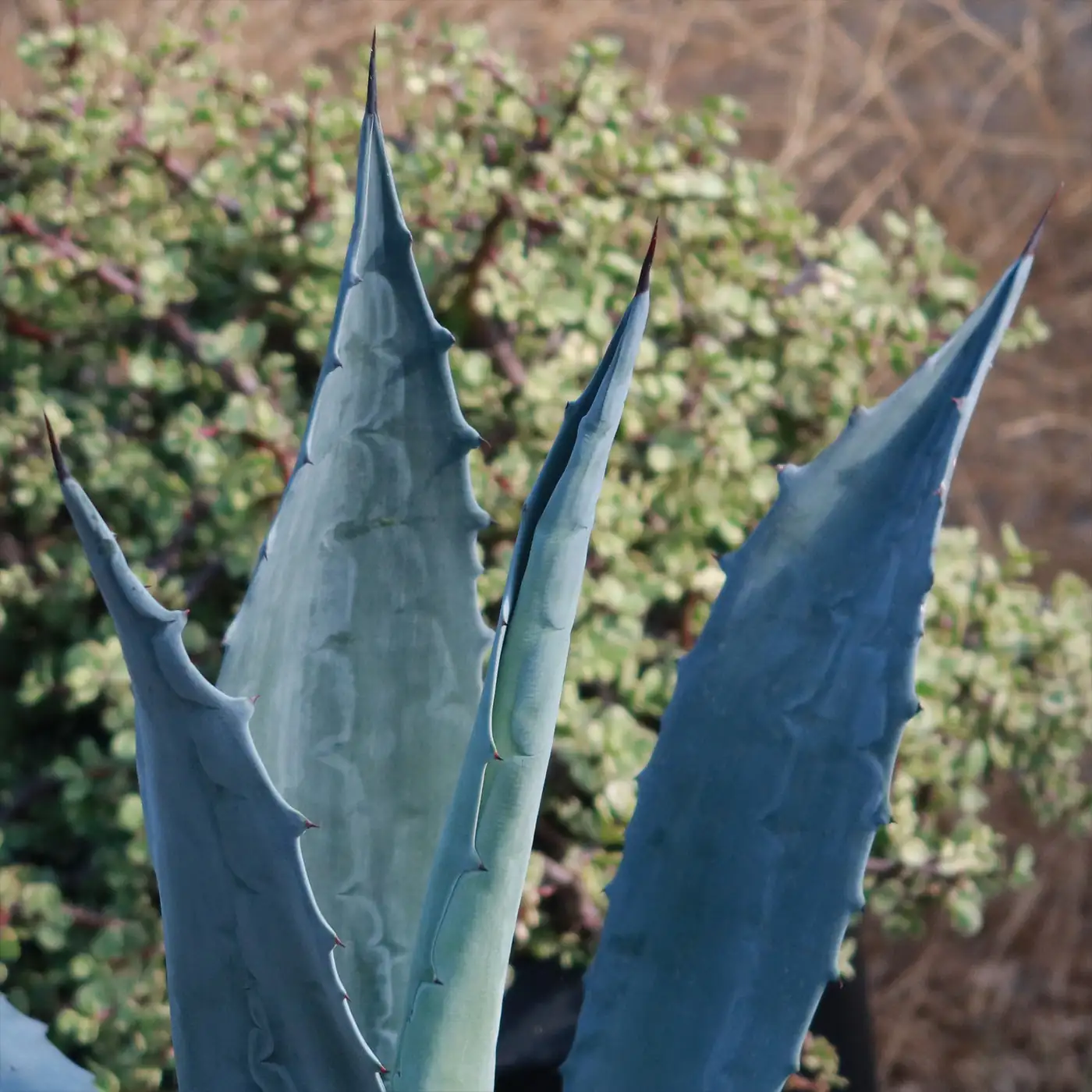
- Family: Asparagaceae; Genus: Agave
- Name roots: Agave from the Greek for “noble” or “illustrious,” a nod to its stately form
- Native range: Mexico; now widely naturalized across warm, dry regions worldwide
In Mesoamerican tradition, agave is inseparable from the goddess Mayahuel, who embodies fertility and nourishment. It’s a fitting match: the plant offered rope, food, and sweet sap to desert cultures, a generous reservoir in a hard land.
Fibers, sap, and a civilization’s toolkit
Agave americana stands at the crossroads of utility and reverence. Imagine a plant that is equal parts pantry, toolbox, and sculpture.
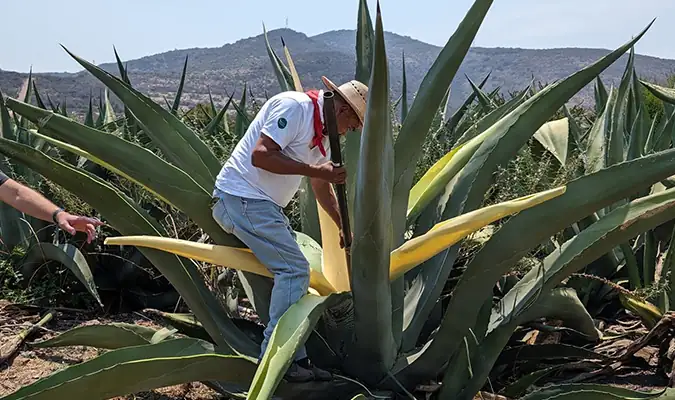
- Fibers: Leaves yield tough strands for rope, cordage, and crafts—indispensable in dryland cultures.
- Sap traditions: The sugary aguamiel (honey water) can be collected and used to make sweet products or fermented beverages. Note: classic tequila is made from specific agaves—especially blue agave (Agave tequilana)—not typically from A. americana.
- Food and more: Across Mesoamerica, agaves provided practical materials and occasional sustenance; their cultural and ceremonial roles ran deep.
The name that stuck: 1753—and the myth that won’t quit
In 1753, Carl Linnaeus officially named Agave americana in Species Plantarum, sealing its identity in the scientific record. Its most famous nickname, however—Century Plant—comes from a fable. No, it doesn’t bloom once every hundred years. The truth is still dramatic:
- Bloom timing: Usually a single, spectacular bloom after many years—commonly 10–25 years depending on conditions.
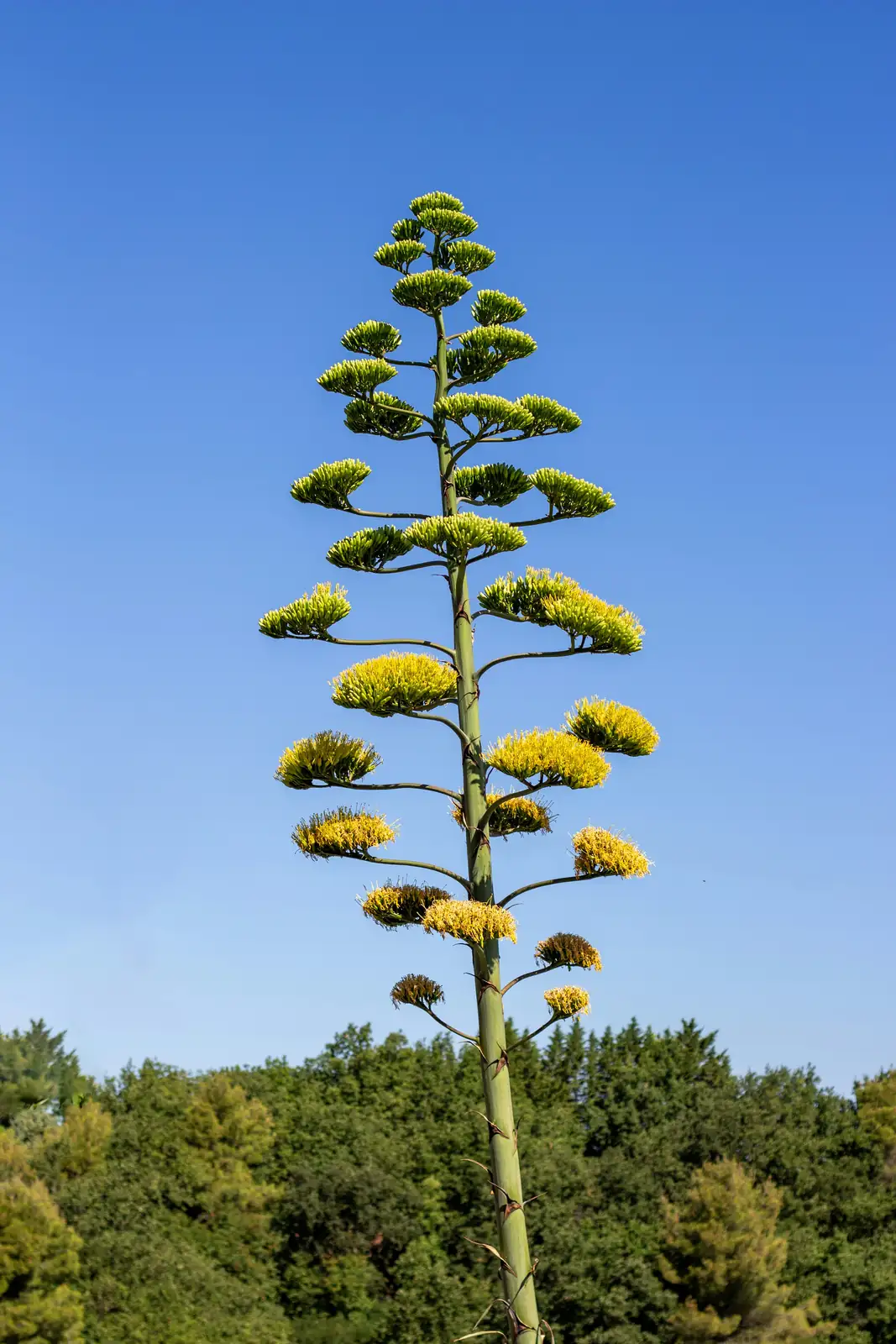
- The finale: A towering, branched flower stalk rockets skyward to about 7–8 m (23–26 ft), studded with masses of yellow‑green, nectar-rich flowers that can scent the evening and draw pollinators such as bats and moths.
- Monocarpic magic: After flowering, the blooming rosette gradually dies. But before you mourn, note the strategy—most plants leave behind offsets (“pups”) that keep the lineage thriving.
How a sculpture learned to travel
From Mexico’s dry plateaus, Agave americana rode with explorers, gardeners, and empire builders—first as a curiosity, then as a coveted ornament of resilience. Its striking geometry fit the aesthetics of cloistered Mediterranean courtyards, modernist plazas, and desert gardens alike. Today, it is widely naturalized across warm, dry regions around the globe: think sun-soaked coasts, islands, and inland xeric belts where winters are mild and drainage is excellent.
Why it thrives abroad
- Unbothered by drought: Built to sip sparingly and store generously.
- Loves the spotlight: Full sun deepens its blue-gray cast and keeps growth strong.
- Frugal roots: Demands fast-draining, gritty soils and abhors standing water.
- Living armor: Spines discourage grazing and casual handling, giving it space to mature.
Grow your own living sculpture: a quick guide
Want that desert drama at your doorstep? Here’s how to make it happy—and keep your fingers intact.
- Light: Full sun is best—aim for 6–8 hours daily. In very hot regions, a touch of afternoon shade can prevent scorch.
- Soil: Use a fast-draining cactus/succulent mix with added coarse sand, pumice, or perlite. Never let water sit in the rosette or the saucer.
- Water: Soak thoroughly, then wait until the mix dries out completely before watering again. In warm, bright conditions, containers may need water every 1–2 weeks; much less in winter. Err dry, not soggy.
- Temperature and hardiness: Prefers about 15–25°C (59–77°F) and tolerates roughly 10–30°C (50–86°F). Protect from hard frost; generally suited to USDA Zones 8–11. Move containers under cover near freezing.
- Size reality check:
- In containers: often to about 90 × 90 cm (35 × 35 in).
- In the ground: rosettes commonly 1–2 m (3.3–6.6 ft) across; individual leaves 1–2 m (3.3–6.6 ft) long.
- Flower stalk: 7–8 m (23–26 ft) when it finally blooms.
- Feeding: Light and infrequent during spring–summer. Either a low-nitrogen cactus feed every 4–6 weeks or a balanced liquid at half strength about every 2 weeks. Stop in winter.
- Pests and pitfalls: Watch for mealybugs and scale in leaf axils, aphids on the flower stalk, and outdoors, agave snout weevil. The most common killer is root/crown rot from overwatering or poor drainage.
- Safety: Sap can irritate skin, and the spines are needle-sharp. Place away from walkways and from children and pets; wear thick gloves and eye protection when pruning.
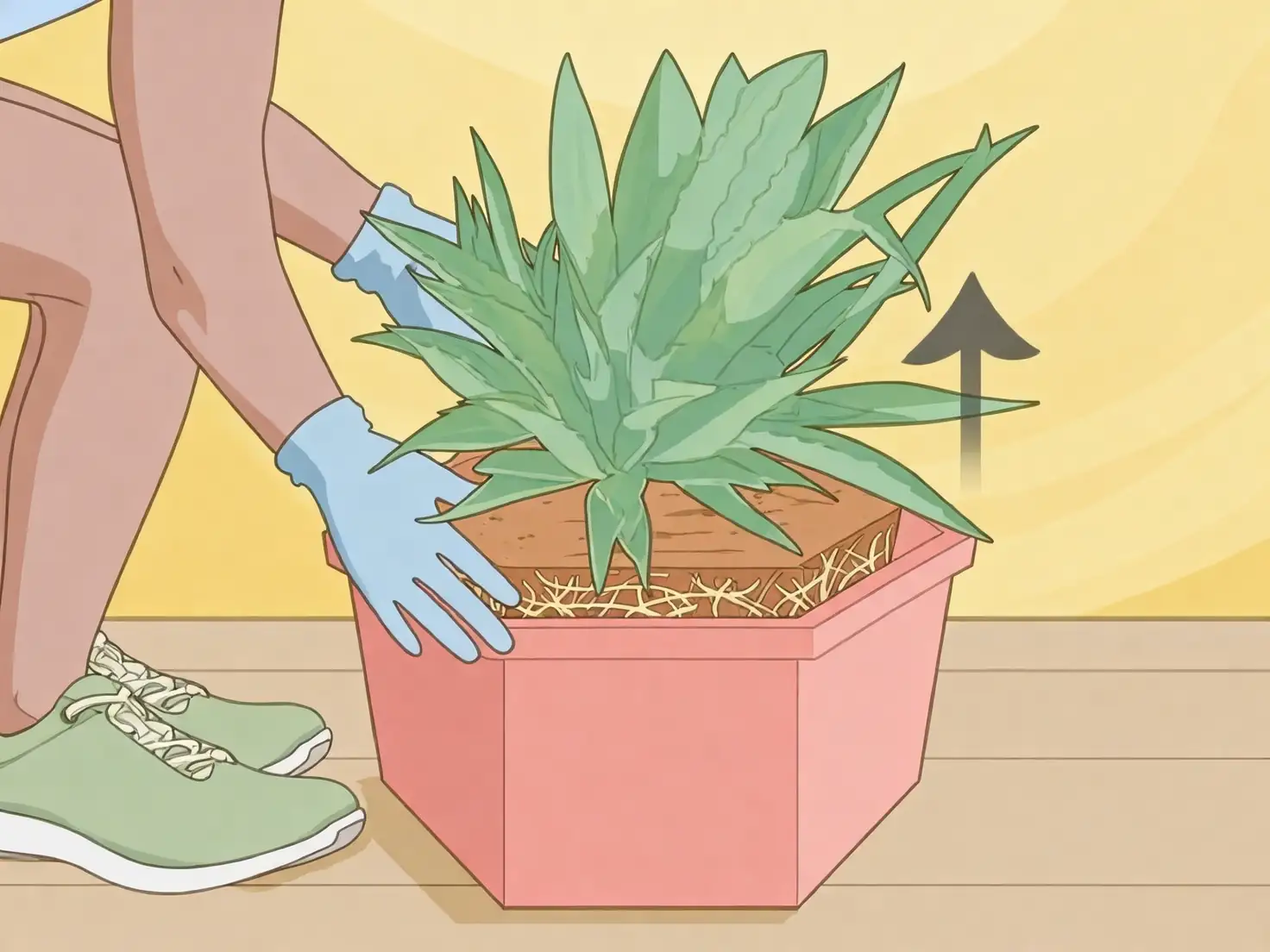
Propagation tip: Offsets (“pups”) are the easiest. Detach a well-sized pup, let cut surfaces callus, then pot into a gritty mix. Seeds are possible but slower; some plants produce bulbils on the spent flower stalk.
The saga of the bloom
When it finally happens, the bloom feels like a time-lapse epic. Years of slow, stoic growth suddenly flip into sprint mode as the stalk rockets up, branches like a candelabra, and opens hundreds of yellow‑green flowers. Afterward, the mother rosette fades—but the colony endures through pups, a desert phoenix routine that feels as mythic as it is botanical.
Symbolism and the whispered “flower language”
People often assign “flower language” to plants, and with Agave americana, the symbolism sticks because it’s lived, not imagined.
- Endurance and resilience: It stands, unfazed, through sun, drought, and time.
- Protection: Spines and armored leaves broadcast “respect my space.”
- Patience and devotion: A lifetime of quiet gathering leads to one grand flourish, then a selfless exit.
- Fertility and nourishment: Echoes of Mayahuel persist in the way agave sustained communities with fibers and sweet sap.
Rather than Victorian sentiment alone, these meanings spring from the plant’s real ecology and cultural history: a survivor that gives back, then bows out in brilliance.
Fast facts for the curious
- Common names: Century Plant, maguey, American agave, American aloe
- Bloom myth vs. reality: Not 100 years—usually once after 10–25 years, then the blooming rosette dies
- Flowering season: Typically spring to summer
- Pollinators: Night-scented flowers attract bats and moths
- Landscape role: A bold, low-maintenance focal point for xeriscapes and large containers
- Not for tequila: Classic tequila is tied to blue agave (Agave tequilana), not typically A. americana
From sunbaked Mexican mesas to seaside promenades half a world away, Agave americana is both artifact and icon—part myth, part muscle, entirely unforgettable. Give it sun, grit, and time, and it will answer with architecture—and, someday, a finale you’ll never forget.