In the dappled understory of Madagascar’s forests, a slender silhouette learned to thrive on leftovers—scattered sunflecks, warm air, and moisture that ebbed and flowed with the seasons. Today that same silhouette—Polyscias elegantissima, better known as false aralia—has stepped indoors, where its filament-fine leaves cast soft shadows across bookshelves and bay windows. It is a plant with an origin story written in shade and refinement: an understory specialist from the Araliaceae family that evolved to be elegant, adaptable, and irresistibly modern.
From Madagascar’s understory to your windowsill
Madagascar gave false aralia its playbook: grow tall but stay light on your feet, spread fine foliage to catch what light you can, and never mistake harsh sun for kindness. Those lessons show up at home:
- Finely divided, feather-like leaflets maximize light capture without bulk.
- Upright, airy branching lets it slip between canopy gaps—just as it now slips into slim urban spaces.
- Preference for bright, filtered light over direct sun mirrors the forest’s shifting shade.
Even its genus name, Polyscias—Greek for “many” + “shade/umbrella”—seems tailor-made for an understory strategist. And while it’s widely called “false aralia,” it’s not a true Aralia at all, but proudly part of the ginseng-and-ivy clan, Araliaceae.
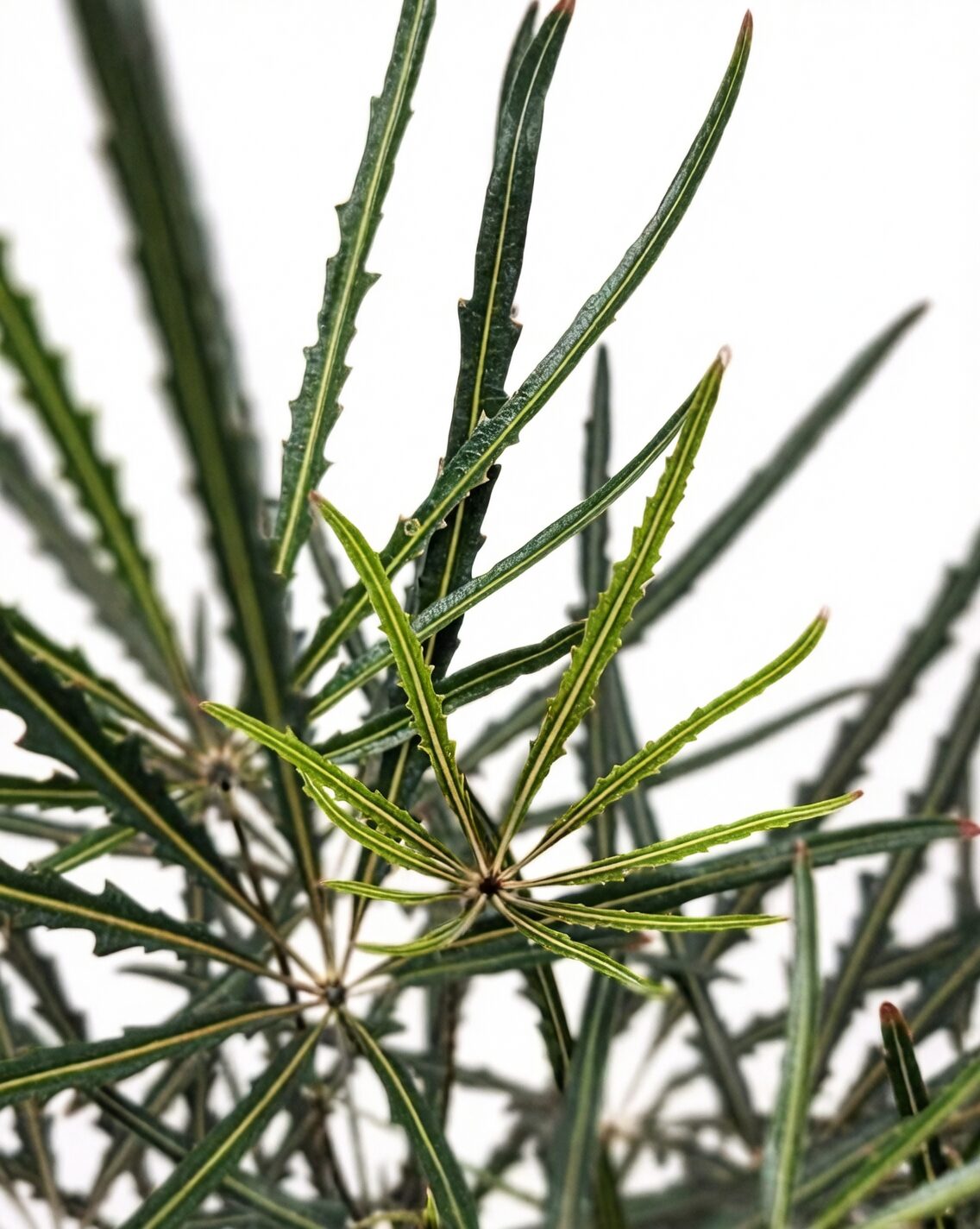
Meet false aralia, the finely cut understory lookalike
What you see
- Habit: Evergreen shrub to small tree; naturally fast-growing and prone to legginess without shaping.
- Size: Indoors typically 1–2 m (3–6.5 ft); outdoors in frost-free climates 3–6 m (10–20 ft).
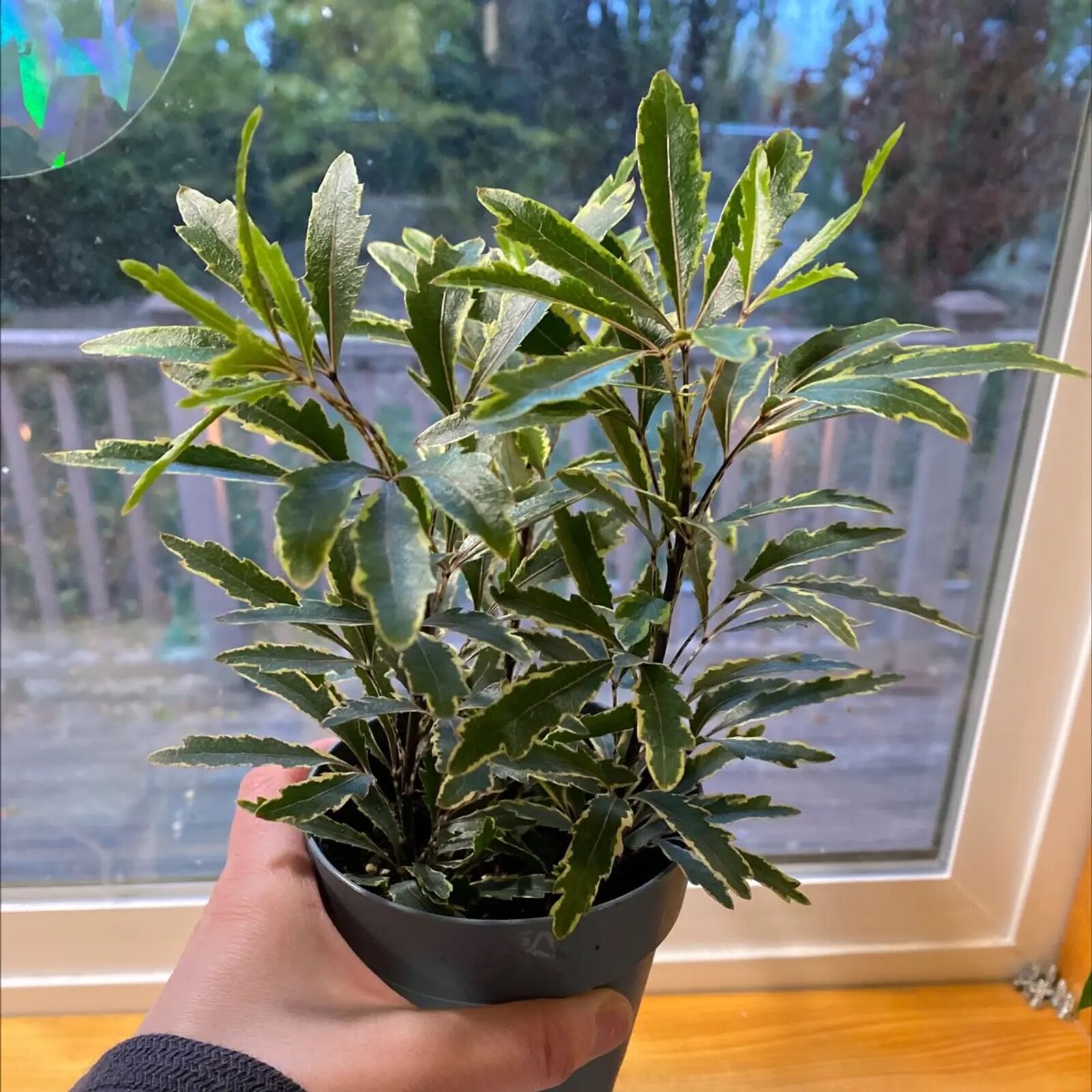
- Foliage: Narrow, deeply cut leaflets create a feathery, high-texture silhouette; bright, filtered light keeps them crisp and glossy. Harsh, direct sun can scorch leaves.
- Flowers: Small and inconspicuous in summer—rare indoors. This plant is all about the foliage.
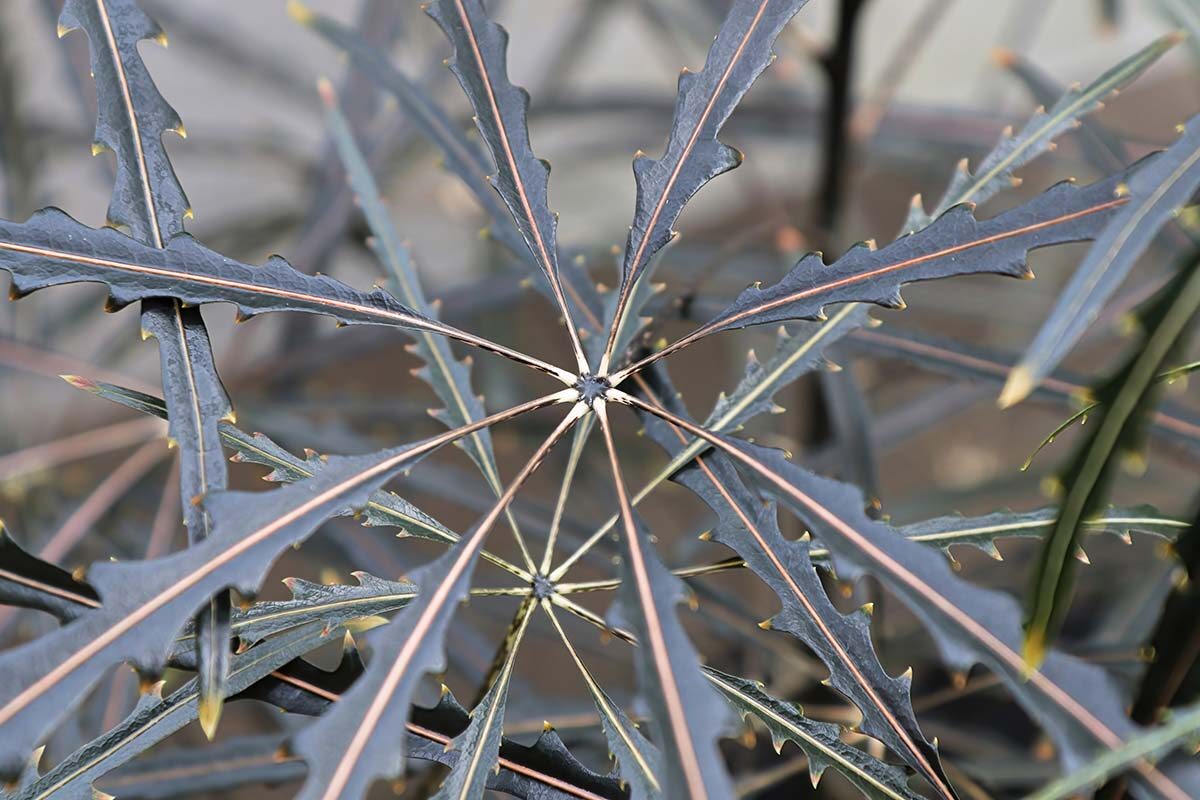
Why that form thrives in shade
Imagine a dancer’s hands fanned wide: those delicate leaf divisions spread surface area without casting heavy shade on themselves. The upright structure keeps leaves staggered in layers, each one catching its ration of light—perfect for life beneath a canopy and perfect for interiors that favor brightness without glare.
Family ties: Araliaceae and the Polyscias clan
False aralia sits within Araliaceae alongside well-known houseplant relatives like Schefflera, Hedera (ivies), and Panax (ginseng). Polyscias is a large Old World genus (roughly 180 species recognized today), celebrated for evergreen shrubs and trees with sculptural foliage. The “false aralia” nickname comes from resemblance, not lineage; you may see it sold under aliases such as Aralia Elegantissima, Ming Aralia, or Schefflera Elegantissima.
From forest floor to design floor: why it became a modern indoor staple
- Light compatibility: Forged for filtered light, it thrives where many “sun plants” sulk—ideal for bright rooms that never get blasted.
- Slim profile: Tall, elegant stems and fine leaves read as architectural, not bulky—great for narrow corners and sightlines.
- Calming texture: The feathered canopy softens hard edges and modern materials, adding movement without visual clutter.
- Cultural cachet: In parts of China, false aralia (福禄桐) is embraced as a good-luck plant linked with prosperity and well-being—appealing in contemporary, wellness-focused interiors.
Styling tip sheet:
- Pair with matte ceramics or fluted planters to echo the leaf division.
- Use two plants of staggered height for a layered, “mini-copse” look.
- Float it near sheer-curtained windows; the plant and the fabric share a language of soft lines and soft light.
Care that honors its origins
Light
- Best: Bright, filtered light to partial shade; avoid strong direct sun.
- Seasonal placement indoors:
- Spring/Autumn: East-facing light
- Summer: Gentler north-facing light (or ~70% shade)
- Winter: Brightest spot available (often south-facing)
Temperature and humidity
- Ideal: 20–30°C (68–86°F)
- Keep above: 13°C (55°F) in winter; around 8°C (46°F) or below can cause damage and leaf drop.
- Humidity: Prefers 60%+. In dry spells, mist foliage and lightly dampen nearby surfaces. In winter, slightly drier air/soil is safer than staying cold and wet.
Watering rhythm
- Growing season: Keep the mix evenly, slightly moist—never soggy. Avoid big swings from very dry to very wet; both can trigger leaf drop.
- Winter: Water less and keep just a touch drier, but don’t allow bone-dry stretches.
Soil and potting
- Use a loose, well-drained mix: peat- or leaf-mold-based potting mix amended with coarse sand.
- Typical starting pot: 15–20 cm (6–8 in), then step up as the plant grows.
- Hardiness: Frost-tender; best outdoors in USDA Zones ~11–12.
Feeding
- Feed monthly in the growing season with a balanced fertilizer (e.g., 20-20-20) or a well-diluted organic liquid. Stop feeding in winter.
Pruning for architecture
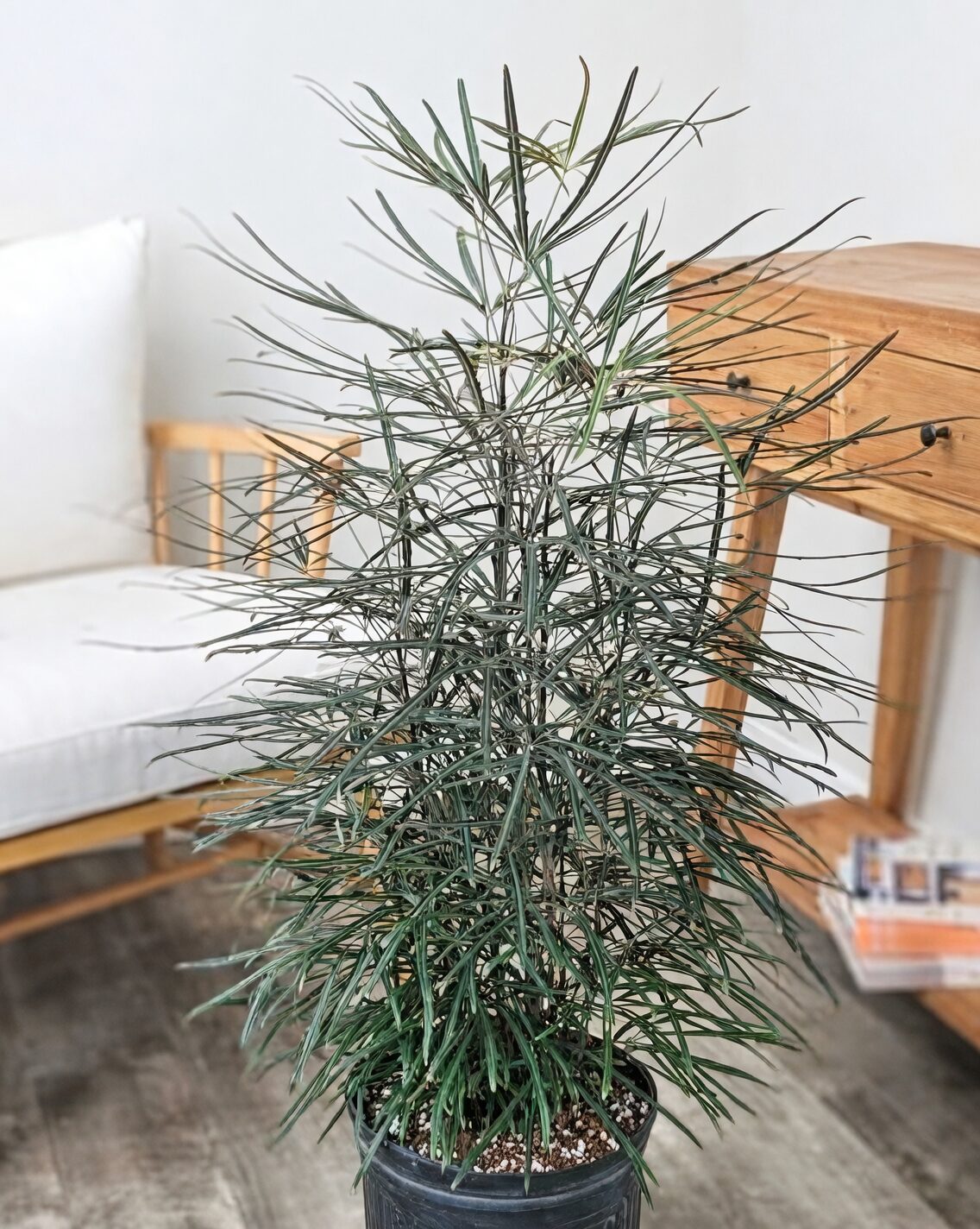
- Light shaping on young plants keeps that elegant column clean.
- For fullness: In early summer, cut stems back by about one-third. When new shoots appear, prune again. Repeating this 2–3 times encourages branching and a lush, denser crown.
- Older, over-tall plants can take a harder cut to reset height.
Repotting and propagation
- Repot: Every ~2 years in spring, stepping up one pot size.
- Propagate:
- Stem cuttings in spring: 10–12 cm (4–5 in) semi-ripe tips, lower leaves removed, rooted in very free-draining media (sand works well). Keep ~25°C (77°F) with high humidity; roots in 3–4 weeks.
- Water-root cuttings or try air layering.
- Seed: Sow immediately or in spring; germinate at 19–24°C (66–75°F); sprouts often in ~3–4 weeks. Transplant at ~10 cm (4 in) tall.
A quick seasonal calendar
- Spring: Repot if due; take cuttings or sow seed; position near an east window.
- Early summer: Prune back by ~one-third to promote branching; repeat after new growth.
- Spring–Autumn: Keep slightly moist; feed monthly; provide ~70% shade in hot summer; boost humidity in dry spells.
- Winter: Keep above 13–15°C (55–59°F); water less; stop feeding; move to the brightest spot.
Health, safety, and troubleshooting
- Pests: Scale insects and aphids are the usual suspects. Treat early with insecticidal soap or horticultural oil; repeat as needed.
- Diseases: Leaf spot can occur. Remove affected leaves, improve airflow, avoid wetting foliage late in the day, and use an appropriate fungicide if necessary.
- Leaf drop? Common triggers include cold drafts, harsh sun, or erratic watering.
- Safety: Toxicity reports are inconsistent across references. Treat as potentially irritating if chewed; keep away from pets and children, and wash hands after pruning.
Buying well
Choose a plant with:
- Sturdy, upright stems and a balanced overall shape
- Dense, deep green, glossy leaves without tears, bare patches, or pest signs
- For any variegated form, clean, bright patterning
After you bring it home:
- Park it in bright, filtered light (sheer-curtained east window is ideal).
- Keep temperatures at or above 15°C (59°F).
- Maintain the mix slightly moist and raise humidity to ~60%+.
- Feed lightly once you see fresh new leaves.
Symbolism and modern “flower language”
In contemporary décor and feng shui circles, false aralia is associated with prosperity, serenity, and a thriving home atmosphere—hence its popularity as 福禄桐 in parts of China, where “福禄” evokes blessings and rank/fortune. This isn’t an ancient floral doctrine so much as a modern synthesis of cultural symbolism and plant character: a steady, evergreen presence with foliage that looks like abundance itself—many finely cut “hands” gathering good energy and spreading it gently through a room.
Fun to know
- Not a true Aralia: despite the name, false aralia belongs to Polyscias in the Araliaceae family.
- Madagascar native turned global: prized worldwide as a shade-tolerant, tropical-looking ornamental.
- The pruning secret: strategic early-summer cuts transform a tall, spindly plant into a compact, branched showpiece.
- Multiplication made easy: stem cuttings, water-rooting, air layering—or seed with warmth and patience.
In the end, Polyscias elegantissima is both story and sculpture: a plant that learned grace in the shadows and now lends that same poise to our rooms—proof that the best design often begins in the forest, one filtered ray at a time.