
Picture a fern on a train to Boston in the 1890s—a soft green passenger with perfect manners. It arrives, unfurls a little differently from its kin, and in a blink becomes the emblem of the century’s fern fever. That’s the Boston fern’s origin story in miniature: a happy horticultural accident that leapt from New England porches to parlors worldwide, and never really left.
A happy accident: how the “Boston” form was born
In the late 1800s, growers were shipping the tropical sword fern Nephrolepis exaltata up and down the Eastern seaboard. Then came 1894 and a now-legendary moment: in a shipment bound for Boston, a plant with unusually arching, feathery fronds appeared—a natural sport distinct from the species’ typical, more erect look. Propagated and passed along, it was soon recognized under the name ‘Bostoniensis,’ the Boston fern form that would redefine indoor greenery.
Horticulturist David Fairchild later shared another thread of the tale, linking the name to a Florida nurseryman who sent his finest ferns to a friend in Boston—an early hint that good plants travel fast when they charm the right audience. However you trace the naming, the idea is the same: a distinctive, graceful variant appeared at just the right place and time.
The perfect storm: Victorian Pteridomania meets a green fountain
By the 1860s–1890s, Britain and America were deep in Pteridomania—fern mania—a cultural wave that elevated ferns from woodland curiosities to must-have décor. Conservatories swelled with verdure; Wardian cases made delicate species portable; seed catalogs and railways stitched plant supply chains together. Into this world stepped the Boston fern, with fronds that didn’t just sit—they flowed.
Why it fit the moment so well:
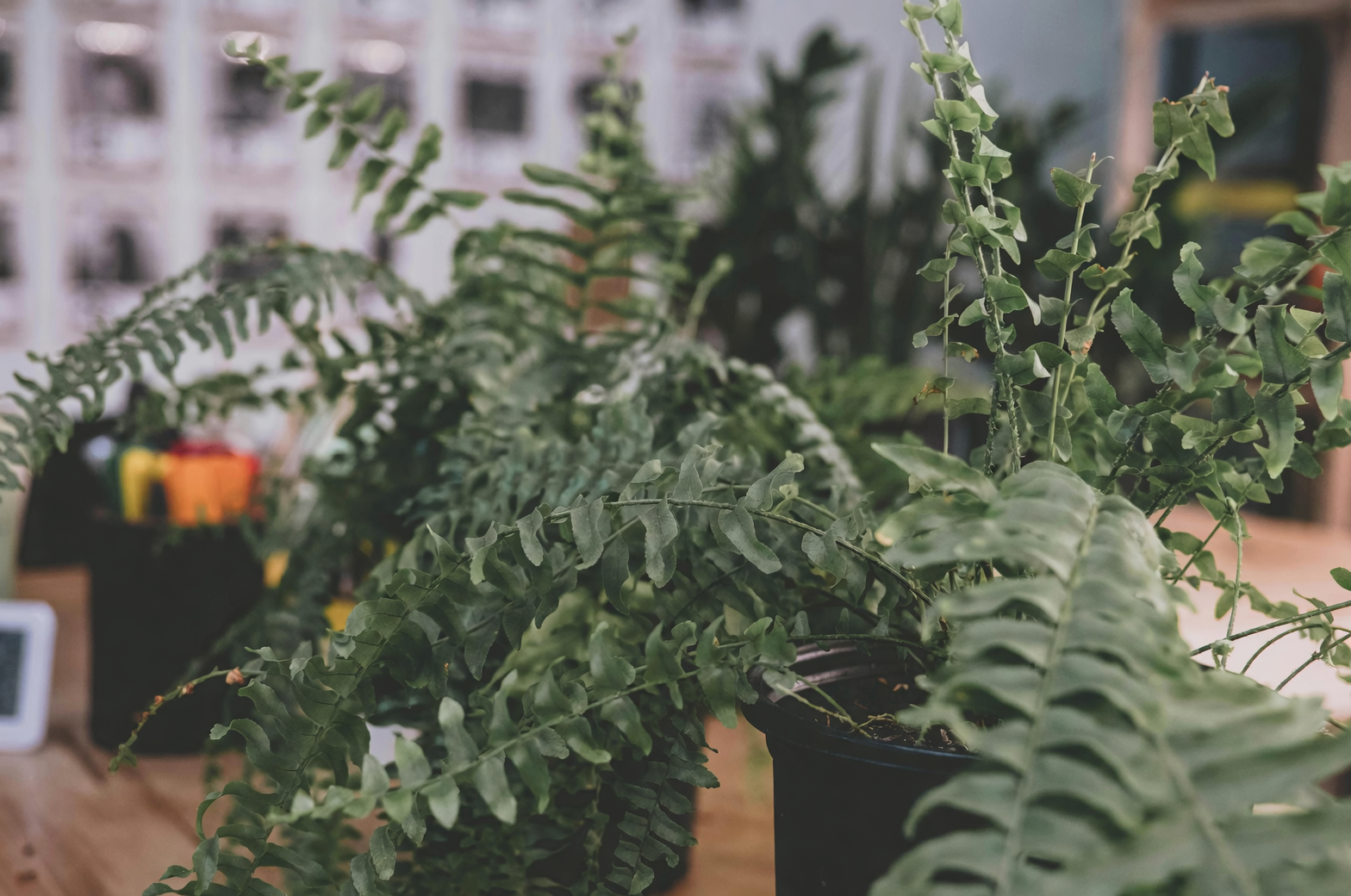
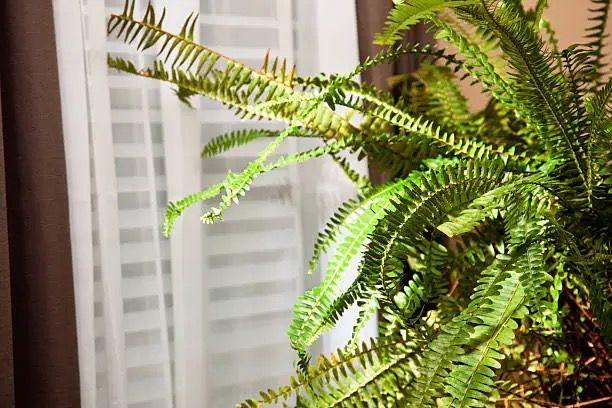
- The look: Boston fern’s arching, finely divided fronds form a lush “green fountain,” softening sharp corners and heavy Victorian furniture alike.
- The habit: It produces elegant fronds from a tight crown but also throws slender runners (stolons) that root into new plantlets—propagation gold for nurseries and a fast route to full baskets.
- The temperament: For a fern, it was relatively forgiving indoors. Bright, indirect light, steady moisture, and humidity kept it plush and parlor-ready.
- The stage: Boston’s trellised porches and stoops loved a plant that cascaded, and so did city windows where floor space was tight but a hanging basket could sing.
Within a few decades, it was everywhere: porch rails in New England, florist windows in New York, and mail‑order catalogues that promised a touch of cool forest to any living room.
From Boston porches to homes worldwide
Once the Boston form caught on, its spread felt inevitable:
- Propagators multiplied it quickly by division and those helpful runners.
- Warm-climate nurseries (especially in the southeastern U.S.) perfected shaded, humid production, turning out masses of full, uniform baskets.
- Steamships, rail lines, and, later, garden centers carried it far beyond New England. In tropical and subtropical regions, Nephrolepis exaltata—native to the Americas, including Florida and the West Indies—was already at home, and it naturalized widely. Elsewhere, it found its niche as a beloved houseplant.
- The 20th century saw waves of enthusiasm—from porch culture to midcentury interiors to the late‑20th‑century houseplant boom. Today it’s back on shelves and feeds, thriving in bathrooms, bright kitchens, and, yes, on porches once more.
Meet the plant behind the legend
- Scientific name: Nephrolepis exaltata (family Nephrolepidaceae); the “Boston fern” refers to a distinctive form/cultivar made famous from the late 1800s.
- Also known as: Sword Fern, Ladder Fern, Tuber Ladder Fern, Wild Boston Fern, Boss Fern, Nephrolepis Fern.
- Native range and reach: Tropical Americas (including Florida and the West Indies), widely naturalized across tropical/subtropical regions; now grown globally as a houseplant.
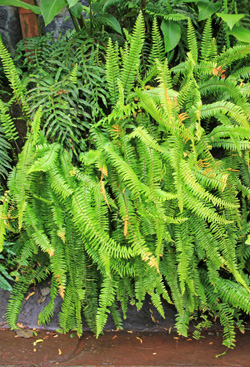
- The look: Evergreen, soft, feathery fronds composed of many narrow leaflets. New fronds rise upright before arching and cascading into that classic fountain form.
- Size indoors: Typically 30–90 cm tall and 60–90 cm wide; individual fronds can reach about 120 cm in good conditions, especially in hanging baskets.
- Botany basics: It’s a fern—no flowers, no seeds. Reproduction is via spores (on the undersides of mature fronds) and by runners that root into new plants.
Why it won hearts (and keeps them)
- Easy for a fern: Give it bright, indirect light and keep roots evenly moist with consistently humid air, and it stays plush for years.
- Room “freshener”: While popular lists cite air‑purifying studies, real‑world impact depends a lot on ventilation, plant size, and plant numbers. What’s certain: Boston ferns trap dust, lift humidity, and visually cool a room.
- Pet‑friendly: Generally regarded as non‑toxic to humans, cats, and dogs—one reason it’s a staple for family homes.
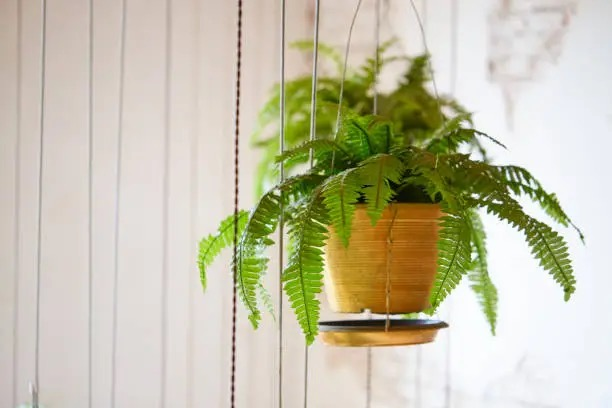
- Versatile: Hangs beautifully, fills porch urns in warm seasons, and softens tabletops or plant stands indoors.
Care cheat sheet for that porch‑fresh look
- Light: Bright, indirect light to partial shade. A touch of gentle morning sun is fine; avoid harsh midday/afternoon rays that crisp fronds.
- Water: Aim for “evenly moist.” Water when the top 2–3 cm of mix begins to dry, then drain thoroughly. Don’t let it bone‑dry or sit waterlogged.
- Humidity: Prefers 50–70%+. Bathrooms and kitchens are great if there’s decent light and airflow. Use a humidifier, pebble tray (keep pot base above water), grouping, or occasional misting.
- Temperature: Best at 16–24°C (61–75°F). Brief dips to about 10–12°C (50–54°F) are tolerable; keep above ~7°C (45°F). Prolonged heat above ~35°C (95°F) stresses it.
- Soil: Moisture‑retentive yet free‑draining, slightly acidic. A peat/leaf‑mold style mix with perlite or coarse sand works well; avoid heavy, soggy media.
- Feeding: During active growth, use a balanced liquid fertilizer monthly at half strength (or more diluted every 2 weeks from April to September). Pause feeding in late autumn/winter. Flush the pot occasionally to prevent salt buildup.
- Grooming: Snip brown or broken fronds at the base. Trim crispy tips for looks—and solve the cause (often low humidity or uneven watering).
- Propagation:
- Easiest: Division in spring/early summer.
- Also easy: Detach and pot up runner plantlets.
- Advanced: Spore sowing—slow but rewarding for fern lovers.
- Pests/diseases: Watch for spider mites (especially in dry air), mealybugs, and scale. Root rot and fungal blights occur in soggy, stagnant conditions—keep mixes airy and routines consistent.
- Outdoors: Frost‑tender. Grow year‑round mainly in USDA Zones 10–11 (sometimes 9–11 in very sheltered microclimates). In cooler regions, summer it outdoors in shade, then bring it in before nights cool.
Flower language without flowers: what ferns “say”
Victorian floriography didn’t stop at blossoms. Ferns, which captured imaginations during Pteridomania, came to symbolize freshness, sincerity, quiet renewal, and the allure of hidden places—fitting for plants that thrive in cool, shaded understories. So when a Boston fern spills its green fountain in your room, the message is less about petals and more about atmosphere: calm, restorative, and a little bit secret‑garden.
A short timeline of a long love affair
- Mid–late 1800s: Fern mania sweeps Britain and the U.S.; ferns become fashion.
- 1894: A graceful, arching sport of Nephrolepis exaltata is noticed in a shipment to Boston; the Boston fern form takes root—literally and culturally.
- Early 1900s: Mail‑order and porch culture propel it across American homes; warm‑climate nurseries scale up production.
- Mid‑century onward: It becomes a houseplant classic, cycling through décor trends yet never fully out of style.
- Today: A global staple—bathrooms, bright kitchens, shaded balconies, and, of course, porches.
Quick answers to the most‑asked questions
- Why are the tips browning?
- Usually low humidity or a root ball that dried out even briefly. Boost humidity, water more evenly, and keep it out of harsh sun and away from heat/AC vents. Flush the pot if you fertilize regularly to prevent salt burn.
- How often should I water?
- When the top 2–3 cm (about 1 in) feels slightly dry—often weekly in warm, bright conditions; less in winter. Target “evenly moist,” not soggy.
- Is the bathroom a good spot?
- Often ideal: humidity is high. Just ensure decent light and some ventilation.
- Can I grow it outside?
- Yes, in frost‑free climates (mainly USDA Zones 10–11; sometimes 9 in sheltered spots). Provide bright shade and consistent moisture.
- Can it grow in water?
- It can in a simple water‑culture setup: rinse soil from roots, anchor in inert media, keep water clean, and feed lightly in the growing season.
In the end, the Boston fern is more than a plant; it’s a living keepsake from the age of fern fever—a gentle heirloom that still excels at what it did on those Boston porches: spill grace, soften edges, and make the air feel just a bit more like a forest.