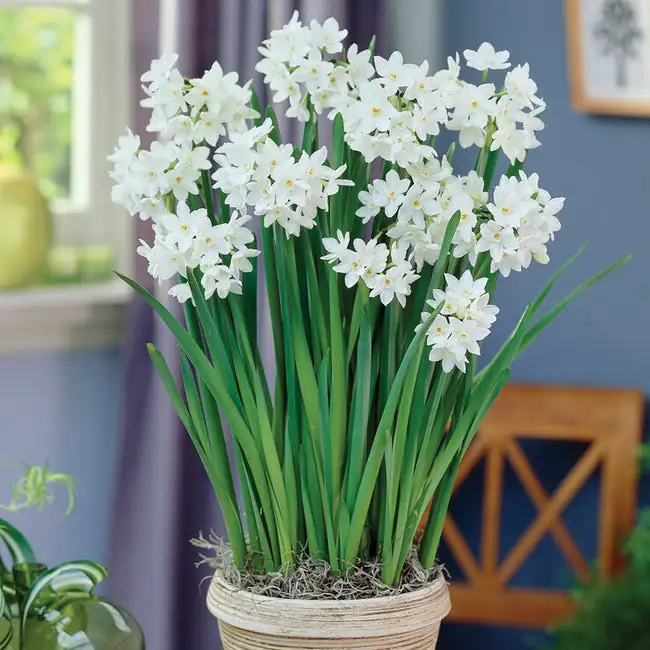
Breathing perfume into the gray of midwinter, Narcissus tazetta—better known as the paperwhite—has long doubled as a cultural messenger. In one bowl of pebbles and water, it can speak of self‑reflection from a Greek tale, whisper prosperity for the Lunar New Year in Chinese homes, and nod to Victorian etiquette with a whiff of coded romance. This is the story behind its flower language (花语): where those meanings came from, how they diverged across cultures, and what they signify today.
Meet Narcissus tazetta (水仙): the winter messenger
- What it is: A bulbous member of the Amaryllis family with upright stems and clusters of small, starry blooms—most often white with a tiny cup—filling rooms with a sweet, strong fragrance.
- Names you’ll hear: Paperwhite Narcissus, Chinese Sacred Lily, tazetta narcissus, bunch‑flowered daffodil (it’s part of the broader daffodil/narcissus group). In shops, you may also see “paperwhite” used for closely related tazetta‑type bulbs.
- Where it comes from: Native around the Mediterranean but now beloved worldwide—especially across East Asia for winter and Lunar New Year displays.
- Why it stars in winter: It’s famously easy to “force” indoors. Nestle bulbs into a shallow bowl of pebbles with water just touching the basal plate, give bright light and cool air, and you’ll usually see flowers in about 4–6 weeks—no prolonged cold period required.

Where the flower language begins: myth, festival, and etiquette
Greece: the mirror and the making of a self
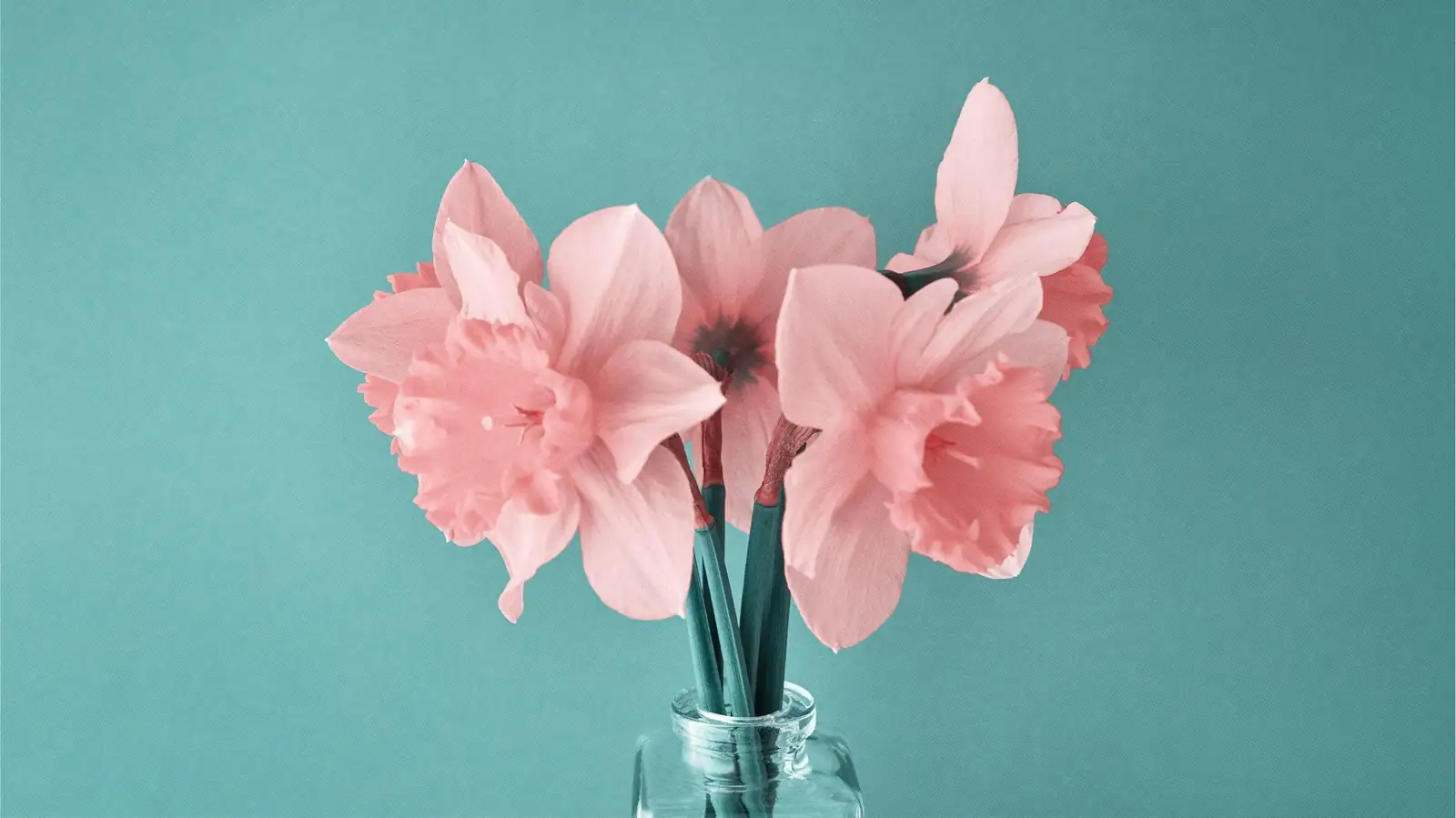
The name “Narcissus” springs from a Greek story. A radiant youth, Narcissus, gazes at his reflection, falls in love with the image, and wastes away; in the aftermath, a narcissus blooms where he lay. The tale has long marked the flower with themes of vanity and obsession—but also with reflection and transformation. A life ends, a flower begins: renewal threaded through warning.
How that reads today:
- Self‑love vs. self‑regard: The cautionary edge (don’t be consumed by your image) has softened in modern gifting into a more generous prompt: know yourself, honor your worth, but keep perspective.
- Reflection as renewal: The flower’s very emergence from a life’s turning point maps onto the idea of fresh starts.
China: a New Year bowl that grows prosperity
In Chinese culture, 水仙 (shuǐxiān, “water immortal”) is a winter icon. Families and shops set shallow bowls of bulbs on pebbles, often artistically carved or trained so leaves and stems arc into sculptural fans. Timed for the Lunar New Year, they perfume entry tables and windowsills right when spring is still a rumor.
Why it means good fortune and prosperity:
- Early arrival of spring: In the cold season, paperwhites bloom as if the calendar has skipped ahead, signaling renewal and auspicious beginnings.
- Abundance you can count: Clusters of many starry blooms on each stem visually “multiply” good luck and household thriving.
- A living wish: As a seasonal gift, 水仙 says “may your home flourish,” a graceful way to offer best wishes for the year ahead.
The Victorians: a polite code with layered cues
In the 19th‑century language of flowers, floriography let people exchange sentiments without saying a word. Narcissus carried several readings that echoed both the myth and the calendar:
- Vanity or self‑love: A direct nod to the Greek story.
- Respect or chivalry: In some flower dictionaries, narcissus conveyed regard and proper conduct.
- New beginnings and purity: As one of spring’s earliest faces, narcissus naturally stood for fresh starts; white forms underscored purity and sincerity.
The upshot: A paperwhite could be a courteous compliment, a gentle reminder to value oneself, or an emblem of starting anew—context and company mattered.
What those meanings signify today
Think of Narcissus tazetta as a trilingual speaker—mythic, festive, and Victorian—whose messages you can tailor to the moment.
- Renewal and new beginnings
- Perfect for: Housewarmings, career leaps, graduations, and fresh chapters.
- Why paperwhite: Winter‑to‑spring blooming makes “new start” more than a metaphor—you can watch it unfold.
- Prosperity, luck, and a thriving home (Lunar New Year)
- Perfect for: New Year gifting, new ventures, store openings.
- How to present: A shallow bowl with pebbles and immaculate water reads elegantly auspicious and traditional.
- Self‑love, reflection, and balance
- Perfect for: Personal milestones, recovery journeys, birthdays with a “treat yourself” theme.
- Tone matters: Frame it as healthy self‑regard, not narcissism—pair with a note about reflection and growth.
- Respect, esteem, and appreciation (a Victorian echo)
- Perfect for: Mentors, teachers, hosts, and anyone you want to thank with grace.
- White paperwhites lean toward sincerity and purity of intent.
Cross‑cultural note on 花语:
- “Flower language” isn’t one codex. Western meanings grew from myth and were formalized in Victorian lists; East Asian readings around 水仙 arise from seasonal timing, domestic display, and festival aesthetics. Many modern “flower language” charts blend them—share the story that matches your recipient and setting.
Reading and sending paperwhites like a local
If you’re celebrating Lunar New Year
- Start 4–6 weeks before the holiday so blooms open right on time.
- Grow in a shallow bowl with pebbles:
- Keep water low—roots in water, bulb itself mostly dry.
- Place in bright light and a cool room; cooler air keeps stems compact and flowers longer‑lasting.
- Gift a beautifully budded bowl with a short blessing for prosperity and renewal.
If you’re invoking the Greek mirror
- Pair the blooms with a card about reflection and self‑knowledge—turn the cautionary tale into a message of balance and self‑respect.
If you’re channeling Victorian floriography
- Send paperwhites as a winter bouquet for “respect” or “fresh beginnings.”
- Practical tip for mixed arrangements: Condition narcissus stems separately first—daffodil sap can shorten the life of other flowers.
Why paperwhites became a New Year icon
- They’re effortless to time: No long chilling needed; blooms typically appear in 4–6 weeks.
- They fit the season: Active growth in cool weather, winter‑to‑spring flowering.
- They perform indoors: Bright windowsill + clean water = a fragrant, sculptural display.
- They invite artistry: Traditional carving and leaf‑training turn a household plant into living calligraphy.
Small practicalities that keep the message fresh
- Light and temperature: Bright light, cool air (about 50–68°F / 10–20°C). Cooler rooms (41–59°F / 5–15°C) yield sturdier stems and longer bloom.
- Water hygiene: In bowls, keep water shallow and fresh; in pots, use free‑draining mix and avoid waterlogging.
- Safety: All parts—especially the bulb—are toxic to people and pets. Keep out of reach; sap may irritate skin.
- Cut‑flower etiquette: Deadhead spent blooms to keep the display tidy; if mixing with other flowers, let narcissus stems soak alone first.
A final note: one flower, many stories
Narcissus tazetta doesn’t force you to choose a single meaning. It brings the Greek lesson of reflection, the Chinese wish for prosperity at the year’s turn, and the Victorian art of tasteful regard—all carried on a cluster of luminous, fragrant stars that announce, in any language: something good is beginning.