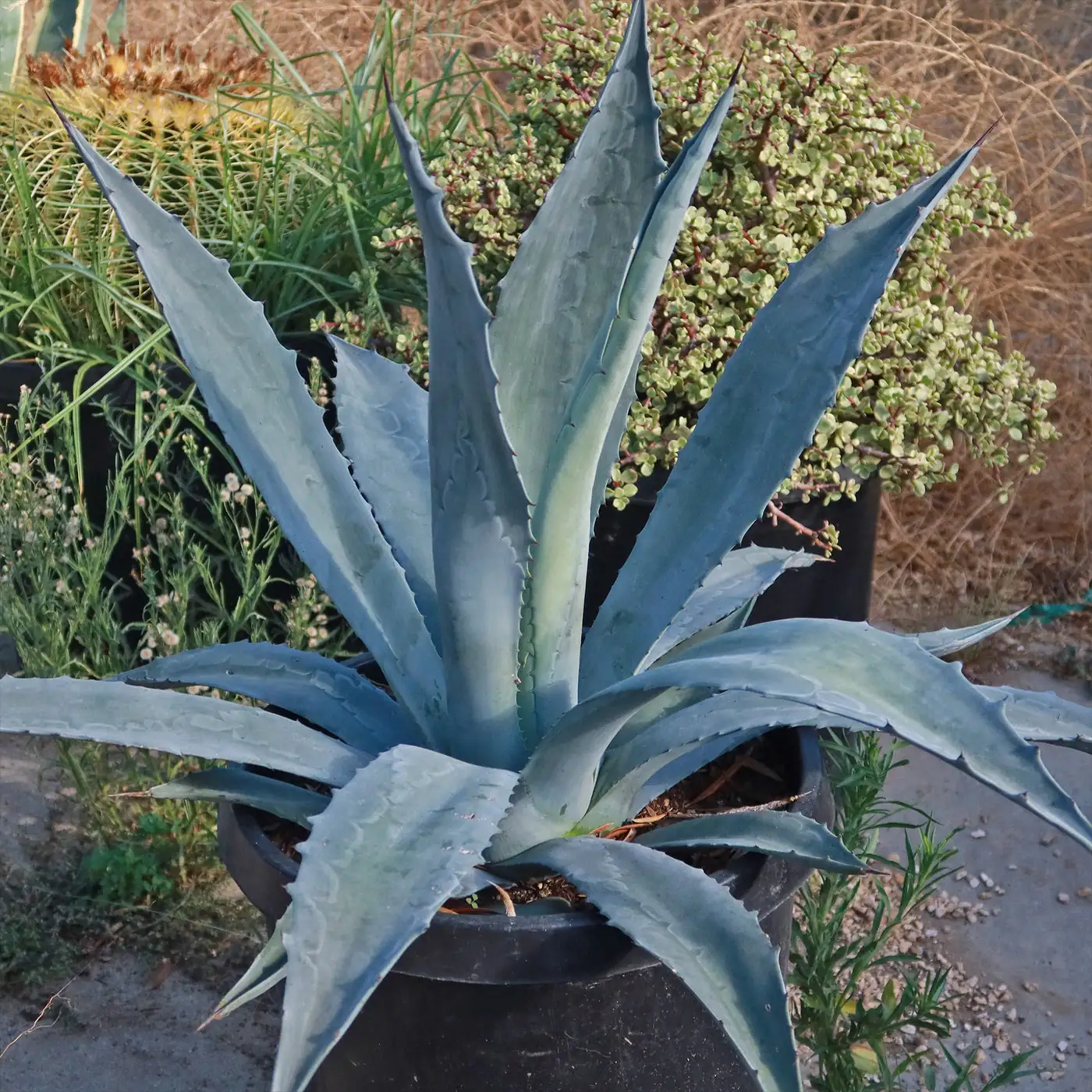
At sunrise in the desert, a blue‑gray rosette sits like a quiet sentinel, every leaf edged with teeth, every tip armed with a needle. This is Agave americana—the Century Plant—whose “flower language” isn’t whispered by petals, but carved into survival: endure the drought, guard your ground, wait for the right moment—and then, bloom once with everything you’ve got.
Meet Agave americana, the living sculpture
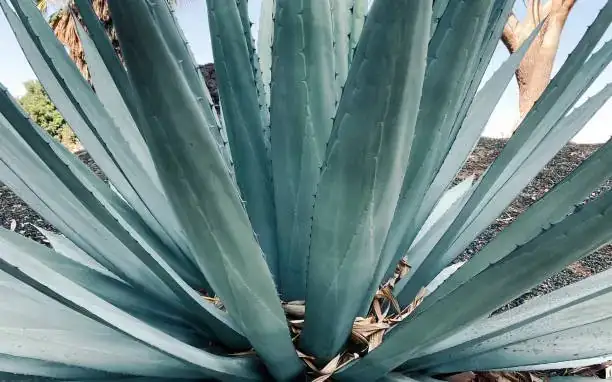
- Native heartland: Mexico, with a global career—now widely naturalized in warm, dry regions around the world.
- Form: a bold, evergreen rosette of thick, gray‑green to blue‑gray, sword‑shaped leaves, lined with sharp marginal teeth and a rigid terminal spine.
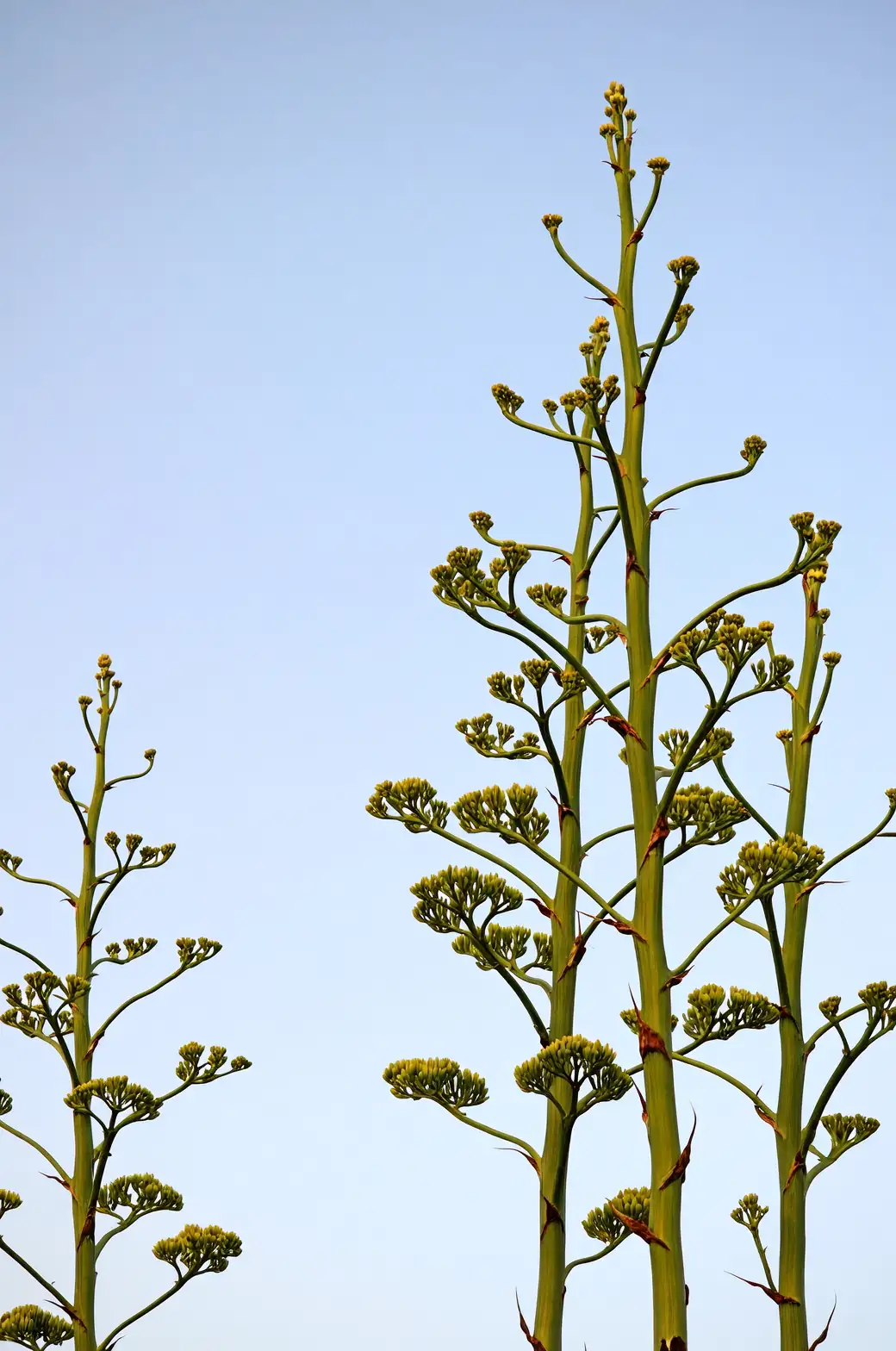
- Life arc: slow-growing, drought‑tough, and monocarpic. After many years—often 10–25 in cultivation—a mature rosette launches a towering flower spike (about 7–8 m / 23–26 ft), then gradually declines and dies. Offsets (“pups”) usually carry on the lineage.
- A note about drinks: agaves are culturally and practically important, but classic tequila is made from blue agave (Agave tequilana), not typically A. americana.
How its flower language (huayu) took root
Floriography—the “language of flowers”—bloomed in the West during the Victorian era, while in East Asia the notion of 花语 (huayu) distilled a plant’s spirit into symbolic messages. Agave americana rarely offers literal flowers for a bouquet; instead, its meaning has been read from its architecture and life strategy. Over centuries, across cultures, three messages have become unmistakable:
Endurance: the art of surviving where others cannot
- Thick, water‑storing leaves, a tight rosette, and a miserly metabolism help it thrive under sun and scarcity.
- It grows slowly and steadily, asking little once rooted in fast‑draining soil and full sun.
- Symbolic message: resilience, self‑possession, and the strength to prevail in a harsh climate—literal and metaphorical.
Protection: beauty with a boundary
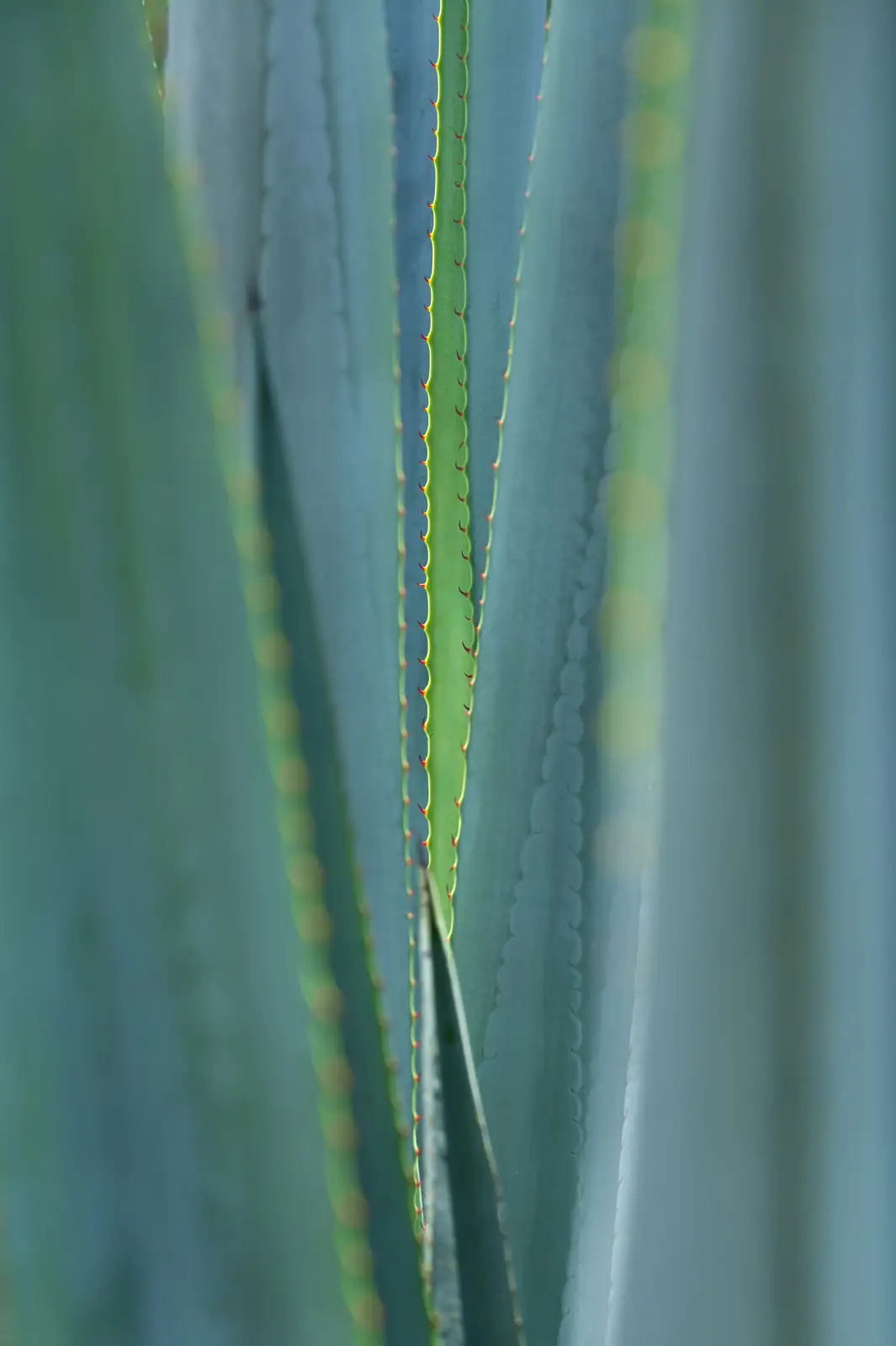
- Marginal teeth and a needle‑sharp tip turn each leaf into living armor.
- Landscapers use it as a “do‑not-cross” cue near perimeters; traditional cultures harvested its leaves for tough fiber.
- Symbolic message: protection, good boundaries, and courage—elegant but not easily trespassed.
Patience and devotion: the once‑in‑a‑lifetime bloom
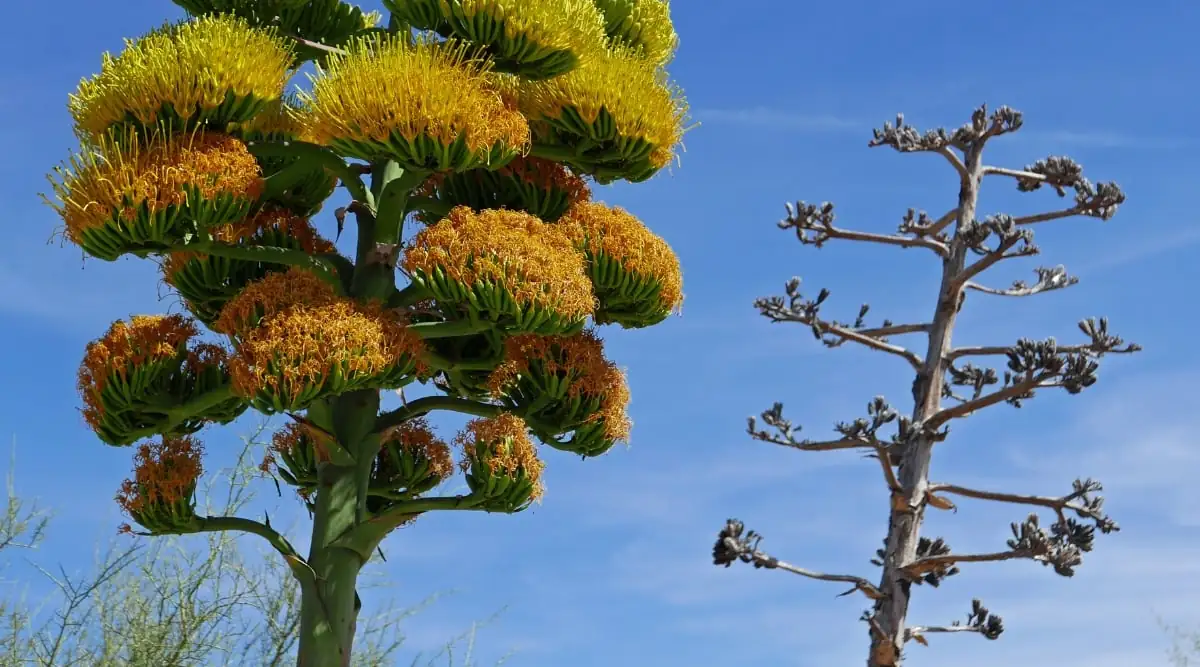
- After a decade or more, the plant pours all its stored energy into a single, spectacular spike packed with yellow‑green blossoms—then the flowering rosette dies.
- Offsets remain: a quiet promise of legacy and renewal.
- Symbolic message: patience rewarded, purpose fulfilled, and the poignant beauty of a last, wholehearted flourish.
Roots of meaning: from Mesoamerican reverence to modern symbolism
- Mesoamerican heart and myth: In Aztec tradition, the goddess Mayahuel is entwined with the maguey (agave), fertility, nourishment, and the sacred drink pulque. Agaves fed, clothed, and sheltered people across arid landscapes; they were more than plants—they were providence. That reverence seeded today’s sense of agave as a giver that endures.
- The “noble” name: The genus name Agave comes from Greek for “illustrious” or “noble,” fitting a plant that lives long, then crowns its life with a breathtaking finale.
- Modern floriography: As succulents swept contemporary design, agave’s language simplified and strengthened—endurance, protection, patience—values as at home on a city balcony as on a desert mesa.
Agave and feng shui: a guardian with caveats
Different feng shui schools read spiky plants in different ways. A practical synthesis:
- Protective placement outdoors: The armored rosette is often used as a symbolic guardian near gates, along property lines, or flanking a sunny entrance. Think of it as a living “keep clear” sign that deflects what you don’t want crossing your threshold.
- Gentle interiors: Indoors, avoid high‑traffic zones, narrow hallways, bedrooms, and tight corners—the spines create visual and literal tension. If displayed inside, give it bright sun, generous space, and keep it away from seating and play areas.
- Soften the stance: Pair with round‑leaf companions or curved containers to balance the agave’s assertive geometry.
- Safety first: Those spines are real; the sap can irritate skin. In homes with small children or curious pets, consider an outdoor placement—or choose a different symbolic plant.
The etiquette and significance of gifting an agave
What your gift says:
- Endurance and resilience: For new businesses, career changes, recoveries, or anyone persevering through a long desert of effort.
- Protection and boundaries: Housewarmings, studio openings, or a new phase that calls for clear lines and confident presence.
- Patience and long‑game devotion: Long projects, studies, marriages, artistic pursuits; a reminder to pace the heart for the big bloom.
When to think twice:
- Tight indoor spaces, households with children or pets, or recipients who prefer soft, touchable plants.
- Very cold climates without a bright, frost‑safe place. (Container culture is fine, but it still needs strong sun and fast drainage.)
How to gift well:
- Choose a manageable specimen for containers (up to about 90 × 90 cm / 35 × 35 in at maturity), and a sturdy, well‑drained pot.
- Tuck in a care card:
- Sun: 6–8 hours of direct light.
- Water: Deeply, then let soil dry fully; keep drier in winter.
- Soil: Gritty, fast‑draining cactus/succulent mix.
- Cold: Protect from freezes; best in USDA Zones 8–11 outdoors.
- Include a pair of thick gloves or a handling note. Mention sap can irritate skin and is mildly to moderately toxic to pets.
- Add a message:
- “May your patience bloom into something towering and unforgettable.”
- “A guardian for your new threshold—strength with grace.”
- “For the long road: steady light, deep roots, and a legendary finale.”
A quick care snapshot (to keep the symbolism alive)
- Light: Full sun is best; bright partial sun is okay in very hot climates.
- Water: Deep but infrequent; never let the pot sit in water or the rosette hold standing water.
- Soil: Extra‑gritty, fast‑draining mix (cactus blend with coarse sand and pumice/perlite).
- Climate: Prefers warmth (about 15–25°C / 59–77°F); protect from hard frost.
- Size: In-ground rosettes can reach 1–2 m (3.3–6.6 ft) across; leaves up to 1–2 m long; flower stalk to about 7–8 m tall.
- Safety: Spines puncture; sap can irritate or blister sensitive skin.
What the bloom ultimately teaches
The Century Plant’s nickname comes from the romance of waiting, not the reality—most mature rosettes flower after 10–25 years, not a hundred. Yet the myth captures something true: agave is a calendar of character. It stores strength without fanfare, stands its ground, and then, when the time is right, spends everything on a towering gesture of life and legacy. Even as that rosette fades, pups remain—a reminder that devotion outlives the moment.
Closing thought
To gift Agave americana is to hand someone a compass: endure, protect, be patient. It’s a living sculpture that guards the threshold and a quiet mentor in the art of timing. In a world that rushes, the agave’s huayu says—wait for your season, and when it arrives, bloom without holding back.