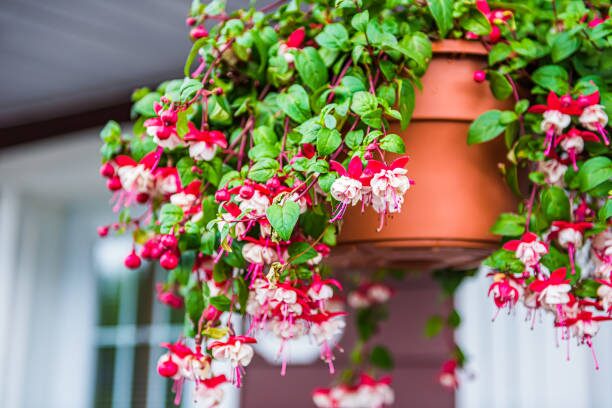
Croton, Codiaeum variegatum, is interior design dynamite: a single plant can read like stained glass—glossy leaves flickering with green, yellow, orange, red, pink, even purple. Style it with intention and it becomes more than a houseplant; it’s the room’s color story, mood lifter, and focal point in one.
Here’s your designer’s playbook for spotlighting croton’s bold palette—where to place it, how to filter light, pair colors, group for humidity, and choose pots and stands that make it shine.
Meet the star: bold foliage with a diva streak
- Botanical notes: Croton (Codiaeum variegatum) is an evergreen shrub in the spurge family (Euphorbiaceae), native to tropical Asia and the western Pacific. Indoors it typically tops out around 12–36 in, though it can reach about 5 ft over time.
- The look: Thick, glossy, leathery leaves in outrageous colorways. Cultivars vary from narrow, strappy forms to broad, oval, lobed, or even spiraled leaves.
- The diva part: It wants bright, filtered light, steady warmth, and generous humidity. Treat it consistently and it will reward you with saturated color and crisp variegation.
Light is your paintbrush: window aspects and diffusing
Croton color deepens with bright, indirect light; too little and it goes greener, too much harsh sun and it can scorch.

- East windows (designer’s favorite): Gentle morning sun brings vibrant color without midday burn. Park your croton within 1–3 ft of the glass.
- South windows: Fantastic brightness; simply hang sheer curtains (40–60% light-filtering) or use light-diffusing blinds during midday to prevent leaf scorch.
- West windows: Strong afternoon sun—use double sheers or place the plant 3–6 ft back from the glass to diffuse the punchy light.
- North windows: Often too dim for rich color. If this is your only option, add a full-spectrum grow light (12–14 hours/day) to preserve variegation.
- Seasonal shift: In winter, bring it a little closer to the light but keep it warm—no cold, drafty panes. Aim to keep it above 59°F/15°C.
Pro tip: Think of sheers as “leaf sunscreen.” If you wouldn’t sit there at noon without squinting, your croton probably needs a filter.
Room-by-room placement that makes it the focal point
Living room
- Corner glow: Place near a south or west window with sheers. A slim pedestal stand lifts the foliage to eye level so those colors read across the room.
- Negative space: Give it breathing room on at least one side so the silhouette pops; don’t wedge it between bulky furniture.
- Night drama: Angle a floor lamp with a warm LED or a stylish grow bulb behind it—backlighting turns the leaves into stained glass after dark.
Bathroom (the spa moment)
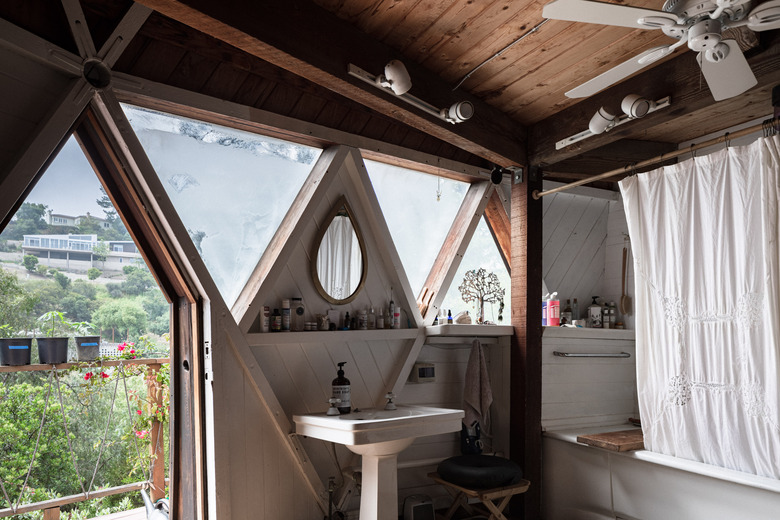
- Bright bathrooms are croton heaven: warm, humid, and steamy. Place near a bright, frosted window or on a stand beside the tub (out of splash zone).
- Windowless bathrooms: Add a dedicated grow light and keep the door ajar for air circulation. Moisture is great; darkness is not.
- Styling: A matte black or brushed brass stand complements the plant’s jewel tones and mirrors common bath fixtures.
Kitchen
- East-facing breakfast nook or counter corner (away from the stove) is ideal: morning sun, all-day brightness, and natural humidity from cooking.
- Use a windowsill cachepot with a hidden saucer to protect surfaces and keep the look tailored.
Home office
- Place by an east window to fuel focus with color. If you sit on endless video calls, position the croton over your shoulder—instant, living “art.”
- Pair it with a slim, mid-century stand to echo clean lines and keep it off floor vents.
Entryway
- A sunny, draft-free foyer wows guests on arrival. Keep it a few feet from frequently opened doors; cold gusts can trigger leaf drop.
Diffuser sheers, blinds, and distance—quick setup guide
- Sheers: 40–60% light-filtering; double-layer west/south if your sun is fierce.
- Slatted blinds: Angle slats upward at midday so light bounces off the ceiling.
- Distance: Start 1–3 ft from east/south windows with sheers; 3–6 ft from west if unfiltered. Adjust weekly based on color depth and leaf edges.
Color pairing: make the palette sing
Croton already brings a saturated spectrum. Use your room’s materials and accents to either echo or contrast.
- Echo (harmonious):
- Warm woods, camel leather, ochre textiles pull the yellows and oranges forward.
- Terracotta, rust, and coral accents sync with red/orange variegation.
- Contrast (dramatic):
- Deep navy, charcoal, forest green, or teal walls make hot variegation look electric.
- Cool metals (brushed nickel) cool the palette; warm metals (brass, gold) amplify heat.
- Pot color strategy:
- Matte white or stone gray = gallery frame for maximum leaf attention.
- Charcoal/black = richer, moodier contrast; great against light walls.
- Mustard or paprika = playful echo of croton’s veins.
- Glossy emerald = tone-on-tone with green fields, letting the reds/yellows pop.
Tie it together with textiles or art: a pillow stripe that picks up the croton’s yellow veins, or an abstract print with the same red-or-teal note. Repetition reads intentional.
Grouping for humidity and sculptural impact
Croton thrives at about 50–70% humidity, and grouping plants helps keep the air comfortably moist.
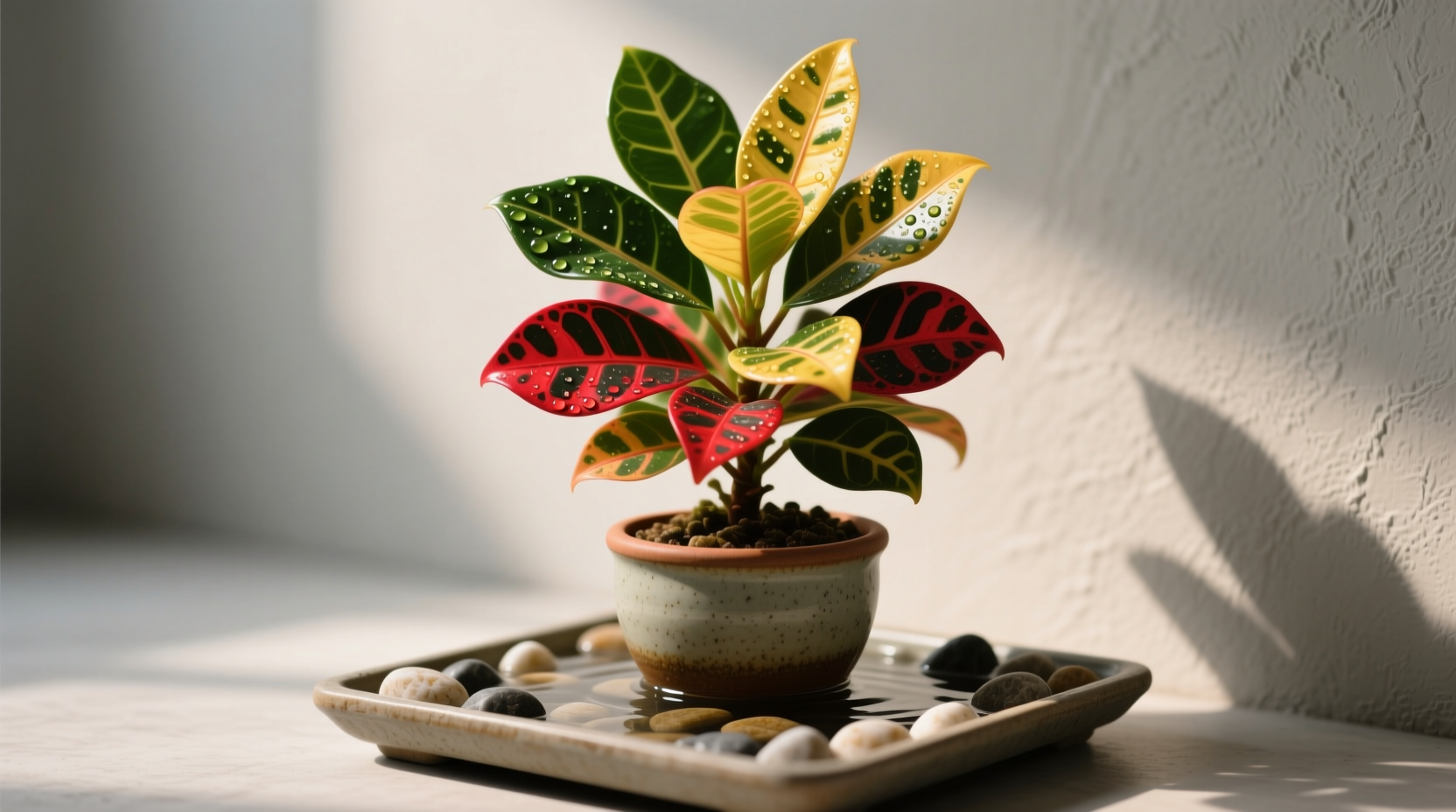
- Compose a trio:
- Tall focal: your croton on a 12–18 in stand.
- Medium companion: another tropical foliage plant with contrasting leaf shape.
- Low “grounder”: a compact plant or a shallow bowl on a pebble tray.
- Pebble tray that disappears:
- Fill a low tray with polished pebbles and water; set the pot on top, not in the water. Slide the tray just under the pot’s footprint for a clean look.
- Humidifier camouflaged:
- Tuck a small humidifier behind the grouping; the plants screen it while sharing the benefits.
- Airflow matters:
- Keep a few inches between leaves for good circulation and to deter spider mites.
Pots, planters, and stands: functional beauty
Form is nothing without function—croton wants excellent drainage and consistent moisture (evenly moist, never soggy).
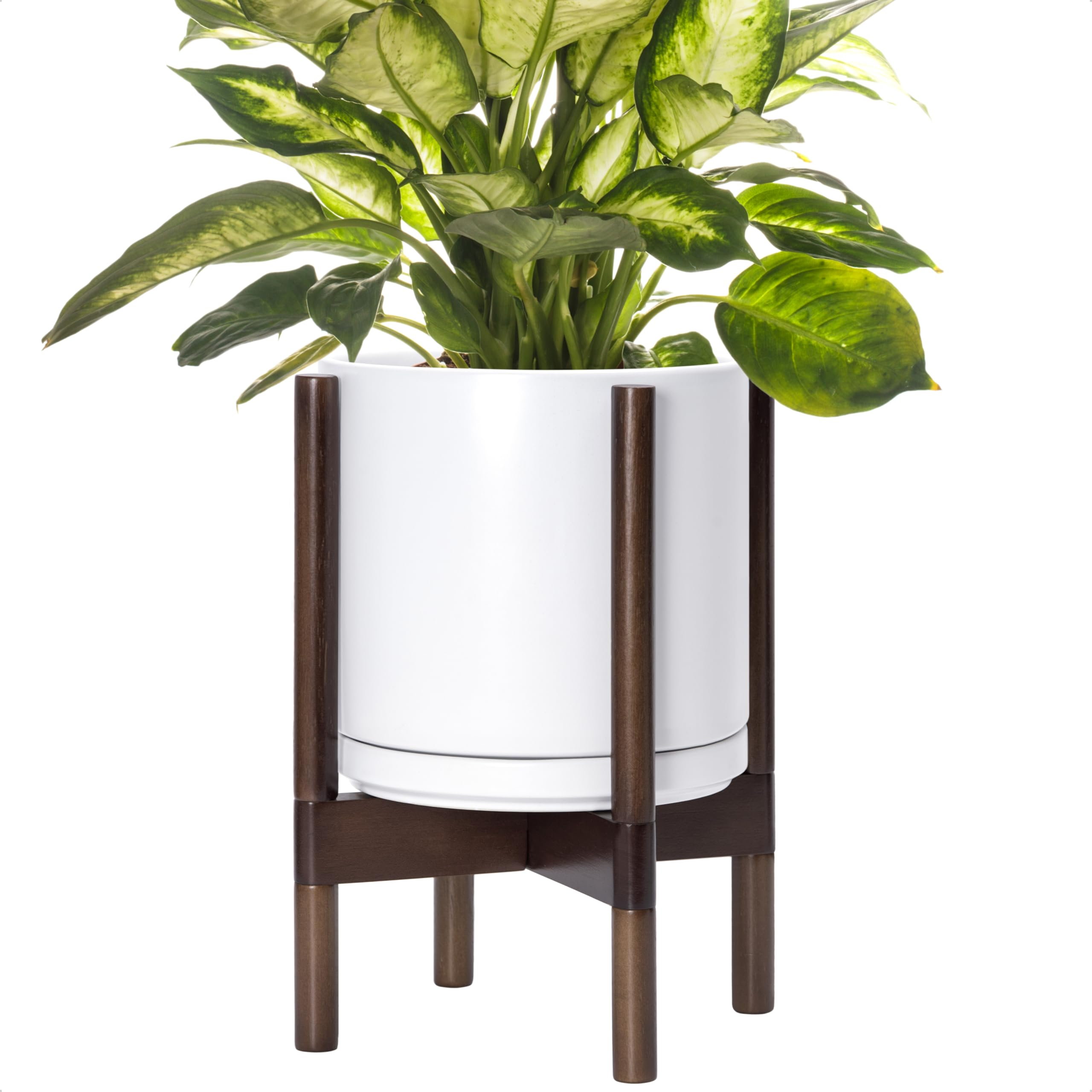
- Drainage first:
- Keep the plant in a nursery pot with holes; drop it into a stylish cachepot with a saucer. This preserves drainage and makes watering tidy.
- Material choices:
- Glazed ceramic or fiberglass: retain moisture—great for croton’s steady drink.
- Terracotta: wicks moisture fast; beautiful, but you’ll water more often. Consider lining with a nursery pot.
- Size and scale:
- Move up only one size when repotting (about 1–2 in wider) to avoid waterlogged soil.
- For a 18–24 in tall plant, a 10–12 in pot typically balances proportion.
- Stands and pedestals:
- Slim, mid-century legs lengthen sightlines and reduce visual bulk.
- A pedestal beside a sofa arm or tub edge brings foliage to eye height where color reads best.
- Rolling caddies protect floors and make rotation easy—just don’t relocate it constantly (see below).
Make it thrive (without the drama)
- Light: Bright, filtered. Gentle sun is fine; avoid harsh midday rays. Low light = greener leaves.
- Warmth: Sweet spot around 70–80°F (21–27°C); keep above 59°F (15°C). No drafts, no AC blasts, no heater blasts.
- Humidity: Target 50–70%. Group plants, use a pebble tray or humidifier. Mist only if your home’s conditions don’t cause leaf spotting and you have good airflow.
- Watering:
- Spring–fall: water thoroughly when the top 0.5–1 in of mix dries. Use lukewarm water.
- Winter: let the surface dry and space waterings (often 10–14 days, depending on your home).
- Never let it sit in water.
- Soil: High-quality indoor mix with added perlite or bark for aeration; slightly acidic to neutral.
- Feeding: During active growth, either:
- Every 2 weeks at label rate, or
- Every 4–6 weeks at half-strength.
Reduce or stop in winter.
- Pruning and shaping:
- Trim in early spring to encourage bushiness; don’t remove more than a third. Cut above a node. Wear gloves—milky sap can irritate.
- Repotting: Spring. Young plants yearly; mature every 2–3 years or when roots peek out.
Consistency counts: Crotons dislike abrupt changes. Find its sweet spot and resist the urge to shuffle it around.
Troubleshooting (designer’s quick read)
- Colors fading to green: Needs more light. Move closer to an east/south window with sheers or add a grow light.
- Leaf drop: Usually stress—cold drafts, low humidity, inconsistent watering, pests, or a recent move. Stabilize conditions; keep it warm and evenly moist.
- Brown, crispy edges: Air too dry or underwatering. Boost humidity and adjust watering cadence.
- Dull or scorched patches: Too much direct midday sun. Add a sheer or increase distance from the window.
- Tiny webs or stippling: Spider mites, especially in dry air. Rinse foliage, raise humidity, treat early with insecticidal soap or horticultural oil.
Safety and placement practicality
- Toxic if ingested; keep away from children and pets. The sap can irritate skin and eyes—use gloves when pruning.
- Elevating on stands not only looks great but also keeps curious paws at bay.
Symbolism: transformation you can decorate with
Croton is often linked with transformation and creative energy—apt for a plant whose leaves intensify and shift color as they mature. While “flower language” traditionally centers on blooms, modern plant symbolism embraces foliage, too. Croton’s evolving palette reads as a design-forward emblem of change, passion, and abundance—perfect for a new home, a refreshed office, or any fresh start.
Buying like a stylist
- Choose vivid, glossy leaves with color carried low on the stems (full, not leggy).
- Skip plants with leaf drop, brown/black spots, or visible pests (check for scale, mealybugs, spider mites).
- Visualize the final vignette: does the leaf shape suit your room’s lines—slender and architectural, or broad and lush?
Three styled vignettes to copy now
- Sun-washed living room tableau:
- East window + sheer linen.
- Croton in a matte white, footed ceramic pot on a walnut stand.
- Navy throw and brass floor lamp behind to backlight evening color.
- Spa-bright bathroom niche:
- Frosted south window with voile curtain.
- Croton on a black metal pedestal; pebble tray tucked beneath.
- Rolled towels in ochre and a small humidifier hidden behind a fern for steady humidity.
- Modern entry moment:
- Bright, draft-free foyer corner.
- Croton in a charcoal planter atop a slim pedestal; abstract art picking up a single red from the leaves.
- Simple bench opposite to create breathing space and a gallery feel.
Bring the light, frame the color, and give your croton the warm, humid stability it loves. Done right, it doesn’t just decorate a room—it defines it.