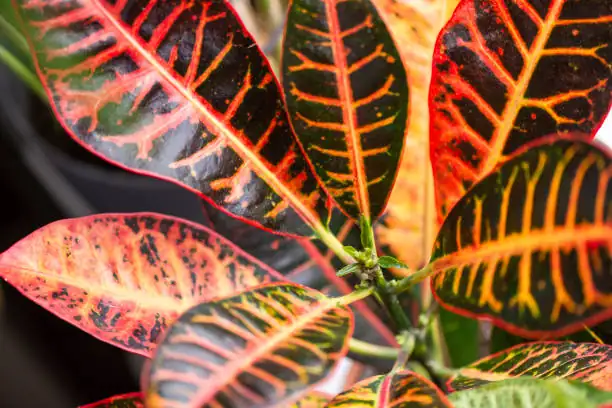
If ever a plant embodied the thrill of change, it’s Croton—Codiaeum variegatum, known in Chinese as 变叶木, “the leaf that changes.” One day it’s lime-slashed and lemon-flecked; the next, it’s flushing copper, ember, and plum as light shifts and leaves mature. No wonder modern Chinese floriography (hua yu) has adopted croton as a lively emblem of transformation, creativity, and abundance—meanings born not from Victorian parlors but from today’s houseplant culture, design-savvy homes, and a renewed love of expressive foliage.
Meet the shapeshifter: what makes croton so expressive
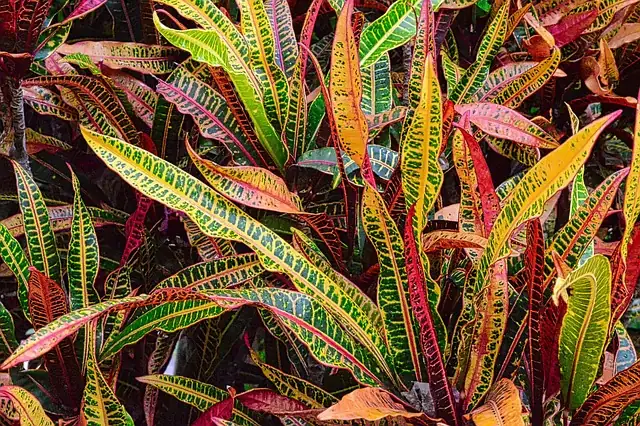
- A tropical evergreen from Southeast Asia to the western Pacific, croton is grown for thick, glossy leaves splashed in green, yellow, orange, red, pink, and purple. Leaf shapes vary wildly by cultivar—narrow and lance-like, broad and oval, wavy, lobed, even spiraled.
- The colors aren’t static. In bright, filtered light, reds deepen, golds sharpen, and pinks glow; in dimmer rooms, the plant drifts greener. This visible evolution is the heartbeat of its symbolism.
- As a houseplant, it’s a glorious diva: keep it warm, evenly moist (never soggy), and humid. A bright bathroom or steamy kitchen window often makes it sing.
Modern flower language (花语): why croton means transformation, creativity, abundance
Contemporary Chinese hua yu has expanded beyond bouquets to celebrate foliage that tells a story. In small urban spaces, plants with character—texture, color, movement—carry the message. Croton’s language is recent, lived-in, and visual:
Transformation
- Leaves literally change color as they mature, mirroring personal growth and new phases of life.
- Brighter light reveals dormant pigments—an elegant metaphor: give yourself the right conditions and your true colors emerge.
Creativity
- Painterly variegation, surprising leaf shapes, and named cultivars with signature palettes make croton the houseplant world’s “artist’s palette.”
- Its unpredictable marbling and vein tracing speak to originality and playful experimentation.
Abundance and upbeat energy
- Bold warm tones—gold, tangerine, cherry—read as prosperity, confidence, and a can‑do glow.
- Dense, glossy foliage suggests fullness and thriving—great visual shorthand for “may your cup overflow.”
Note on origins: This is not classic Victorian floriography. It’s a modern reading popularized by contemporary Chinese-speaking communities, plant shops, and online houseplant culture that prizes how croton’s living color shift mirrors real-time change.
Warding off the “bad stuff”: regional beliefs in Southeast Asia
In parts of Southeast Asia, crotons are planted by gates and thresholds to keep negative energy at bay and invite good fortune. The idea is intuitive: a fiery, vibrant shrub “holds the line,” signaling vigor and clarity at the boundary of home and street. Today, many urban plant lovers borrow this protective vibe indoors—placing croton near an entry, studio doorway, or the spot where they sit down to work, as a colorful guardian of focus and optimism.
Feng shui, but make it plant‑friendly
Croton blends the living Wood element (it’s a plant) with Fire (its reds and oranges). Use that synergy while giving the plant what it truly needs.
Best placements (and why)
- East (Health/Family) or Southeast (Wealth): Wood thrives here; croton’s lush growth and gold accents echo vitality and prosperity.
- South (Fame/Reputation): Fire is favored; red/orange variegation helps “light the beacon” for recognition.
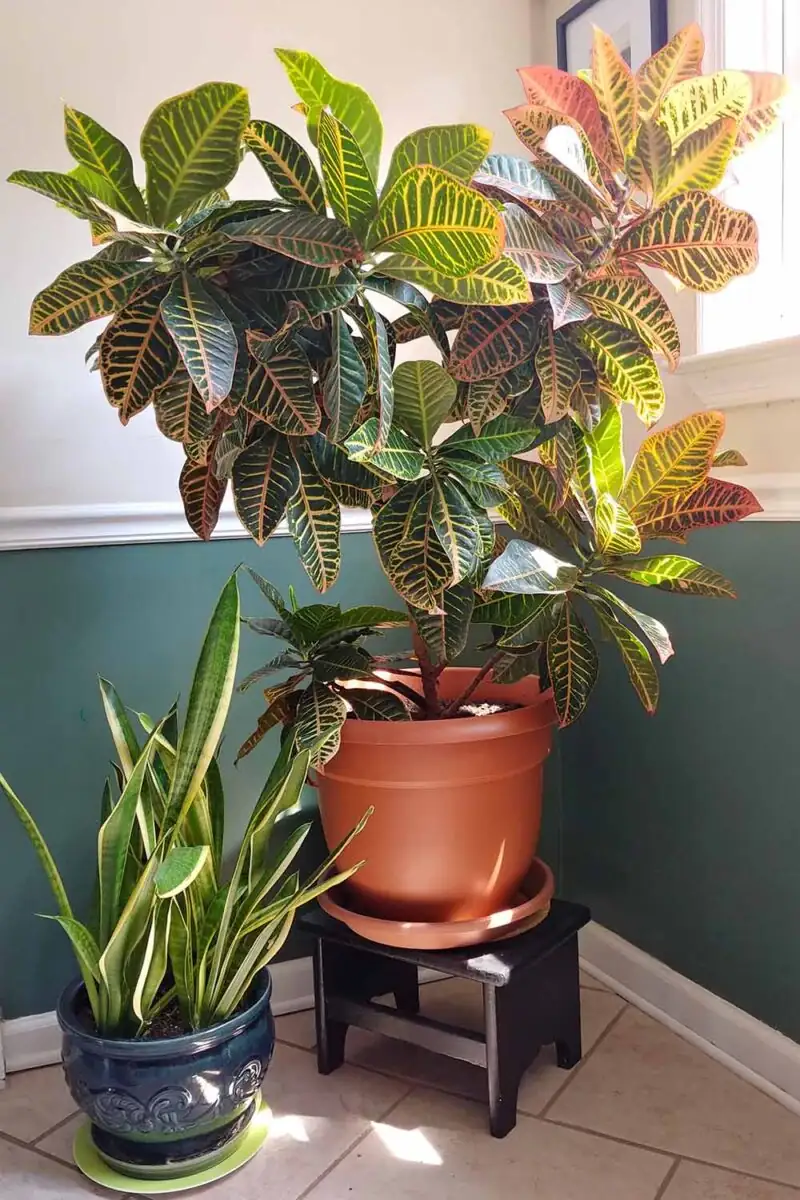
- Near a bright, filtered window (east/south/southwest) is ideal. Gentle morning sun is great; avoid harsh midday rays that can scorch.
Environmental musts (to keep the qi—and the plant—strong)
- Light: Bright, indirect. Too little light = color fades greener.
- Warmth: Keep it steady, roughly 21–27°C (70–80°F). Avoid chills; don’t let it drop below 15°C (59°F).
- Humidity: Aim for 50–70%. Use a humidifier, pebble tray, or plant groupings; mist only if it doesn’t spot leaves and there’s airflow.
- Drafts and blasts: Keep away from AC vents, space heaters, and cold doorways.
- Styling notes: Odd-number groupings feel dynamic; a warm-toned pot (terracotta, ochre, deep red) subtly amplifies the Fire message without overwhelming your space.
Safety side note: Croton is toxic if ingested and its milky sap can irritate skin—keep it out of reach of children and pets, and wear gloves when pruning.
When to gift croton: the ultimate “new chapter” plant
A croton is a vibrant way to say “I see your change—and I’m cheering you on.”
- Housewarming or first apartment: A bold welcome that declares, “May this home be lively and abundant.”
- Grand opening, office move, or startup launch: Energizes reception areas and creative studios; choose cultivars with sunny golds for a prosperity nod.
- Graduation or career pivot: An emblem of reinvention and confidence.
- Post‑renovation “reveal”: A living color anchor that ties a room’s palette together.

Pro tip for personalization:
- Red/orange-forward cultivars = courage, visibility, momentum.
- Gold/yellow accents = prosperity and optimism.
- Pink/purple notes = imagination and artistic flair.
- Greener, veined forms = steady growth and balance.
Include a handwritten note naming its hua yu—Transformation. Creativity. Abundance.—and an intention for the recipient’s next season.
A quick care-and-meaning cheat sheet to tuck into the gift
- Light: Bright, filtered. More light = richer color.
- Water: Keep evenly moist; water when the top 0.5–1 inch (1–2.5 cm) dries. Never let it sit in water.
- Climate: Warm and steady; avoid sudden changes and drafts.
- Humidity: 50–70% is ideal; group plants or use a humidifier.
- Grooming: Prune in spring to keep it bushy; wear gloves (sap can irritate).
- Pests: Watch for spider mites, scale, and mealybugs—wipe leaves and treat early.
- Placement reminder: Bathrooms and warm kitchens often provide the humidity croton loves—just be sure the light is bright and filtered.
A brief backstory for plant nerds and poets alike
Croton has been captivating plant lovers for centuries—written about as early as 1578 and introduced to European gardens by the late 1600s before dazzling American collectors in the 1870s. Yet it feels most at home in today’s apartments and studios, where its shifting palette matches our shifting lives. Place it where you brainstorm, by the threshold where you greet opportunity, or in the nook where you hope to grow—then watch its colors answer the call.
In a world that changes by the day, croton doesn’t just keep up—it celebrates. That’s the heart of its modern hua yu: may your life reveal its richest colors, one new leaf at a time.