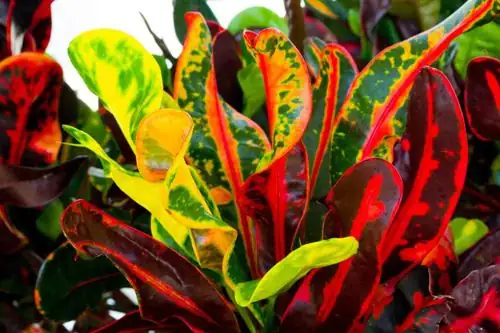
Meet the plant that never wears the same outfit twice. Codiaeum variegatum—better known as croton or Joseph’s coat—is a kaleidoscope shrub from tropical Asia and the western Pacific that turns light and time into art. Its leaves twist, curl, lob, and spiral; its colors slide from lime to lemon to fire-engine red as each leaf matures; and a single species has given rise to hundreds of dazzling cultivars. Ready for bite-sized wonders?
The Shape-Shifter of Houseplants
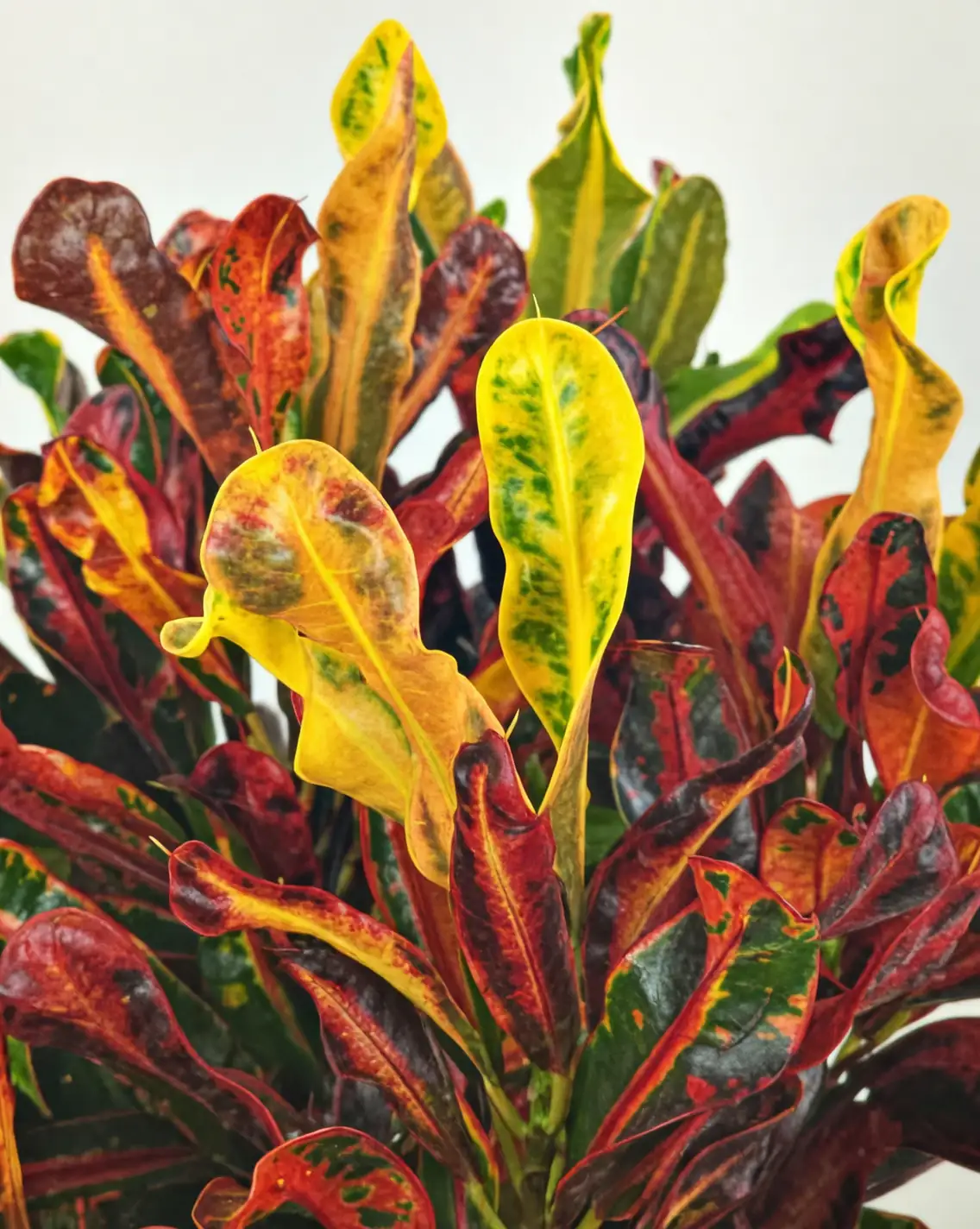
- One species, endless looks: Most crotons you see—from broad-leaved ‘Petra’ to corkscrew ‘Mammy’ and speckled ‘Gold Star’—trace back to the same species, Codiaeum variegatum. Horticulturists selected eye-popping “sports” (spontaneous mutations) and turned them into stable cultivars. That’s why one species spawned hundreds of forms.
- A leaf costume party: Depending on the cultivar, leaves can be narrow and linear, broad and oval, lobed like a quirky oak, deliciously wavy, or even twisted into spirals. They’re thick, leathery, and glossy, 2–12 inches long—true statement foliage.
Why the Colors Keep Changing (and How to Nudge Them)

- A built-in “mood ring”: Croton leaves don’t color up all at once. Young leaves often emerge greener, then layer on yellows, oranges, reds, pinks, and purples as they mature.
- Light is the paintbrush: Brighter, filtered light sharpens reds and yellows; dimmer light nudges foliage back toward green. Think: spotlight equals fireworks; shade equals camouflage.
- Home tip to amp the glow:
- Move your croton near a bright east, south, or west window with filtered light.
- Avoid harsh midday sun that can scorch or dull leaves.
- Keep it warm and stable (ideally 70–80°F / 21–27°C) with humidity around 50–70%—color improves when the plant isn’t stressed.
The Curious Case of (Almost) Invisible Flowers
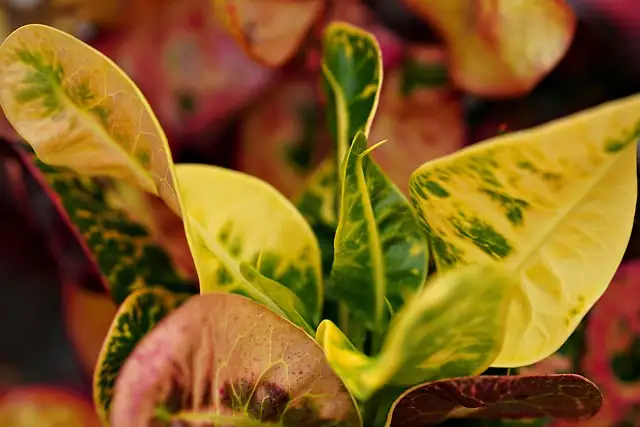
- Why you rarely see blooms indoors: Crotons do flower, but usually outdoors in spring in frost-free climates. Indoors, it’s occasional at best because the plant craves intense, steady tropical light, warmth, and mature size to “decide” it’s bloom time.
- What the blooms actually look like: They’re small and understated on slender spikes. Male flowers are whitish with tiny petals and a flurry of stamens; female flowers are yellowish and lack petals. Leaf lovers don’t mind—crotons are all about the foliage finale.
Color Alchemy: The Science-y Secret
- Multiple pigments team up: Greens come from chlorophyll; yellows and oranges from carotenoids; reds and purples from anthocyanins. Brighter light encourages those showy pigments to develop, while lower light prompts more chlorophyll so the plant can photosynthesize efficiently—hence the green “fade.”
From Jungle Shrub to Coffee-Table Diva
- Wild size vs. living room size: In the ground in tropical climates, croton becomes a branching shrub up to about 10 feet tall. Indoors, it’s usually 12–36 inches, sometimes stretching to 5 feet with time and great care.
- The diva tendency: Croton loves consistency. Drafts, chills below about 59°F (15°C), low humidity, or abrupt moves can trigger dramatic leaf drop. Keep it warm, evenly moist (never soggy), and humid. A bright bathroom? Chef’s kiss.
Quirks You Can Brag About
- Family ties: It’s in the spurge family (Euphorbiaceae), making it a cousin of poinsettia—and it shares the telltale milky sap.
- The sap story: That milky latex can irritate skin and eyes. It’s also toxic if ingested by humans or pets—so admire with your eyes, prune with gloves, and keep it out of paw’s reach.
- Sports happen: Crotons are notorious for throwing “sports,” where a shoot suddenly looks nothing like its parent. Plant collectors pounce—today’s hallway showstopper could be tomorrow’s named cultivar.
- Indoors = humidity hack: Grouping several leafy plants together or setting the pot on a pebble tray lifts local humidity. Your croton will thank you with tighter, shinier growth.
Fast FAQ—Fun Edition
- How do I keep the colors loud? Give bright, filtered light. Too little light? Expect a drift back to green.
- Why is it dropping leaves after I moved it? It hates sudden change and chills. Keep it above 59°F (15°C), boost humidity, water evenly, and let it settle.
- Can I grow it outdoors? Yes—year-round mainly in frost-free zones (USDA 11–12). Otherwise, summer it outdoors and bring it in before nights cool.
Mini Care Cheatsheet for Maximum Wow

- Light: Bright, indirect; a touch of gentle sun is helpful. Avoid harsh midday rays.
- Water: Evenly moist, never soggy. Let the top 0.5–1 inch (1–2.5 cm) dry before watering in spring–fall; go lighter in winter.
- Temperature: Aim for 70–80°F (21–27°C); keep above 59°F (15°C).
- Humidity: 50–70% is a sweet spot. Pebble tray, humidifier, or plant grouping helps.
- Feeding: During spring–fall, use a balanced liquid fertilizer either lightly every 2 weeks or at half-strength every 4–6 weeks. Ease off in winter.
- Pruning: Early spring to shape and encourage bushiness; wear gloves—sap can irritate.
Symbolism: The Leaf That Means “New Chapter”
Croton’s color-shifting foliage has long symbolized transformation and change. Those evolving patterns also evoke creativity, passion, and abundance—perfect as a gift for graduations, housewarmings, or anyone stepping into a bold next act. The symbolism likely grew alongside its horticultural history: as cultivars multiplied and leaves morphed through seasons and light, the plant itself became a vivid metaphor for reinvention.
Name Game Bonus
“Croton” here refers to Codiaeum variegatum, not the separate Croton genus used for other plants. Common names can be tricksters—this one just happens to wear the more famous moniker.
Five Snackable Facts to Share
- One species, hundreds of cultivars: most croton varieties are all Codiaeum variegatum.
- Color intensity is light-driven—turn up filtered brightness to turn up the reds and golds.
- Leaves keep changing as they age, so your plant’s “palette” evolves month by month.
- Outdoors in the tropics, croton becomes a sizable shrub; indoors it’s a compact star.
- It’s a spurge-family cousin of poinsettia—and yes, that milky sap is the giveaway.
If you love plants with personality, croton is a full-blown character: dramatic, demanding, but absolutely unforgettable when the light hits just right.