Troubleshooting made simple: how to spot early symptoms on Cornus officinalis and use integrated pest management before problems snowball.
Japanese cornel (Cornus officinalis) is the kind of plant that makes you look good as a gardener: clouds of bright yellow flowers in late winter, glossy red fruits and fiery fall color, and handsome, exfoliating bark when everything else looks bleak. It’s also surprisingly tough and, when sited well, usually trouble-free. The trick is to notice tiny changes early and respond with smart, low-effort fixes. That’s integrated pest management (IPM) in a nutshell—monitor first, lean on cultural care, then use targeted controls only if needed.
Below is a practical, step-by-step guide tailored to Japanese cornel so you can catch issues before they cascade.
Meet Cornus officinalis at a glance (ID and preferences)
- Form and size: A multi-stemmed large shrub/small tree, typically 15–26 ft (4.5–8 m) tall and 10–15 ft (3–4.5 m) wide, with an open, rounded crown.
- Year-round interest:
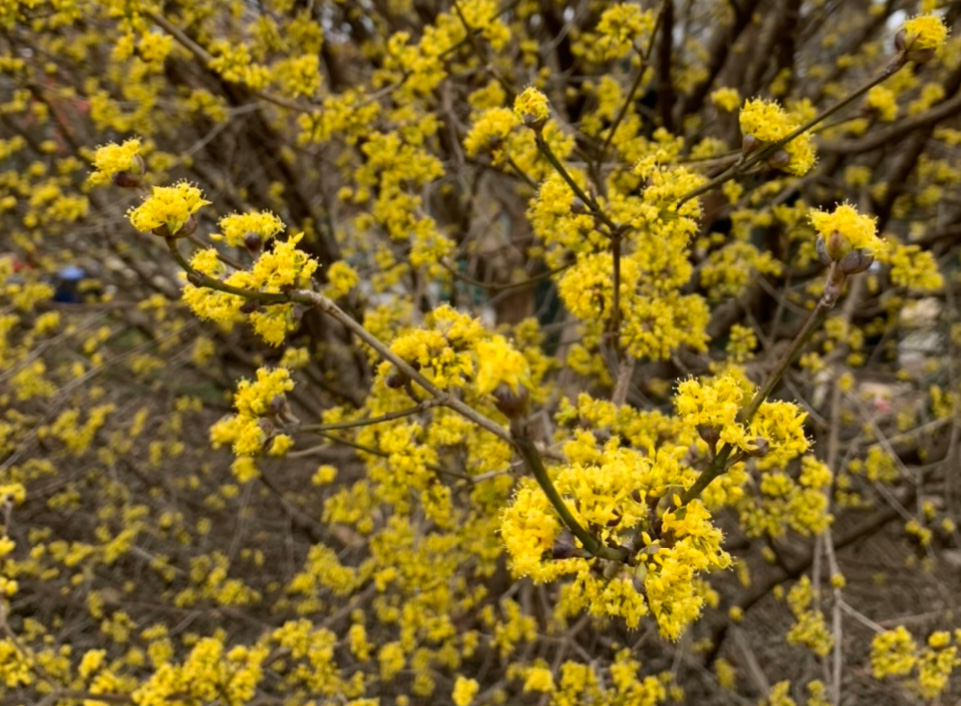
- Late winter to early spring: Tight clusters of tiny, bright yellow flowers open on bare stems, often for up to 30 days.
- Summer: Dark green, oval leaves with prominent veins.
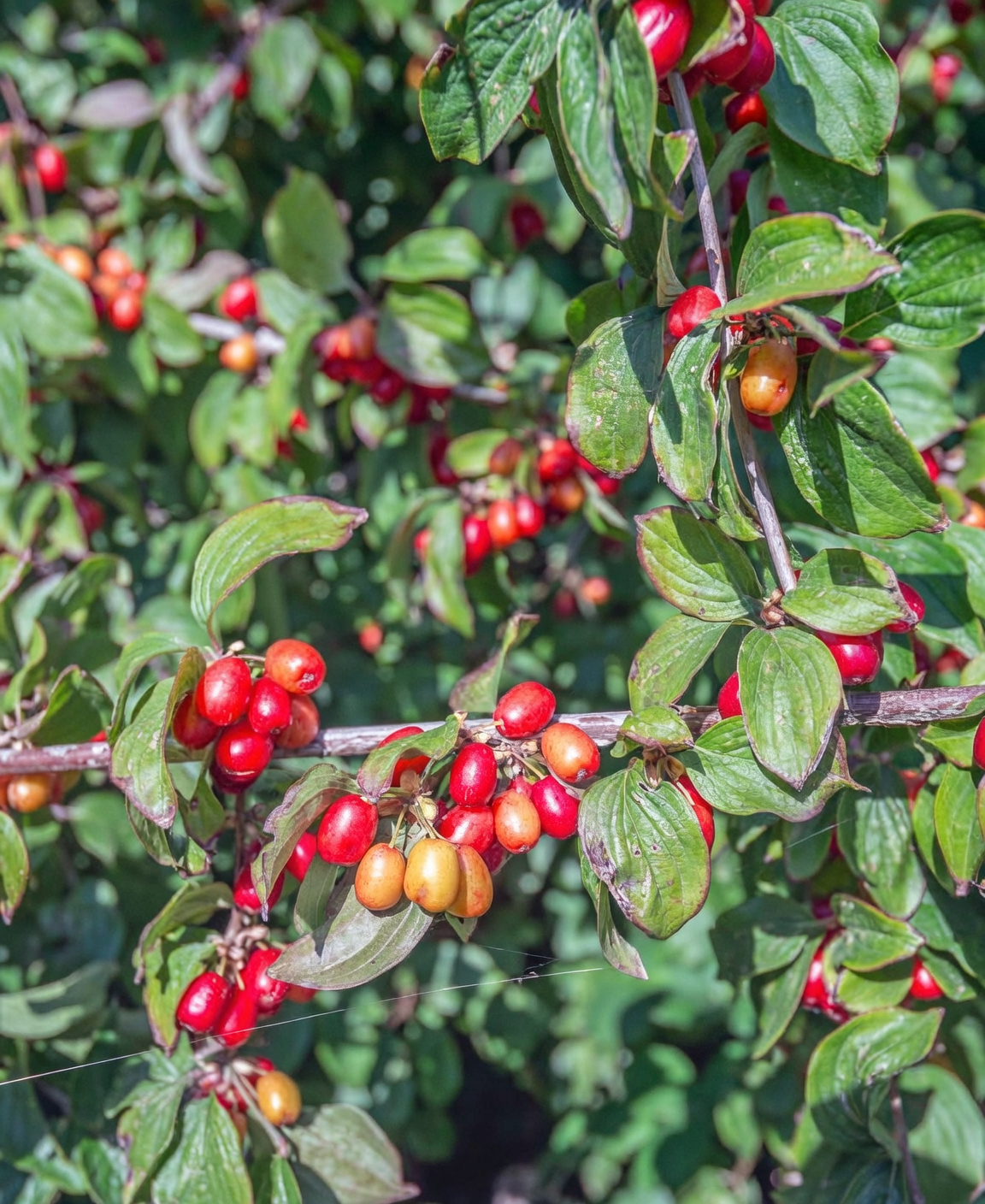
- Fall: Leaves blaze yellow, red, purple, and orange; glossy red, olive-like fruits ripen.
- Winter: Gray-brown bark peels in attractive patches.
- Best growing conditions:
- Light: Full sun to partial shade (light afternoon shade in hotter regions).
- Soil: Fertile, well-drained loam/sandy loam; slightly acidic to neutral, roughly pH 6.5–7.5.
- Water: Even moisture while establishing; once established, water deeply but less often—if the top ~1 inch (2.5 cm) of soil is dry, it’s time to water.
- Climate: USDA 5–8; happiest around 60–75°F (15–24°C); cold-hardy to about 0°F (-18°C).
The early-warning tour: what to watch, season by season
- Late winter–early spring (flower time)
- Buds fail to open evenly, or clusters look blighted: possible frost nip or early-season fungal blight.
- Loose or sloughing bark on lower trunk: check carefully for borer activity.
- Spring–early summer (leaf-out)
- New leaves curl, pucker, or feel sticky: sap-suckers like aphids or soft scales may be at work.
- Pale, overall yellowing: nutrient imbalance or high pH; also consider low nitrogen.
- Water-soaked patches that turn tan with purple margins: early leaf spot.
- Mid–late summer
- White, dusty coating on leaves: powdery mildew.
- Scorching or browning edges: heat/drought stress or restricted roots.
- Twigs die back from the tip with a sunken, dark patch on the stem: canker.
- Fall–winter
- Thin canopy or short internodes (stunted growth): chronic drought or poor soil fertility.
- Multiple epicormic sprouts/suckers from the base: stress signal—check roots, drainage, and trunk wounds.
Common issues on Japanese cornel—and how to stop them early
Good news: Cornus officinalis is typically resilient. When problems appear, they’re often environmental. Still, a few insects and diseases can show up. Catching them early makes control simple.
1) Environmental (abiotic) stressors
- Drought/heat stress
- Tells: Leaf edge scorch, midday wilting that recovers at night, premature leaf drop.
- First response: Deeply water the root zone; refresh a 2–3 in (5–8 cm) mulch layer, keeping it off the trunk; provide light afternoon shade if site is hot and exposed.
- Poor drainage/overwatering
- Tells: Leaves yellow from the inside of the canopy out; soil smells sour; growth stalls.
- First response: Reduce watering; improve drainage (raise the planting area, add coarse organic matter); avoid compacted soils.
- High pH or low fertility
- Tells: Uniform leaf yellowing; green veins with pale blades in high-pH soils.
- First response: Light, balanced feeding at half-rate in spring; top-dress with compost; confirm pH before amending.
2) Insects (usually minor, but worth monitoring)
- Aphids
- Tells: Curling new leaves, sticky honeydew, sooty mold on leaves below.
- IPM: Blast with water; encourage lady beetles and lacewings; spot-treat with insecticidal soap or light horticultural oil if needed.
- Scale insects (soft and armored)
- Tells: Dome- or plate-like bumps on stems; soft scales excrete honeydew (sooty mold follows), armored scales do not.
- IPM: Prune out heavily infested twigs; hand-scrub small colonies; apply horticultural oil. Timing notes: use a dormant oil just before buds swell, or a lighter “summer” oil after bloom to avoid coating open flowers.
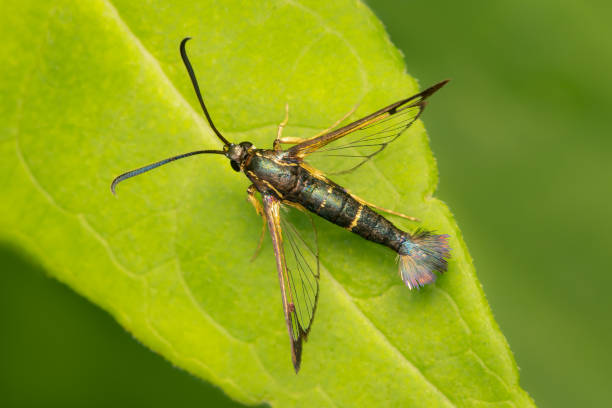
- Borers (notably dogwood borer on some dogwoods)
- Tells: Loose/flaking bark on trunk or lower branches, small exit holes, fine sawdust-like frass, branch dieback.
- IPM: Prevention is key—avoid trunk wounds, keep trees vigorous (steady moisture, no overfertilizing), and maintain mulch (not touching bark). If you confirm borer galleries, consult a certified arborist for timing-specific trunk treatments; prune and destroy infested wood.
3) Diseases (occasional on this species)
- Leaf spots/anthracnose-like symptoms
- Tells: Tan to brown leaf blotches, sometimes with purple margins; worst after cool, wet spells.
- IPM: Rake and destroy fallen leaves; water at soil level; thin interior shoots just after flowering to improve airflow.
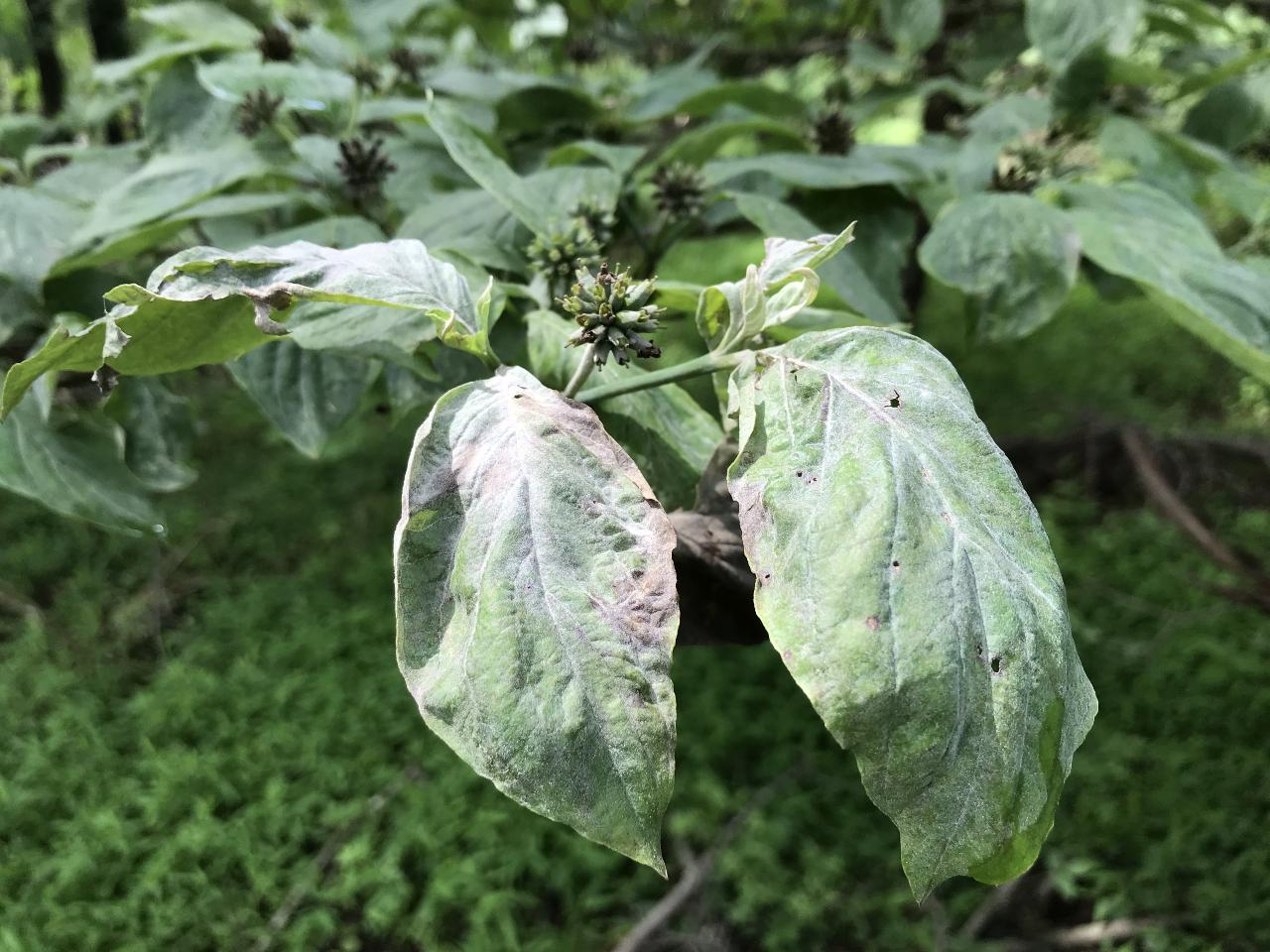
- Powdery mildew
- Tells: White, talc-like coating, often starting mid–late summer. Early infections can distort new growth.
- IPM: Improve sunlight and airflow; avoid excess nitrogen; if early and severe, consider a labeled low-impact fungicide (e.g., horticultural oil or sulfur formulations) and ensure thorough coverage. Late-season mildew is mostly cosmetic—often no spray needed.
- Cankers
- Tells: Sunken, cracked lesions on stems; dieback beyond the canker.
- IPM: Prune out affected wood well below symptoms just after bloom; sterilize tools between cuts; reduce plant stress (correct watering, mulch, no bark injury).
- Root rots in saturated soils
- Tells: Chronic decline, poor vigor, sparse canopy; roots may be dark/mushy.
- IPM: Prevention via good drainage; avoid planting in low, waterlogged spots. There is no reliable rescue once roots are severely rotted—improve site conditions before replanting.
Your IPM game plan
Cultural foundations (solve 80% of problems)
- Site and soil: Plant in well-drained, fertile loam/sandy loam; aim for pH 6.5–7.5.
- Light: Full sun for best bloom and fruit; in hotter climates, give light afternoon shade.
- Water: While establishing, keep soil evenly moist—not soggy. Thereafter, water deeply when the top ~1 inch is dry; in many gardens, this averages about every two weeks in the growing season, adjusted for heat and rainfall.
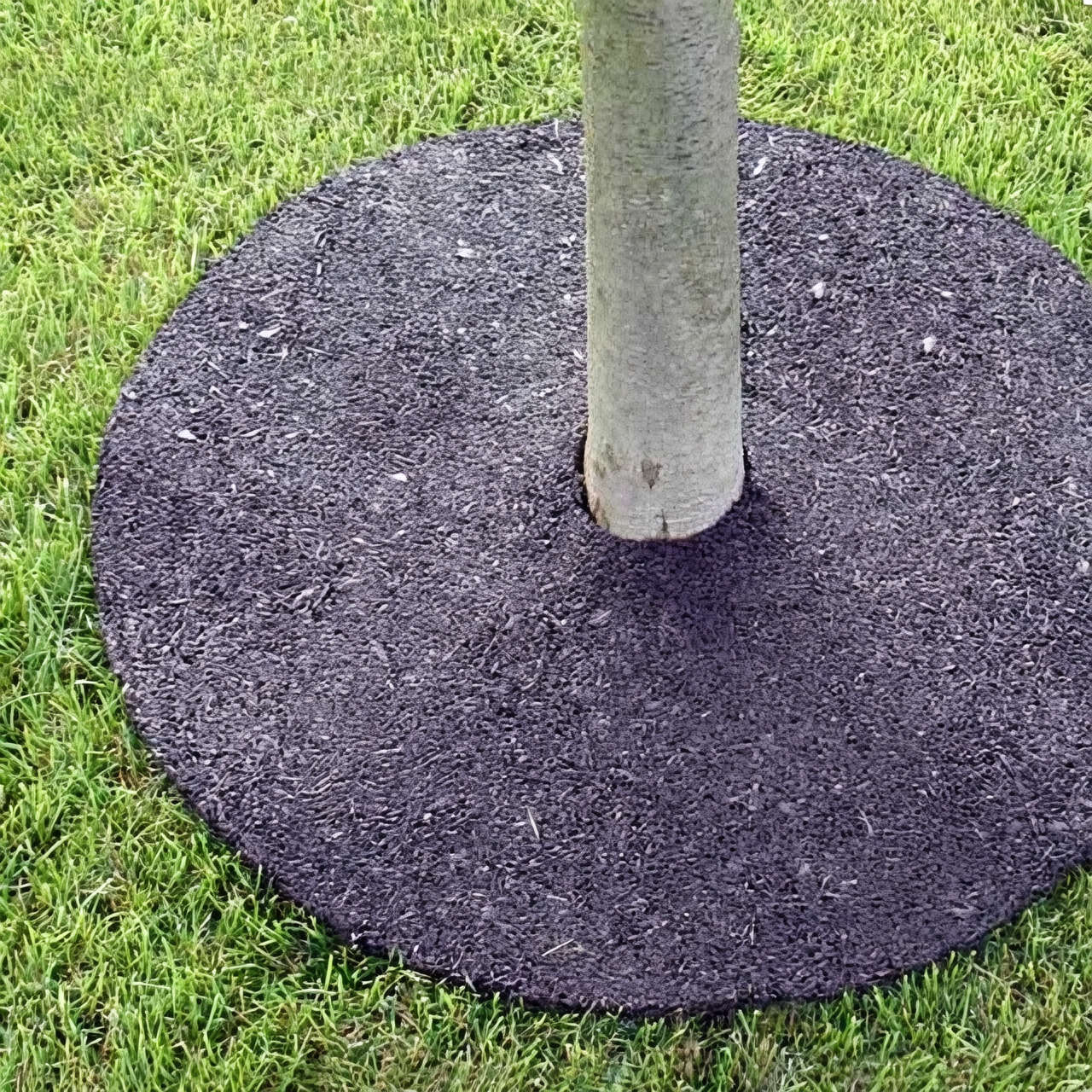
- Mulch: Maintain 2–3 inches over the root zone, pulled back from the trunk; this stabilizes moisture and cools roots.
- Pruning: Right after flowering. Remove dead/diseased/crossing branches first; then lightly shape. Avoid hard cuts unless renovating. Remove suckers at the base if they appear.
- Sanitation and airflow: Rake infected leaves, thin crowded interior twigs after bloom, and avoid overhead irrigation.
Monitoring routine and thresholds
- Weekly 1-minute walk-throughs in spring and early summer; biweekly in midsummer:
- Flip a few leaves—look for honeydew/sooty mold and white powder.
- Inspect lower trunk for loose bark or frass.
- Scan for sudden tip dieback or odd patches of discoloration.
- Act when:
- Sooty mold appears under multiple branches (scale or aphids present).
- More than scattered, late-season leaf spots show up early in the season.
- Any evidence of borer galleries, exit holes, or rapidly expanding cankers.
Targeted, lowest-risk controls
- Sucking insects (aphids, soft scales)
- Start with water sprays and pruning of heavily infested shoots.
- Follow with insecticidal soap or light horticultural oil; reapply as labeled.
- Treat in the evening and avoid spraying open bloom to protect pollinators.
- Armored scales
- Scrape small patches; use dormant oil before bud swell, or summer oil after bloom for crawlers.
- Foliar diseases
- Prioritize sanitation and airflow. If early and spreading fast, use a labeled, protective fungicide for ornamental dogwoods, applied preventatively and repeated per label.
- Borers
- Focus on prevention and vigor. Confirmed infestations warrant precise, professionally timed treatments; consult a certified arborist.
Always read and follow local regulations and product labels. Test any spray on a small area first.
When to call a pro
- You suspect borers or see dieback paired with trunk wounds.
- Canopy decline continues despite corrected watering and soil fixes.
- You have a specimen tree with valuable form you’d like to preserve through selective, expert pruning.
Quick diagnostic cheatsheet
- Sticky leaves + black sooty film + ants: Aphids or soft scales → wash foliage, encourage predators, use soap/oil.
- Bumps on twigs that don’t brush off easily: Scale insects → prune worst twigs, oil at proper timing.
- Powdery white coating starting mid–late summer: Powdery mildew → improve airflow; early severe cases may warrant oil/sulfur; late cases often cosmetic.
- Brown leaf edges in hot spells: Heat/drought stress → deep watering, mulch, light afternoon shade.
- Yellowing leaves in persistently damp soil: Poor drainage/overwatering → reduce irrigation, improve drainage.
- Sunken, dark lesion on a twig with dieback beyond: Canker → prune out after bloom, sterilize tools.
- Loose bark, small exit holes, frass at trunk: Possible borer → avoid trunk injury; consult an arborist for timing-specific control.
A brief note on symbolism and fruit
In East Asian tradition, Cornus officinalis is associated with longevity, health, and prosperity—a fitting story for a plant that flowers so bravely at winter’s end and bears medicinally valued, tart red fruits. Think of this “flower language” less as a strict code and more as cultural poetry born from centuries of observation and use. The fruits are edible (very sour fresh), better cooked into preserves or syrups. The plant isn’t known to be toxic to people or pets.
Keep it shining
Japanese cornel rewards steady, simple care: good drainage, the right light, even moisture, and pruning after its late-winter show. Pair that with a quick weekly look for early warning signs, and most issues never get a chance to snowball. Your payoff is that four-season performance—golden bloom, summer shade, fall fireworks, and winter bark—that makes this species such a keeper.