Is your fuchsia throwing a tantrum—buds dropping, flowers melting, pests moving in? Take a breath. Fuchsia × hybrida is a cool-loving, bright-light diva with simple needs. Nail a few key tweaks today, and you can stop the spiral fast.
Below is your rapid-response playbook for the biggest problems—bud/flower drop, gray mold (Botrytis), rust, aphids, spider mites, and whiteflies—plus easy, today-ready fixes.
First, set the stage (prevents 80% of issues)
- Light: Bright light with gentle direct sun, especially mornings. Keep out of harsh midday/afternoon sun in summer. Indoors, east or bright south window; never a dim corner.
- Temperature: Loves cool: 15–22°C (59–72°F). Above 25°C (77°F), growth slows; ~35°C (95°F) can be deadly. In heat waves, move to bright shade with strong airflow.
- Moisture: Evenly moist soil—never bone-dry, never waterlogged. Water thoroughly when the surface dries, then drain well.
- Airflow + humidity: Likes moisture in air but hates stale, damp pockets. Pair any humidity boosts with good ventilation.
- Feeding: During active growth, feed every 2 weeks with a balanced-to-blooming formula; pause in peak heat.
- Ethylene alert: Keep away from ripening fruit (apples, bananas, avocados) and exhaust fumes—ethylene gas triggers bud drop.
—
Bud and flower drop: fix the “Big Three” fast
Most fuchsia bud/flower drop traces to one (or more) of these: heat, low light, or ethylene.
1) Heat stress
What you see
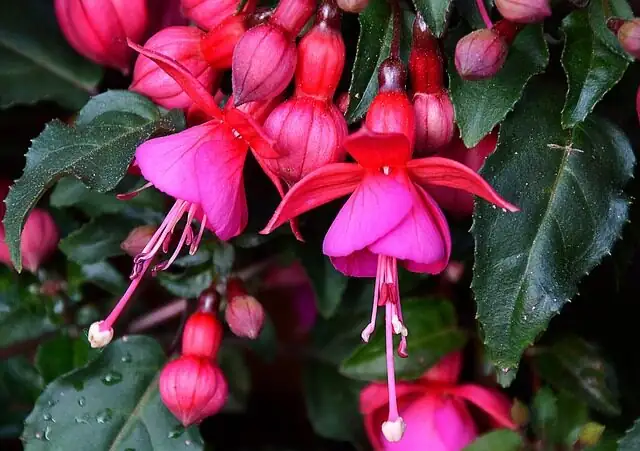
- Yellowing leaves, buds that yellow and bail before opening, blooms that collapse quickly.
Do this today
- Move to bright shade with a breeze; give only gentle morning sun.
- Keep soil lightly and evenly moist; never soggy. In heat, water may be needed every 1–2 days.
- Mist lightly for cooling in the morning only, and increase airflow so foliage dries quickly.
- If the plant is lanky or exhausted, cut back by 1/3–1/2 to help it “rest” and rebound when temps cool.
Prevent it
- Aim for 15–22°C (59–72°F). Shield from hot afternoon sun and hot, stagnant patios.
- Pause fertilizer during hot spells.
2) Low light
What you see
- Leggy, weak growth; pale leaves; fewer buds; buds dropping right before opening.
Do this today
- Move to a brighter spot—morning sun is ideal. Indoors, park it at a bright east or south window.
Prevent it
- Keep the canopy thin enough that light reaches interior growth.
- Pinch young plants early in the season to build a fuller, well-lit basket.
3) Ethylene exposure
What you see
- Seemingly healthy plant suddenly dropping loads of buds/flowers.
Do this today
- Relocate away from ripening fruit bowls, compost bins, garages, and gas appliances.
- Improve ventilation around the plant.
Prevent it
- Never display fuchsia near stored produce. Keep windows cracked for fresh air.
—
Botrytis (gray mold): stop the fuzz before it spreads
What you see
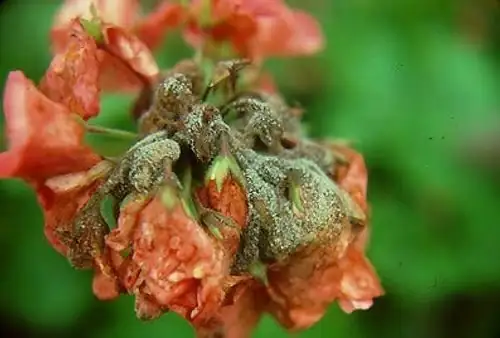
- Soft brown patches on petals/leaves that turn fuzzy gray; mushy flowers; most common in cool, damp, dim, crowded canopies.
Do this today
- Strip off and bin all affected petals/leaves—don’t compost.
- Open the plant: deadhead, thin crowded stems, and improve airflow immediately.
- Water the soil in the morning; avoid wetting flowers and foliage.
- Apply a labeled fungicide—potassium bicarbonate products are a simple, effective option for gray mold. Repeat as directed.
Prevent it
- Daily deadheading in cool, damp spells.
- Bright light, good spacing, and a small fan or breezy placement.
- Avoid evening misting or overhead watering.
—
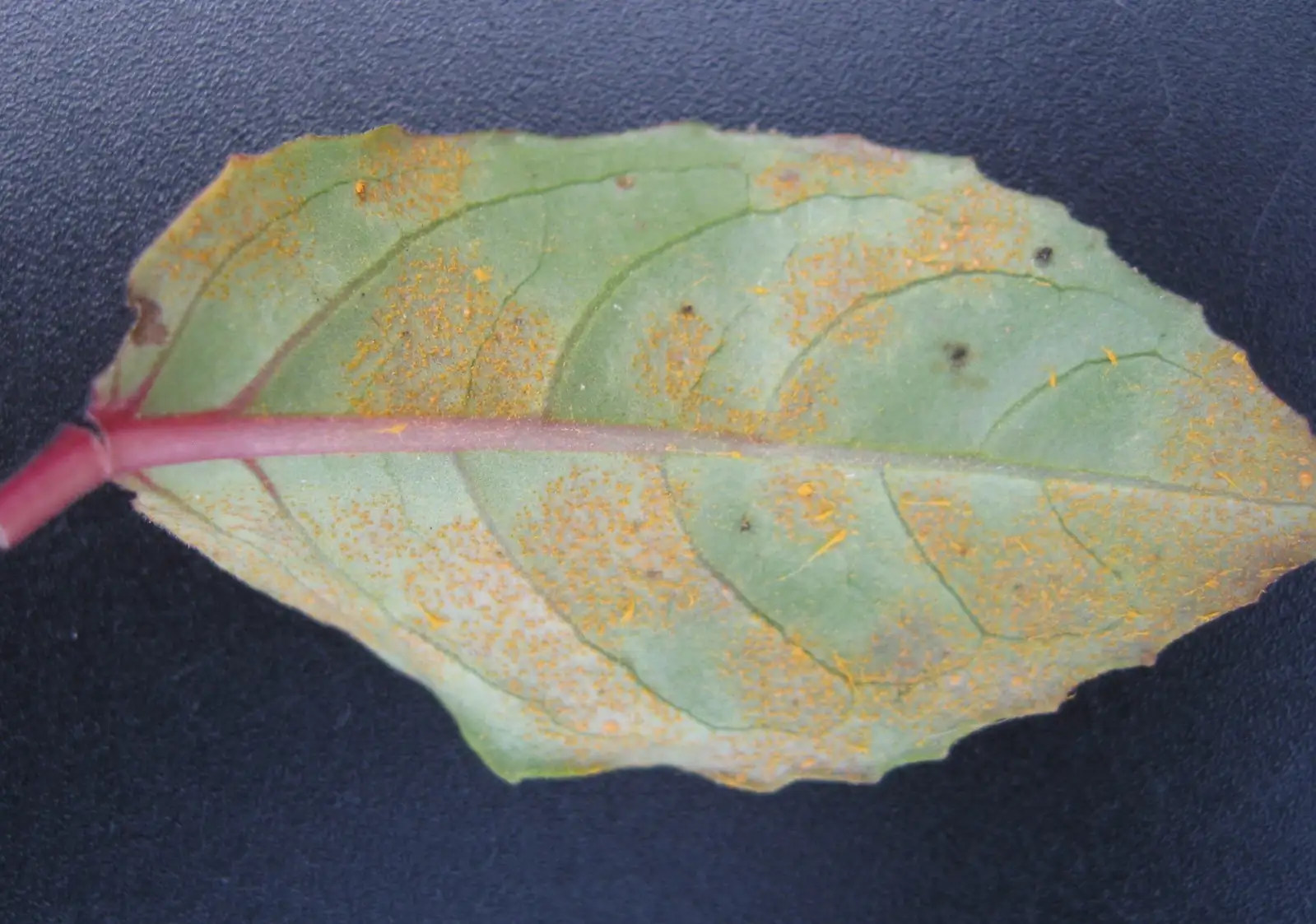
Rust: those tiny orange freckles under the leaves
What you see
- Yellow spotting on top of leaves; orange-brown pustules on undersides. Spreads in cool, wet, poorly ventilated conditions.
Do this today
- Isolate the plant. Remove and discard badly spotted leaves.
- Increase spacing and airflow; water at the base only, mornings.
- Treat with a rust-labeled fungicide per instructions; repeat at intervals until new growth is clean.
Prevent it
- Keep foliage dry, especially late in the day.
- Regularly thin dense growth and quickly remove fallen leaves/old blooms.
—
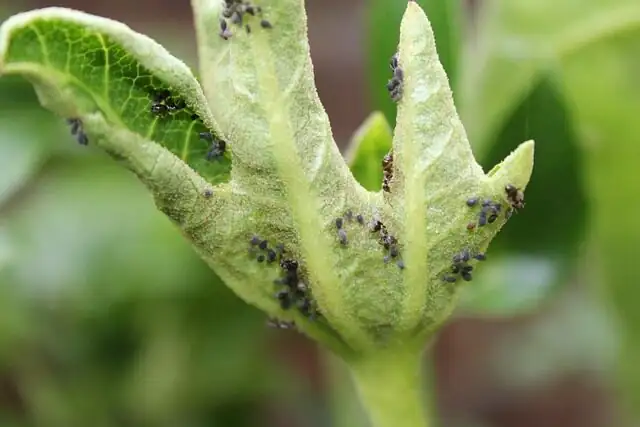
Aphids: sticky tips, curled leaves, and tiny green/black specks
What you see
- Clusters on new shoots, sticky honeydew, ants, and sometimes sooty mold on leaves.
Do this today
- Blast them off with a firm spray of water, focusing on shoot tips and leaf undersides.
- Follow with insecticidal soap or horticultural oil, coating undersides thoroughly. Repeat every 5–7 days, 2–3 rounds.
- Quarantine if indoors; outdoors, encourage ladybugs/lacewings.
Prevent it
- Keep growth sturdy with bright light; soft, shaded growth invites aphids.
- Clean up plant debris; check weekly, especially in spring.
—
Spider mites: stippling, fine webbing, and a plant that looks dusty
What you see
- Tiny speckles on leaves (especially between veins), leaf bronzing, fine webbing—worse in hot, dry conditions.
Do this today
- Rinse foliage (especially undersides) with a strong, gentle shower.
- Apply insecticidal soap or horticultural oil to leaf undersides. Repeat every 5 days for 2–3 cycles.
- Move to brighter but cooler conditions; raise humidity slightly while boosting airflow.
Prevent it
- Avoid heat stress; never let the mix swing from bone-dry to sopping.
- Regularly hose down outdoor baskets in the morning.
—
Whiteflies: a tiny snowstorm when you nudge the plant
What you see
- Small white moth-like insects that fly up when disturbed; sticky honeydew; leaf yellowing.
Do this today
- Vacuum adults gently in the cool morning.
- Hang yellow sticky cards to trap flyers.
- Spray undersides with insecticidal soap or horticultural oil; repeat every 5–7 days for 2–3 rounds.
- Isolate from other houseplants.
Prevent it
- Inspect new plants before bringing them home.
- Keep air moving around baskets and window boxes.
—
A 10-minute tune-up you can do right now
- Light check: Give it morning sun and bright, open light the rest of the day.
- Heat relief: Relocate to breezy bright shade if temps exceed 25°C (77°F).
- Watering reset: Water thoroughly when the surface just dries; drain well. No soggy saucers.
- Airflow boost: Thin interior stems and run a fan or use a breezy spot.
- Sanitation sweep: Deadhead, remove fallen petals/leaves, empty drip trays.
- Ethylene audit: Evict fruit bowls and exhaust fumes from the plant’s neighborhood.
- Feeding finesse: Resume a balanced-to-blooming feed every 2 weeks in active, cool growth; pause in heat.
—
Quick seasonal pointers (so problems don’t boomerang)
- Spring: Repot into a fertile, airy, moisture-retentive mix (peat/leaf mold base + perlite/coarse sand). Pinch tips 2–3 times to build a full basket and better airflow.
- Summer: Prioritize cooling—bright shade, frequent but careful watering, and airflow. Consider a light cutback (1/3–1/2) if the plant tires in heat.
- Autumn: Cooler weather often brings a fresh bloom wave. Reduce watering slightly as growth eases.
- Winter: Keep bright and cool (above 5–10°C / 41–50°F for safety; ~12–15°C / 54–59°F if you want steady performance). Water about weekly; avoid waterlogging.
—
When to worry—and when not to
- A few dropped buds after a move? Normal. Stabilize light and temperature.
- Lots of buds dropping in a cool, dim room near a fruit bowl? Classic ethylene + low-light combo. Move, ventilate, and watch the plant rebound.
- Yellowing in a heatwave? Heat pause. Cool the plant, keep evenly moist, and wait for a fresh flush when temperatures ease.
—
A tiny note on meaning
Fuchsias are often tied to playful charm and fascination—those dangling, bell-like flowers feel like nature’s earrings. Flower “language” is more tradition than science, but many gardeners see fuchsias as emblems of curiosity and fondness: little lanterns inviting you to look closer.
—
With bright light, cool air, and steady moisture, Fuchsia × hybrida will repay you with months of swaying, lantern-like blooms. When trouble pops up, move quickly with the steps above—most issues turn around fast once you dial in the light, airflow, and temperature.