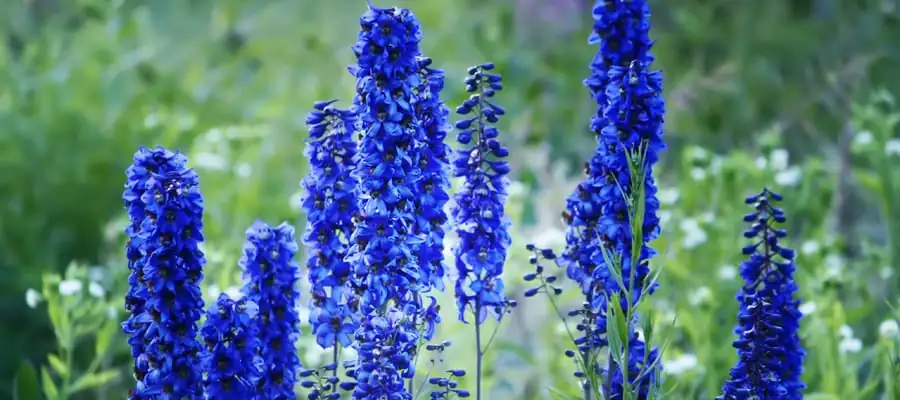
Plant Features
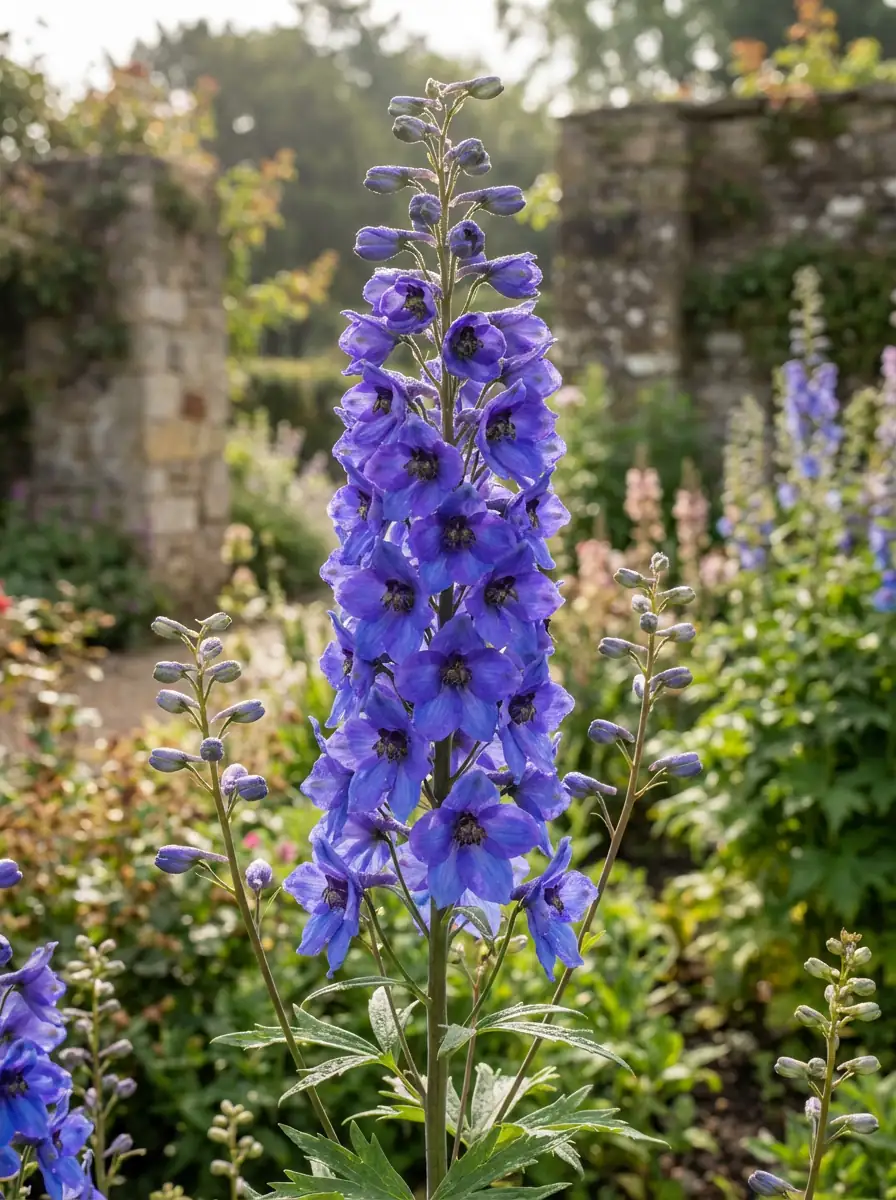
- Size: Typically 150–180 cm (5–6 ft) tall; dwarf varieties about 30–60 cm (12–24 in).
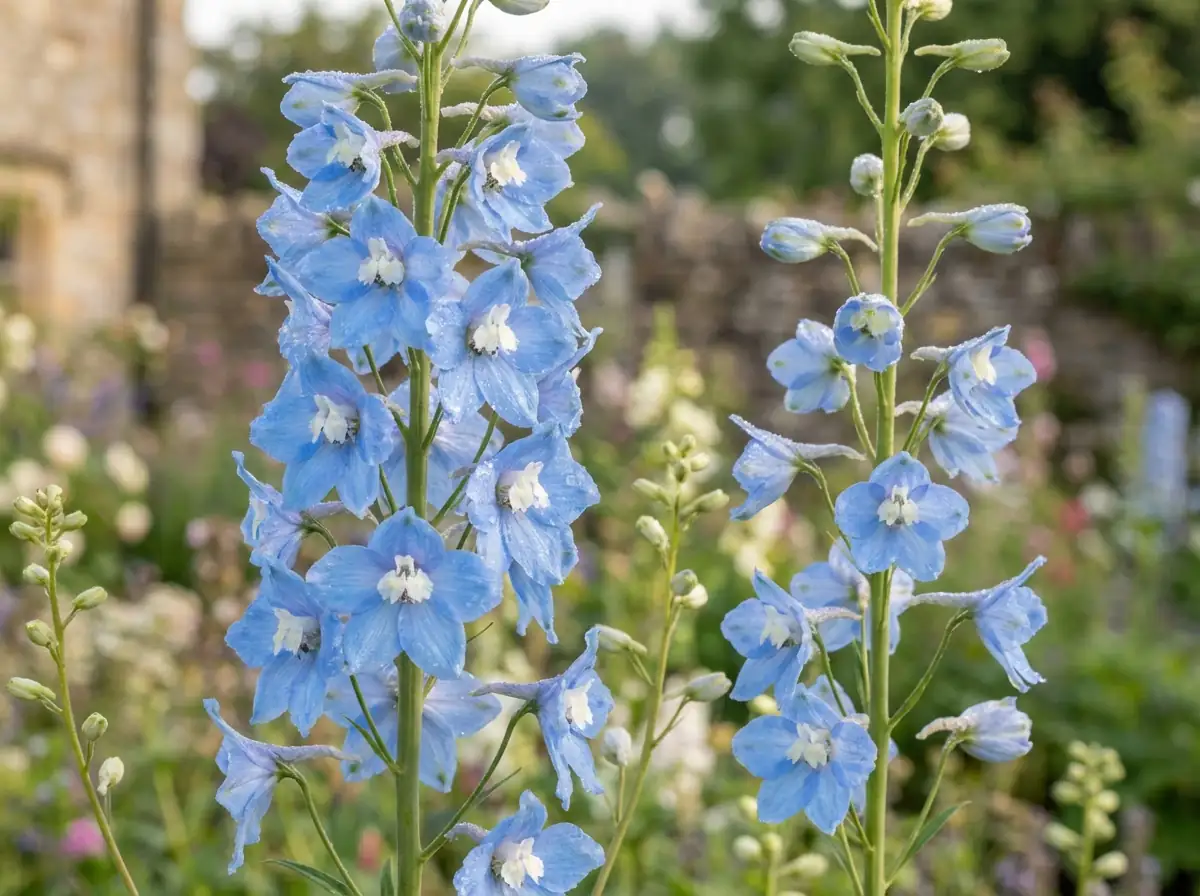
- Foliage: Deeply divided, lacy leaves in a dark green tone with a soft, finely cut texture that gives the plant a light, airy look.
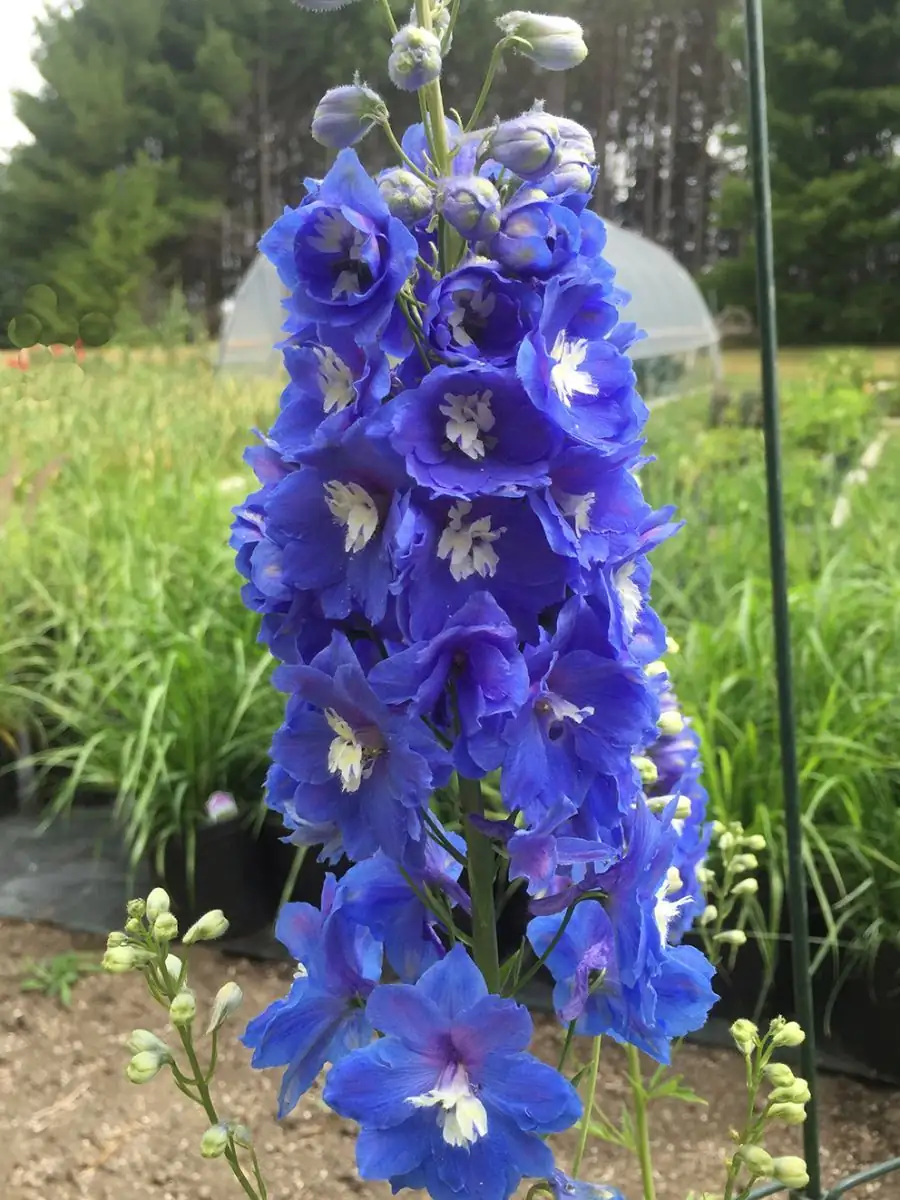
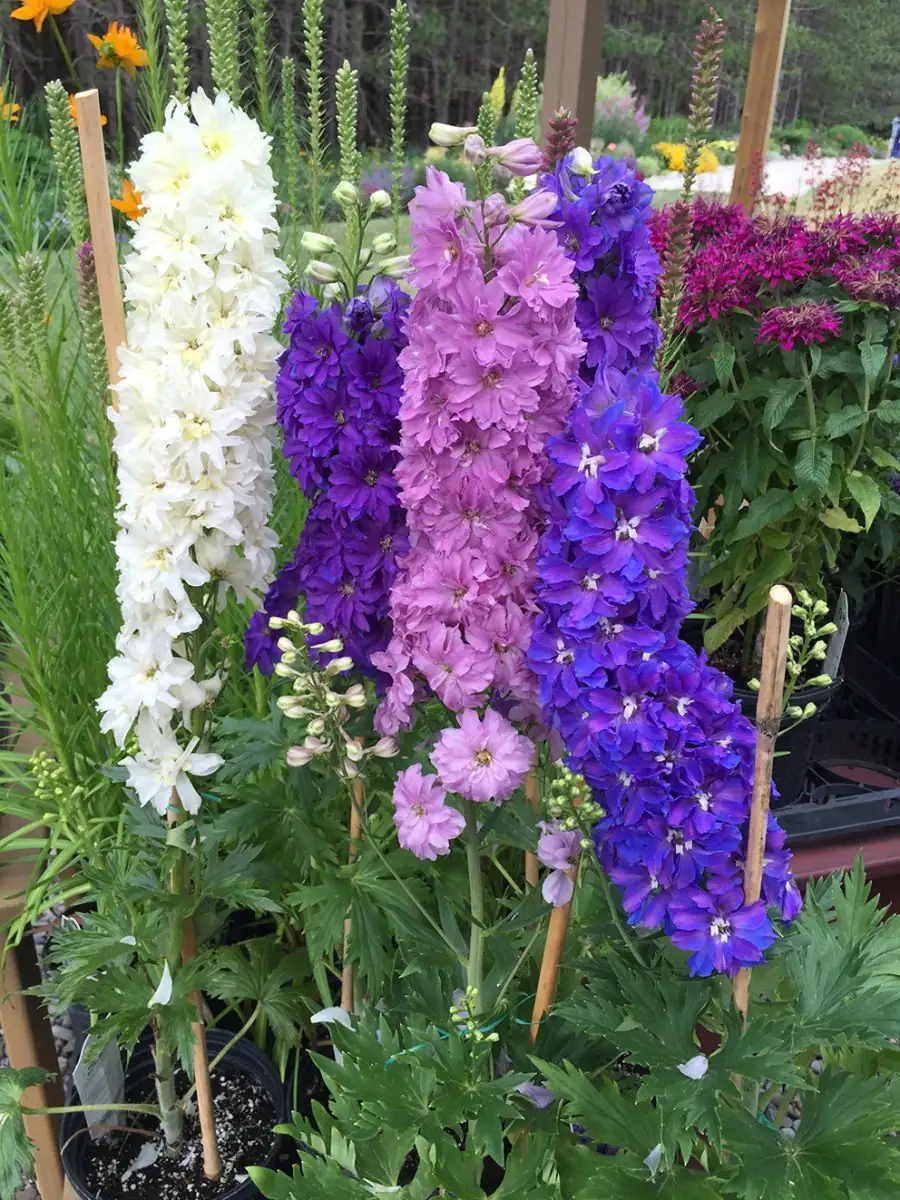
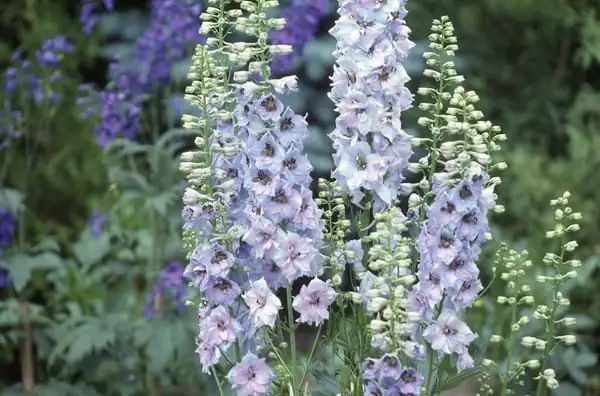
- Flower: Flowers are carried along tall, spike-like racemes on upright stalks. Individual florets may be single, semi-double, or double and are about 2–6 cm (0.8–2.4 in) across. Each floret features a distinctive spur (nectar tube). The contrasting flower center—often called the “bee”—can be white, tan, brown, black, or even striped depending on the variety.
- Flowering Season: Summer (mainly June–July); can rebloom in late summer to early fall if promptly cut back after the first flush.
- Growth Habit: Upright, clump-forming perennial with hollow stems; tall forms often need support against wind and rain.
Environment
Sunlight
Full sun (about 6–8 hours daily). Best performance usually comes from gentle morning to early afternoon sun, especially in warmer regions.
Temperature
Prefers cool-summer conditions; ideal around 15–24°C (60–75°F). Struggles in sustained heat and high humidity.
Humidity
Likes evenly moist soil and good air movement; avoid prolonged drought, but also avoid wet, stagnant conditions around the crown.
Soil
Well-drained, humus-rich soil. Often performs best in slightly alkaline to near-neutral conditions (about pH 6.0–7.5).
Placement
Plant in a sheltered spot protected from strong winds (near an east- or south-facing wall can help). Great for the back of borders or the center of island beds where the tall flower spikes can shine.
Hardiness
Generally hardy in USDA Zones 3–7. In hot southern climates it’s often treated as a short-lived perennial or even an annual.
Care Guide
Difficulty
High maintenance and somewhat picky—best for gardeners willing to stake, water thoughtfully, and manage disease risk (especially in humid climates).
Buying Guide
Choose plants with sturdy stems and healthy, unspotted foliage. Spring purchase and transplanting is typically easiest on the plant.
Watering
Aim for about 2.5 cm (1 in) of water per week in the growing season, more during hot/dry spells. Keep soil consistently moist but never waterlogged. Water at the base (not over the leaves) to reduce fungal problems.
Fertilization
At planting, mix in bone meal if desired. Feed with a balanced liquid fertilizer every 2–3 weeks during active growth; avoid high-nitrogen feeds that push weak, floppy growth. Top-dress with compost in spring; composted manure can be added in fall.
Pruning
After the main bloom, cut spent flower stalks back to small side shoots to encourage a second flush. After autumn frost, cut stems down to ground level. For stronger flowering, thin shoots early: new plants to 2–3 shoots; established clumps to about 5–7 shoots.
Propagation
Most reliably propagated by division in early spring as growth starts; divide clumps about every 3–4 years. Seed is possible but may not come true to the parent; seeds benefit from cold stratification for roughly 4–6 weeks before sowing.
Repotting
Most often grown in the ground. For containers, use a wide, stable pot at least 30 cm (12 in) wide with multiple drainage holes to support the root system and reduce tipping.
📅 Seasonal Care Calendar
Spring: top-dress/fertilize, thin shoots, and stake early. Summer: water steadily, mulch to hold moisture, and deadhead/cut back after flowering for possible rebloom. Fall: add compost, cut back after frost. Every 3–4 years: divide in early spring.
Pests, Diseases & Safety
Common Pests & Diseases
Watch for powdery mildew, botrytis blight, rust, crown rot, and root rot—problems are worse with poor airflow or wet foliage. Common pests include aphids, cyclamen mites, nematodes, slugs, and snails. Best prevention: good spacing/air circulation, watering at soil level, and removing infected debris.
Toxicity
Toxic to humans and animals (including cats, dogs, and livestock). All parts are poisonous, with seeds often the most toxic, due to diterpenoid alkaloids (e.g., methyllycaconitine). Ingestion can cause serious nervous-system effects (breathing difficulty, weakness, paralysis/convulsions) and may be fatal; sap/contact may irritate skin. Keep away from children and pets and wear gloves if you’re sensitive.
Culture & Symbolism
Symbolism: Often associated with clarity, justice, freedom, lightness, and beauty. Color meanings are sometimes given as: pink for poetry, blue for melancholy, purple for affection and gentleness, and white for elegance.
History & Legends: The genus name comes from Greek “delphis” (dolphin), inspired by the dolphin-like shape of the buds/spurred flowers. Gardeners also call the contrasting flower center the “bee,” a charming feature that helps identify varieties.
Uses: Primarily ornamental—an iconic cottage-garden perennial and a standout vertical accent in mixed borders. Excellent as a cut flower, often lasting about 1–2 weeks in a vase when harvested at the right stage. Historically used medicinally, but this is not recommended without professional supervision due to toxicity.
FAQ
Why isn’t my delphinium blooming?
Common causes include plants being too young (many bloom best from the second year), soil drying out during bud formation, too much heat/humidity, not enough sun, or disease stress. Improving light, steady moisture, and airflow usually helps.
Why did my delphinium disappear after a few years?
Some tall, nursery-sold hybrids (including many bred for cut flowers) can be short-lived, sometimes lasting only 1–2 years—especially if summers are hot/humid or winters are extreme. Trying hardier series, improving drainage, or treating them as short-lived perennials can reduce disappointment.
Do delphiniums need staking?
Yes for most tall types. Hollow stems plus heavy flower spikes mean wind and rain can flatten them. Stake early (around 30 cm / 12 in tall) and tie at intervals of about 30–45 cm (12–18 in).
Fun Facts
- True blue is genuinely rare in flowers, which is a big reason delphiniums are so coveted.
- The little spurred florets look like tiny dolphins—exactly what inspired the name Delphinium.
- They’re a cornerstone of traditional English cottage-garden style.
- Seed saved from garden plants often produces surprising color variations instead of matching the parent.
- Annual larkspur (Consolida ajacis) is generally easier and faster than perennial delphinium, but typically shorter.
- Unlike many garden plants, delphiniums often appreciate slightly alkaline soil; gardeners sometimes sweeten soil with lime or a small amount of wood ash where appropriate.