
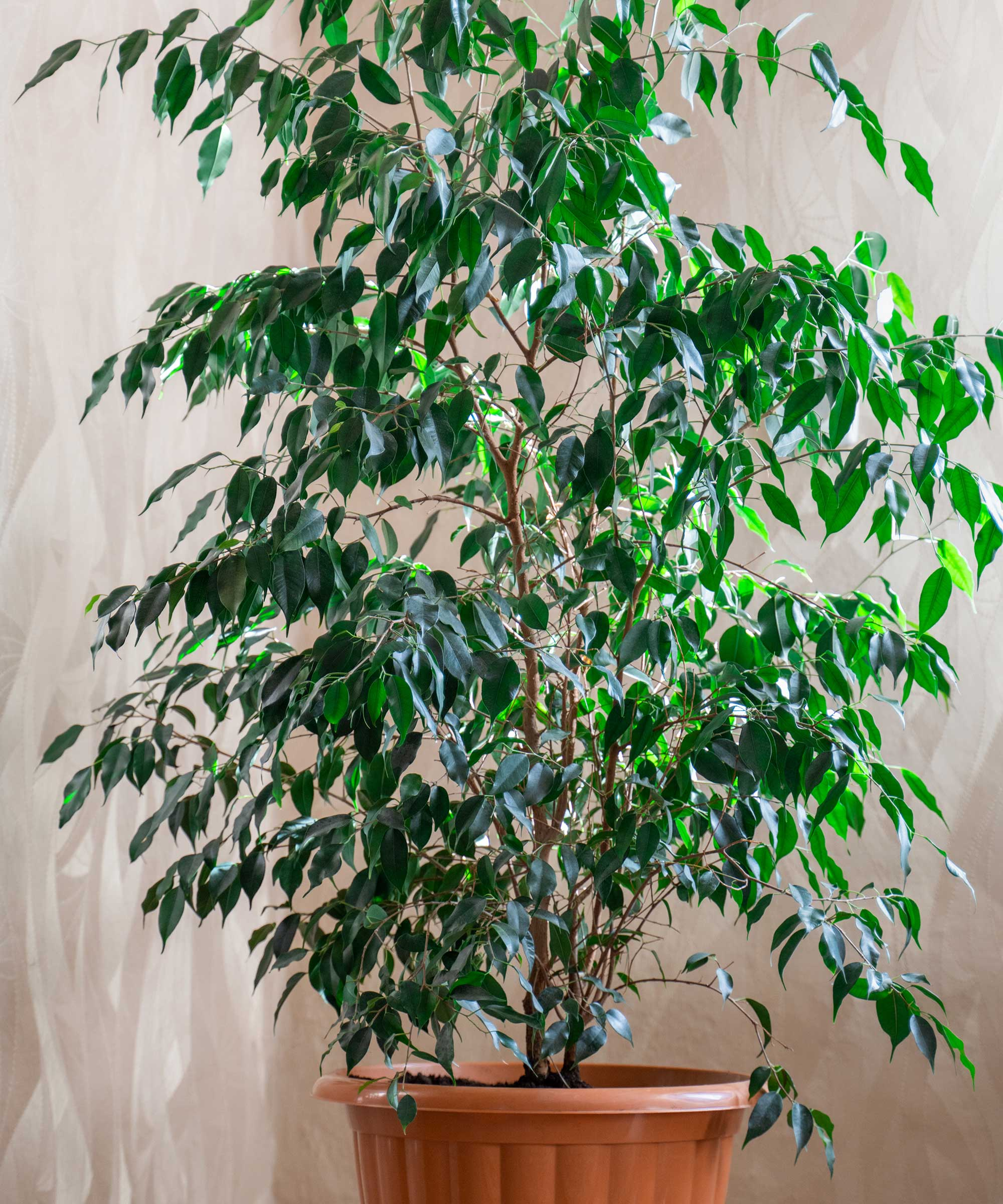
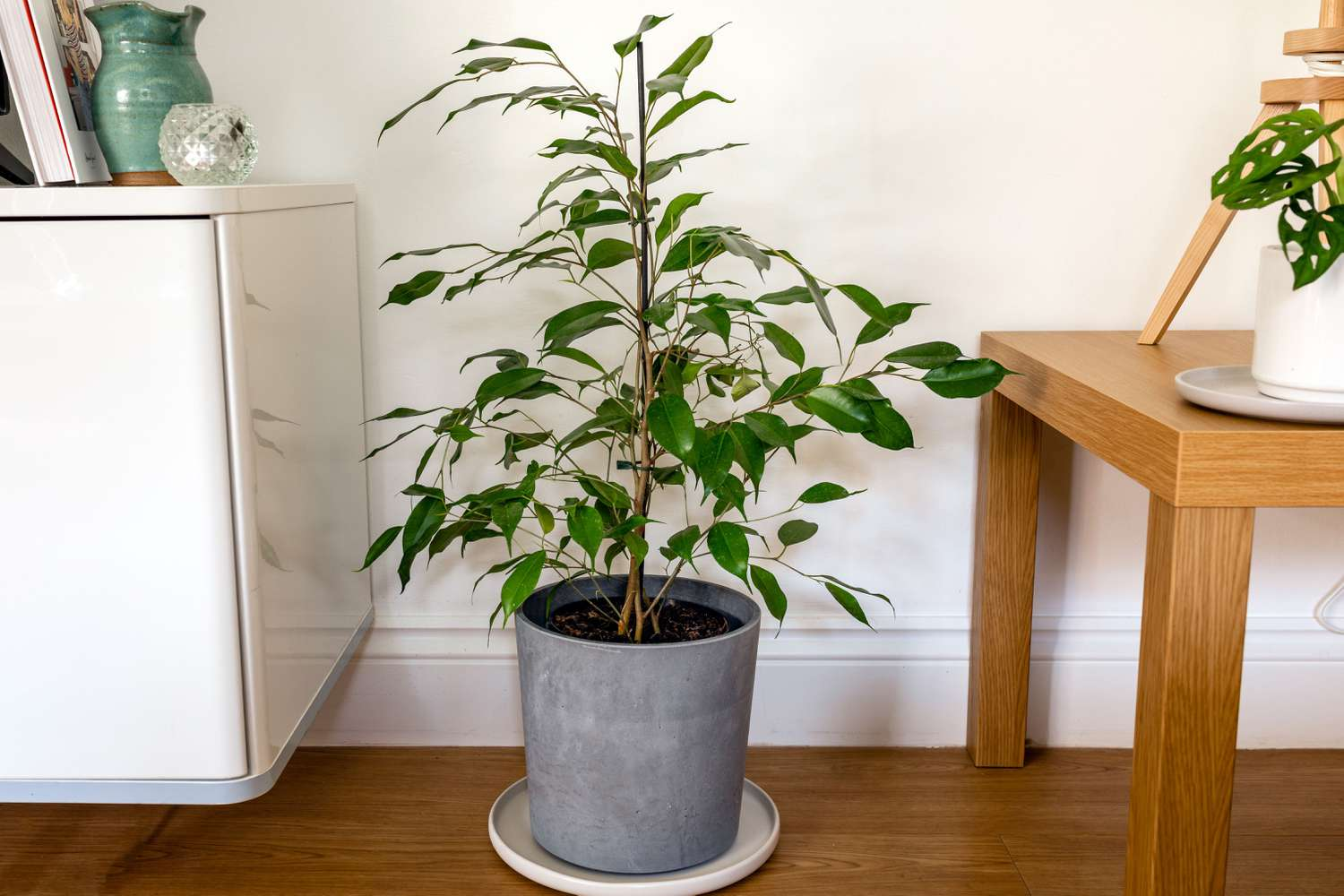
When it comes to transforming your living or office space into a vibrant, lush sanctuary, the Ficus benjamina—commonly known as the Weeping Fig—stands out as a top choice. Imagine a tall, graceful tree with glossy, polished leaves adorning your room, offering not only aesthetic appeal but also contributing to a healthier environment by purifying the air. Let’s explore how this striking plant can be a centerpiece of design and wellness in your interiors.
The Weeping Fig: A Design Marvel
ஒவ்வொரு இலையிலும் அழகு
The Weeping Fig is akin to a living sculpture, with its arching branches and shiny leaves. It’s the kind of plant that demands attention, yet offers tranquility—a paradox wrapped in green. Whether you’re placing it in a cozy corner of your living room or using it as a natural divider in an office space, this plant’s aesthetic versatility is unmatched.

உங்கள் Ficus benjamina-ஐ எங்கு வைக்க வேண்டும்
Finding the right spot for your Weeping Fig is crucial. It thrives in bright, indirect light, much like an actor who shines best with just the right spotlight. Consider positioning it near a north- or east-facing window where it can enjoy morning sun without the harsh afternoon rays. Avoid moving it around too often, though; this plant is a creature of habit and doesn’t take well to change—think of it as the introvert of the plant world.
Enhancing Air Quality and Ambiance
ஒரு புதிய சுவாசம்
Weeping Figs are not just pretty faces; they are also known for their air-purifying qualities. Like nature’s air filter, they can help reduce indoor pollutants, making your home or office a healthier place to breathe. This makes them perfect for urban settings where fresh air is a luxury.
அமைதியான சூழலை உருவாக்குதல்
There’s a reason why Ficus benjamina is associated with stability and positive energy. Its presence can evoke a sense of calm and order, making it a favored choice for stress-prone environments like busy workplaces or homes bustling with activity. In some cultures, it is even considered a symbol of good luck and prosperity, a living talisman for a harmonious space.
Caring for Your Weeping Fig
Watering and Fertilization
Think of your Weeping Fig as a friend who prefers consistency. Water it when the top 2.5 to 5 cm (1 to 2 inches) of soil is dry, ensuring you don’t let it sit in waterlogged conditions. During the growing season, a monthly dose of balanced liquid fertilizer will keep it flourishing, while in the colder months, you might want to ease off a bit—it’s the plant equivalent of a winter hibernation diet.
Managing Size and Shape
Pruning is your opportunity to play stylist to your plant. Light pruning can help maintain its shape and encourage bushier growth. Just be mindful of the milky sap, which can irritate skin—gloves are your friend here.

The Pitfalls to Avoid
Leaf drop is the Weeping Fig’s way of saying, “I’m not happy.” This can occur due to sudden changes in light, temperature, or watering routines. Like a moody teenager, it needs stability and a consistent routine to thrive.
Conclusion: A Statement of Style and Wellness
Incorporating a Ficus benjamina into your interior design is not just about adding greenery. It’s about elevating the ambiance, enhancing air quality, and embracing a touch of nature’s elegance. Whether you’re a seasoned plant enthusiast or a beginner looking to green your thumb, the Weeping Fig offers a unique blend of beauty and practicality that can transform any space into a serene oasis. So go ahead, invite this leafy companion into your life, and watch as it weaves its charm throughout your home or office.