

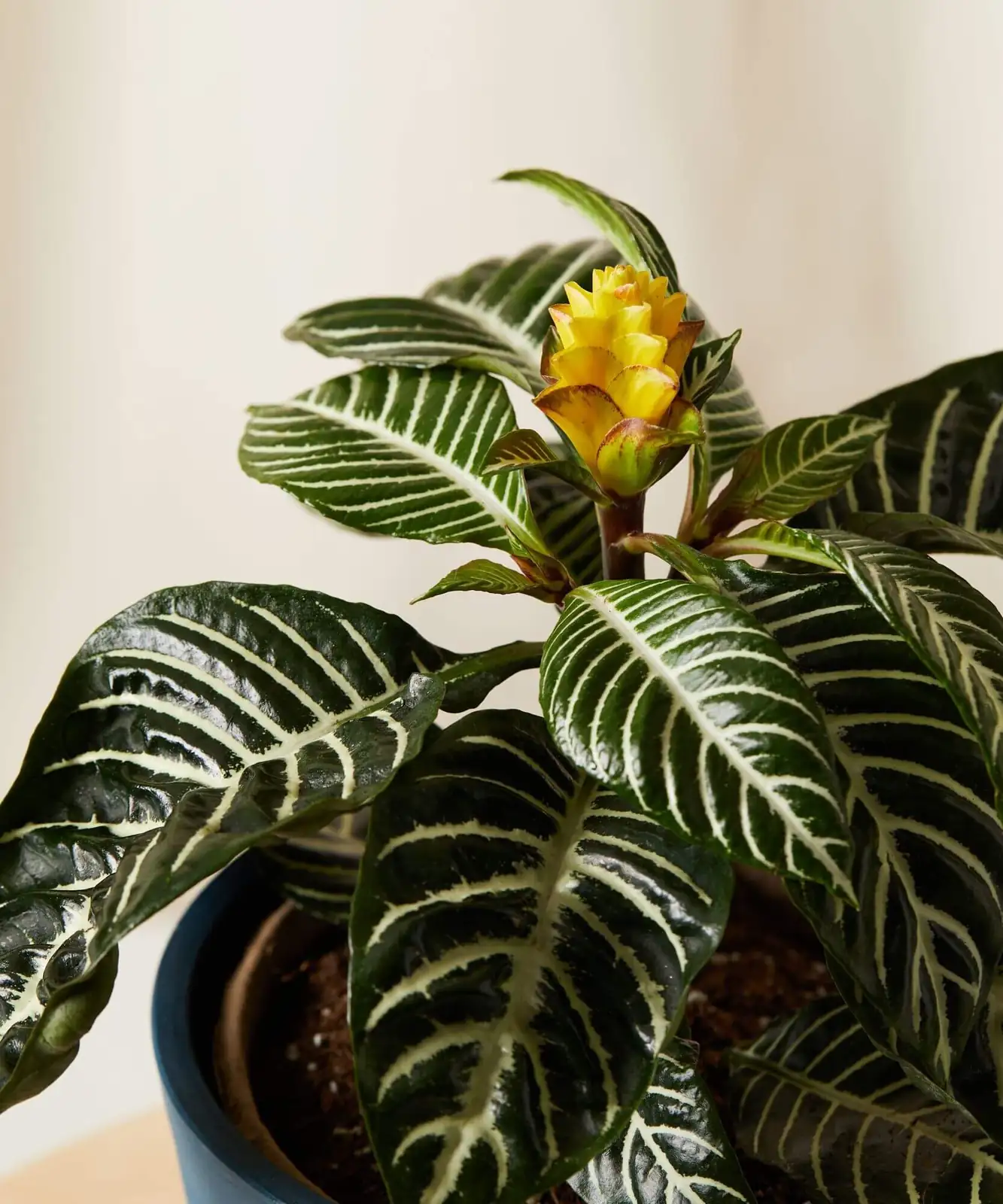
If you’ve ever wanted a plant that practically wears its own spotlight, Aphelandra squarrosa—better known as the Zebra Plant—delivers. Those glossy, deep-green leaves streaked with creamy-white “zebra” veins, topped by golden-yellow bracts with tiny orange tubular flowers, make it a natural showstopper. It does have opinions about comfort (think warm, bright, and humid), but with a dialed-in routine, you’ll keep it lush and leaf-happy year-round.
Meet the Zebra Plant at a Glance
- Botanical: Aphelandra squarrosa (Acanthaceae)
- Origin: Atlantic Forest of southeastern Brazil
- Habit & size: Upright, compact evergreen subshrub; typically about 60 × 60 cm (24 × 24 in) indoors
- Star features: Glossy foliage with bold white veining; long-lasting yellow bracts with small orange flowers; peak bloom late summer to autumn
- Overall difficulty: Moderate to challenging at first; becomes easy once light, moisture, and humidity are steady
Light: Precise Targets for Bold Leaves and Reliable Blooms
Bright, indirect light is the secret to crisp striping and strong, compact growth. Aim for:
- Daily target: 2,000–5,000 lux (≈200–500 foot-candles) for 10–12 hours
- Peak “push” for budding/bract show: Nudge toward the upper end (3,000–5,000 lux) while keeping direct midday sun off the leaves
Where to put it:
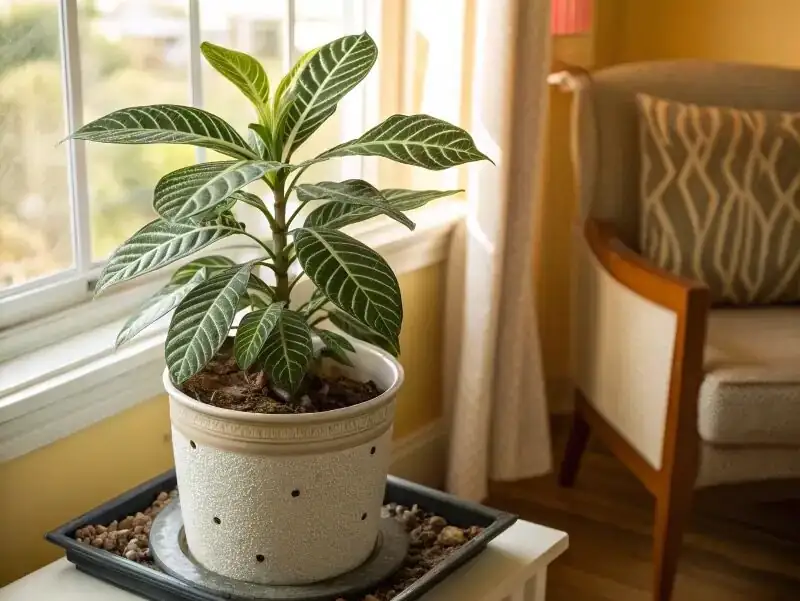
- Best bet: Near an east-facing window (gentle morning sun is fine)
- Summer options: A north window or a spot set back from bright south/west windows behind a sheer curtain
- Winter boost: Move to the brightest warm spot you have—often near a south window but a little back from cold glass
Grow-light translation:
- Distance under LED panels/bulbs: Usually 25–45 cm (10–18 in) above the canopy for the targets above; use a light meter app and adjust height to hit 2,000–5,000 lux
Avoid:
- Harsh midday direct sun (scorch)
- Very low light (leggy growth, poor flowering)
Temperature and Humidity: The “No-Drama” Comfort Zone
- Temperature sweet spot: 15–27°C (59–81°F)
- For flowering, steady warmth helps—buds often form better above ~20°C (68°F)
- Keep winter temps ≥10–13°C (50–55°F); avoid cold drafts and swings
- Humidity:
- Baseline: 50–60%
- Happiest: 60–80%
- How to hit it:
- Humidifier set to 55–65% near the plant
- Pebble tray with water (pot on stones, not sitting in water)
- Group plants; mist occasionally in dry rooms for a quick bump
Watering Rhythm: A Real-World, Season-Smart Cadence
Think “evenly moist, never waterlogged.” Zebra Plant sulks (and drops leaves) if it dries out, yet soggy roots spell trouble.
- Growing season (spring–autumn):
- Frequency: Typically about twice per week in warm, bright rooms
- Method: Water thoroughly until a bit drains out; let only the top layer begin to dry before watering again
- Winter:
- Frequency: Roughly every 7–14 days, depending on light and heat
- Rule: Allow the surface to become nearly dry, but do not let the root ball fully dry out
Pro tips:
- Water type: Rain or distilled is best; mineral salts can crisp edges and invite leaf drop
- Pot check: In a 15–20 cm (6–8 in) pot, expect deeper moisture to linger; poke a finger or use a moisture meter and water as soon as the top 1–2 cm (½–¾ in) is just turning dry
- Environment matters: Warmer temps, brighter light, and lower humidity = faster dry-down
- Monthly flush: Run tepid water through the potting mix for 30–60 seconds to clear salts, then drain well

Soil & Potting Mix: Moisture-Retentive Yet Airy
Use a rich, free-draining mix that holds moisture but breathes:
- Recipe idea:
- 2 parts peat or coco coir potting mix
- 1 part fine bark
- 1 part perlite
- Optional: A small handful of coarse sand for drainage
- Pot: Choose one with generous drainage; don’t oversize
Feeding: Gentle and Regular in Warm Months
- Spring–summer: Balanced liquid fertilizer every 2 weeks (many growers prefer half-strength to avoid salt stress)
- Autumn–winter: Reduce or pause; if growth continues in a warm, bright spot, feed lightly about monthly
Pruning & Shaping: Keep It Compact and Bushy
- After flowering: Remove spent spikes; cut stems back to just above lower leaves (leave ~2 sets of leaves) to trigger branching
- Ongoing: Pinch tips to prevent legginess; a harder cutback can refresh a bare base
Blooming: Golden Bracts, Orange Flowers
- Season: Often late summer to autumn indoors (timing varies with warmth and light)
- What you see: Upright yellow bracts that last for weeks; small orange tubular flowers pop between them and are shorter-lived
- To encourage a show:
- Keep light bright (upper range of targets), humidity high, and temperature steady above 20°C (68°F)
- Maintain even moisture
The Anti–Leaf-Drop Playbook
If you want steady, showy foliage, treat leaf drop as preventable—not inevitable.
- Never let the mix fully dry; slight surface dry is okay, but keep the root zone softly moist
- Hold humidity at 50–80%; use a humidifier if your space dips below 45%
- Guard against drafts and temperature swings (especially by cold windows and doors)
- Use low-mineral water; flush salts monthly
- Avoid “feast or famine” watering—keep it consistent
- Repot in spring into fresh, airy mix; avoid jumping multiple pot sizes
- Bright but filtered light—no harsh midday sun and no dim corners
Perfect Placement Planner
- Indoors:
- East window: Ideal
- North window (summer): Works with steady humidity
- South/west windows: Place back from glass or use sheers to filter
- Best rooms: Humid bathrooms and kitchens
- Outdoors (very warm climates only, roughly USDA 11–12): Bright shade/filtered light; never frost
Repotting: Annual Refresh
- When: Spring (or after flowering)
- How: Move up one pot size if rootbound; typical adult pot is ~15–20 cm (6–8 in)
- Always use fresh mix and ensure excellent drainage
Propagation: Easy, Quick Wins from Stem Tips
- Timing: Spring to early summer
- How:
- Take 8–15 cm (3–6 in) tip cuttings with 2–3 nodes; remove lower leaves
- Root in a warm, humid setup (bag/propagator) in moist, airy medium
- Warmth speeds success: 25–27°C (77–81°F)
- Expect roots in roughly 4–5 weeks under good conditions
Pests, Diseases, and Simple Fixes
- Common pests: Spider mites (dry air magnet), mealybugs, scale, aphids; occasionally thrips
- Treatment: Boost humidity (without keeping leaves wet), improve airflow, and treat early with insecticidal soap or horticultural oil
- Disease watch: Root rot from overwatering; leaf spot in stagnant, overly wet conditions—keep drainage strong and avoid splashing leaves late in the day
Safety
- Not widely listed as seriously toxic to pets, but chewing any plant can upset tummies; sap may irritate sensitive skin. Keep out of reach of pets and children.
Seasonal Care Calendar
- Spring
- Repot into fresh mix; resume regular watering as growth picks up
- Begin feeding every 2 weeks
- Take cuttings and pinch tips for bushiness
- Summer
- Bright, indirect light; keep evenly moist
- Maintain 60%+ humidity; feed every 2 weeks
- Watch for spider mites in dry heat
- Autumn
- Enjoy peak bract display; keep moisture steady
- Reduce feeding as growth slows
- Winter
- Brightest warm spot you have, away from drafts/cold glass
- Water when the surface is nearly dry (often every 7–14 days)
- Keep humidity up; feed lightly only if actively growing
Symbolism and “Flower Language”
Zebra Plant often symbolizes boldness and vibrant energy—fitting for foliage that looks hand-painted and bracts that glow like small torches. Any “flower language” tradition here is modern and aesthetic rather than ancient folklore: the dramatic contrast and long-lasting bracts are read as confidence and endurance. If you’re styling a space to project optimism and poise, this is your living exclamation point.
Troubleshooting Quick Guide
- Leaves drooping, then falling: Mix got too dry, humidity too low, or temperature shock—rehydrate gently, raise humidity to 60%, and stabilize temps
- Brown leaf edges: Mineral salts or low humidity—switch to rain/distilled water; flush the pot; humidify
- Faded veining and lanky stems: Light too low—move closer to bright window or add a grow light
- Scorch marks: Too much direct sun—add sheer curtain or shift back from glass
With steady warmth, bright filtered light, and moisture that never quite quits, your Aphelandra squarrosa will keep those zebra stripes crisp and the canopy full—no drama, just show.