

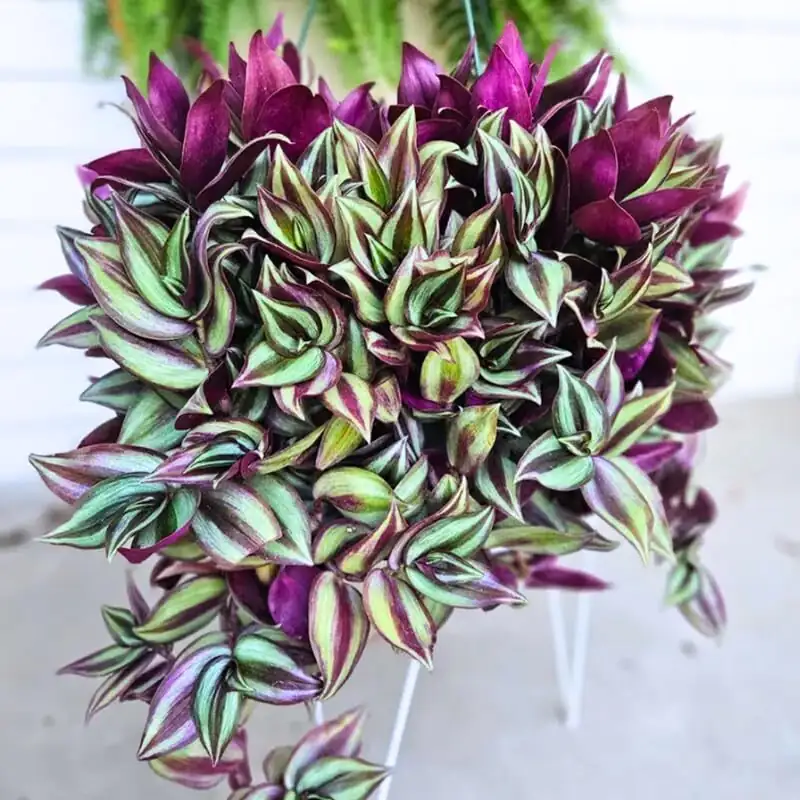
If you’ve ever wished a plant would just tell you what it wants in every season, meet Tradescantia zebrina, the inch plant: a fast-growing, purple-and-silver spiller that thrives on simple routines. Set up a spring-to-winter rhythm for watering, feeding, pinching, repotting, temperature, and humidity, and you’ll keep those stripes vivid without the fuss.
Common names: Inch Plant, Silver Inch Plant, Wandering Dude, Wandering Jew (older, now widely avoided), Zebra Plant (Tradescantia)
Scientific name: Tradescantia zebrina (family Commelinaceae)
Hails from: Mexico (often cited with parts of Central America); naturalized widely in warm regions
First, the rule that makes all the others work: light
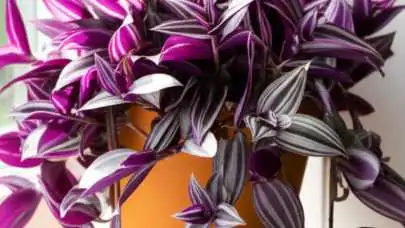
- Best spot: bright, indirect light or gentle morning sun. East windows are perfect; bright north works; south/west need sheer curtains or a set-back from the glass.
- Why it matters: too little light = lanky, greenish, washed-out stems; bright filtered light = bold silver striping and rich purples.
- Avoid: harsh midday summer sun that can scorch or yellow leaves.
With light dialed in, the rest becomes nearly automatic.
The seasonal playbook
Spring: Wake-up and shape-up
- Watering
- Start watering when the top 2–3 cm (about 1 in) of mix is dry.
- Goal: lightly and evenly moist, never soggy. Let excess drain each time.
- Feeding
- Begin regular feeding as growth resumes: either every 2 weeks at a diluted rate or about once a month at label strength.
- If you want a few more blooms, swap in a bloom-leaning feed a couple of times this season.
- Pinching and pruning
- Pinch or snip soft tips weekly to trigger branching and fullness.
- If stems are leggy, cut back hard and re-root the best tips to refill bare spots.
- Repotting
- Best time to repot or refresh: every 1–2 years into a breathable 15–20 cm (6–8 in) pot or basket with fresh, fast-draining mix.
- Pro move: instead of sizing up, replant multiple rooted cuttings for an instant, dense cascade.
- Temperature and humidity
- Ideal 18–22°C (64–72°F); protect from cold drafts.
- Aim for moderate humidity (~50%+). If tips look papery, add a pebble tray or occasional mist with good airflow.
Summer: Color maintenance mode
- Watering
- Growth and warmth speed drying. Check soil more often and keep evenly moist, never waterlogged.
- If in brighter sites, expect slightly more frequent watering.
- Feeding
- Continue your spring rhythm (biweekly dilute or monthly at label strength). Avoid heavy nitrogen—colors can wash out.
- Pinching
- Lightly shape every 1–2 weeks. Don’t fear the scissors: more cuts, more branches.
- Temperature and humidity
- Happy indoors up to about 24°C (75°F). Keep above 10°C (50°F) at night if on porches or balconies.
- Provide airflow and moderate humidity to prevent brown tips and pests.
- Light note
- Morning sun is fine; shield from strong midday rays, especially in heatwaves.
Autumn: Gentle slow-down
- Watering
- As days shorten, let the top 2–3 cm dry and then water. You’ll likely water less often than summer.
- Feeding
- Taper to monthly or stop late in the season as growth slows.
- Pinching
- Light trims to keep shape; save major chop-and-prop for spring unless the plant is very leggy.
- Temperature and humidity
- Keep in bright indoor light, away from chilly windows and drafts.
Winter: Easy-care rest (but keep it bright)
- Watering
- Reduce frequency; keep the mix just slightly moist. No constant wet feet.
- Feeding
- Pause feeding until spring.
- Pinching
- Minimal shaping only. If it looks tired, start a few cuttings on a windowsill to plant up in spring.
- Temperature and humidity
- Keep above 10°C (50°F); damage can occur below ~5°C (41°F).
- Average home humidity is fine; add a pebble tray if tips crisp.
How to water like a pro
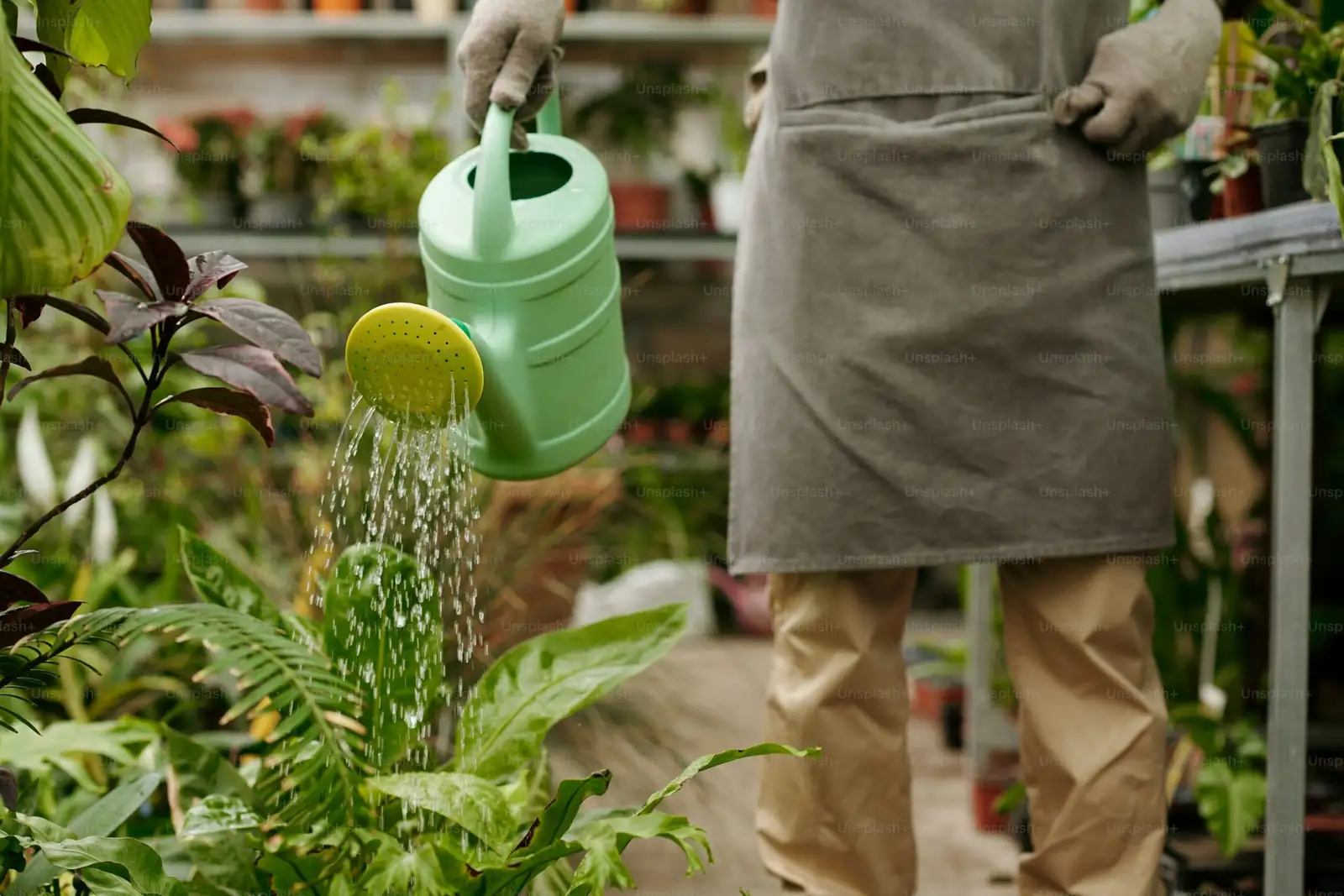
- The touch test: water thoroughly when the top 2–3 cm (about 1 in) is dry. Let excess drain; never leave it standing in a saucer.
- The balance: evenly moist spring through autumn; slightly moist in winter.
- Warning signs
- Underwatering + dry air: crispy brown tips.
- Overwatering/poor drainage: limp stems, mushy nodes, rot. Improve airflow and ensure fast-draining mix.
Soil recipe: a loose houseplant mix amended with perlite or coarse sand at roughly 3:1 for quick drainage. Always use a pot with drainage holes.
Feeding for color, not flab
- Schedule: spring to early autumn only—either every 2 weeks at a diluted rate or once monthly at label strength.
- Keep it lean: avoid excess nitrogen, which can soften growth and fade those silver-and-purple stripes.
- For blooms: a bloom-leaning formula (slightly higher phosphorus/potassium) a few times during the growing season can nudge out dainty pink-to-lavender flowers.
Pinch, prune, and re-root: the fullness formula
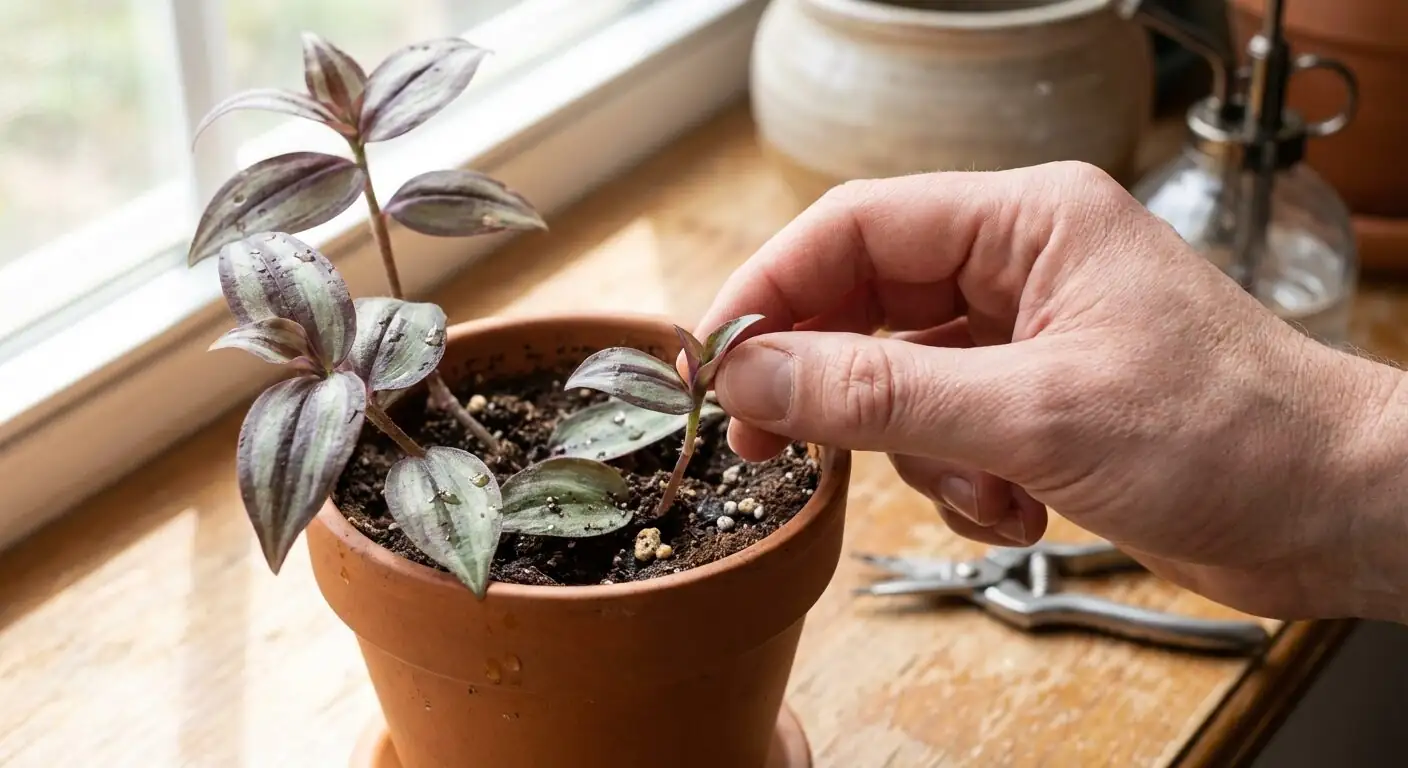
- Ongoing pinch: remove the soft tip of each stem regularly to trigger side shoots.
- Big refresh: if the base gets bare, cut stems back, keep the nicest 7–12 cm (3–5 in) tips, and root them.
- Propagation basics
- Remove lower leaves and place 1–2 nodes in water or moist mix/perlite. Roots typically appear in about a week to 10 days.
- Plant several cuttings together for an instant lush look.
Repotting and the “restart” strategy
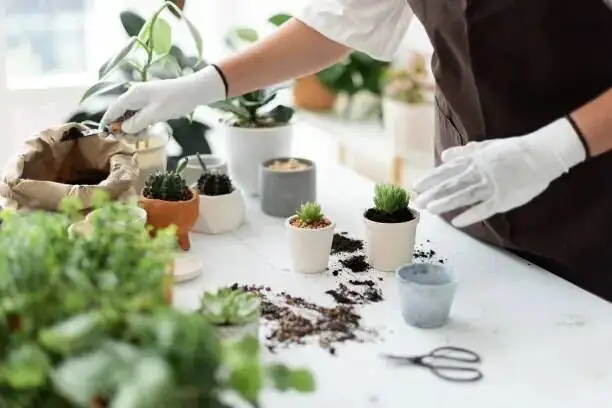
- When: spring, every 1–2 years (some stretch to 2–3 if growth is steady).
- How: choose a breathable 15–20 cm (6–8 in) container with fresh, fast-draining mix.
- Alternative: skip potting up—replant a handful of fresh rooted cuttings into the original pot for a thicker, younger-looking plant.
Temperature, humidity, and placement at a glance
- Temperature sweet spot: 18–22°C (64–72°F). General indoor range: ~12–24°C (54–75°F). Keep above 10°C (50°F); protect from drafts.
- Humidity: prefers moderate (~50%+); adapts to typical home air. Brown tips signal it wants a touch more moisture and airflow.
- Placement: near bright east- or north-facing windows, or any bright spot with filtered light. Great for hanging baskets and high shelves where stems can trail.
Quick rescue guide
- Faded stripes, long gaps between leaves
- Move to brighter, indirect light. Pinch back to encourage branching.
- Crispy tips
- Check both soil moisture (likely too dry between waterings) and humidity; add a pebble tray or light misting with airflow.
- Mushy stems, yellowing from the base
- Overwatering or poor drainage. Unpot, trim rot, refresh the mix, and ensure quick drainage.
- Bare base with leaves only at the tips
- Normal with age. Cut back hard and re-root tips to re-densify the pot.
Pests, health, and safety
- Pests to watch for: spider mites, mealybugs, aphids, and scale—especially in dry air.
- Rinse foliage, then treat with insecticidal soap or horticultural oil; repeat as needed and improve airflow.
- Diseases: overwatering and stagnant air can spur stem rot or leaf spots. Remove affected leaves and refresh to a fast-draining mix; improve ventilation.
- Safety: sap can irritate sensitive skin; ingestion may cause mild mouth or stomach upset in pets or children. Keep out of reach and wear gloves if you’re prone to irritation.
A note on outdoors and spread
- Frost-tender: suitable outside year-round mainly in USDA Zones 10–12.
- In frost-free climates it can spread and naturalize. Dispose of trimmings responsibly—don’t toss them where they can root.
A tiny burst of flowers, a big dose of meaning
- With good light you may see small, three-petaled blooms in pink to lavender from spring through summer (and sporadically anytime indoors).
- Symbolism: often linked with resilience, adaptability, and hope—fitting for a plant that bounces back beautifully from a haircut and roots at nearly every node.
Your don’t-think-about-it checklist
- Light: bright, filtered; a dash of morning sun okay.
- Water: when top 2–3 cm (1 in) is dry; keep evenly moist spring–autumn, slightly moist in winter.
- Feed: spring to early autumn only—biweekly diluted or monthly at label strength; avoid high nitrogen.
- Pinch: little and often for bushiness; refresh with cuttings every 1–2 years.
- Pot and mix: drainage holes; loose, fast-draining mix (about 3:1 potting mix to perlite/sand).
- Climate: 18–22°C (64–72°F) ideal; keep above 10°C (50°F); moderate humidity with airflow.
Follow this rhythm and your Tradescantia zebrina will repay you in ribbons of silver and purple that spill, sparkle, and stay gorgeous all year.