

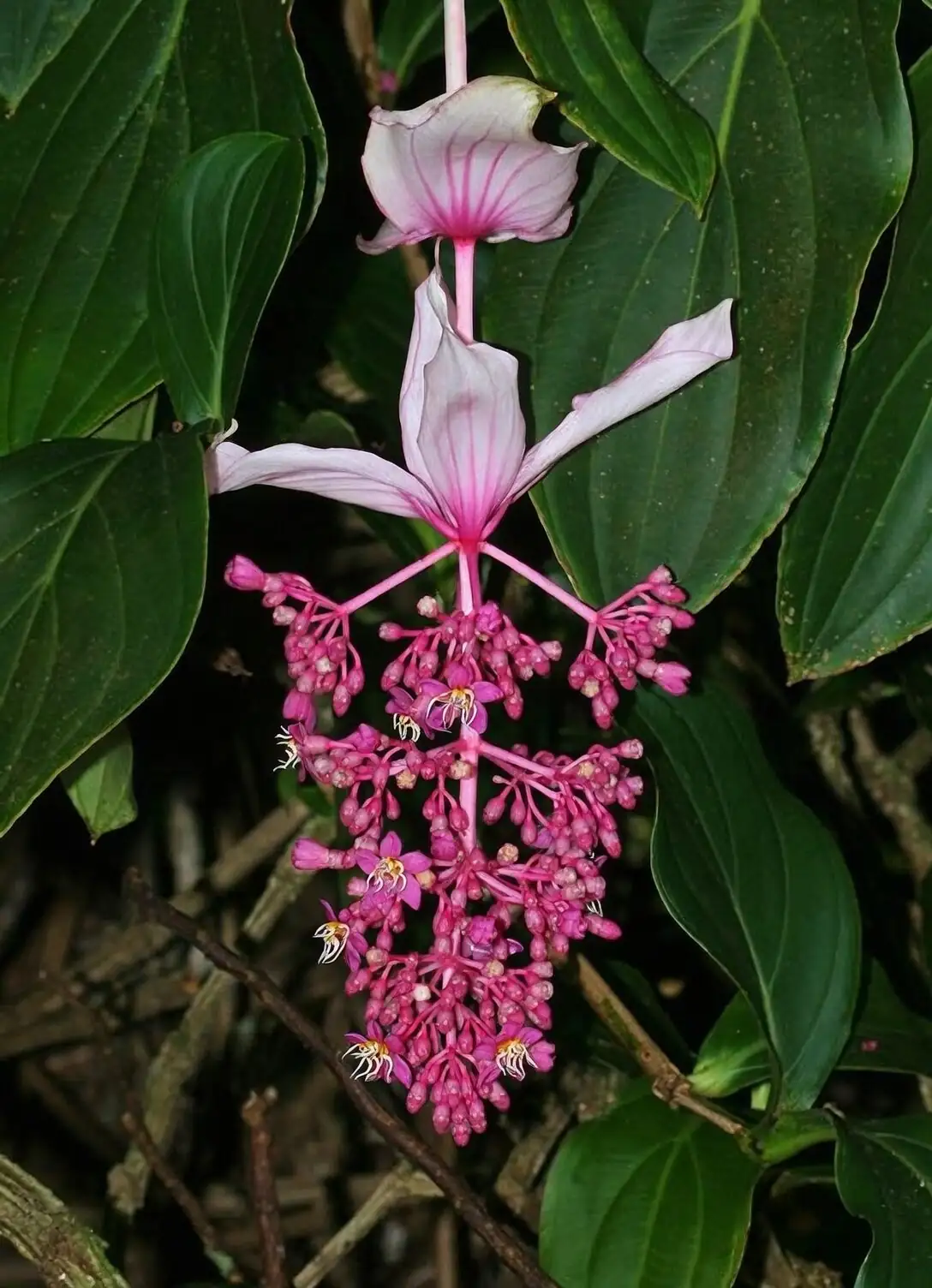
If you’ve ever seen Rose Grape (Medinilla magnifica) in full regalia, you know why people call its blooms “chandeliers.” Rosy tiers of pendant bracts drape like silk over glossy, deeply veined leaves—pure tropical theater from the forests of the Philippines. The secret to getting that show year after year? Think like a stage manager. Set the scene in winter, rehearse in spring, keep the air moving during the performance, and strike the set with a crisp prune when the curtain falls. Here’s your season-by-season playbook to stack the odds for repeat flowering.
The repeat‑blooming game plan (at a glance)
- Winter: Move it to the brightest filtered light you have, keep it warm (above 16°C/61°F), and water sparingly—slightly on the dry side.
- Early spring: Repot if due into a deep, airy, free‑draining mix; ramp up humidity; begin feeding.
- Late spring to early summer (main bloom): Prioritize steady moisture, high humidity, and gentle ventilation; avoid heat spikes and harsh sun; don’t wet the flowers.
- Summer: Maintain frequent watering as needed; keep bright filtered light and airflow steady; support heavy, drooping stems.
- After flowering: Remove spent clusters and cut back flowered shoots by about half to trigger new flowering growth.
- Autumn: Ease off feeding, keep light bright, and continue even-but-slightly-less watering as days shorten.
—
Winter: bank the light, keep it warm, rest on the dry side
Rose Grape doesn’t “sleep” so much as it slows. Your job is to keep conditions steady until spring cues new growth.
- Light and placement
- Aim for the brightest filtered/indirect light you can offer: an east window or a south window with a sheer curtain.
- Elevate the pot on a stand so future blooms can drape naturally.
- Temperature and humidity
- Keep it warm and stable: ideally 17–25°C (63–77°F), never below ~16°C (61°F).
- Target 50–70%+ humidity; 70–80% is gold-standard. Use a humidifier or pebble tray; avoid misting blooms directly.
- Watering rhythm
- Let the top layer of the mix dry slightly between waterings. No soggy soil and no bone-dry swings.
- Use lukewarm rain or distilled water when possible; if using tap, let it sit overnight.
- Do’s and don’ts
- Do move it closer to the brightest window as days shorten.
- Don’t expose it to cold drafts or radiators blasting dry heat.
—
Early spring: wake-up, repot if due, feed for lift‑off
This is setup season—small adjustments now pay off in blooms later.
- Repotting (every ~2 years, spring)
- Choose a deep container (about 20–25 cm wide; 30–40 cm deep) with excellent drainage.
- Use an airy, rich, free‑draining medium:
- Option A: humus‑rich potting mix lightened with coarse sand/perlite/vermiculite.
- Option B: “orchid‑style” fine bark with perlite/charcoal.
- Disturb roots as little as possible; provide light shade for a few days after.
- Feeding
- Begin your growing‑season program (see “Water and feed recipes” below).
- Raise humidity and keep light bright to support bud initiation.
- Training and display
- Set the pot high so future inflorescences can cascade.
- Have soft ties on hand to gently support heavy stems later.
—
Late spring to early summer: bloom‑time—ventilate and steady the ship
This is showtime. The big risks now are heat spikes, stagnant air, harsh sun, and watering swings.
- Airflow and temperature
- Provide gentle, continuous ventilation to prevent heat buildup—crack a window nearby or run a quiet fan across the room.
- Keep it warm (22–28°C / 72–82°F is ideal) but avoid hot, stagnant pockets that trigger bud/flower drop.
- Light
- Bright, filtered light. No prolonged harsh midday sun—scorching damages leaves and buds.
- Moisture and humidity
- Keep the mix evenly moist, never soggy.
- Bottom‑water: stand the pot in a tray of lukewarm water for ~20 minutes, then drain completely.
- Maintain 70–80% humidity if you can; avoid wetting the blooms.
- Support the show
- Heavy pendant clusters can stress stems—use discreet ties or stakes to prevent flopping or breakage.
- Troubleshooting bud/flower drop (classic stress signals)
- Heat spike + stale air? Increase ventilation and pull back from hot sun.
- Soil yo‑yo (too dry, then drenched)? Adopt even, measured watering.
- Cold drafts or AC blasts? Relocate to a steadier microclimate.
- Flowers getting wet? Water from below and keep sprays off the clusters.
—
Mid–late summer: keep the energy flowing
- Continue bright filtered light, steady moisture, and higher humidity.
- In hot spells, expect more frequent watering (sometimes even daily if the mix dries fast), but never let the pot sit in water.
- Keep gentle airflow; scout weekly for spider mites, mealybugs, scale, and whiteflies.
—
After flowering: prune‑back and reset the plant for next year
This is where many growers win or lose next year’s display.
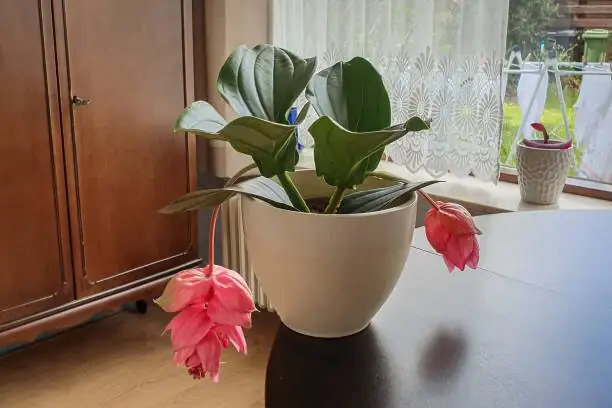
- Immediate cleanup
- Remove spent inflorescences promptly.
- Structural prune (the key step)
- Cut back the shoots that flowered by about half. This stimulates fresh growth that can carry the next round of blooms.
- Shorten overly long stems to maintain a rounded, architectural silhouette.
- Why it works
- Rose Grape blooms on new growth—post‑bloom pruning redirects energy into those future flowering shoots.
—
Autumn: coast into rest
- Begin spacing out feedings; let intervals between waterings lengthen slightly.
- Keep bright filtered light and stable warmth as daylight wanes.
- Maintain moderate to higher humidity and good airflow to deter pests.
—
The environment dossier (quick reference)
- Sunlight: Bright, filtered/indirect; partial shade tolerated. Avoid prolonged harsh direct sun.
- Temperature: Best at 22–28°C (72–82°F); acceptable 17–25°C (63–77°F). Keep above ~16°C (61°F).
- Humidity: 50–70%+ workable; 70–80% ideal for strong bud set and bloom.
- Soil: Airy, rich, very free‑draining (bark‑based “orchid” style or lightened humus‑rich mix both work).
- Hardiness: Frost‑tender. Outdoors year‑round only in about USDA 11–12; otherwise grow indoors or in a conservatory.
- Placement: Indoors near an east window or a south window with sheer; outdoors (warm climates) in bright shade with shelter from rain and drying wind.
—
Water and feed recipes that work
Pick one approach and stick to it; consistency is your friend.
- Option 1 (monthly balanced + bloom boost)
- Feed monthly with a balanced fertilizer (e.g., 20‑20‑20 at label rate).
- When buds appear, give 1–2 extra feeds emphasizing phosphorus/potassium.
- Option 2 (little‑and‑often potassium support)
- From spring to late summer, feed every 2 weeks with a half‑strength, high‑potassium liquid fertilizer.
- Always
- Don’t overfeed; steady light and humidity matter more.
- Use lukewarm water and avoid splashing the blooms.
—
Propagation windows
- Stem cuttings
- Spring softwood or summer semi‑ripe cuttings, 8–10 cm long.
- Warm, humid rooting—often 3–4 weeks to take.
- Air layering
- Spring–summer; root in about 8–12 weeks.
- Seed
- Slower; sow fresh or in spring around 19–24°C (66–75°F).
—
Common pitfalls and quick fixes
- Bud or flower drop
- Usually heat + stagnant air, harsh sun, cold drafts, or watering swings. Improve airflow, stabilize moisture, and filter the light.
- Leaf scorch or pale growth
- Too much direct sun or too little light, respectively. Shift to bright filtered light.
- Pests
- Spider mites love dry air; also watch for mealybugs, scale, and whiteflies. Increase humidity and airflow; treat early with insecticidal soap or horticultural oil.
- Diseases
- Leaf spot and root/stem rot stem from wet flowers or waterlogged media. Keep the mix free‑draining and blooms dry; remove affected tissue promptly.
- Toxicity note
- Not widely documented as toxic to people or pets, but ingestion may cause mild stomach upset—best to keep out of reach.
—
Display and buying tips
- Display high so the cascades can drape—this plant is a natural focal point.
- When shopping, look for deep‑green, unblemished leaves and strong, developing clusters (ideally 3–5), with at least one partially open to judge quality. Avoid blackened bracts, soft stems, or sticky residue.
—
Symbolism, names, and a fun reality check
- Symbolism
- Often gifted as a statement of tropical glamour, elegance, and abundance—more “couture bouquet” than everyday houseplant. If you encounter “flower language” claims, they’re modern, gift‑culture associations rather than ancient lore; the meaning rests in its theatrical, cascading display and long‑lasting clusters.
- Names you may see
- Rose Grape is the most common English name; you’ll also hear Magnificent Medinilla, Philippine Medinilla, “Philippine Orchid” (a trade nickname—it’s not an orchid), and in the Philippines, kapa‑kapa.
- Fun facts
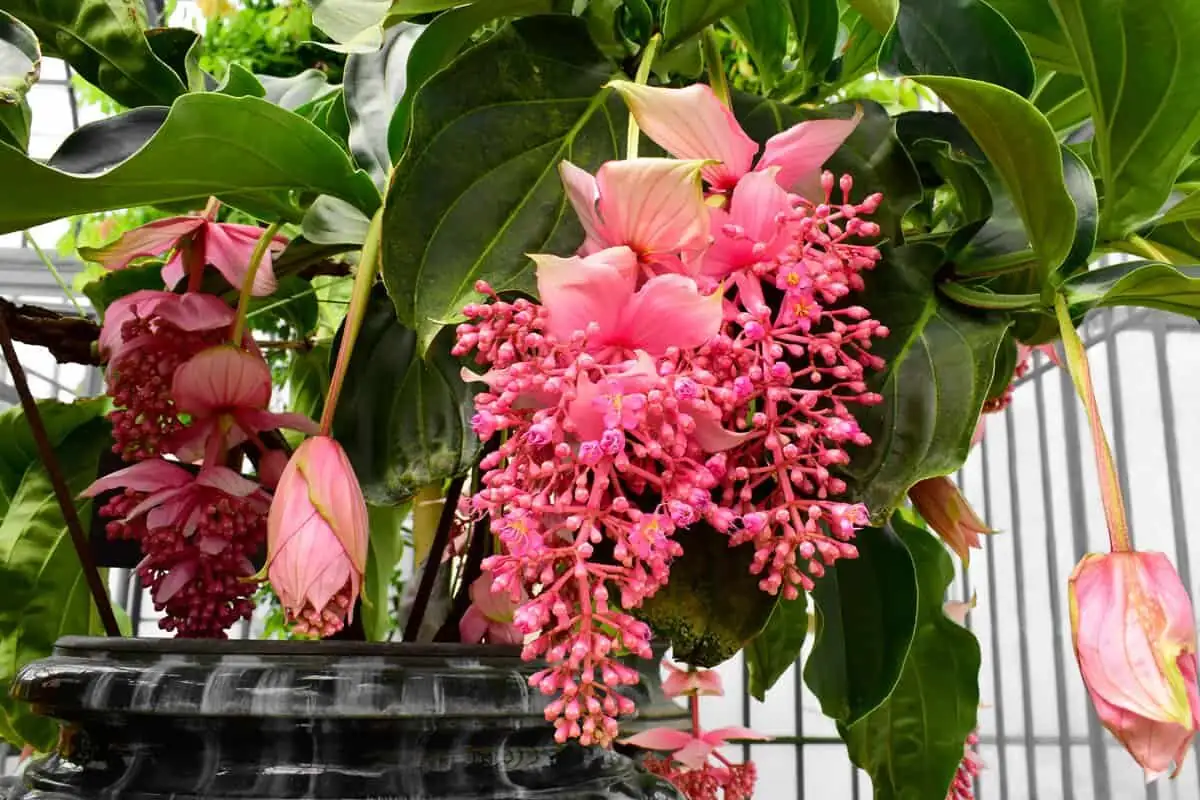
- Those big pink “petals” are bracts; the true flowers are the smaller pink‑to‑purple blooms tucked within.
- Inflorescences are heavy—support during bloom keeps the show flawless.
—
The six levers that unlock repeat flowering
- Bright, filtered light (especially through winter).
- Warm, steady temperatures (aim high teens to high 20s °C; avoid chills and heat spikes).
- High humidity (work toward 70–80% for top performance).
- Even moisture (never bone‑dry, never boggy).
- Gentle ventilation during bloom (no stuffy heat; no cold drafts).
- A decisive post‑flower prune (cut back flowered shoots by about half).
Dial these in, and your Medinilla magnifica will reward you with those signature chandelier blooms—season after season.