

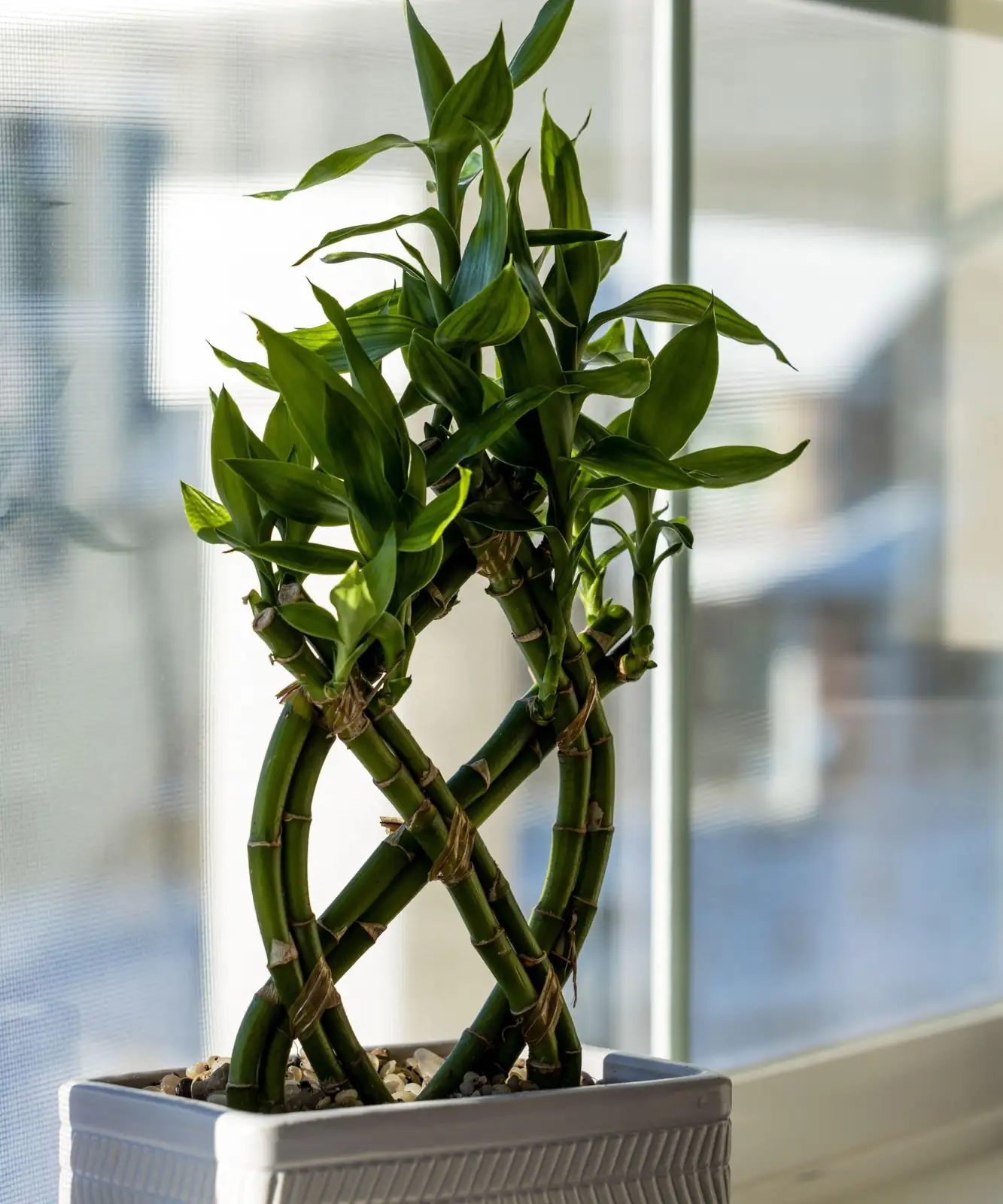
Lucky bamboo without the guesswork—this month-by-month game plan keeps your Dracaena sanderiana happy whether it’s rooted in soil or dancing in a vase. You’ll know when to water, when to mist, when to prune, and how to shield it from temperature stress. Plus: quick checklists for both soil-grown and water-grown setups so your routine becomes second nature.
Before we start: lucky bamboo loves bright, indirect light; warm air; and clean, consistent moisture. It isn’t a true bamboo—think “easy indoor dracaena,” not “pond plant.”
Key comfort zone
- Light: Bright, filtered light; no harsh midday sun. East windows or sheered south windows are classics.
- Temperature: 18–30°C (64–86°F), strongest growth around 25–30°C (77–86°F). Keep it above 10°C (50°F).
- Humidity: Prefers 50%+, with occasional misting. In hot, dry spells, mist 2–3 times a day.
Month-by-month playbook
Note: If you’re in the Southern Hemisphere, flip the seasons by six months.
January
- Water rhythm
- Soil-grown: Go easy. Let the top 2–3 cm (about 1 in) of mix dry, then water. Often every 10–14 days, but watch your room temp and light.
- Water-grown: Top up as needed. Change water weekly; wipe the vase and rinse any pebbles.
- Humidity boost: Central heating = dry air. Group plants, run a humidifier, or set a pebble tray with water beneath the pot/vase.
- Pruning window: Hold off on big cuts. Lightly snip only brown tips.
- Temperature safeguards: Keep off chilly windowsills. Avoid drafts from doors and AC units. Never below 10°C (50°F).
February
- Water rhythm: Similar to January; days are still short.
- Humidity boost: Keep misting if tips are browning. Use dechlorinated/aged water for misting and watering.
- Pruning window: Still light-only. Rotate the container to keep canes upright.
- Temperature safeguards: Nights can be cold—pull plants 30–60 cm (1–2 ft) back from cold glass.
March
- Water rhythm
- Soil-grown: Growth wakes. Start watering a touch more frequently, keeping soil evenly moist without waterlogging.
- Water-grown: Weekly changes; consider switching to an opaque vase to reduce algae.
- Humidity boost: Resume gentle, regular misting as sunny days pick up.
- Pruning window: Begin planning structural pruning for late spring.
- Temperature safeguards: Spring drafts happen—avoid vents and open windows on cold days.
April
- Water rhythm: Steady, even moisture in soil; don’t let a soil pot sit in a saucer of runoff. Water-grown stays weekly.
- Humidity boost: Warmer days can dry tips—mist, and clean leaves with a damp cloth.
- Feeding: Start light feeding this month during active growth:
- Option A: Balanced dilute houseplant fertilizer every ~2 months.
- Option B: Very weak foliage feed every ~2 weeks (especially cautiously in water culture).
- Pruning window: Light shaping is fine; save big cuts for early summer.
- Temperature safeguards: Shade from strengthening sun; never in harsh midday beams.
May
- Water rhythm: Regular, reliable moisture for soil; weekly fresh water for vases.
- Humidity boost: Warm spells? Pebble trays and grouping help maintain 50%+ RH.
- Feeding: Continue your chosen light-feeding plan. Overfeeding can cause floppy growth and foul water.
- Pruning window: Stake top-heavy canes now if you want to delay pruning.
- Temperature safeguards: Warmth is good; avoid hot glass and heat bursts.
June
- Water rhythm: Peak growth. Keep soil evenly moist; water-grown gets scrupulously clean weekly changes.
- Humidity boost: In hot, dry rooms, mist 2–3 times per day to prevent brown tips, especially for new cuttings.
- Prime pruning and propagation window:
- Cut canes back to about 15 cm (6 in). Stubs typically resprout from nodes.
- Root top cuttings: 20–25 cm (8–10 in) tips in clean water (change every 3–4 days) or 10–15 cm (4–6 in) cane sections in a light mix at 25–30°C (77–86°F). Roots form in roughly 3 weeks.
- Clean tools; some growers dust cut ends with charcoal to discourage rot.
- Temperature safeguards: Keep in the 25–30°C (77–86°F) sweet spot. Shade from fierce midday sun.
July
- Water rhythm: Consistent moisture; never let a water-culture vase run dry.
- Humidity boost: Keep air moisture high; bathrooms with bright, indirect light are ideal summer spots.
- Feeding: Maintain light feeding. In water culture, go extra dilute to avoid algae/rot.
- Pruning window: Still excellent for shaping and taking cuttings if you missed June.
- Temperature safeguards: Protect from sunburn through glass; rotate to prevent leaning.
August
- Water rhythm: Same steady routine. Trim any crowded or rotting roots during water changes.
- Humidity boost: Persist with misting in heat waves.
- Pruning window: Slow heavy cutting toward month’s end as growth begins to ease.
- Temperature safeguards: Watch for AC blasts; keep away from vents.
September
- Water rhythm: Begin easing watering slightly for soil-grown plants as days shorten; keep water-grown clean and fresh.
- Humidity boost: Maintain moderate humidity as indoor heat returns.
- Feeding: Last light feed of the season this month or next; then taper off.
- Pruning window: Light tidying only. Let new shoots harden before cooler months.
- Temperature safeguards: No cold drafts on cool nights.
October
- Water rhythm: Soil-grown plants shift to modest watering; allow the top layer to dry a little more between drinks.
- Humidity boost: Add a humidifier or trays as heaters click on.
- Feeding: Wrap up feeding. Avoid pushing soft, off-season growth.
- Pruning window: Minimal—remove only spent or yellowing leaves.
- Temperature safeguards: Keep above 10°C (50°F). Don’t park by exterior doors.
November
- Water rhythm: Conservative watering in soil; in water culture, continue weekly changes, gentle scrubbing of the container, and root checks.
- Humidity boost: Consistency over intensity—aim for 45–55% RH at minimum.
- Pruning window: Skip structural cuts.
- Temperature safeguards: Move plants away from cold panes at night.
December
- Water rhythm: “Holiday mode” = less water for soil-grown plants, but never bone-dry. Vases: keep roots submerged and water clean.
- Humidity boost: Festive heating dries air—mist leaves and dust them to keep pores clear.
- Pruning window: None beyond cosmetic.
- Temperature safeguards: Traveling? Set thermostats to protect plants (no lower than 15–16°C / 59–61°F indoors).
Light and placement notes all year
- Ideal: 50–70% filtered light. East windows or bright rooms with sheer curtains.
- Signs to watch: Pale leaves = not enough light; brown tips = dry air or water quality issues; yellowing = too much fertilizer or sun.
- Rotate plants monthly for even, upright growth. Sculpted spirals are trained over time by turning stalks toward light.
Quick checklists
Soil-grown lucky bamboo (pot culture)
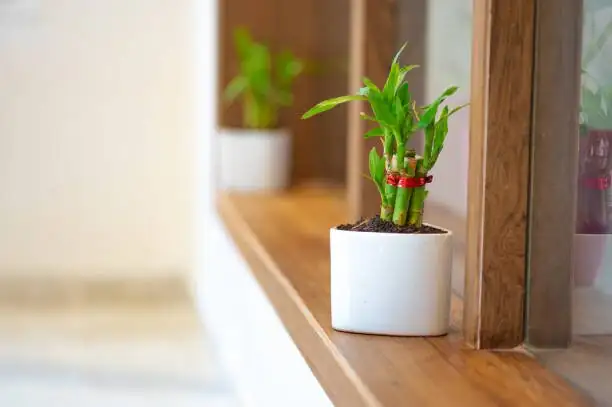
- Pot and mix
- Small pot is fine (12–15 cm / 4.7–5.9 in). Use a well-drained houseplant mix with a bit of perlite/sand.
- Watering
- Spring–summer: Keep evenly moist; let top 2–3 cm dry slightly between waterings.
- Autumn: Gradually reduce.
- Winter: Slightly drier but never parched.
- Feeding
- Light schedule: either dilute feed every ~2 months, or very weak solution every ~2 weeks during active growth. None in winter.
- Pruning
- Best: Early to midsummer. Cut canes to ~15 cm (6 in) to prevent toppling; stubs resprout.
- Repotting
- About annually in spring, or refresh the mix when roots crowd the pot.
- Placement
- Bright, indirect light. Protect from hot sun and cold/AC drafts.
Water-grown lucky bamboo (vase or bowl)
- Water care
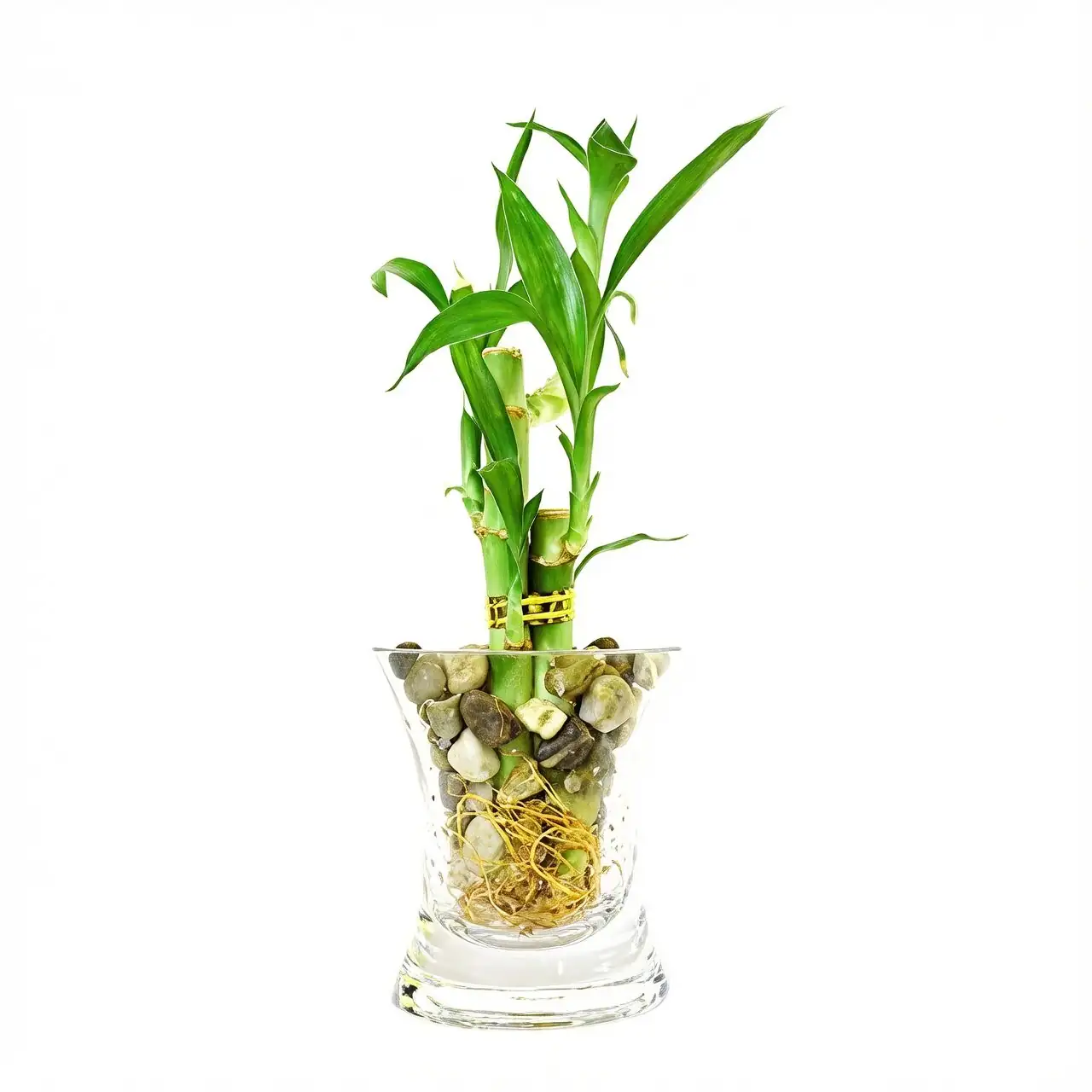
- Keep roots submerged; change water weekly once rooted.
- New cuttings: change every 3–4 days.
- Use clean, preferably dechlorinated/aged water; rinse pebbles each change.
- Hygiene
- Scrub containers to prevent algae; opaque vases help. Red roots are normal.
- Trim crowded, dead, or slimy roots during changes.
- Feeding
- Extremely dilute and infrequent; less is more to avoid algae and rot.
- Pruning
- Early to midsummer for shaping; root cut tops in fresh water.
- Placement
- Bright, filtered light; never in harsh sun.
Fertilizing finesse
- Use a balanced, dilute fertilizer.
- Either feed lightly every two months or use a very weak foliage feed about every two weeks in the growing season.
- In water setups, err on the side of “almost nothing.” Overfeeding leads to algae, foul smells, and soft growth.
Common pitfalls and fast fixes
- Yellow leaves: Too much sun or fertilizer. Move to brighter, indirect light and flush soil or change water.
- Brown leaf tips: Dry air or water chemicals. Boost humidity; switch to dechlorinated/aged water.
- Soft, mushy canes: Rot from stagnant water or cold stress. Remove affected stems; refresh and sanitize containers; keep warm.
- Leaning/top-heavy stems: Stake gently or hard-prune in summer; rotate plant for even light.
- Pests: Scale, thrips, and aphids show up as bumps, silvery streaks, or sticky residue. Treat early with insecticidal soap or horticultural oil and isolate the plant.
- Pet safety: Toxic to cats and dogs if chewed. Display out of reach.
Pruning and propagation, demystified
- Best season: Early summer to midsummer when warmth and humidity speed recovery.
- How-to
- Height control: Cut canes to ~15 cm (6 in). Expect new shoots from nodes.
- Tip cuttings: 20–25 cm (8–10 in) tips root in water in about 3 weeks; change water every 3–4 days.
- Cane sections: 10–15 cm (4–6 in) pieces root in a light mix kept warm (25–30°C / 77–86°F) and lightly moist.
- Clean tools; optional charcoal dusting at cut ends can help discourage rot.
Where it shines
- Desks, living rooms, bright bathrooms, reception areas—anywhere with warm air and filtered light.
- Outdoors only in frost-free climates (roughly USDA Zones 10–12), and always shaded from strong sun.
Symbolism and the “flower language” behind lucky bamboo
- Meaning: Prosperity, harmony, good fortune, and longevity—hence its popularity as a gift for new homes and businesses.
- Why the association? The bamboo-like form and evergreen resilience aligned beautifully with feng shui traditions that value balance and vibrant, ongoing life.
- A gentle reality check: The symbolism is cultural, not botanical. Your plant’s “luck” flows from attentive care—clean water, soft light, steady warmth—which in turn creates the serene, uplifting presence people prize.
With this calendar and the two quick checklists, your lucky bamboo becomes less of a mystery and more of a joyful ritual: refresh the water, wipe the leaves, watch for new shoots, and enjoy the calm green canes that repay small, consistent habits with year-round grace.