

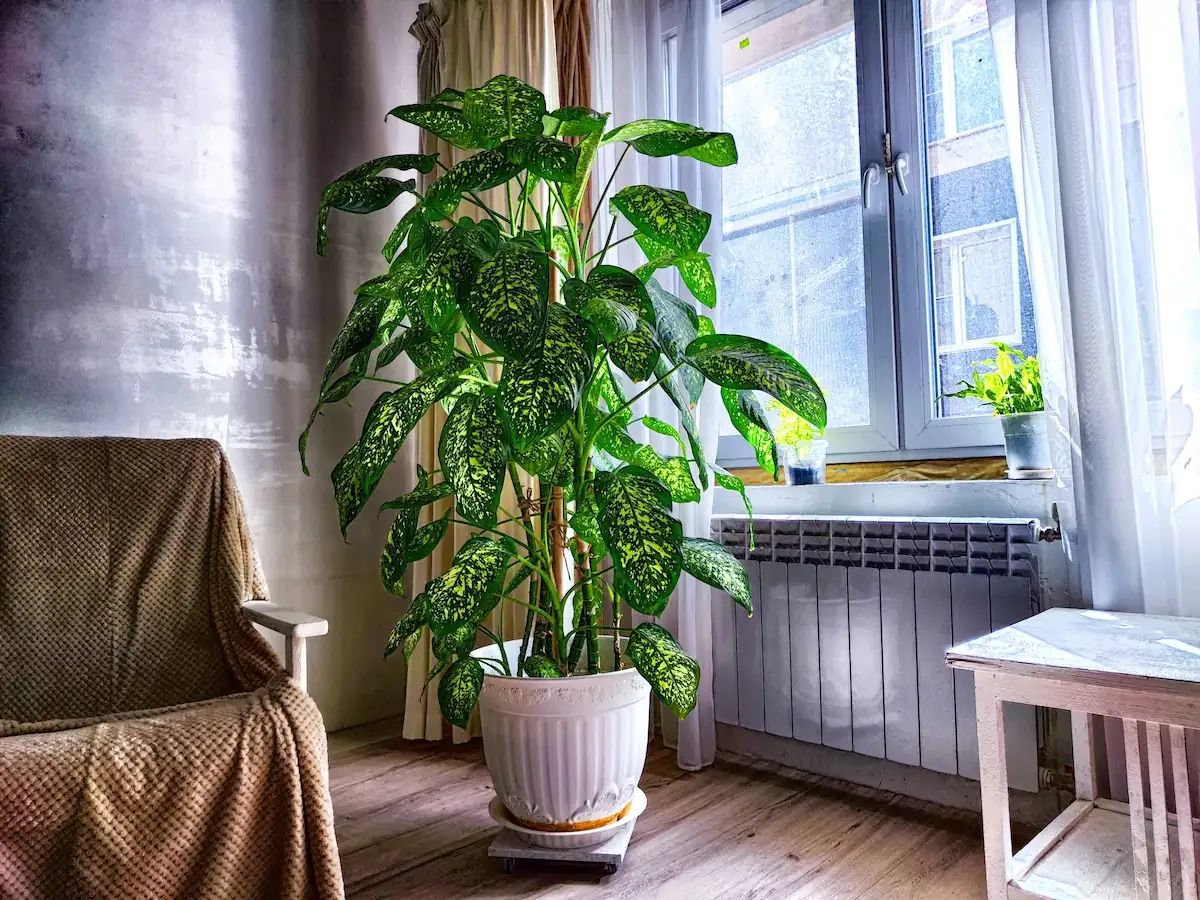
Bold foliage, easy attitude, and a dramatic, cane-like silhouette—Dieffenbachia seguine (often called Dumb Cane or Leopard Lily) is a tropical showstopper that loves a simple, seasonal rhythm. Follow this quarter-by-quarter checklist to keep those creamy-splashed leaves lush and luminous all year.
Meet the plant
- Botanical name: Dieffenbachia seguine (Araceae)
- Common names: Dumb Cane, Dieffenbachia, Leopard Lily
- Origins: Tropical Americas—Caribbean, Central America, and northern South America
- Look: Upright, cane-forming stems with big, glossy, patterned leaves
- Size indoors: Typically 0.9–1.5 m (3–5 ft), potentially up to 3 m (10 ft) under ideal care
- Light sweet spot: Bright, indirect light (sheer-filtered south/west windows, or near east/north windows)
- Temperatures: Best at 18–24°C (65–75°F); protect from chills and drafts—avoid prolonged exposure below about 12–15°C (54–59°F)
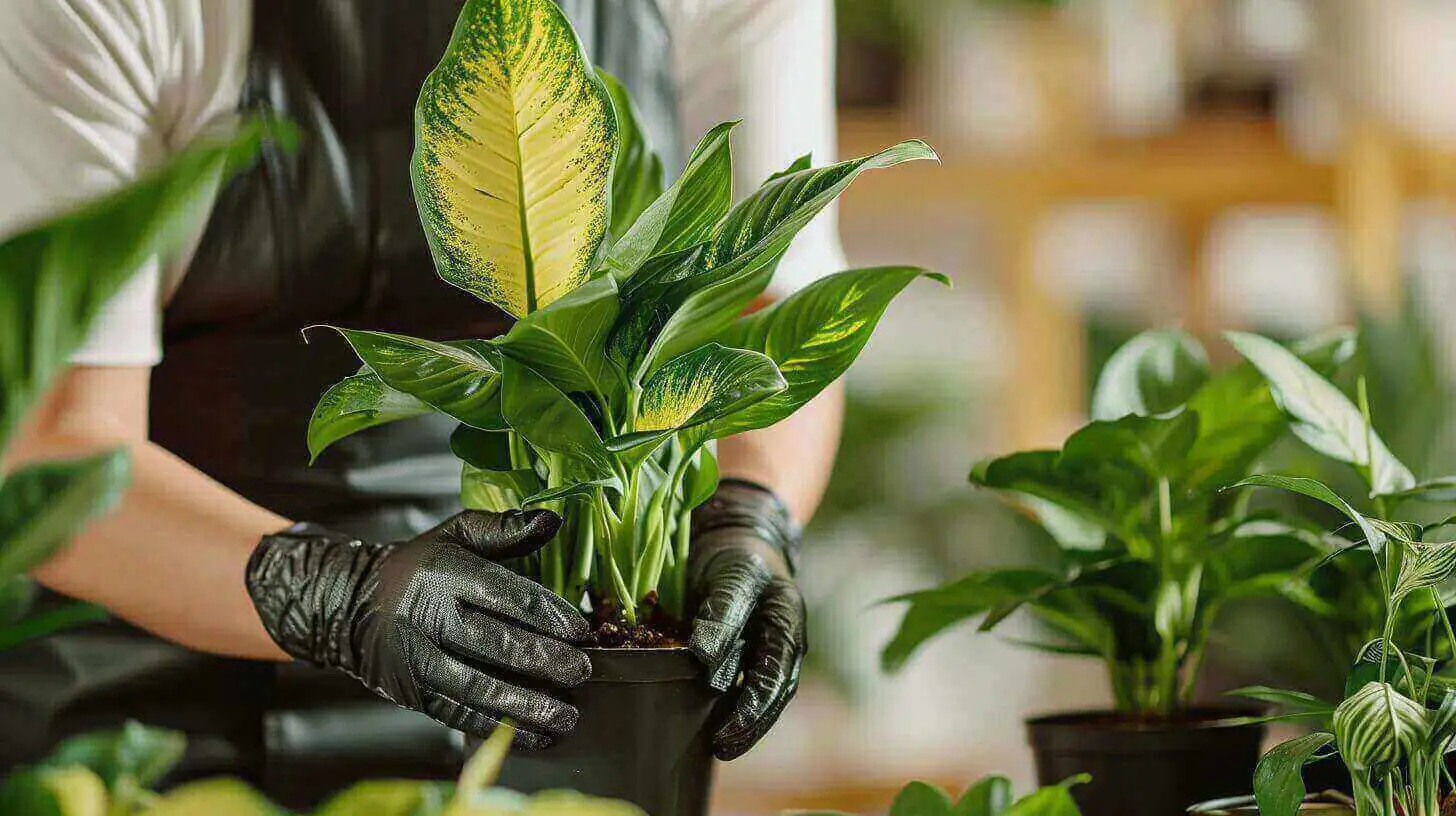
- Safety: Toxic if chewed; sap may irritate skin. Keep away from kids and pets, wear gloves when pruning
Your seasonal checklist
Spring: Reset, repot, propagate, and feed
- Repot:
- Move up 2.5–5 cm (1–2 in) in pot diameter if roots circle the pot or peek from drainage holes.
- Refresh with a loose, airy, well-draining mix (peat/coir-based with perlite or bark).
- Feed:
- Resume a balanced liquid fertilizer every 4–6 weeks (monthly at label rate works; use half-strength if your plant is sensitive).
- Propagate:
- Take 10–13 cm (4–5 in) cane sections with at least one node, or divide clumps; air-layer leggy canes if you prefer.
- Root warm and humid; patience—new roots form in a few weeks.
- Watering tune-up:
- As days brighten, water when the top 2.5–5 cm (1–2 in) of mix is dry; aim for evenly moist, never soggy.
- Groom and shape:
- Remove tired lower leaves and clean dust from foliage for better light capture.
Summer: Keep humidity up and moisture steady
- Light and heat:
- Bright, indirect light is ideal; shield from harsh midday sun to prevent scorch.
- Growth is strong up to about 27°C (81°F). Rotate the pot for even, upright growth.
- Watering rhythm:
- Maintain consistent moisture; many larger plants need watering about once or twice a week. Always empty saucers.
- Humidity help:
- Aim for 50%+ if you can. Use pebble trays, plant groupings, or a humidifier; a bright bathroom can be perfect.
- Watch for pests:
- Spider mites love dry air; also check for mealybugs, scale, thrips, and aphids. Treat early with insecticidal soap or horticultural oil.

Fall: Ease off the feed and adjust to shorter days
- Light shift:
- As daylight fades, move slightly closer to bright windows (still indirect). Consider sheer curtains for south/west exposures.
- Taper care:
- Reduce fertilizing; feed lightly into early autumn, then pause as growth slows.
- Let the top 2.5–5 cm (1–2 in) of mix dry a touch more between waterings.
- Pre-winter check:
- Confirm the plant is away from drafty doors and vents. Clean leaves to maximize winter light.
Winter: Minimal water, no fertilizer, draft protection
- Water sparingly:
- Keep the mix just lightly moist; overwatering in cool, dim conditions is the fastest route to rot.
- Stop feeding:
- Hold all fertilizer until spring or when temps reliably stay above about 15°C (60°F).
- Temperature and drafts:
- Protect from cold blasts and windowsills that dip below 12–15°C (54–59°F). Stable warmth = happy canes.
- Light and humidity:
- Bright, indirect light still; supplemental humidity helps combat dry indoor heat.

Core care, distilled
Light
- Best: Bright, indirect light to keep variegation crisp.
- Tolerates: Partial shade and lower light, but expect slower growth and softer markings.
- Tip: Rotate the pot monthly to prevent leaning.
Water
- Goal: Evenly moist, not soggy.
- How-to: Water thoroughly, then wait until the top 2.5–5 cm (1–2 in) is dry. In winter, go lighter.
- Avoid: Standing water and heavy, airless mixes (prime culprits in root/stem rot).
Soil and pot
- Mix: Well-aerated, well-draining (peat/coir + perlite/bark); slightly acidic to neutral.
- Pot: Drainage holes are non-negotiable. Consider a nursery pot slipped into a decorative cachepot so you can pour off excess easily.
Feeding
- Timing: Spring through early autumn, about every 4–6 weeks.
- Pause: Winter or whenever temps dip below ~15°C (60°F).
Temperature and humidity
- Comfort zone: 18–24°C (65–75°F); protect from prolonged chills below 12–15°C (54–59°F).
- Humidity: Enjoys 50%+. Pebble trays, groupings, or occasional misting can help in drier homes.
Pruning and styling
- Remove yellowing leaves; cut back lanky canes to prompt new shoots.
- Wear gloves—sap can irritate skin.
- For a fuller look, plant several rooted canes together or allow basal offsets to develop.
Propagation (quick start)
- Cane cuttings: 10–13 cm (4–5 in) sections with nodes; plant horizontally or upright in warm, lightly moist mix.
- Division: Separate clumps with roots attached.
- Air layering: Score a leggy cane, wrap with moist sphagnum, and pot once roots form.
Troubleshooting at a glance
- Yellowing leaves:
- Often watering issues (too wet/too dry), low light, cold drafts, or nutrient shortage. Check drainage, light, and temperature.
- Brown tips/edges:
- Low humidity, moisture swings, or salt buildup. Rinse the soil occasionally and boost humidity.
- Faded variegation:
- Not enough light—move to brighter, indirect exposure.
- Leggy, top-heavy canes:
- Increase light, rotate the pot, and consider cutting back canes to rejuvenate.
- Pests:
- Fine webbing = spider mites; cottony tufts = mealybugs; sticky residue = scale/aphids. Treat promptly; improve humidity and airflow.
Safety first
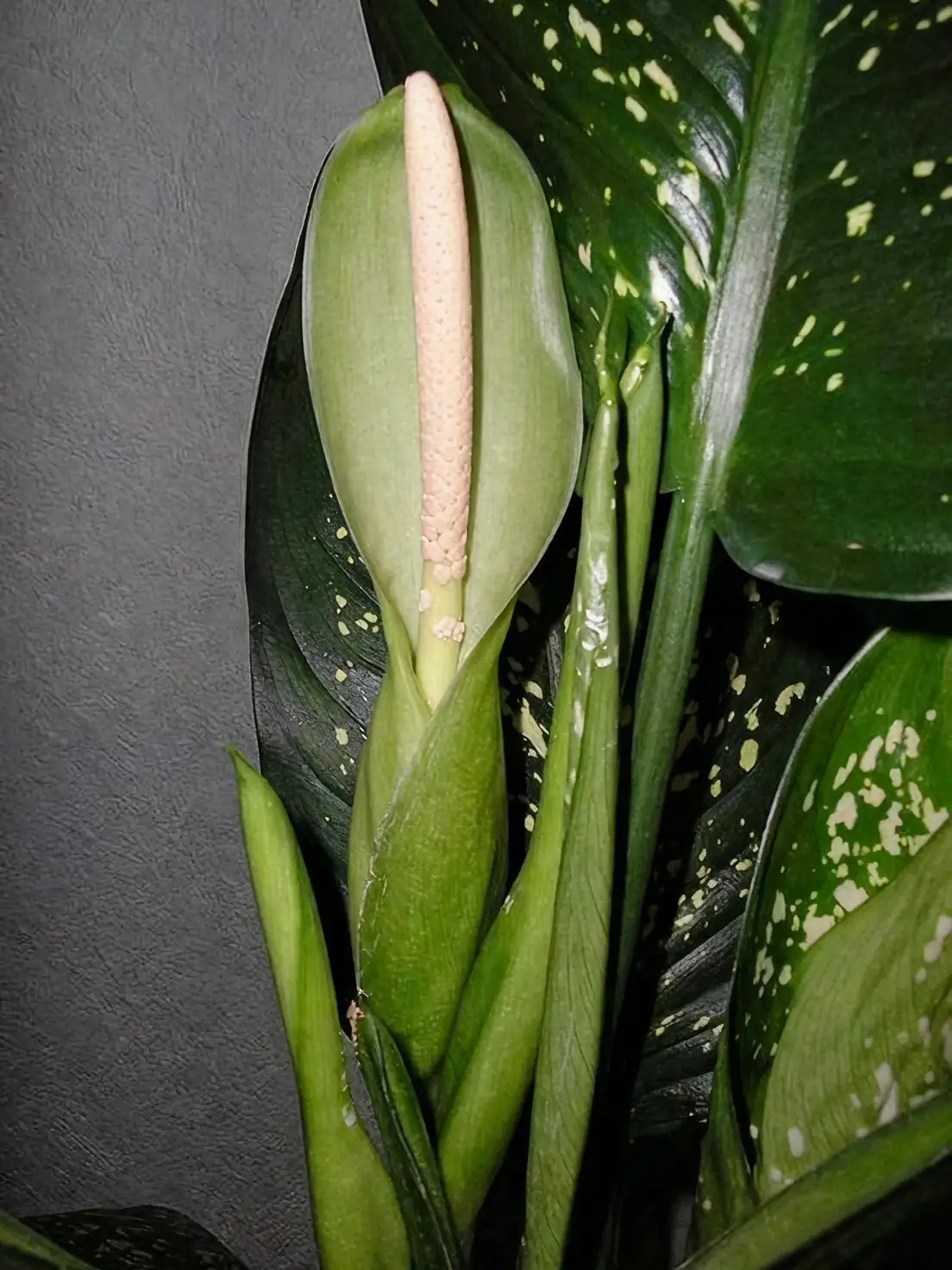
- All parts are toxic if chewed or ingested due to calcium oxalate crystals, which can cause intense mouth/throat irritation, drooling, swelling, and temporary speech difficulty. Sap may irritate skin and eyes.
- Keep away from pets and children; wear gloves for pruning and propagation.
Where it fits best at home
- Place near bright, filtered windows in living rooms, offices, entryways, and lobbies. A steamy, well-lit bathroom can be a humidity win.
- It’s often listed among air-improving houseplants, but remember: good ventilation is still the best way to refresh indoor air.
A note on symbolism and story
- Named by botanist Heinrich Wilhelm Schott to honor Joseph Dieffenbach (1790–1863), this plant’s common name “Dumb Cane” refers to the temporary loss of speech that can follow chewing its tissues—one reason to treat it with respectful caution.
- In Brazilian folk tradition, Dieffenbachia is sometimes thought to guard against negative energy. More broadly, its vigorous, variegated foliage reads as abundance and tropical prosperity—an indoor jungle’s quiet guardian rather than a loud bloom.
Quick recap checklist
- Spring: Repot if root-bound; start fertilizing; prune and propagate; increase watering as growth resumes.
- Summer: Bright, indirect light; steady moisture; 50%+ humidity; rotate; monitor for pests.
- Fall: Taper feeding; reduce watering slightly; adjust placement for shorter days.
- Winter: Minimal watering; no fertilizer; protect from drafts and temps below 12–15°C (54–59°F).
Follow this seasonal cadence, and your Dieffenbachia seguine will repay you with bold, architectural greenery—an easy-care statement that looks like it hired its own stylist.


