

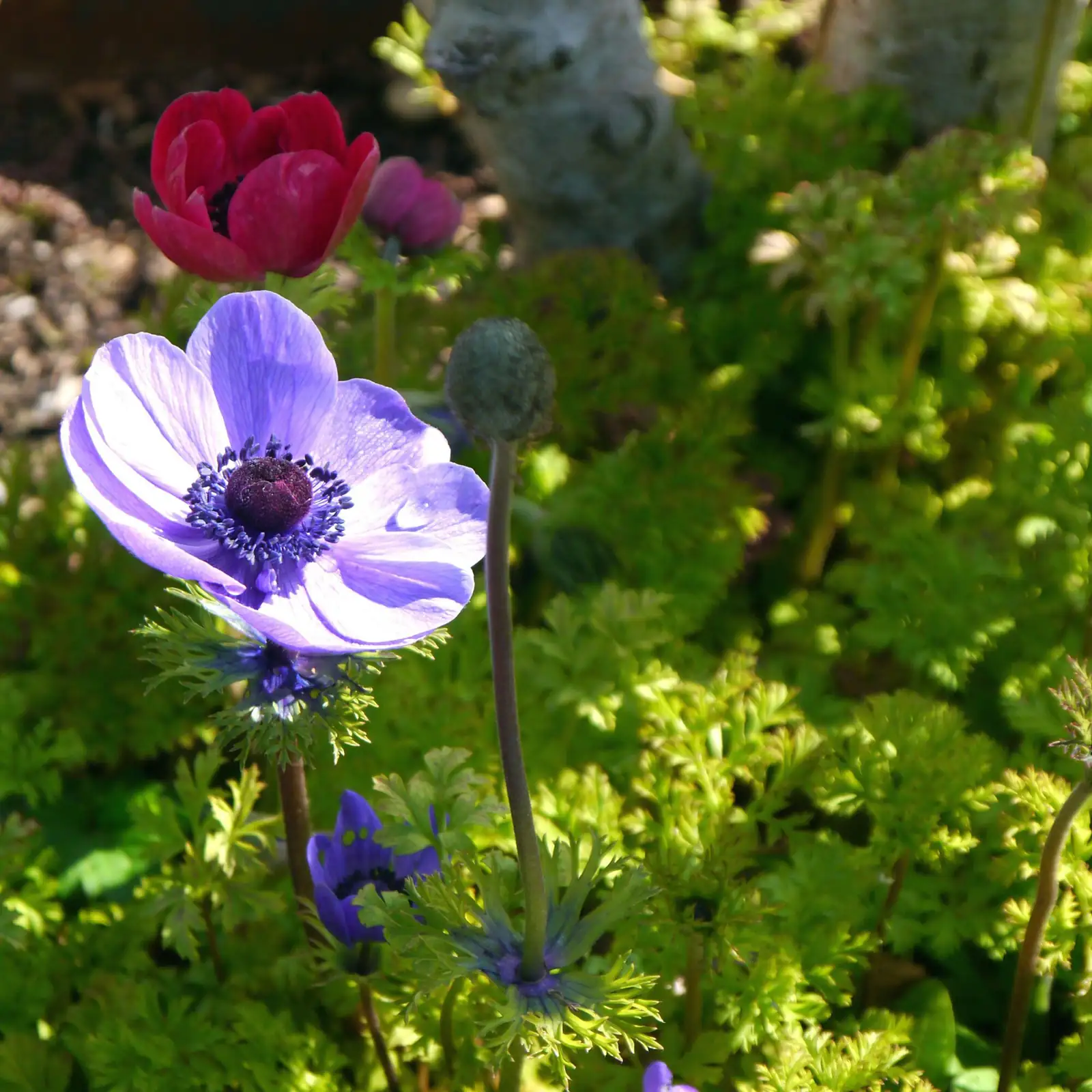
Paper-thin petals, in colors that could have been plucked from a candy box, lift on slender stems as if the breeze itself opened them—no wonder Anemone coronaria is called windflower. Grown from knobby little tubers, this Mediterranean charmer is a cool-season star: it wakes with autumn rains, glows through winter in bright light, and steals spring before slipping into a well-earned summer rest. Here’s a season-by-season plan to plant, enjoy, then safely store your poppy anemones for an encore next year.
Meet the poppy anemone (Anemone coronaria)
- Family and form: Ranunculaceae; a tuberous perennial often grown as a cool-season flowering plant.
- Habit and size: Compact; commonly under 30 cm (12 in) tall—perfect for pots and spring borders.
- Flowers: Vivid, papery, poppy-like blooms in red, pink, purple, blue, and white.
- Light: Full sun to bright light; part shade tolerated.
- Rhythm: Active in cool seasons; dormancy in summer heat (and sometimes during very cold winters).
- Special note for cut-flower lovers: Sensitive to ethylene gas—keep blooming plants and cut stems away from ripening fruit.
The year-at-a-glance calendar
Late fall (finish by late November): Wake, pre‑soak, and plant
- Pre‑soak to rehydrate: Before planting, plump tubers in clean water or in damp sand until they’re no longer hard and wrinkled. This jump-starts sprouting and evens out emergence.
- Orientation matters: Plant with the pointed side facing down (don’t invert).
- Depth:
- Pots: about 1.5 cm (0.6 in) deep.
- Garden beds: 5–7 cm (2–2.8 in) deep.
- Container recipe: A 12–15 cm (4.7–5.9 in) pot fits 3 tubers nicely in a triangle.
- First watering: After planting, water lightly to moisten the mix; avoid soaking. Increase gradually as growth begins to prevent rot.
Why late fall? Cool soils encourage root-building without heat stress, setting the stage for sturdy winter foliage and a generous spring show.
Winter (cool, bright growth): Build foliage and buds
- Light: Give full sun to bright light; a sunny window, bright patio, or well-lit balcony works. Too little light = leggy stems and fewer blooms.
- Temperature: Best growth at 15–20°C (59–68°F). Protect from hot, humid conditions.
- Moisture: Keep evenly moist, never waterlogged. Check drainage after heavy rain or snow.
- Feeding: About once a month with a dilute balanced fertilizer. Good airflow helps prevent gray mold and rust in cool, damp spells.
Note: In regions with very cold winters, foliage may stall or the plant may temporarily rest. Resume normal care as temperatures moderate.
Early–mid spring (peak bloom): Showtime, harvest, and deadhead
- Harvest for vases: Cut when the bloom is just beginning to open—petals lifting from the center—for the best vase life. Use sharp, clean snips.
- Deadheading: Remove spent blooms promptly if you’re not saving seed so the plant channels energy back to the tuber.
- Bloom booster: As buds form, give one feeding higher in phosphorus and potassium (for example, a bloom formula around 15‑15‑30) to support flowering and tuber development.
- Ethylene alert: Keep arrangements and potted plants away from ripening fruit. And avoid mixing freshly cut anemones with daffodils in the same vase—daffodil sap can soften anemone stems.
Late spring to early summer: Letting go—dormancy begins
- Natural rest: As weather warms, leaves yellow and growth slows—that’s normal. Reduce watering.
- Don’t force water: Soggy soil now can rot tubers. Allow the top of the mix to dry between light waterings as foliage fades.
Early summer: Lift, dry, and store for safety
- When to lift: After foliage has fully died back (often around June), carefully dig up tubers from beds or tip out pots.
- Clean and cure: Brush off soil (don’t wash), then air-dry in shade with good airflow until completely dry.
- Storage: Keep tubers dry—many gardeners use dry sand—to prevent moisture swings. Store cool and dark.

Early fall: Reawaken, inspect, and pre‑soak again
- Check your stash: Discard any tubers that are soft or moldy. Firm, dense tubers are keepers.
- Pre‑soak to plump, then replant by late fall to reset the cycle.
Planting, step by step
For containers
- Pot size: 12–15 cm (4.7–5.9 in) diameter; plant 3 tubers per pot.
- Mix: Rich, free-draining medium—think compost or leaf mold blended with fertile loam and a generous portion of coarse sand.
- Depth: 1.5 cm (0.6 in). Space tubers evenly.
- Aftercare: Water lightly post-planting; increase as shoots appear. Bright light is essential for sturdy stems.
For garden beds
- Site: Raised, sharply drained, fertile ground. Avoid any spot that puddles after rain.
- Soil: Rich yet free-draining (add coarse sand/grit and organic matter).
- Depth: 5–7 cm (2–2.8 in), pointed side down.
- Drainage check: After rain, ensure water runs off quickly; standing water is a fast track to rot.
Care essentials: water, light, temperature, and feeding
- Watering:
- Active growth and bloom: Keep evenly moist, never soggy. Water when the surface of the mix dries.
- Post-planting: Start light, then increase as sprouts emerge.
- Dormancy and winter rest: Keep much drier.
- Light: Full sun to bright light; part shade tolerated. In hot spells, provide 50–60% shade to prevent stress.
- Temperature: Thrives in 15–20°C (59–68°F). Struggles in hot, humid conditions; not reliably frost-hardy in severe winters.
- Feeding: Monthly during active growth with a dilute balanced fertilizer. Switch once to a bloom-supporting feed (higher P and K) as buds form.
Cut-flower finesse
- Best cutting stage: When petals just begin to lift from the center (the first‑open stage).
- Conditioning: Place stems in clean, cool water immediately.
- Keep away from:
- Ripening fruit (ethylene shortens vase life).
- Daffodil stems in the same vase (their sap can soften anemone stems).
Pests and diseases to watch
- Fungal troubles: Rust, gray mold (Botrytis), and Sclerotinia can strike in damp, poorly ventilated conditions.
- Prevention: Start with clean tubers, provide airflow, avoid waterlogged soils, and space for breeze.
- Aphids: Often cluster on stems and buds. Gently wash off early or manage promptly with controls that fit your local guidelines.
Safety notes
Like many buttercup relatives, Anemone coronaria can irritate skin and is harmful if eaten. Keep it away from children and pets; consider gloves if you have sensitive skin.
Symbolism and the “windflower” mystique
Anemone coronaria is often linked with anticipation and hopeful expectation. That sense of “something wonderful on the way” fits its life cycle: quiet rooting in cool weather, tidy winter greenery, then—suddenly—silky discs of color unfurl in spring. The nickname windflower comes from blooms that look as if a passing breeze opened them, and from their delicate way of nodding to wind. While modern “flower language” is part folklore, part Victorian fancy, the anemone’s association with awaiting joy feels true in the garden: you plant in fall, tend through winter, and are rewarded in spring with a flourish that seems almost magical.
Quick answers (so your season runs smoothly)
- Why won’t my newly potted tubers sprout?
- Overwatering right after planting is a common culprit. If the pot is soaked immediately, tubers can stay too wet and rot before sprouting. Water lightly at first; increase as growth begins.
- How do I plant poppy anemone tubers in the garden?
- Plant in October–November in a raised, well-drained, fertile spot. Pre‑soak to rehydrate, set 5–7 cm (2–2.8 in) deep with the pointed side down, water lightly, and ensure excess water can drain away. Under good conditions, new leaves may appear in about 20 days.
- My leaves are yellowing—what’s wrong?
- Check light (too dim?), watering (too wet or too dry?), and drainage. Healthy foliage should be fresh green and finely divided.
- Stems are weak and floppy—help?
- Increase light and airflow, avoid overwatering, and keep temperatures in the cool range. In hot weather, provide 50–60% shade to reduce stress.
Plant by late fall, keep it cool and bright through winter, celebrate spring with steady moisture and quick deadheading—and then let your anemones sleep. With a careful lift, a dry, cool summer rest, and a fresh pre‑soak in autumn, Anemone coronaria will return right on cue, ready to catch the wind again.