

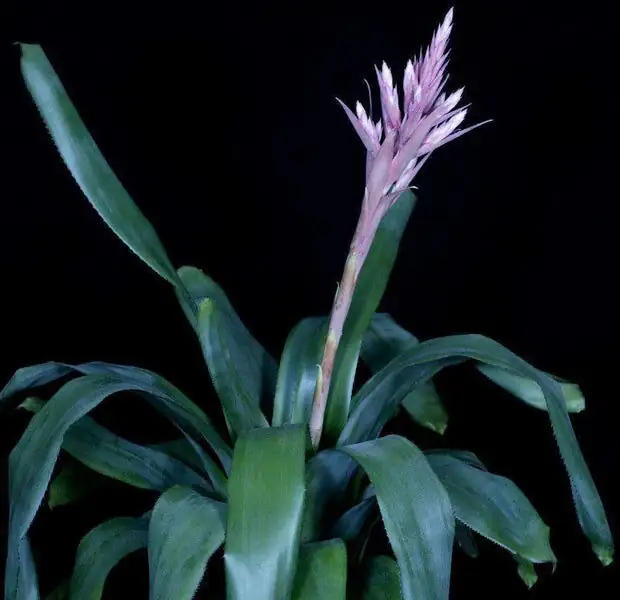
Meet the Dragonfly Bromeliad (Aechmea fendleri): a sculptural, silver‑green rosette with a built‑in water “cup” and a summer show of pink bracts and tiny purple blooms. The easiest way to keep this epiphytic beauty thriving? Run it by the seasons. Here’s a set‑and‑forget calendar that tells you exactly when to water the potting mix, refresh the cup, feed, and tune humidity from spring through winter.
First, set the stage (one‑time setup)
- Light: Bright, filtered light. Think an east window, a bright north window, or a few feet back from a south/west window behind a sheer curtain. Avoid harsh midday sun.
- Temperature: 15–27°C (59–81°F); keep it above 10°C (50°F).
- Humidity: Moderate is fine; it simply appreciates a boost in hot weather.
- Pot and mix: Use a snug pot (about 12.5–15 cm / 5–6 in) with an airy, fast‑draining epiphyte mix. Great recipes:
- Equal parts orchid bark mix + perlite + coconut coir, or
- 1:1 orchid bark mix and general potting mix.
- Water quality: Use rainwater or distilled water—tap water often leaves mineral crust on the cup and leaves.
- Growth habit: Rosette‑forming epiphyte that slowly clumps by producing offsets (pups).
Pro tip: Aim a small fan across the room for gentle air movement—bromeliads love airflow.
—
The Seasonal Care Calendar
Spring (wake‑up mode: March–May)
- Watering the potting mix
- Keep the mix lightly moist—never waterlogged.
- Water when the top 2–3 cm (about an inch) is dry; let excess drain freely.
- Central cup care
- Fill the rosette’s cup with rain/distilled water.
- Refresh/top up every 4–8 weeks. While refreshing, pour out old water and replace with fresh to prevent stagnation.
- Fertilizing
- Begin feeding every 2 weeks at 1/2 strength with a balanced liquid fertilizer.
- Apply into the cup or as a foliar feed, then occasionally flush with plain water to prevent salt buildup.
- Humidity
- Normal indoor humidity is fine; if your air is very dry, light morning misting helps.
- Light shift
- Days are longer—give it a brighter spot, but continue to avoid hot midday sun.
Set‑and‑forget reminder: Calendar a repeating task—“Every 2 weeks: feed Aechmea (1/2 strength). Every 6 weeks: refresh cup.”
—
Early Summer to High Summer (performance mode: June–August)
- Watering the potting mix
- Warmth speeds drying; check more often. Keep the mix lightly moist.
- Central cup care
- Maintain water in the cup at all times; refresh/top up every 4–8 weeks.
- Fertilizing
- Continue every 2 weeks through late summer.
- Humidity and heat
- In hot, dry spells, mist daily or every other day.
- A pebble tray or bright bathroom placement boosts humidity and deters spider mites.
- Light
- Bright, filtered light is key for strong color and potential flowering. Shield from harsh midday beams.
- Outdoors?
- Patio time is fine in frost‑free climates. Give bright shade, protect from direct noon sun, and bring back in if nights dip near 10°C/50°F.
Set‑and‑forget reminder: “Summer: mist on hot days; 2‑week feed rhythm; 6‑week cup refresh.”
—
Autumn (wind‑down mode: September–November)
- Watering the potting mix
- Slow the schedule: let the top layer dry more deeply before watering. The mix should never stay soggy.
- Central cup care
- Keep some clean water in the cup; continue refreshing/top‑ups every 4–8 weeks.
- Fertilizing
- Taper and stop by late September/early October.
- Temperature and placement
- Keep above 15°C/59°F; move away from cold drafts as the season changes.
- Grooming and pups
- After blooming, remove the spent flower spike.
- When pups reach 1/3–1/2 the size of the mother and have roots, they’re ready to separate and pot into the same airy mix.
Set‑and‑forget reminder: “October: stop fertilizer; refresh cup by schedule; check for pups.”
—
Winter (rest and resilience: December–February)
- Watering the potting mix
- Let the mix dry out before watering again; use smaller volumes to avoid lingering wetness.
- Central cup care
- Maintain a small amount of clean water in the cup and refresh/top up every 4–8 weeks. In cool rooms, avoid overfilling.
- Refill in the daytime so the rosette isn’t cold and wet overnight.
- Fertilizing
- Skip feeding in winter.
- Humidity and light
- Air tends to be dry—run a humidifier nearby if leaves crisp or mites appear.
- Maximize brightness: east window, bright north, or filtered south. Rotate the pot monthly for even growth.
- Temperature
- Keep comfortably above 10°C/50°F and away from heater blasts.
Set‑and‑forget reminder: “Monthly winter note: cup refresh; inspect for mites; rotate plant.”
—
One‑Minute Monthly Checklist
- Refresh the cup: Empty, rinse, and refill with rain/distilled water (every 4–8 weeks).
- Scan for pests: Check leaf bases and undersides for mealybugs, scale, or spider mites.
- Airflow check: Ensure the plant isn’t crammed among leaves or curtains—breathe easy, grow easy.
- Salt control: If you’re fertilizing (spring–late summer), flush with plain water now and then.
- Grooming: Remove only fully brown leaf tips and old bracts; never cut into healthy green tissue.
—
Watering, the Bromeliad Way

- Cup versus roots
- The central cup is a natural reservoir—keep it supplied with clean water and refreshed on schedule.
- The roots prefer airy, not soggy. In the growing season, keep the mix lightly moist; in winter, let it dry before rewatering.
- Quality matters
- Rain or distilled water prevents mineral crust and leaf spotting.
- What to avoid
- Standing water in the pot or saucer.
- Stagnant cup water that smells off—refreshing solves this.
—
Repotting and Propagation (low effort, high reward)
- Repotting
- Choose a snug pot; move up only one size when crowded. Over‑potting increases rot risk.
- Pups (offsets)
- When pups are 1/3–1/2 the size of the mother and show roots, separate with a clean cut and pot into the same airy mix.
- Buying tip
- Look for firm, upright leaves and a clean, odor‑free cup. Avoid mushy or blackened leaf bases and perpetually soggy pots.
—
Placement Ideas
- Indoors: East window, bright north, or set back from a south/west exposure behind sheers. Bright kitchens and bathrooms work beautifully if there’s decent airflow.
- Outdoors (warm, frost‑free months only): Bright shade with protection from midday sun; bring indoors before nights cool.
—
Troubleshooting at a Glance
- Brown, crispy tips
- Air too dry or salt buildup. Boost humidity; flush with plain water; use rain/distilled water.
- Pale, stretched leaves
- Not enough light. Move to brighter, filtered light.
- Leaf scorch or silvery patches
- Too much direct midday sun. Step back or diffuse the light.
- Mushy base or sour smell
- Potting mix stayed wet or cup water stagnated. Refresh the cup, improve airflow, and ensure a fast‑draining mix.
- Pests (mealybugs, scale, spider mites)
- Common in dry air. Isolate, wipe with a damp cloth, and treat as needed; raise humidity and airflow to prevent recurrence.
—
Safety and Symbolism
- Safety
- Generally low toxicity. Sap may irritate sensitive skin; nibbling may upset pets’ stomachs. Best kept out of reach of curious animals.
- Symbolism (花语)
- Hospitality and resilience. Its vase‑shaped rosette welcomes and “holds a drink,” and the long‑lasting pink bracts symbolize enduring cheerfulness. In tropical cultures where tank bromeliads host miniature ecosystems, they’re also seen as quiet caretakers—stable, generous, and strong.
—
Fun to Know
- That “flower” that lasts? It’s mostly colorful bracts. The true purple flowers are brief, but the bracts keep the show going.
- The central cup is a micro‑reservoir—wild rosettes can cradle entire tiny communities of insects and microorganisms.
With this seasonal playbook—lightly moist mix in the warm months, a tidy, refreshed cup on a 4–8‑week rhythm, and easy, half‑strength feeding from spring through late summer—Aechmea fendleri practically runs itself. Set the reminders once, then sit back and enjoy the dragonfly elegance all year.