

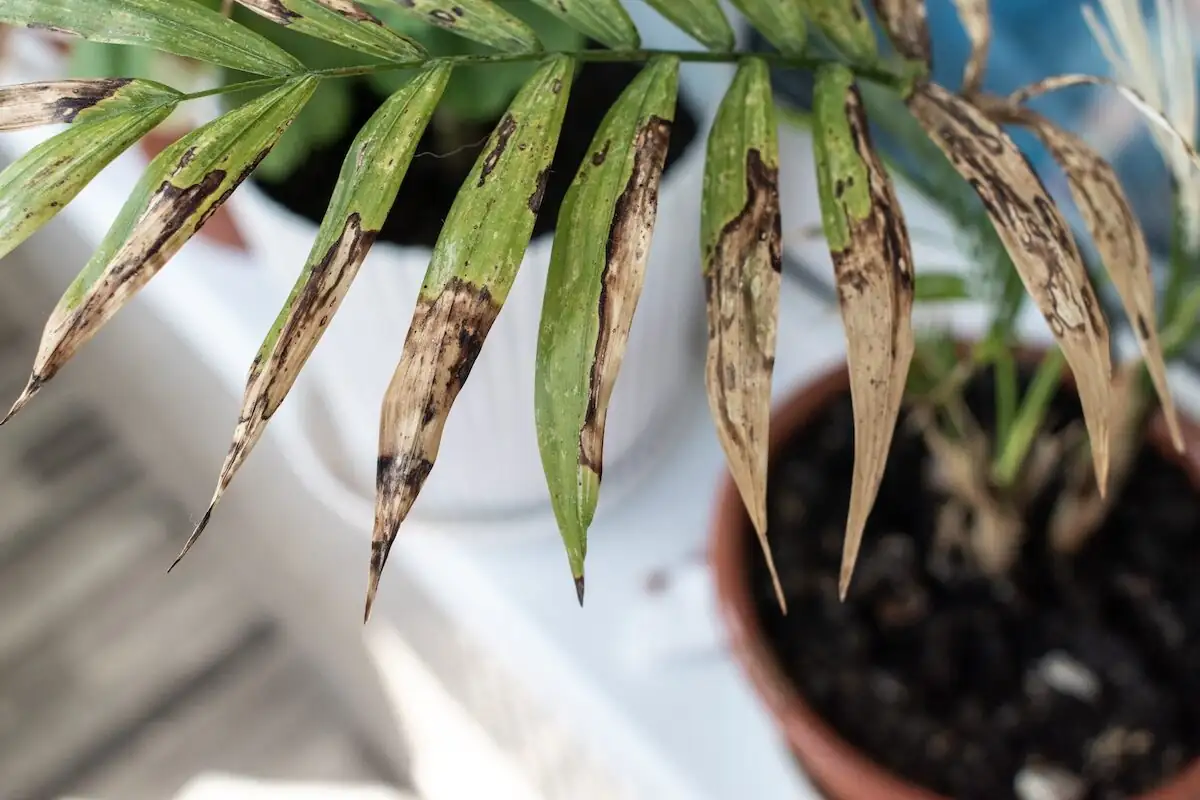
If your parlor palm suddenly looks weary—speckled leaves, sticky fronds, silver streaks, or a slump you can’t shake—don’t panic. Chamaedorea elegans is famously forgiving indoors. Think of this guide as an ER triage: quick symptom checks, clear diagnoses, safe treatment loops you can actually follow, and prevention habits that keep problems from coming back.
First, a 90‑Second Triage Check
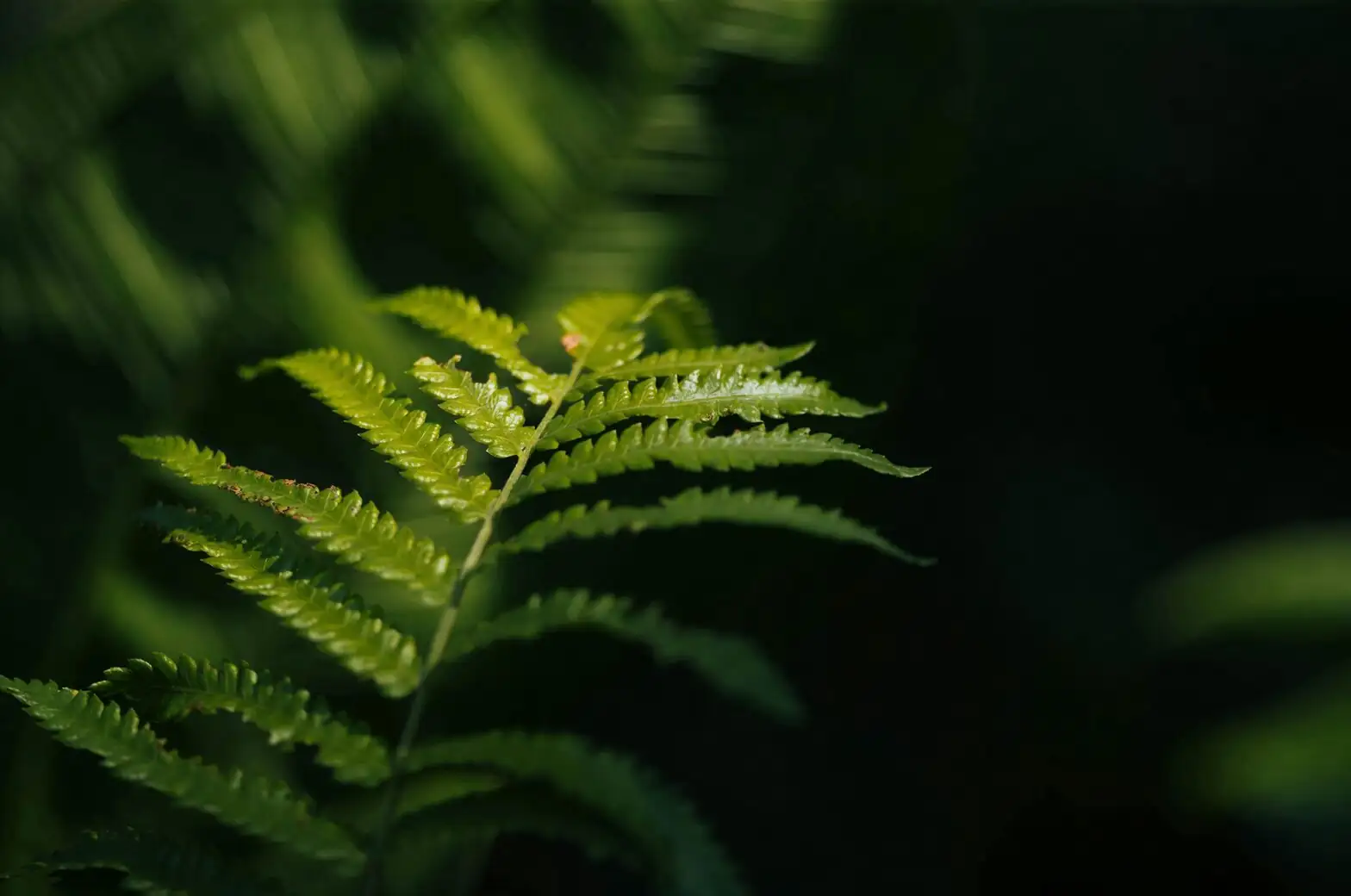
Before you treat anything, scan these five fast clues:
- Soil check: Is the potting mix cold and wet? Is the saucer full of water? Soggy + cool soil is the #1 path to yellowing and root rot.
- Light check: Is the plant in harsh direct sun (crispy tips) or deep gloom (stretchy, thin fronds)? Ideal is bright, filtered light—like dappled shade.
- Leaf surfaces: Any stippling, fine webbing, cottony tufts, hard bumps, or silvery scarring? That’s pest territory.
- Foliage moisture: Are leaves frequently wet late in the day and airflow poor? That primes leaf spots/blights.
- Drafts and chills: Temps below about 10°C/50°F—or bursts of cold air—show up as browning tips/edges and general decline.
Now jump to the right “clinic” below.
—
Pest Clinic: Identify, Treat, Repeat
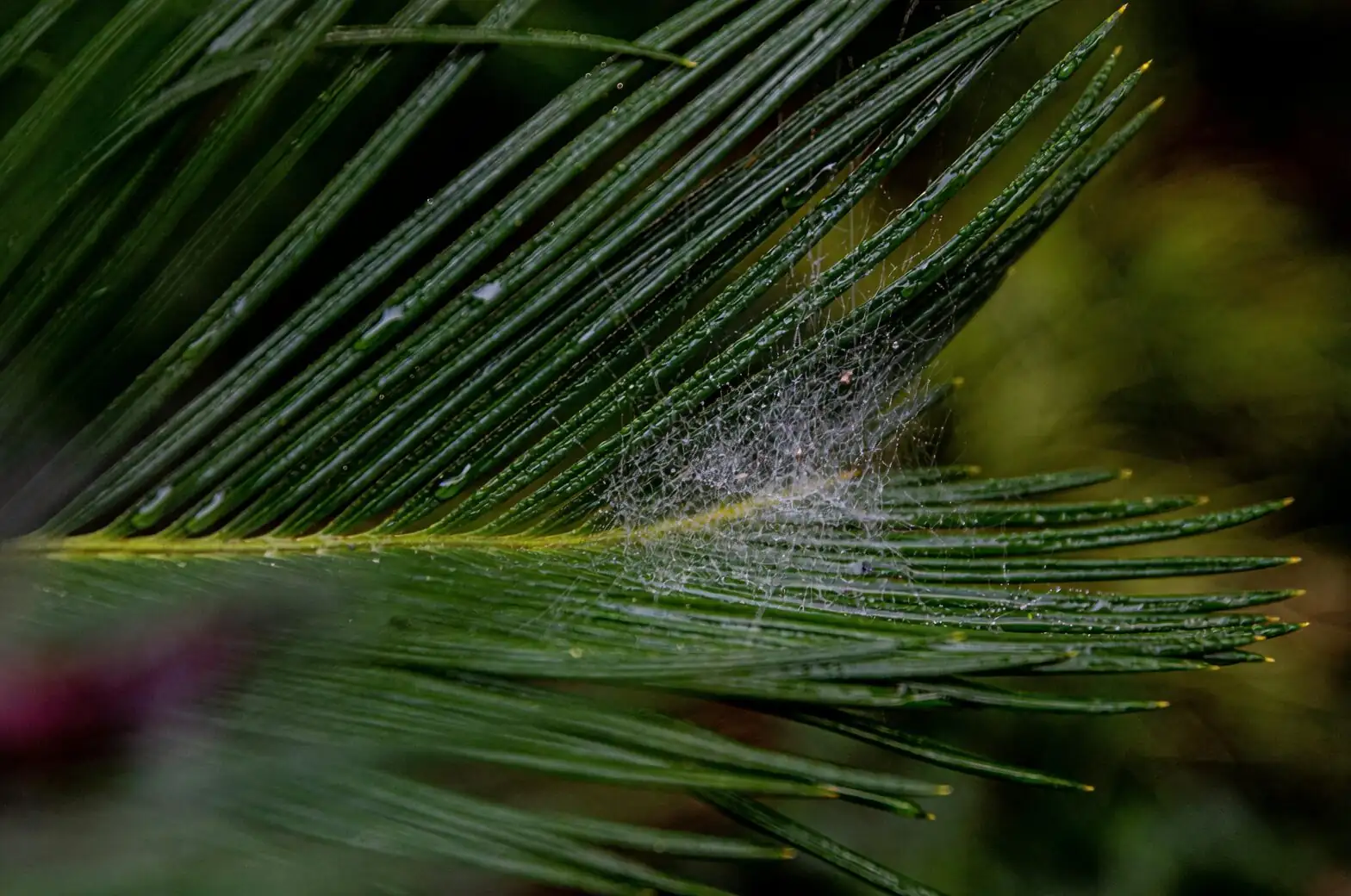
General safety for palms
- Always isolate the plant at the first sign of pests.
- Test-spray any product (insecticidal soap or horticultural oil) on one leaflet, wait 24 hours, then treat the whole plant if no burn appears.
- Avoid spraying in direct sun or on heat-stressed plants. Keep oils/soaps out of the crown where new fronds emerge.
Spider mites (dry-air specialists)
- Spot it
- Fine, dusty stippling; fronds look faded or sandpapery.
- Very fine webbing, especially between leaflets and along midribs.
- Confirm it
- Tap a frond over white paper—specks that crawl = mites.
- Immediate actions
- Rinse: Give a lukewarm shower, leaf undersides included.
- Raise humidity and improve airflow (but don’t keep foliage constantly wet in cool rooms).
- Safe treatment loop
- Day 0: Spray with insecticidal soap or a light horticultural oil (label rate). Thorough coverage of undersides is key.
- Day 7: Repeat.
- Day 14: Repeat again. Persist for 3–4 cycles to break the life cycle.
- Optional: Add blue or yellow sticky cards nearby to monitor activity.
- Prevention notes
- Keep the palm in bright, indirect light and maintain moderate humidity. Dust leaves regularly.
Scale (the stubborn bumps)
- Spot it
- Hard or soft dome-like bumps on stems/leaf midribs; sticky honeydew; possible sooty mold.
- Confirm it
- Try to flick a bump with a fingernail—scale detach; leaf tissue does not.
- Immediate actions
- Manually remove visible adults with a cotton swab or dull butter knife.
- Prune the most infested fronds if needed.
- Safe treatment loop
- Day 0: Thoroughly coat stems and leaf midribs with horticultural oil to smother crawlers.
- Days 7–10: Reapply.
- Days 14–20: Reapply again. Expect at least 3 rounds.
- Keep the plant isolated for the full month.
- Prevention notes
- Inspect leaf bases and stems during routine watering. Avoid overcrowding for better airflow.
Mealybugs (cotton in the crevices)
- Spot it
- White cottony tufts in leaf bases, along stem joints, and deep in the crown; sticky residue possible.
- Confirm it
- Disturb a tuft; you’ll see the soft-bodied insect inside.
- Immediate actions
- Dab clusters with a cotton swab dipped in 70% isopropyl alcohol (spot-treat, don’t drench fronds).
- Rinse the plant gently to dislodge hidden bugs.
- Safe treatment loop
- Day 0: Apply insecticidal soap, targeting leaf bases and undersides.
- Day 10: Repeat.
- Day 20: Repeat again. Mealybugs hide well—stay persistent for 3–4 rounds.
- Prevention notes
- Quarantine all new plants 2–3 weeks. Keep the crown clean and dry between waterings.
Thrips (silver streakers)
- Spot it
- Silvery/bronze streaks, black speck frass, distorted or ragged leaflets, damage on newest growth.
- Confirm it
- Gently unroll or part new leaf bases; look for slender, fast-moving insects.
- Immediate actions
- Add blue sticky cards near the foliage to catch adults.
- Rinse the plant to knock down numbers.
- Safe treatment loop
- Day 0: Spray with insecticidal soap (excellent coverage of undersides and newest growth).
- Day 7: Repeat.
- Day 14: Repeat. Severe cases may warrant a rotation with a houseplant-safe product labeled for thrips (always follow labels and ensure good ventilation).
- Prevention notes
- Good light and steady warmth (18–24°C / 64–75°F) help strong, less-thrips-prone growth. Avoid bringing cut flowers near the palm—thrips hitchhike.
—
Disease Clinic: Leaf Spots and Root Rot
Leaf spot/blight (wet-leaf + low-airflow combo)
- Spot it
- Round to irregular brown or tan lesions; sometimes with yellow halos. Spots can coalesce on older, shaded fronds.
- Why it happens
- Persistently wet foliage, poor ventilation, cool conditions, or crowded placement.
- Immediate actions
- Remove and discard heavily spotted fronds.
- Water at soil level in the morning; avoid late-day wet leaves.
- Improve airflow and space plants apart.
- Low-impact control loop
- Week 1: Sanitation + cultural fixes (above) often stop mild cases.
- Week 2–4: If new spots still appear, use a houseplant-labeled bio- or copper-based fungicide per label directions, applying every 7–14 days until no new lesions form.
- Prevention notes
- Keep to bright, filtered light; don’t mist in cool rooms; clean pruners between cuts.
Cold + wet root rot (the urgent one)
- Spot it
- Yellowing that creeps from older fronds, wilting despite wet soil, sour smell, roots that look brown/mushy.
- Why it happens
- Overwatering in a heavy mix + cool temps; pot sitting in water; oversized container with slow-drying soil.
- Immediate rescue protocol
- Move to a warm, bright, indirect-light spot (aim 18–24°C / 64–75°F).
- Slip the plant from its pot; inspect roots. Trim only dead/mushy roots with sterile scissors.
- Repot into a fresh, well-draining houseplant mix improved with perlite/coarse sand and/or fine bark. Choose a pot just 2–5 cm (1–2 in) wider than the old one—always with drainage holes.
- Water once to settle, then let the top 2–3 cm (about 1 in) dry before watering again. Never leave the pot in a saucer of water.
- Hold fertilizer for 4–6 weeks while roots re-establish.
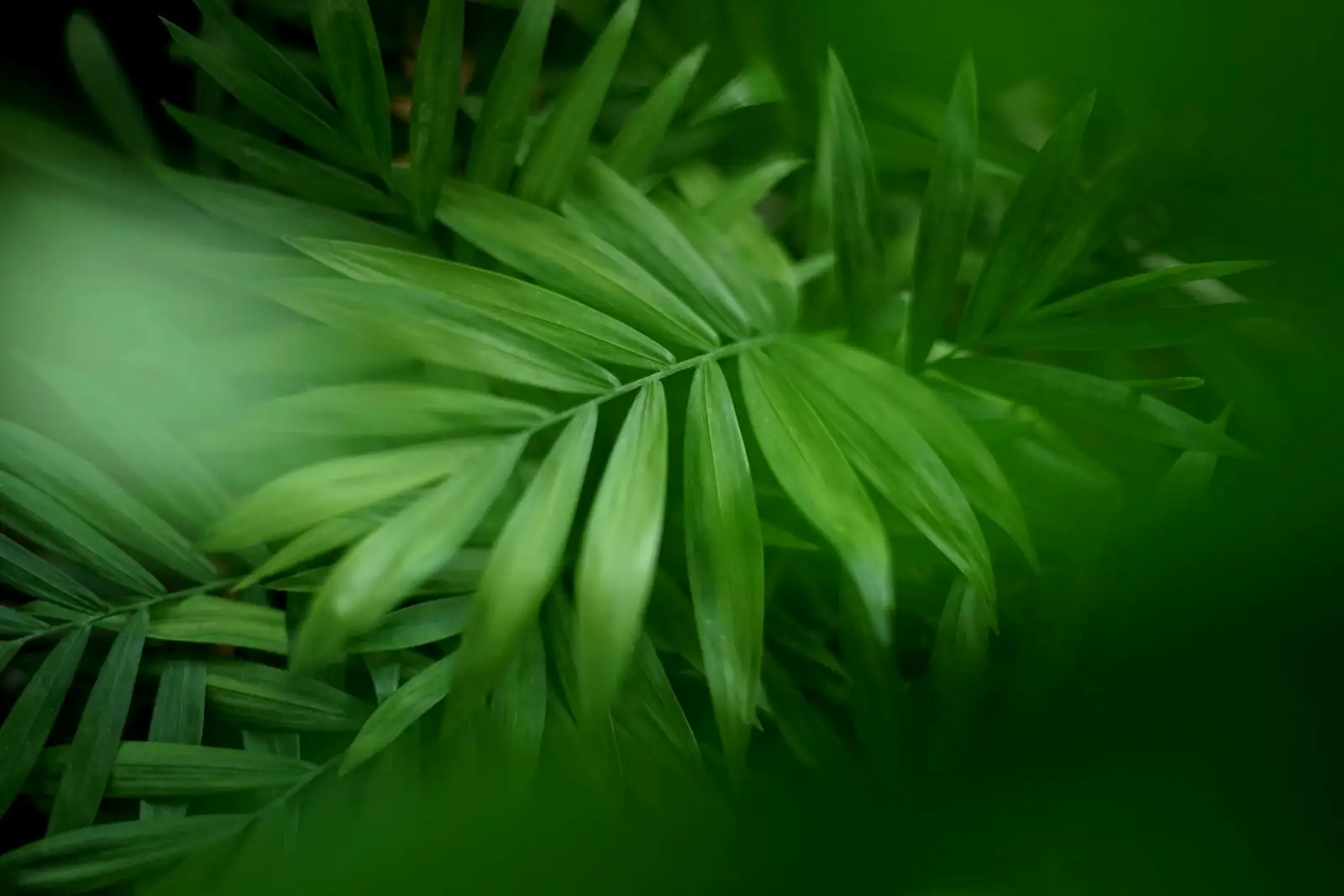
- Optional “hydro-style” stabilizer
- If roots are very compromised, you can transition to water-culture: rinse off soil, keep roots submerged in clean water while the stem base stays above the waterline, refresh every 3–5 days in summer (10–15 days in cooler seasons), and add a small dose of hydroponic nutrient only after the plant is stable.
- Prevention notes
- Keep winter soil on the drier side, and keep the plant above 10°C/50°F (warmer is better for looks). Overwatering + chill is the classic failure combo.
—
Prevention Habits That Actually Work
Think “clean leaves, steady light, smart watering.”
- Light and placement
- Bright, indirect light is ideal—think dappled understory. Near an east or north window, or a few feet back from stronger sun behind a sheer curtain (roughly 30–50% shade).
- Watering rhythm
- Water thoroughly, then let the top 2–3 cm (about 1 in) of mix dry before watering again in spring–summer. In autumn–winter, let it dry a bit more between waterings.
- Always empty saucers; never let the pot sit in water.
- Temperature and humidity
- Best around 18–24°C (64–75°F). Keep above 10°C (50°F). Protect from drafts.
- Prefers moderate humidity; in dry homes, use a pebble tray or humidifier. Avoid keeping foliage constantly wet in cool conditions.
- Soil, pots, and repotting
- Use a loose, well-draining houseplant mix with added perlite/coarse sand/bark. Repot every 2–3 years in spring, only one size up.
- Feeding
- During active growth (spring to early autumn), feed lightly with a balanced liquid fertilizer either monthly or every 2 weeks at half strength. Pause in winter or when growth slows.
- Grooming and inspections
- Dust leaves monthly; check undersides and leaf bases for mites, scale, mealybugs, or thrips when you water.
- Quarantine new plants for 2–3 weeks.
- Leaf-wetness discipline
- Water the soil, not the fronds. Avoid late-day leaf wetting. Improve airflow in tight corners.
—
Symptom-to-Solution Quick Map
- Fine stippling + webbing → Spider mites → Rinse + soap/oil every 7 days x 3–4.
- Sticky fronds + bumps → Scale → Manual removal + oil every 7–10 days x 3.
- Cottony clusters in crevices → Mealybugs → Alcohol dabs + soap every 10 days x 3–4.
- Silvery streaks + black specks → Thrips → Rinse + soap every 7 days x 3; use sticky cards.
- Round brown spots → Leaf spot → Remove worst fronds; keep leaves dry; improve airflow; consider a labeled fungicide if it persists.
- Yellowing + wet soil + sour smell → Cold + wet root rot → Warmth, repot into airy mix, drier cycle, no fertilizer 4–6 weeks.
—
Care Anchors That Keep Parlor Palms Happy
- Nature and look: A compact, clumping indoor palm with soft, feathery deep-green fronds—built for filtered light and cozy corners.
- Size indoors: Typically 60–120 cm (2–4 ft) tall; clumps spread 30–60 cm (12–24 in).
- Bloom note: Mature plants may produce small sprays of yellow flowers indoors now and then—more a charming bonus than a show.
- Pet safety: Generally considered non-toxic to cats and dogs. Still, discourage nibbling.
—
A tiny note on symbolism (and why this plant charms rooms)
Parlor palms rose to fame in Victorian parlors because they stayed elegant where other palms sulked. Over time they picked up associations with welcome, good luck, and long-lived vitality—the quiet confidence of greenery that thrives in everyday life. No mystical guarantees, of course; the “good fortune” is really the steady mood lift of a plant that looks graceful for years with simple, consistent care.
—
When to escalate
- Despite 3–4 treatment cycles, pests persist or spread to multiple plants.
- Root rot advances after repotting and warm care.
- You see rapid decline with unclear cause.
In those cases, consult a local houseplant-savvy nursery or extension service with clear photos and a history of your recent care. Sometimes a hard reset—discarding a heavily infested plant to protect the rest—is the kindest option.
With bright, filtered light, warmth above 10°C/50°F, and a no-soggy-soil rule, Chamaedorea elegans will reward you with dense, glossy fronds and almost no drama. And if a problem pops up? Now you’ve got the playbook.