
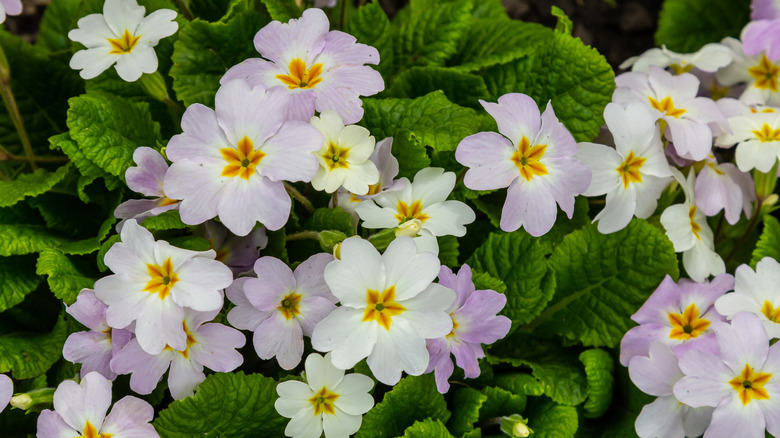
Dappled shade is the painter’s light: soft, shifting, and flattering to every petal. Primroses (Primula spp.) are the spring brushstrokes that wake a woodland bed beneath deciduous trees—cheerful rosettes and jewel-toned flowers arriving just as the canopy is leafing out. Think of them as your early-season color engine and texture-builder, linking late-winter highlights to late-spring lushness with grace.
Why Primula belongs in your woodland palette
- Early drama: One of spring’s first perennials to bloom, carrying gardens from April into May just when most borders still look sleepy.
- Shade-savvy: Thrives in partial to full shade and cool conditions—an ideal understory choice beneath deciduous trees where light is brighter in spring and filtered in summer.
- Color flexibility: Reds, pinks, oranges, yellows, blues, purples, and whites—often with a golden “eye”—make Primula a natural for color echoes and contrasts.
- Tactile foliage: Basal rosettes of gently wrinkled leaves add plush, grounding texture long after bloom.
Design note: Primula performs best in rich, moisture-retentive yet well-drained soil (leaf mold and compost are your best friends). Aim for slightly acidic conditions (pH 5.5–6.5), steady moisture, and afternoon shade in warm climates. Most are hardy in USDA Zones 3–8; they struggle long-term in hot zones (often treated as cool-season annuals in Zone 9+).
Design foundations: texture, form, and color
Textural layering that feels lush (not busy)
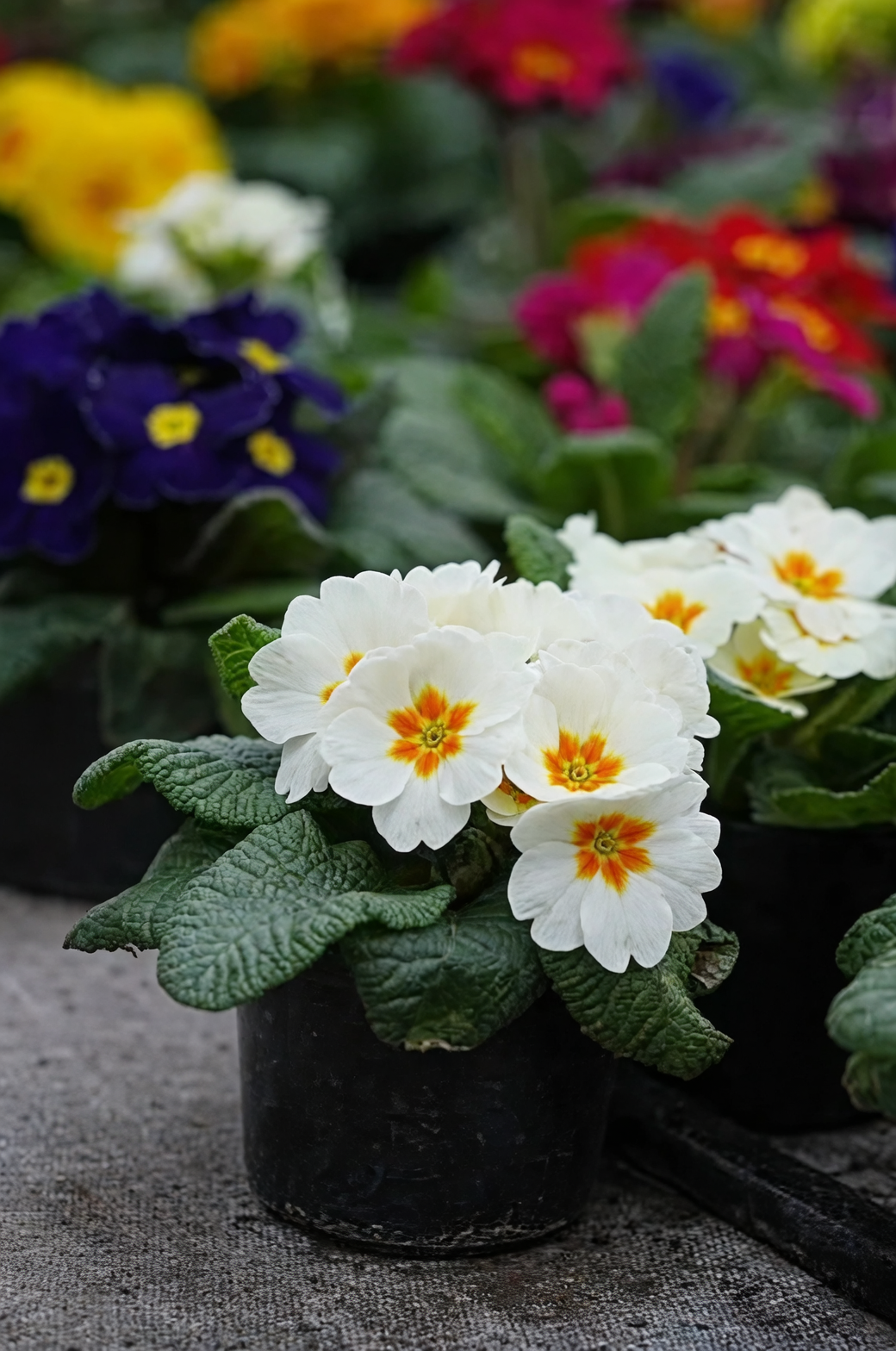
- Base cushions: Primula rosettes create low “pillows” (typically 6–12 in tall), perfect for edging paths and defining drifts.
- Fine filigree: Fern fronds (Athyrium, Dryopteris), epimedium’s wiry stems, and dainty foamflower (Tiarella) add airy contrast to Primula’s denser leaves.
- Gloss vs. matte: Hellebores’ evergreen sheen plays off the matte Primula foliage; brunnera’s silvery leaves lighten the whole scene.
- Shape play: Mix rounded Primula clumps with upright spires (candelabra primroses, fox-tail-like astilbe) and broad hosta leaves for rhythm.
Bloom succession under a deciduous canopy
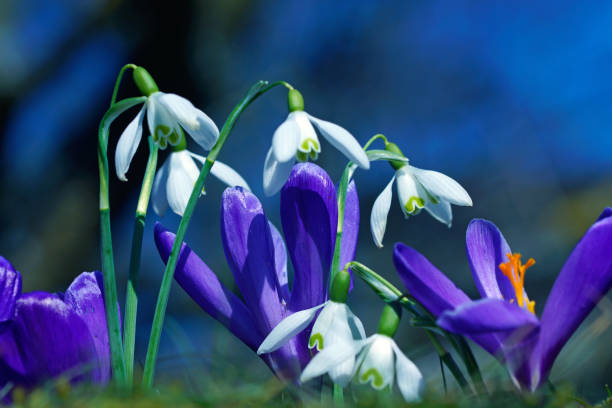
- Late winter to very early spring: Snowdrops, crocus, hellebores, winter aconite set the stage.
- Early to mid-spring (headline act): Primula spp. bloom in earnest, bridging bulbs to perennials.
- Mid to late spring: Drumstick primrose (Primula denticulata), brunnera, lungwort (Pulmonaria), epimedium, English bluebells, bleeding heart join in.
- Late spring into early summer: Candelabra primroses (Primula japonica) rise in tiered whorls, followed by astilbe and the textural swell of ferns and hostas.
- Summer to fall: Leaf drama takes over—hostas, heucheras, Japanese forest grass, evergreen ferns. Shrubs like oakleaf hydrangea add summer bloom and fall color.
Color theory that shines in shade
- Cool harmonies read luminous: Blues, violets, and magenta primroses look extra saturated in low light. Echo them with brunnera blossoms, pulmonaria, and hellebores in dusky purples.
- Chartreuse as a highlighter: Lime tones (Helleborus foetidus, golden carex, spring foliage of some hostas) make deep purples and magentas pop.
- Warm accents for contrast: Thread in sunny yellow or coral primroses near blue or violet companions for complementary spark. A few bright notes go far.
- White as a “breathing space”: White primroses and bulbs act like moonlight, preventing dark combos from feeling heavy.
- Repeat to unify: Choose 2–3 primrose colors and repeat them in loose drifts so the bed reads as one composition, not confetti.
The Primula roster for layered effects
- Primula vulgaris (English primrose): Classic clusters in a broad color range; low, neat rosettes for edging and carpet effects.
- Polyanthus primroses (P. × polyantha): Florist-favorite color mixes; superb for rhythmic color repeats in shade borders and containers.
- Primula denticulata (drumstick primrose): Spherical “pom-pom” heads on taller stems; excellent for cool, moisture-holding spots. Notably cold-hardy.
- Primula japonica (candelabra primrose): Tiered spires in reds, pinks, magentas, oranges; loves consistent moisture—ideal near downspouts, seeps, or pond edges.
- Primula auricula (auricula): Jewel-box blooms with chic eyes and bands; great for front-of-border punctuation and containers.
Tip: Many Primula bloom best in cool air and moist soil; protect them from harsh midday sun and heat spikes. In warmer regions, treat them as seasonal stars for spring, then refresh plantings.
Companion planting under deciduous trees
Shrub layer (backdrop and bones)
- Evergreen structure and spring show: Hellebores (evergreen foliage, late-winter bloom), rhododendron/azalea, Pieris japonica; oakleaf hydrangea for summer bloom and fall color.
- Deciduous companions that leaf out late: Fothergilla, Enkianthus, red-twig dogwood (winter stems), and small viburnums. Their delayed canopy allows primroses generous spring light.
Mid and ground layers (texture-and-bloom chorus)
- Foliage-first anchors: Hostas, ferns, epimedium, heuchera, brunnera, foamflower.
- Flowering allies: Pulmonaria, bleeding heart (Lamprocapnos spectabilis), Jacob’s ladder (Polemonium), wood anemone, violets, Corydalis.
- Shade-tolerant “grasses”: Carex spp. and Hakonechloa to feather edges and catch dappled light.
Bulb weaving for early fireworks
- Naturalize in drifts among primroses: Snowdrops, winter aconite, crocus, Scilla, Anemone blanda, muscari, species tulips, and daffodils.
- Design trick: Tuck bulbs midway under primrose drifts so their fading foliage disappears beneath emerging perennials.
Four woodland recipes to copy (and tweak)
1) Spring Sorbet (pastels, soft textures)
- Primula vulgaris in blush pink and lemon yellow, repeated in clumps of 5–9
- Helleborus in soft apricot/cream
- Brunnera ‘Jack Frost’ to lift the shade
- Tiarella as a lacey groundcover
- Snowdrops and muscari threaded through front edges
2) Jewel Box Glow (saturated, high contrast)
- Polyanthus primroses in magenta, violet, and deep blue
- Chartreuse accents: Carex ‘Evergold’ and Helleborus foetidus
- Dark heuchera (near-black) to ground brights
- Pulmonaria with cobalt flowers, silver-flecked leaves
- White daffodils to add “moonlight”
3) Streamside Symphony (wet-loving tiered drama)
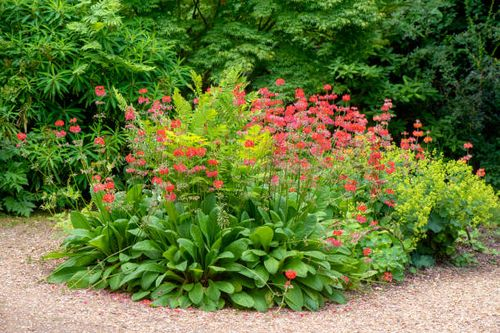
- Primula japonica in coral and cherry, massed in rhythmic swathes
- Drumstick primrose for spherical repetition
- Matte fern fronds as vertical foil
- Astilbe plumes to carry bloom into early summer
- Creeping jenny (Lysimachia nummularia ‘Aurea’) to splash gold at the water’s edge
4) Under the Old Maple (root-savvy, low-dig)
- Pockets of compost + leaf mold, then:
- Primula in mixed soft purples and butter yellow
- Epimedium as a drought-tolerant understory once canopy closes
- Hellebores for evergreen winter structure
- Jacob’s ladder and wood anemone to bridge bloom windows
- Mulch with shredded leaves to echo the forest floor
Planting under trees without ruffling roots
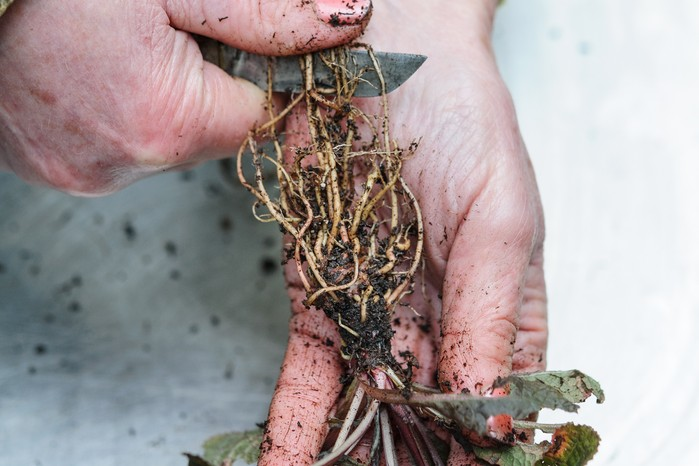
- Pocket-plant, don’t trench: Slice small openings between feeder roots and backfill with compost-rich soil.
- Water deeply, less often: Aim for 1 inch per week during dry spells. Under dense canopies, drip lines or slow soaker hoses are kinder than overhead sprays.
- Feed the soil: Annual top-dressing with leaf mold or compost; avoid high-salt fertilizers around tree roots.
- Gentle mulch: 2–3 inches of leaf mold to keep roots cool and moisture steady; keep mulch off Primula crowns.
Care quick-guide for Primula
- Light: Partial to full shade; morning sun is welcome in cool regions, but protect from harsh afternoon rays.
- Moisture: Keep evenly moist, never soggy. Excellent drainage prevents crown/root rot.
- Feeding: Half-strength liquid feed every two weeks during active growth, or a balanced spring and fall feeding in the ground.
- Grooming: Deadhead to extend bloom; remove yellowed leaves to improve airflow.
- Division: Every few years in early spring or fall to rejuvenate clumps and preserve cultivars.
- Containers: Water when the top 1 inch is dry; divide and refresh soil annually.
Seasonal cadence
- Spring: Peak bloom—water evenly, deadhead, light feed.
- Summer: Shade and cool roots; some types may rest in high heat.
- Fall: Divide if crowded; top-dress with compost.
- Winter: Mulch outdoors in cold zones; keep indoor gift primroses cool and bright.
Troubleshooting and gentle warnings
- Pests: Slugs and snails are prime culprits—use iron phosphate baits, copper barriers, and tidy mulches. Watch for aphids, mealybugs, whiteflies, and spider mites in hot, dry stress.
- Diseases: Leaf spots, powdery mildew, botrytis, and root rots are linked to soggy, stagnant conditions—ensure drainage and airflow, water at soil level.
- Safety: Primroses are toxic to humans and pets, and the sap can irritate skin. Wear gloves if sensitive and site plants away from curious nibblers.
Symbolism: what the primrose whispers
The very name Primula nods to “first”—the first flowers of spring and the mood shift they bring. In Victorian floriography, primroses carried the message of young love and the tender admission, “I can’t live without you.” It’s not hard to see why: their early arrival makes them feel essential, a hopeful signpost after winter’s hush. Today, that symbolism reads as renewal and resilience, an invitation to begin again—apt for a plant that quietly knits the woodland garden from winter’s last bulbs to summer’s full leaf.
Put it all together
- Start with soil: layer in compost and leaf mold for moisture-retentive, well-drained structure.
- Choose a Primula “lead”: soft pastels for serenity, or saturated tones for drama.
- Build texture tiers: rosettes at the base, airy companions mid-level, and a few spires for vertical punctuation.
- Stagger bloom windows: bulbs → primroses → mid-spring perennials → early-summer accents → handsome foliage for the long haul.
- Repeat colors and forms in loose drifts for a cohesive whole.
Do that, and your dappled shade won’t feel dim—it will hum. Primroses are the spark; the rest of the woodland chorus follows.