

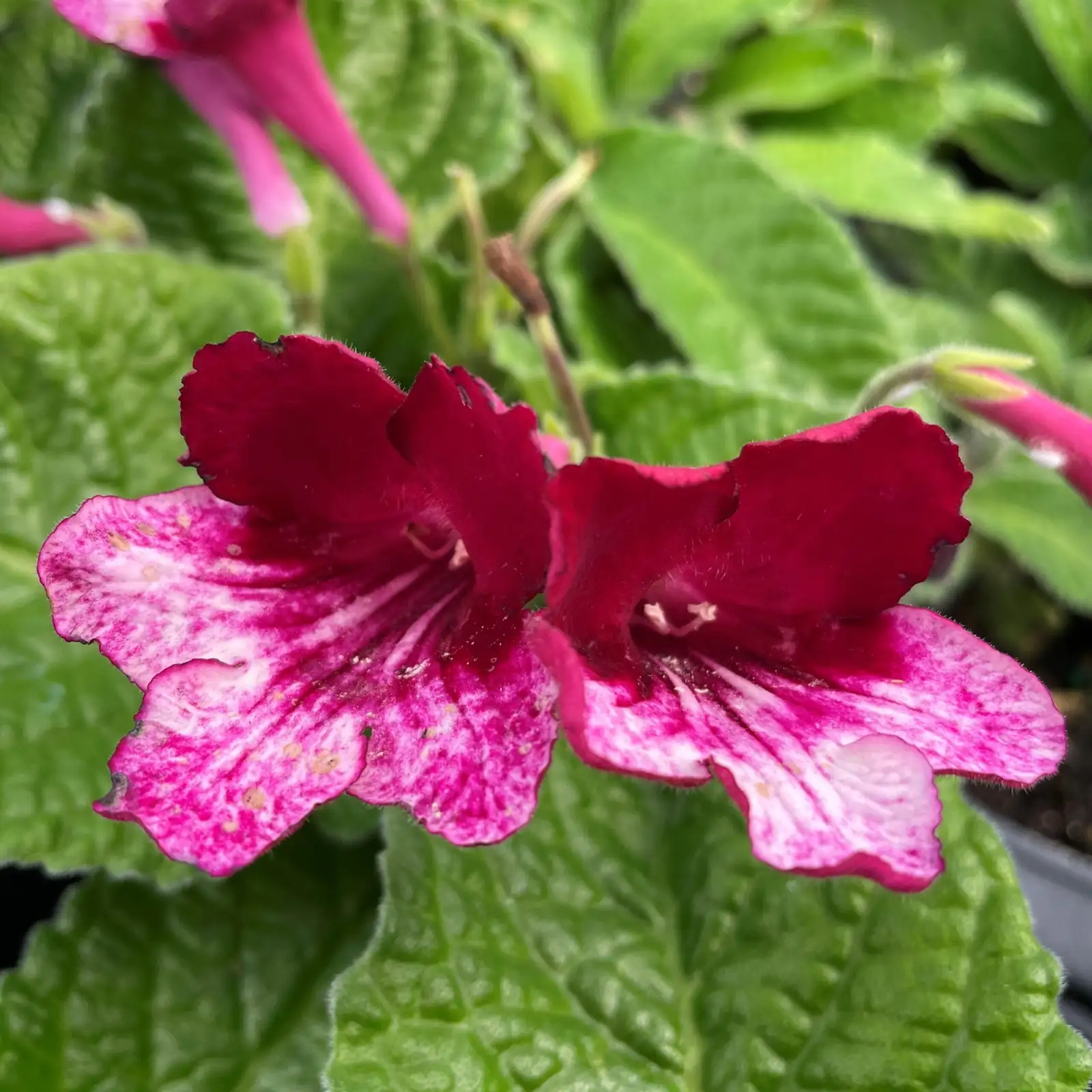
Imagine petals painted by hand: soft velvet trumpets, throats dusted with freckles, stripes, or a perfect barber‑pole edge. That’s Streptocarpus—Cape primrose—at its design peak. If you love bicolors and patterned throats, this houseplant is your ready‑made color story for a bright windowsill. Below, you’ll find style‑first tips for pot palettes, east‑window light that keeps flowers coming, and how to group Streptocarpus with African violets for a display that feels curated, not cluttered.
Meet the muse: why Streptocarpus belongs on your showiest sill
- Velvety, trumpet‑to‑funnel blooms hover above a compact rosette of softly crinkled green leaves—elegant but never fussy.
- Colorways run from white, pink, and red to blue and purple, with jaw‑dropping bicolors and intricately patterned throats.
- Long bloom season: many flower from spring through autumn; modern hybrids can push into winter with brighter light.
- Native to shaded, rocky habitats in Southern Africa, they thrive indoors in bright, indirect light—the classic east window scenario.
Dial in the east-window glow
Think of an east window as nature’s softbox: gentle morning sun to set buds, then bright, indirect light for the rest of the day.

- Placement sweet spot
- Spring–autumn: 20–60 cm (8–24 in) from the glass, catching a couple hours of early sun, then bright shade.
- Summer: use a sheer curtain if leaf edges start to crisp; rotate plants weekly for even growth.
- Winter: move closer to the glass—or to an even brighter windowsill with a bit more direct sun—to keep flowers coming.
- Light tells
- Too little: stretched leaf stalks, sparse flowering.
- Too much: bleached leaves, crispy edges. Ease back or diffuse with a sheer.
- Design note: Use pale walls, a white tray, or a mirror set behind your plants to bounce light back into rosettes (and make patterned throats gleam in photos).
Pots that make patterns pop
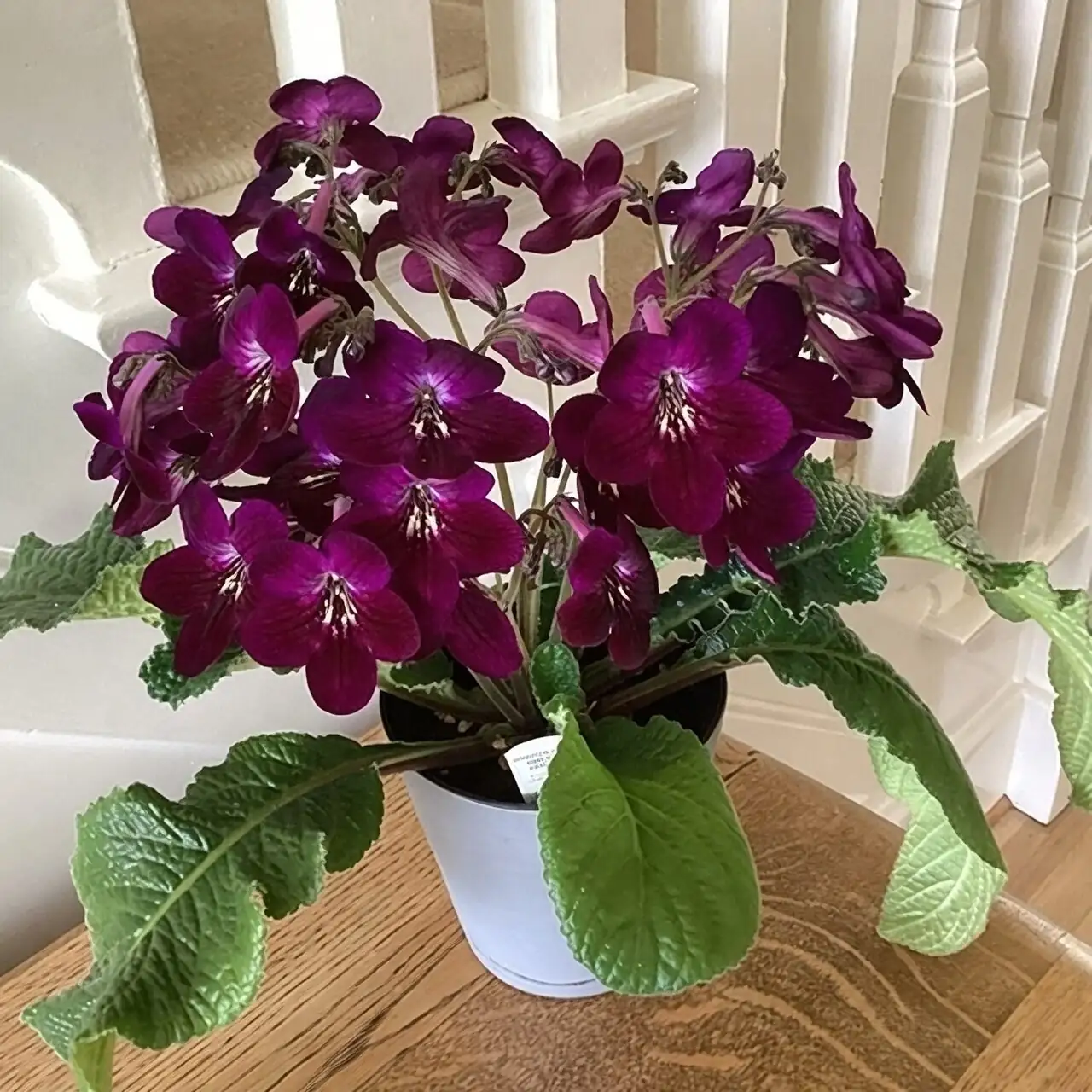
You’re designing for contrast, clarity, and scale. Streptocarpus loves being a bit snug in a pot—great news for styling—so lean into wide, shallow vessels with excellent drainage.
- Size and shape
- Aim for 10–15 cm (4–6 in) pots; step up only slightly each spring.
- Prefer low, wide silhouettes or half‑pots; they echo the rosette and keep the crown high and dry.
- Materials
- Unglazed clay wicks moisture—clean lines and fewer rot risks—but you’ll water a touch more.
- Glazed ceramic retains moisture—choose if your home runs dry—just ensure generous drainage holes.
- Cachepots are fine for fashion: keep the grower pot separate and never let water pool at the bottom.
- Color strategies for bicolors and patterned throats
- Cool blues/purples with white throats: matte white, charcoal, or soft cement to sharpen the contrast; add a fine pale gravel top‑dress to echo throat speckles.
- Pinks/reds with candy stripes: smoky gray, jade, or celadon pottery to keep things chic rather than saccharine; brass accents warm the palette.
- Crisp whites and picotees: black stoneware or inky navy for gallery drama; top‑dress with black lava to frame the bloom.
- Three cohesive pot palettes
- Monochrome Gallery: matte white + charcoal + soft concrete. Minimal and museum‑ready.
- Citrus Sorbet: pale peach + mint + warm gray. Contemporary and fresh.
- Jewel Box: deep cobalt + moss green + antique brass. Lush, high‑contrast, perfect for patterned throats.
Grouping with African violets for a seamless vignette
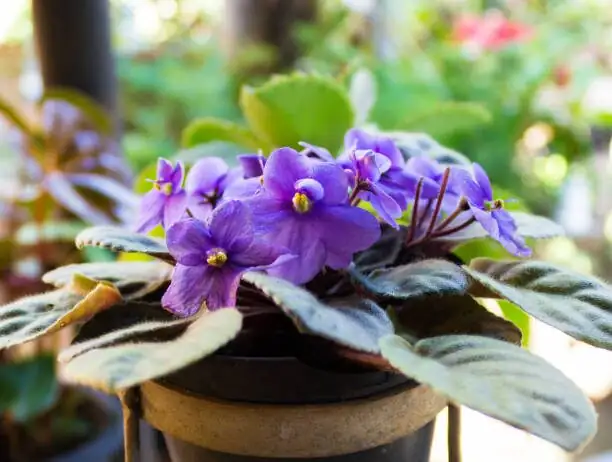
Streptocarpus and African violets are natural display partners: cousins in the same family, both rosette‑forming, both lovers of bright, indirect light.
- Composition
- Height tiering: place Streptocarpus just behind or slightly above (on a low riser) your African violets so flowers float without blocking the view.
- Repetition with variation: repeat one pot color across the group, but vary textures (matte, satin, lightly speckled) for sophistication.
- Leaf textures: pair Streptocarpus’ long, softly wrinkled leaves with the round, plush pads of African violets for a pleasing contrast.
- Care sync that keeps design intact
- Light: both flourish on a bright east windowsill with gentle morning sun.
- Water: bottom‑water both for ~20 minutes, then drain completely. Streptocarpus prefers the mix to dry at the surface between spring–autumn waterings, and almost dry between winter waterings. African violets usually like slightly more consistent moisture—so check them a bit sooner.
- Airflow: space rosettes so leaves don’t overlap; 5–8 cm (2–3 in) between plants prevents humidity pockets and keeps crowns dry.
- Cohesive finishing touches
- Shared tray with pebbles (no standing water touching pots) creates a unified base and gentle ambient humidity.
- A single sculptural mister on the side for looks—then use the watering can at the soil line when it’s time to water.
Mix and medium: what’s in the pot matters to the look
Great displays stay great because the plants thrive.
- Potting mix
- Use a free‑draining houseplant mix; lighten it with perlite so water never lingers around roots or the crown.
- Watering
- Top or bottom‑water; avoid repeatedly soaking the crown. Always drain well after bottom‑watering.
- Feeding
- From spring through autumn, feed about once a month with a high‑potassium fertilizer for flowering plants, following the label.
- Repotting and restraint
- Repot in spring, just one size up. A lightly root‑restricted Streptocarpus flowers more freely—and stays proportionate for display.
Quick design recipes
- The Pattern Play Trio
- Plants: a lavender‑and‑white bicolor Streptocarpus, a deep violet African violet, a white African violet.
- Pots: all matte white cylinders; vary diameters by 2 cm for rhythm.
- Placement: set the Streptocarpus on a 3 cm riser, AVs flanking in front; add pale pumice top‑dress to unify.
- The Modern Cottage Shelf
- Plants: two Streptocarpus with striped throats and one soft pink solid.
- Pots: glazed celadon, smoke gray, and brushed brass cachepot (with inner nursery pot).
- Placement: east window; sheer curtain pulled midday in summer; mirror behind to bounce morning light.
- The Minimalist Mantel
- Plants: one sculptural, large‑leaf Streptocarpus with white blooms, paired with a single, compact dark‑leaf African violet.
- Pots: black stoneware; fine black lava top‑dress.
- Placement: 30 cm from east window; rotate weekly; wipe leaves with a soft brush for a flawless finish.
Seasonal styling and care calendar
- Spring–autumn
- Light: bright, indirect; gentle morning sun ideal.
- Water: when the surface of the mix feels dry; drain thoroughly.
- Grooming: remove spent flower stems; trim older leaves as fresh ones emerge.
- Feed: monthly with a high‑potassium formula.
- Winter
- Light: move to a brighter window; a bit more direct sun helps sustain blooms.
- Water: reduce; let the mix become almost dry between waterings.
- Style tip: winter light is low—slide plants closer to the glass and use a pale tray to reflect light back up.
Troubleshooting elegance
- Wilting yet soil is wet? Likely root or crown rot from overwatering. Trim damage, refresh into a freer‑draining mix, and water only when the surface dries.
- Pale, reluctant blooms? Increase light (east window, closer to glass in winter) and resume monthly feeding.
- Leaf edges crisping? Soften the light with a sheer or shift back from the glass during hot spells.
- Pests (mealybugs, aphids, spider mites)? Improve airflow, isolate, and treat promptly; careful watering practices prevent most issues.
Propagate to extend your palette
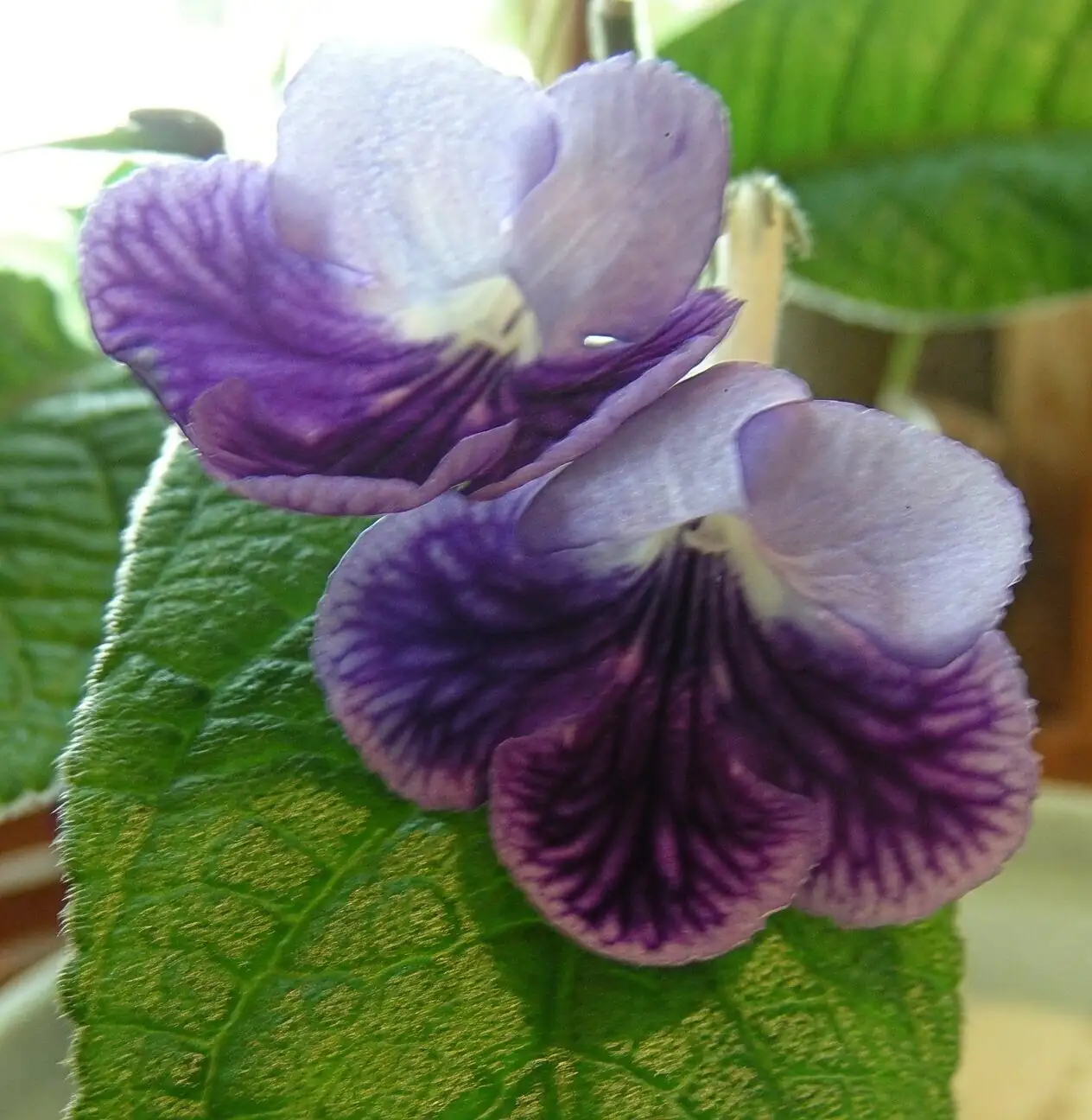
- Leaf cuttings (whole leaves or sections) root readily—an easy way to multiply your favorite bicolors for symmetrical, repeating displays across a shelf.
- Divide mature clumps in spring when repotting to fill out a longer windowsill with matching forms.
Safety and placement
- Generally regarded as non‑toxic to cats and dogs. Still, keep your most artful arrangements out of playful paws.
- Tender and not frost hardy; enjoy them indoors unless you live frost‑free.
Curator’s note: a few cultivar ideas to explore
While you’ll find countless beauties, look for named forms celebrated for bicolors and patterned throats—often with descriptive names hinting at stripes, speckles, or candy‑cane edges. Many modern hybrids are bred for extra‑long flowering, perfect for displays that stay “on” for months.
—
With the right pot palette, a dialed‑in east window, and a thoughtful duet with African violets, Streptocarpus becomes more than a plant—it’s a rotating exhibition of color and pattern. Style your sill, then let the flowers do the talking.