

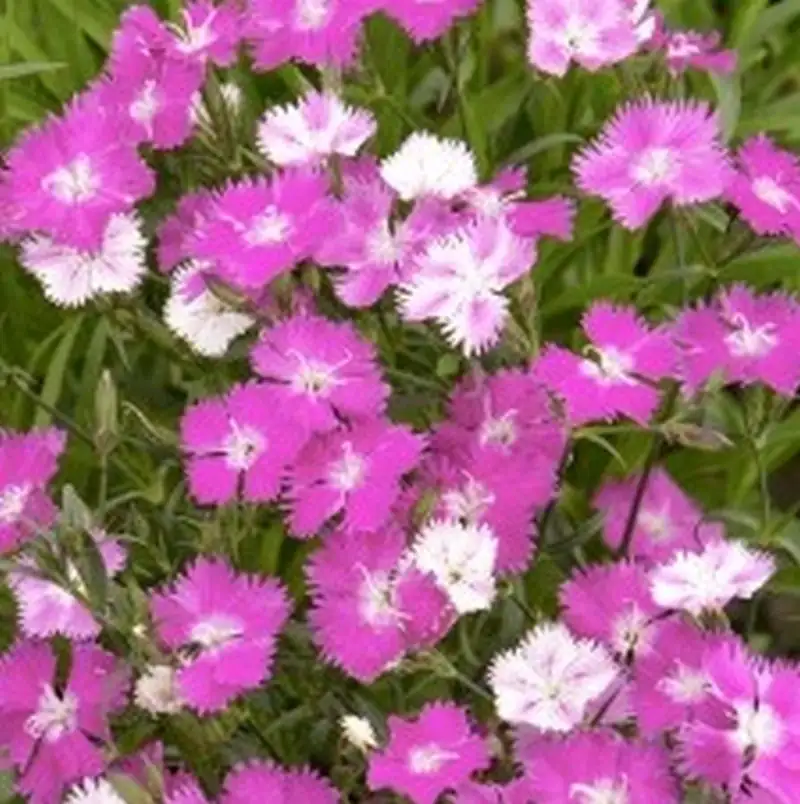
Think of Chinese pink (Dianthus chinensis) as the cheerful ringmaster of a sunny window box: compact, fragrant, and endlessly flirtatious with bicolor blooms that wink from spring’s cool mornings into early summer. If you’ve ever watched a container lose its perk in midsummer—petals spotted, foliage sulking—this is your blueprint for containers that stay fresh: play up bicolors, design for airflow, plant in gritty media, and team Dianthus with castmates that love the same bright, breezy, well-drained life.
Meet Chinese Pink at a Glance
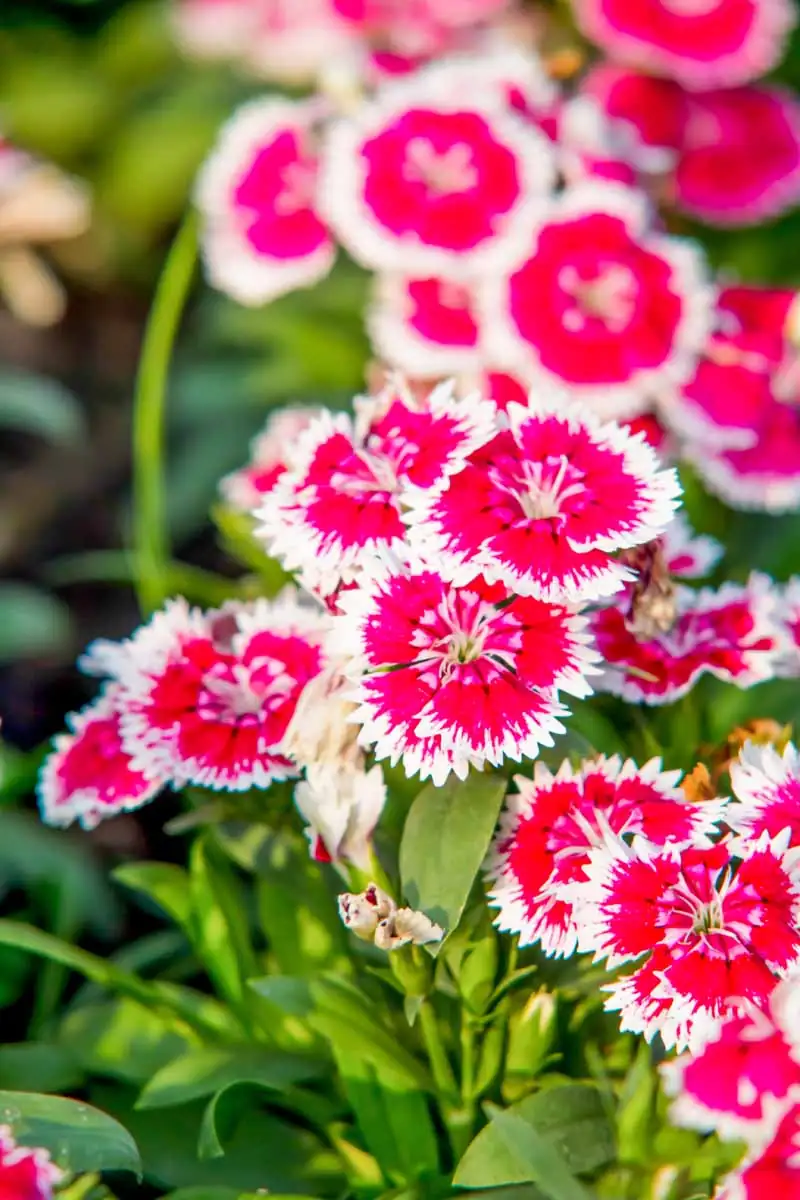
- Botanical name: Dianthus chinensis (Chinese Pink; also sold as China pink, rainbow pink, cottage pinks)
- Habit and size: Compact, clump-forming; typically 8–16 in tall and 6–12 in wide; upright to gently mounding
- Blooms: Pink, red, white, purple, and many bicolors, often with a darker “eye” and fringed petals
- Scent: Light, spicy clove note (varies by variety)
- Season: Best in cool to mild weather; main show spring to early summer (longer with deadheading and cool conditions)
- Sun: Full sun for best flowering (6–8 hours); a touch of afternoon shade helps in very hot spells
- Temperatures: Prefers 45–68°F (7–20°C); can take brief drops to about 14°F (-10°C) but hates winter wet
- Soil: Loose, fertile, very well-drained, neutral to slightly alkaline; prioritize sharp drainage in pots
The Perky-Not-Peaky Container Formula
Great-looking Dianthus containers are more than color—they’re physics and airflow. Here’s how to keep them crisp instead of clammy.
1) Color Play: Mix-and-Match Bicolors
Dianthus chinensis is famous for pinwheels, picotees, rings, and bold eyes. Use those patterns like graphic stripes in a capsule wardrobe.
- Pairings that pop:
- White petals with a raspberry eye + magenta-and-plum bicolors
- Cherry-red edges (picotee) + solid white for a tailored, high-contrast look
- Watermelon pinks + dusty rose for a soft, cottage palette
- Design rhythm:
- Repeat a dominant color three times (your “theme”), a secondary twice, and add one contrasting accent for sparkle.
- Keep bloom shapes similar so the patterns read as a chorus, not a shouting match.
2) Space for Airflow (Your Secret Anti-Rust/Anti-Rot Sauce)
Chinese pink thrives when leaves and petals dry fast.
- Spacing in containers/window boxes:
- Dianthus centers 6–8 in apart in mixed plantings.
- Keep crowns 0.5–1 in above the final soil line; don’t bury stems.
- Leave 0.5–1 in between foliage masses so air can slip through.
- Layout trick: Stagger plants in gentle triangles rather than straight rows. Air lanes > overcrowded edges.
- Water at soil level only. Wet petals invite blemishes and rust.
3) Gritty, Free-Draining Substrate (Because Wet Feet = Woes)
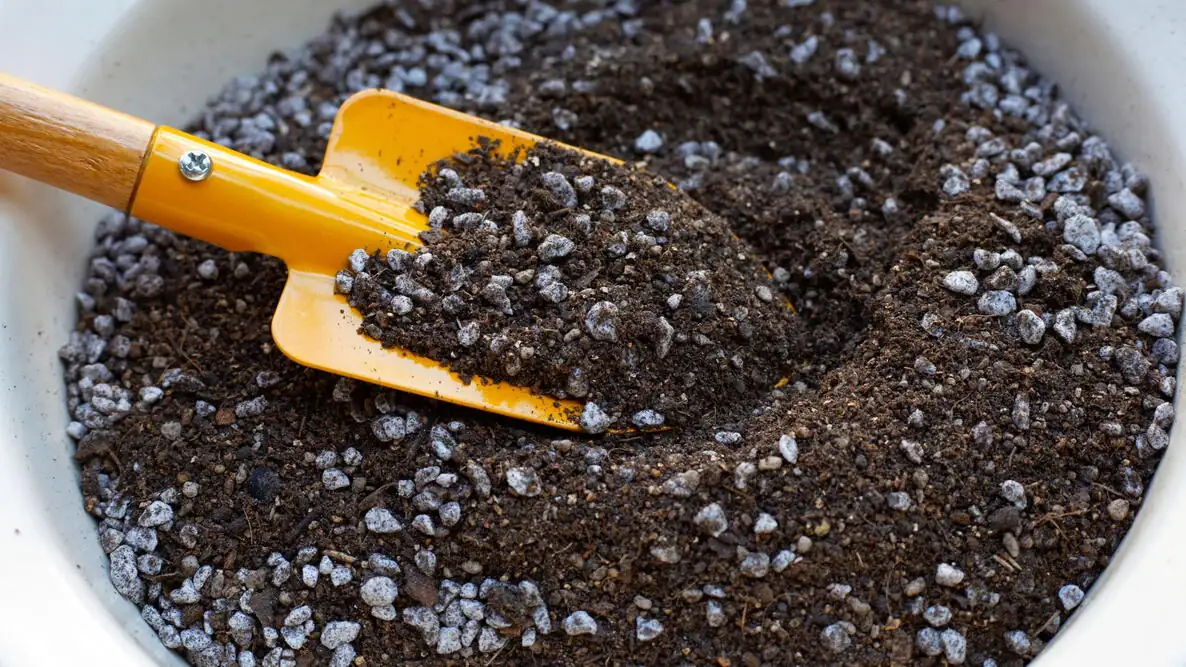
Think “airy biscotti,” not “brownie batter.”
- Potting mix recipe (by volume):
- 40% high-quality peat- or coir-based mix
- 30% perlite/pumice or horticultural grit
- 20% coarse sand (not play sand)
- 10% mature compost
- Optional: a light dusting of garden lime if your water is very soft; Dianthus is happy neutral to slightly alkaline.
- Containers:
- Terra-cotta or metal window boxes with coco liners breathe well.
- Ensure generous drainage holes; add a mesh over holes, not pebbles (pebbles can create perched water).
- If using a self-watering/reservoir box, keep the wick minimal and let the top inch dry between refills; overflow must function.
4) Sun Placement, With a Seasonal Twist
- Aim for 6–8 hours of sun and breezy exposure.
- In high summer heat, slide into light afternoon shade to preserve flower quality.
The Dream Team: Companions That Like the Same Lifestyle
Dianthus chinensis pairs beautifully with plants that love sun, sharp drainage, and airy conditions. Here’s a proven trio:
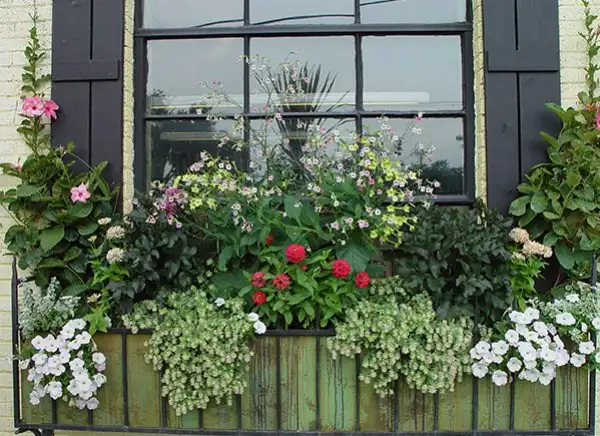
Lavender (Lavandula, dwarf forms for containers)
- Role: Upright “thriller,” silvery-green foil to saturated Dianthus blooms
- Why it works: Sun-loving, leans alkaline, hates soggy roots—just like Dianthus
- Tip: Choose dwarf types for boxes; keep roots in the grittiest part of the mix
Dusty Miller (Jacobaea maritima/Senecio cineraria)
- Role: Sculptural “filler,” silvery fans that cool off hot pinks and reds
- Why it works: Heat- and drought-tolerant once established; excellent drainage required
- Tip: Shear lightly to keep a compact shape that won’t smother Dianthus
Sweet Alyssum (Lobularia maritima)
- Role: Honey-scented “spiller,” softens box edges and stitches the scheme together
- Why it works: Thrives in cool weather, adores sun and porous soil; subtly echoes Dianthus’ spice with its own sweetness
- Tip: Replace or shear when it tires in peak heat; it rebounds in cooler weather
Proportion guide for a 24–30 in window box:
- 3 Dianthus (spaced 7–8 in on center)
- 1 compact lavender at one side or centered
- 2 Dusty Miller tucked behind/beside Dianthus
- 3–5 Sweet Alyssum seedlings to trail the front edge
Planting—Step by Step
1) Timing: Plant in cool weather—early spring or autumn in mild regions.
2) Prep the box: Fill with the gritty mix, mounding slightly so crowns sit just high.
3) Dry-fit the layout: Stagger Dianthus; keep foliage from touching at planting time.
4) Plant and top-dress: Water in at soil level, then add a thin mineral mulch (fine gravel) to keep petals clean and deter splash.
5) Light: Full sun; add afternoon shade only if blooms are scorching.
6) Watering rhythm: Let the top layer dry before watering again. In spring, that’s often weekly; never let pots sit in saucers of water.
7) Feeding: During active growth, feed monthly at half strength with a balanced fertilizer. While blooming well in cool weather, switch to a light, low-nitrogen, higher-potassium feed every 10–14 days—only while growth is clearly active.
Easy Care That Pays Off
- Pinch to branch: When 4–6 in tall, pinch tips once. You’ll get more flowering stems and a denser mound.
- Deadhead often: Snip spent spikes back to a leafy node to extend the show.
- Heat management: In a hot spell, give dappled afternoon shade and keep watering precise but not heavy.
- Airflow maintenance: Don’t let neighbors crowd; rotate window boxes if one side gets still air.
- After a main flush: Shear lightly to encourage fresh growth.
Pests, Diseases, and How to Stay Ahead
- Spider mites: Most likely in hot, dry spells. Watch for stippled leaves and fine webbing. Improve airflow, rinse foliage gently (morning, so it dries), and treat early with horticultural soap or oil if needed.
- Rust and rot: Encourage by humidity and wet foliage. Water at the base, keep spacing generous, and maintain the gritty mix—overly wet media invites root issues.
- Seedlings: Avoid damping-off by using sterile, fast-draining mix and watering sparingly from below or at soil level.
Seed-to-Show for DIY Growers
- When to sow: Early autumn works beautifully in many regions.
- How: Surface-sow or barely cover (about 1/8 in) at 55–59°F (13–15°C). Germination in 7–10 days.
- Transplant: Move to 4–5 in pots when seedlings have 4–5 true leaves. Avoid overpotting—Dianthus dislike sitting in a big pot of wet mix.
- Bloom time: Often 16–17 weeks after sowing, depending on light and temperature.
Safety and Edible Petal Note
- Low-toxicity ornamental.
- Petals may be used as a garnish for those specifically grown for culinary use and never treated with pesticides. When in doubt, do not eat.
- If pets nibble, only mild stomach upset is expected, but it’s best to discourage chewing.
Flower Language and Lore—With a Grain of Salt
The genus name Dianthus is often translated as “flower of the gods,” and Chinese pinks are linked with joy, good fortune, and honor in ornamental use. In broader dianthus traditions, they symbolize affection and admiration and are sometimes called “guardian flowers” in modern interpretations. These meanings trace to floriography—19th-century flower “codes” and cultural lore—beautiful but not scientific. Enjoy the poetry, but let your design choices be led by light, drainage, and airflow.
Three Ready-to-Plant Recipes
A) Frosted Berry
- Dianthus: White with raspberry eye + solid magenta (repeat colors)
- Companion: Dusty Miller for silvery “frost”
- Accent: Dwarf lavender on one side
- Spiller: White sweet alyssum
- Why it works: Cool silver calms hot berry tones; the whole mix loves sun and sharp drainage.
B) Porcelain Cottage
- Dianthus: Blush-to-white bicolors
- Companion: Compact Dusty Miller
- Spiller: Soft lavender or white alyssum
- Why it works: Gentle contrast keeps the box luminous, even on cloudy days.
C) Sunburst Stripe
- Dianthus: Red picotee (white petal with red edge) + pure white
- Companion: Dusty Miller for definition
- Accent: Dwarf lavender to lift the eye
- Spiller: Honey-scented alyssum
- Why it works: Clean lines echo the picotee edge; silver foliage makes reds read crisp, not harsh.
Quick Troubleshooting
- Flopping or lanky growth: Not enough sun or too much nitrogen. Move to brighter light; switch to a gentler, low-N feed.
- Petals spot or brown fast: Overhead watering or sticky humidity. Water at the base, increase airflow, and give a little afternoon shade in heat.
- Plants sulk in summer: Chinese pink prefers cool weather. Keep drainage razor-sharp, reduce stress, watch for mites, and shear lightly for a comeback when temperatures ease.
Hardiness and Overwintering
Often grown as a cool-season annual or short-lived perennial, with performance highly dependent on cultivar and winter wet. Roughly USDA Zone 6–9. If you’re in a wet-winter climate, treat as an annual in containers or give excellent rain-shedding cover—remember, dryness plus air beats cold, clammy soil every time.
Build your box like a breathable boutique—well-edited bicolors, crisp spacing, and gritty media—then invite lavender, dusty miller, and sweet alyssum to the party. Your Chinese pinks will keep smiling back.


