

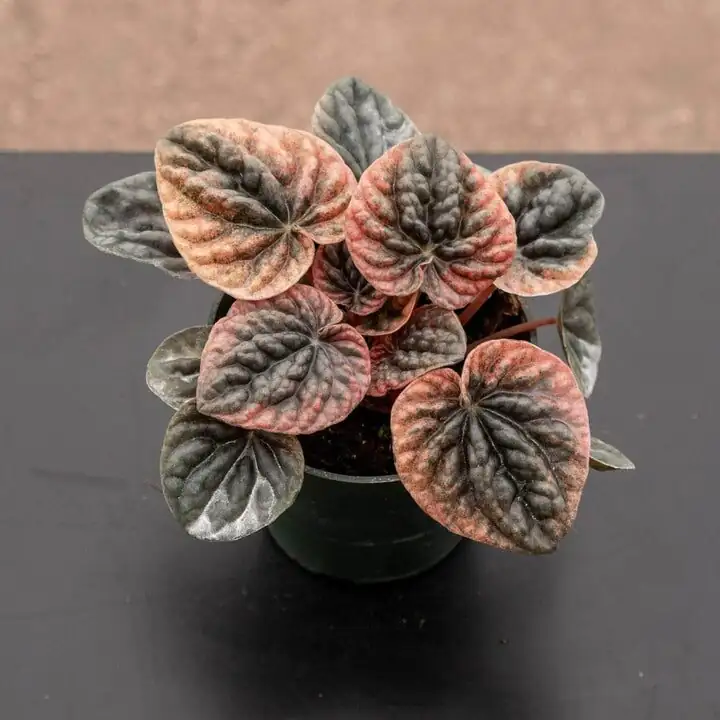
Ripple peperomia (Peperomia caperata) wears light like a velvet jacket—give it a soft, even glow and those heart-shaped, puckered leaves show off rich greens, reds, and burgundies with a satiny two‑tone sheen. Hit it with a harsh spotlight and the ridges wash out or crisp. This guide shows you exactly how to place LEDs so you get lush color without bleaching—complete with intensity ranges, distances, timers, and a quick “is this bright‑indirect?” test you can do in 30 seconds.
Meet Ripple Peperomia’s light personality
Native to tropical South America, P. caperata is a compact, easygoing foliage plant that naturally grows under a leafy canopy—think bright but filtered. Indoors, it thrives in partial shade to bright, indirect light and should be protected from harsh direct sun, especially midday. Under the right glow, many cultivars deepen to red or burgundy tones; in summer, it may push up slim, cream‑green flower spikes above the leaves.
Key vibe: Give it a sky, not a spotlight.
What “bright‑indirect” means in numbers (and what to aim for)
- Home “bright‑indirect” target for peperomias: about 250–1000 foot‑candles (FC). Sweet spot for caperata color without risk: roughly 300–700 FC.
- Lux equivalent: ~2,500–10,000 lux (1 FC ≈ 10.8 lux).
- PPFD ballpark under white LEDs: ~50–150 μmol m⁻² s⁻¹.
- If you like DLI: ~3–6 mol m⁻² day⁻¹ over a 10–12‑hour photoperiod.
These are practical ranges that keep Ripple Peperomia vivid yet safe from bleaching, whether the light comes from a bright window plus a small LED, or an LED alone.
The 30‑second “is this bright‑indirect?” test
No meter? Try these quick checks right at leaf level:
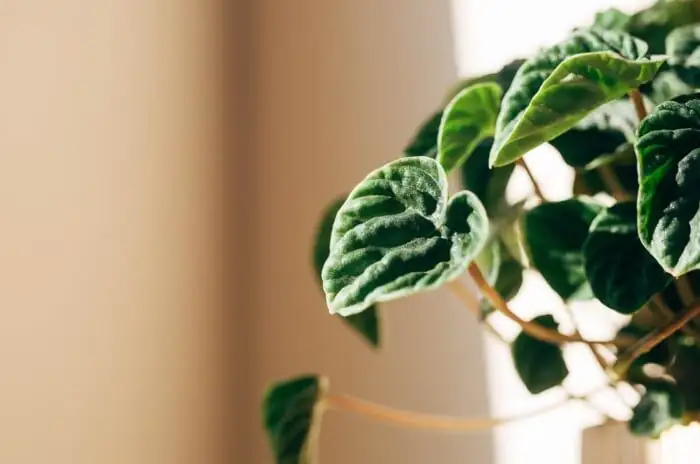
- Shadow check: Hold your hand 6–8 in (15–20 cm) over the leaves at midday.
- Soft, fuzzy‑edged shadow = bright‑indirect.
- Crisp, high‑contrast shadow = too direct/intense; increase distance or diffuse.
- Barely any shadow = too dim; move closer or extend hours.
- Warmth check: After the light’s been on 30+ minutes, touch the leaf.
- Leaf should feel like room temperature. Noticeably warm = too close or too intense.
- Phone lux check (optional): With a free light meter app, aim at the leaf surface. Midday readings around 2,500–8,000 lux usually land you in the safe zone.
LED placement recipes that flatter, not fry
Every fixture varies, but these starting points usually land Ripple Peperomia in the sweet spot. Keep the light centered over the plant’s canopy unless noted, and fine‑tune using the quick test above.
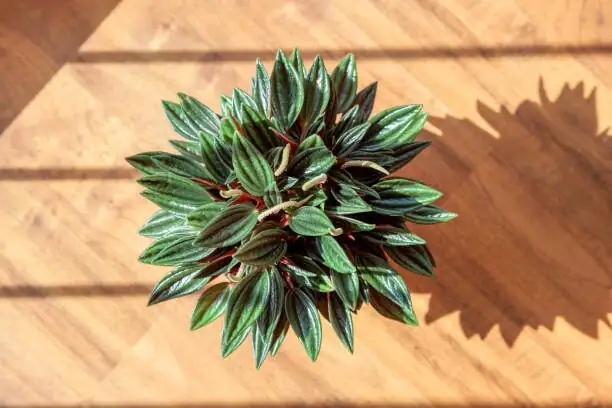
- 9–12 W LED bulb in a clamp lamp (4000–6500 K, white)
- Distance: 8–12 in (20–30 cm) above the leaves
- Photoperiod: 10–12 h/day
- Adjust: If ridges look pale or leaves feel warm, pull back to 12–16 in (30–40 cm) or add a diffuser.
- 20–30 W LED bar/strip (full‑spectrum white)
- Distance: 10–16 in (25–40 cm)
- Tip: Angle the bar 15–30° off‑vertical to reduce “hot spots” on the puckered leaf ridges.
- 24 W T5 HO fluorescent (2 ft/60 cm)
- Distance: 8–12 in (20–30 cm)
- Place slightly off‑center or use a frosted cover for softer spread.
- 30–40 W flat LED panel
- Distance: 16–24 in (40–60 cm)
- Add a thin diffuser (sheer fabric, parchment, or the panel’s frosted lens) to prevent ridge bleaching.
- Using a bright window + LED “fill”
- East window: Place the plant 1–3 ft (30–90 cm) back from glass; run a 9–12 W LED 6–8 h in winter or on dark days.
- West window: Keep 2–4 ft (60–120 cm) back or use a sheer curtain; supplement 4–6 h if needed.
Pro tip on angles and diffusion
Rippled leaves catch glare. If you see shiny highlights on the ridge tops, either:
- Nudge the light 2–4 in (5–10 cm) farther away,
- Aim it slightly from the side so light skims rather than drills, or
- Add a diffuser (sheer curtain, tracing paper, or a frosted lamp dome).
Timers and daily rhythm
- Photoperiod: 10–12 hours/day is perfect year‑round.
- Winter option: You can ease to 8–10 hours if you prefer slower growth—just match your watering to the slower pace.
- Consistency beats intensity: Use a cheap plug‑in timer for the same on/off every day.
- Split schedule? Not necessary. A single block is simplest and highly effective.
Fine‑tuning by reading the leaves
Your plant will tell you when the light is off. Adjust in small steps (raise/lower light 2–3 in or change timer by 30–60 minutes) and recheck after a week.
Too much light (risk of bleaching)
- Washed‑out or silvery patches on the ridge tops
- Crispy edges or tiny scorch freckles
- Downward cupping, leaf feels warm to the touch
Fix it: Raise or dim the light, add a diffuser, or shorten the photoperiod.
Too little light
- Stretched petioles, wider gaps between leaves
- Duller color; slow or timid new growth
- Soil staying wet too long
Fix it: Move 2–4 in closer, add an hour or two to the timer, or supplement a dim window.
Watering note as you tweak light
More light = faster drying. Let the top of the potting mix dry before watering (spring–autumn), and go almost dry in winter. Skip misting—water can sit in those ripples and spot the leaves. A pebble tray under the pot (water below the pot’s base) is a better humidity boost.
Room placement that works with LEDs
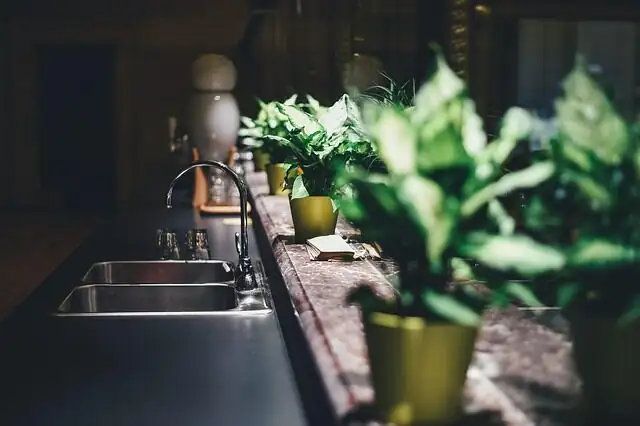
- Best homes: Bright bathrooms or kitchens with steady humidity around 50%+.
- Windows: East is gentle; west needs distance or a sheer. Keep it out of harsh midday sun on south windows.
- Drafts: Avoid cold windows or blasts of AC; keep above 12°C (54°F), ideally 15–24°C (59–75°F).
Your quick LED toolkit
- Light meter app (for lux), or a simple handheld meter
- Plug‑in timer (24‑hour)
- Dimmer or extra distance options (raise the fixture)
- Diffuser (frosted dome, sheer fabric, or parchment)
- A lazy Susan to rotate the pot weekly for even growth
Mini care refresher (because light touches everything)
- Soil: Loose, airy, fast‑draining mix; add a generous handful of perlite.
- Potting: Slightly snug 4 in (10 cm) pot; repot every 2–3 years.
- Feeding: Monthly at half‑strength in spring–autumn; reduce or stop in winter.
- Pests: Watch for mealybugs, mites, and scale—wipe leaves and treat early if needed.
- Pets: Generally considered non‑toxic to cats and dogs.
A tiny note on symbolism
Ripple peperomia is often linked with quiet resilience and gentle charm—more a modern houseplant sentiment than a historical “flower language.” That steady, sculptural foliage embodies calm persistence: small plant, big presence.
Bright‑indirect, no‑bleach checklist
- Start the light farther than you think; ease closer over 1–2 weeks.
- Aim for 300–700 FC (≈ 2,500–8,000 lux) at the leaves, 10–12 h/day.
- Use the shadow test: soft edges = just right.
- Angle the light or diffuse to protect the leaf ridges.
- Adjust in small steps; watch for pale ridges (too bright) or stretch (too dim).
- Match watering to light: brighter = slightly faster dry‑down, but never soggy.
Give Peperomia caperata a sky of steady, gentle photons and it will repay you with saturated color, crisp texture, and that irresistible ripple—no bleaching, no drama, just lush.