

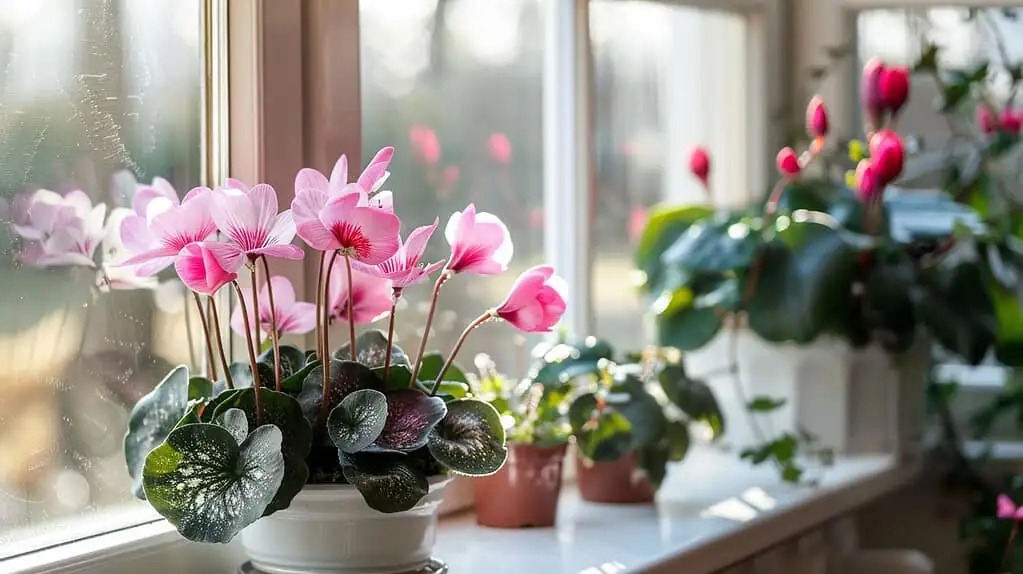
Think of Cyclamen persicum as winter’s ballerina: heart-shaped leaves like little velvet capes, flowers that kick their petals back in a perfect arabesque, and a performance that peaks just when most plants bow out. And yet, so many cyclamen wilt before the holidays are over—not because they’re “impossible,” but because they’re often treated like tropicals. They aren’t. This is a cool-season, Mediterranean native that rewards you with weeks of color if you follow its seasonal rhythm. Let’s bust the myths and map the exact light, temperature, and watering routine that keeps blooms going all winter.
Meet Cyclamen persicum (Florist’s Cyclamen)
- Origin: Mediterranean regions including Greece, Syria, and Lebanon
- Family: Primulaceae; Genus: Cyclamen
- Habit: Compact, tuberous perennial with a flattened, corky brown tuber
- Size: About 15–23 cm (6–9 in) tall and wide
- Foliage: Heart-shaped leaves marbled with silver; long petioles from the tuber’s top
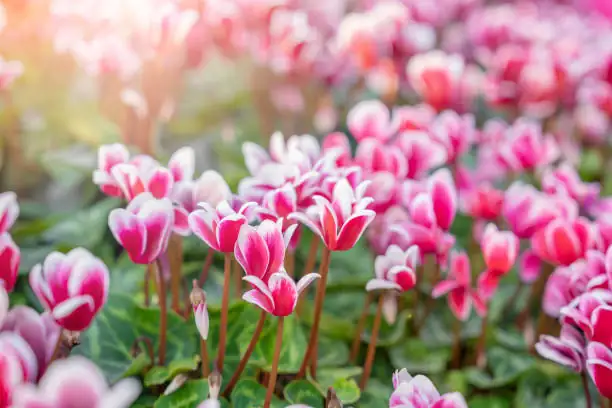
- Flowers: Reflexed “butterfly” petals in white, pink, red, and purple; airy and elegant
- Bloom Season: Fall through spring (typically November–March; often peaking December–February)
- Star power: A classic winter-blooming houseplant with a display that often lasts around 6–8 weeks (and longer with great conditions)
The Big Myths—Busted
- Myth: “Cyclamen like warm homes.”
Truth: Warmth shortens their life. Cool days (15–21°C / 60–70°F) and colder nights (4–10°C / 40–50°F) keep flowers coming.
- Myth: “Full sun = more blooms.”
Truth: Bright, indirect light is ideal; hot direct sun scorches leaves and stalls flowering.
- Myth: “Water like a normal houseplant.”
Truth: Bottom-water and keep the tuber’s crown dry to prevent rot.
- Myth: “It died after blooming.”
Truth: It goes dormant in summer—rest is normal. With patience, it reblooms each fall.
- Myth: “Bury the tuber fully for stability.”
Truth: Keep the top third slightly exposed when potting to reduce rot.
- Myth: “A quick mist boosts humidity.”
Truth: Moist air is great; wet leaves/crown invite botrytis. Use a pebble tray or humidifier instead.
Light, Temperature, and Watering—Your Winter-Bloom Playbook
Light: Bright, Indirect—Never Harsh
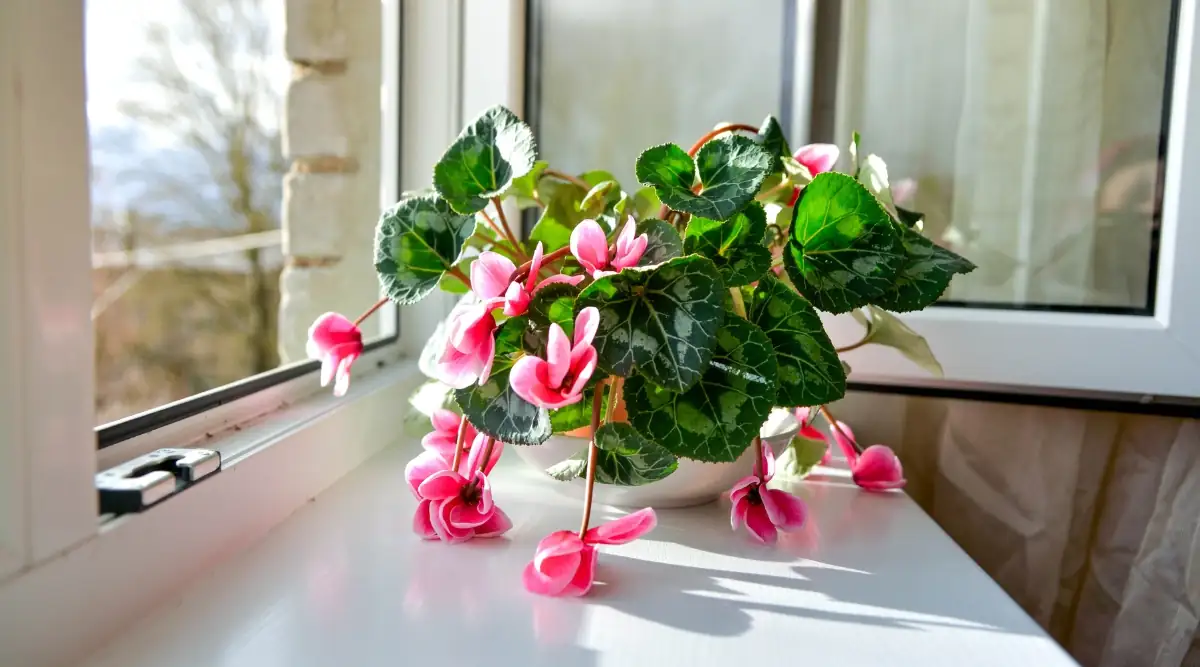
- Aim for: Bright, indirect light all day. Think 500–1,500 foot-candles (≈5,000–16,000 lux).
- Best spots:
- East window: Perfect morning light.
- Bright north window: Excellent all day.
- South/west: Set 1–2 m (3–6 ft) back or use sheer curtains.
- Signs to watch:
- Too much sun: Scorched or crispy patches.
- Too little light: Fewer buds, stretched petioles, slow growth.
Temperature: Cool by Day, Chilled by Night
- Day: 15–21°C (60–70°F), ideally toward the cooler end for longest bloom.
- Night: 4–10°C (40–50°F). Brief dips to about 0°C (32°F) are tolerated, but avoid prolonged freezing.
- Keep away from heaters, radiators, and hot drafts. Warm rooms (>20°C / 68°F) shorten flowering.
- Night-chill hacks:
- Crack a window in a cool room.
- Park it in an unheated foyer, enclosed porch, or by a patio door (no frost pockets).
- Between curtain and window pane at night (if not freezing).
Watering Rhythm: Precise, Gentle, From Below
- Golden rule: Water when the top 2–3 cm (about 1 in) of mix is dry. Keep evenly moist in bloom, never soggy.
- Bottom-watering method:
- Set the pot in a shallow bowl of room‑temp water for 10–20 minutes.
- Lift, drain thoroughly, and return to its saucer dry. Never leave it sitting in water.
- If you must water from above, pour around the pot’s rim—keep the crown/tuber top dry.
- Real-world frequency guide (adjust to your room):
- Cool room (15–17°C / 59–63°F), 50–60% RH: Every 3–5 days.
- Cool but dry air (15–17°C / 59–63°F), 30–40% RH: Every 2–4 days.
- Warmer room (20–21°C / 68–70°F), dry air: Every 1–2 days—but try to move it cooler.
- Humidity: Moderate to high (ideally >50%). Use a pebble tray or humidifier with good airflow. Avoid misting the crown/leaves.
The Year-Round Cyclamen Calendar
Spring (Mar–May): Ease Off Gracefully
- What you’ll see: Blooming slows; some leaves yellow.
- Actions:
- Reduce watering frequency—still bottom-water, but less often.
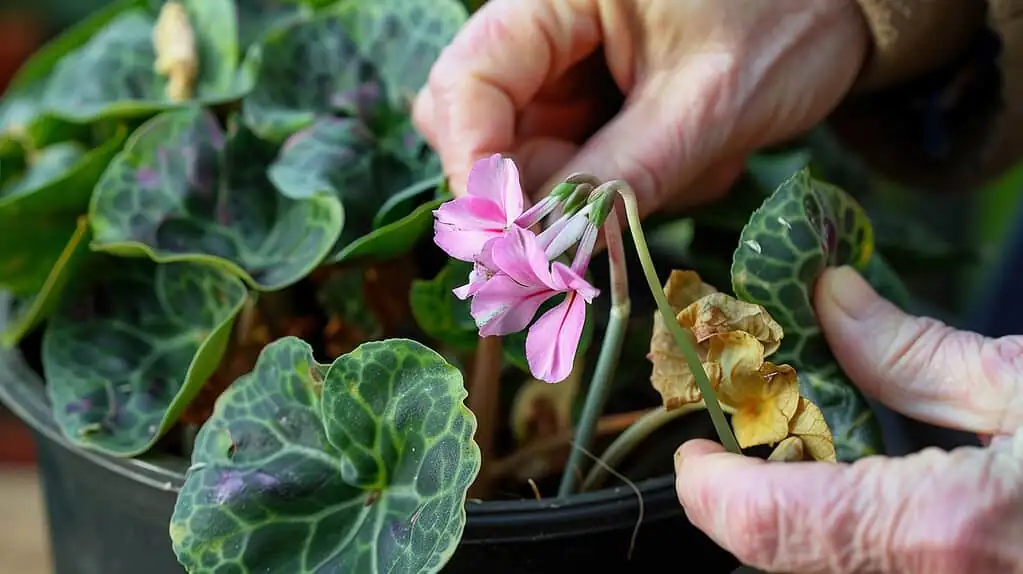
- Remove spent flowers/yellow leaves by gently twisting stems from the base.
- Keep it cool and bright as it winds down.
Summer (Jun–Aug): True Rest/Dormancy
- What you’ll see: Leaves die back; the tuber rests.
- Actions:
- Move to a cooler, airy spot with lower light.
- Keep almost dry—water sparingly, just enough to keep the tuber from shriveling.
- No fertilizer. Do not bake it in heat.
Fall (Sep–Nov): Wake-Up and Rebuild
- What you’ll see: New leaves emerge; buds start forming.
- Actions:
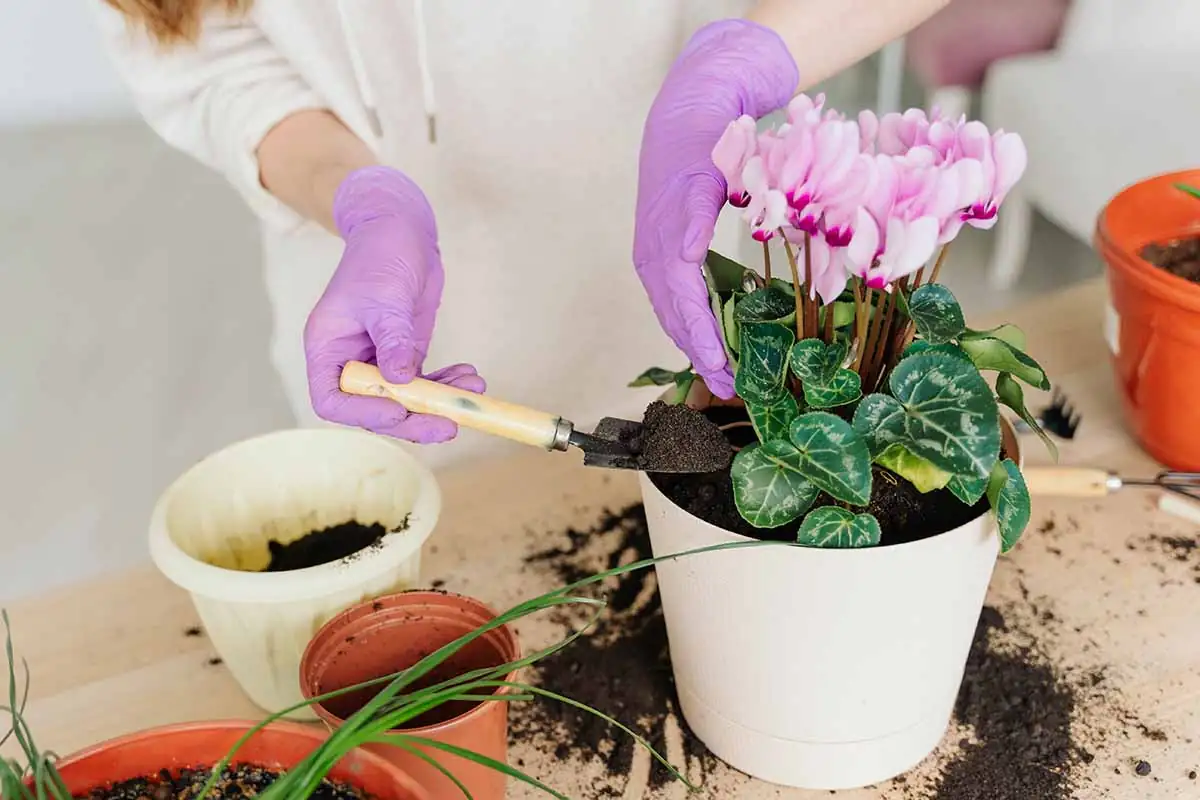
- Repot (about every 2 years) while dormant or at the first sign of growth. Move up only slightly; use a rich, free-draining, slightly acidic mix. Leave the top third of the tuber exposed.
- Resume regular bottom-watering and begin feeding every 2–3 weeks with a diluted, low‑nitrogen liquid fertilizer during active leafy growth.
- Provide bright, indirect light and cool days/cold nights to set the bloom show.
Winter (Dec–Feb): Peak Performance
- What you’ll see: A flush of flowers—keep conditions steady to prolong the show.
- Actions:
- Keep cool and bright; avoid any heat blasts.
- Maintain even moisture via bottom-watering.
- Pause fertilizer during peak bloom.
- Deadhead promptly by twisting spent stems away at the base to prevent rot and encourage more buds.
Soil, Potting, and Feeding—Dialing in the Details
- Soil: Rich yet free-draining, slightly acidic potting mix (a peat- or coir-based blend with perlite works well).
- Pot: Snug is fine; cyclamen like a modest pot. Ensure excellent drainage.
- Repotting: Every ~2 years in summer dormancy. Fresh mix, minimal up-potting, top third of tuber above the soil line.
- Fertilization:
- Feed every 2–3 weeks in fall during active leafy growth.
- Pause during peak bloom and through dormancy.
- Restart feeding when fresh growth returns in fall.
Grooming That Extends Bloom
- Deadhead like a pro: Grip spent flower or yellow leaf at the base, twist, and pull cleanly. Cutting can leave stubs that rot.
- Air movement: Gentle circulation helps deter botrytis (gray mold).
- Rotate the pot weekly for an even crown and symmetrical bloom display.
Buying Smart: Start Strong, Bloom Longer
- Choose plants with:
- Firm tubers and crisp, marbled leaves
- Lots of unopened buds (promise of a longer display)
- Avoid: Yellowing foliage, wilting, soft or mushy crowns (rot warning).
Troubleshooting—Fast Fixes
- Yellowing leaves:
- Most common: Overwatering. Also check for underwatering, warmth, natural dormancy onset, or pests.
- Droopy plant/bud blast:
- Often too warm or too dry. Move cooler, raise humidity, water when the top 1 in dries.
- Gray fuzz on stems/leaves (botrytis):
- Remove affected parts, improve airflow, avoid wetting the crown.
- Pests:
- Cyclamen mites (distorted growth), aphids, spider mites, vine weevils. Act early with appropriate controls and better airflow.
- Root or crown rot:
- Linked to soggy mix or wet crown. Repot into fresh, draining mix; bottom‑water only; keep the tuber top dry.
Placement Cheatsheet
- Indoors: Bright windowsills, cool living areas, offices—away from heaters, strong sun, and drying drafts.
- Outdoors (mild climates, roughly USDA 9–11): Morning light, bright shade later; protect from prolonged freezing. Tolerates brief near‑freezing dips, but avoid sustained frost.
Safety Note
Cyclamen is toxic to humans and pets (terpenoid saponins, highest in the tuber). Ingestion can cause drooling, vomiting, and diarrhea; larger amounts may be dangerous to animals. Keep out of reach.
Symbolism and “Flower Language” (花语), With a Clear-Eyed View
Cyclamen carries a long cultural footprint around the Mediterranean and into Europe. Its heart-shaped leaves and winter tenderness earned it associations with sincere affection, devotion, and lasting love; in some Christian symbolism, the flower echoes sorrow and compassion. Color lore follows common themes—red for love, white for purity, pink for enduring affection. Remember: floriography bloomed in Victorian times as a poetic code, not a botany manual. Enjoy the sentiment, but let science guide the watering can.
Fun to Know
- “Cyclamen” comes from Greek kyklos, “circle,” nodding to the rounded tuber.
- As flowers fade, their stems can coil, drawing developing seed pods toward the soil.
- The old name “sowbread” hints at wild pigs nibbling the tubers.
- A mature, happy plant can carry dozens of blooms in one season.
- Over 20 Cyclamen species exist; C. persicum rules winter windowsills.
Quick Winter Bloom Checklist
- Light: Bright, indirect; no harsh midday sun.
- Temperature: 15–21°C (60–70°F) by day, 4–10°C (40–50°F) by night. Cooler is better than warmer.
- Water: Bottom-water when the top 2–3 cm (1 in) is dry; drain well; never wet the crown.
- Humidity: >50% via pebble tray/humidifier; keep air moving.
- Feeding: Every 2–3 weeks only during active leafy growth in fall; pause during peak bloom and dormancy.
- Grooming: Twist off spent stems; keep debris off the crown.
- Respect the nap: Mostly dry, cool rest in summer; then it’s showtime again.
Follow this cool, bright, bottom-watered rhythm and your Cyclamen persicum will dance through winter with weeks of crisp foliage and butterfly blooms—no drama, just applause.


