

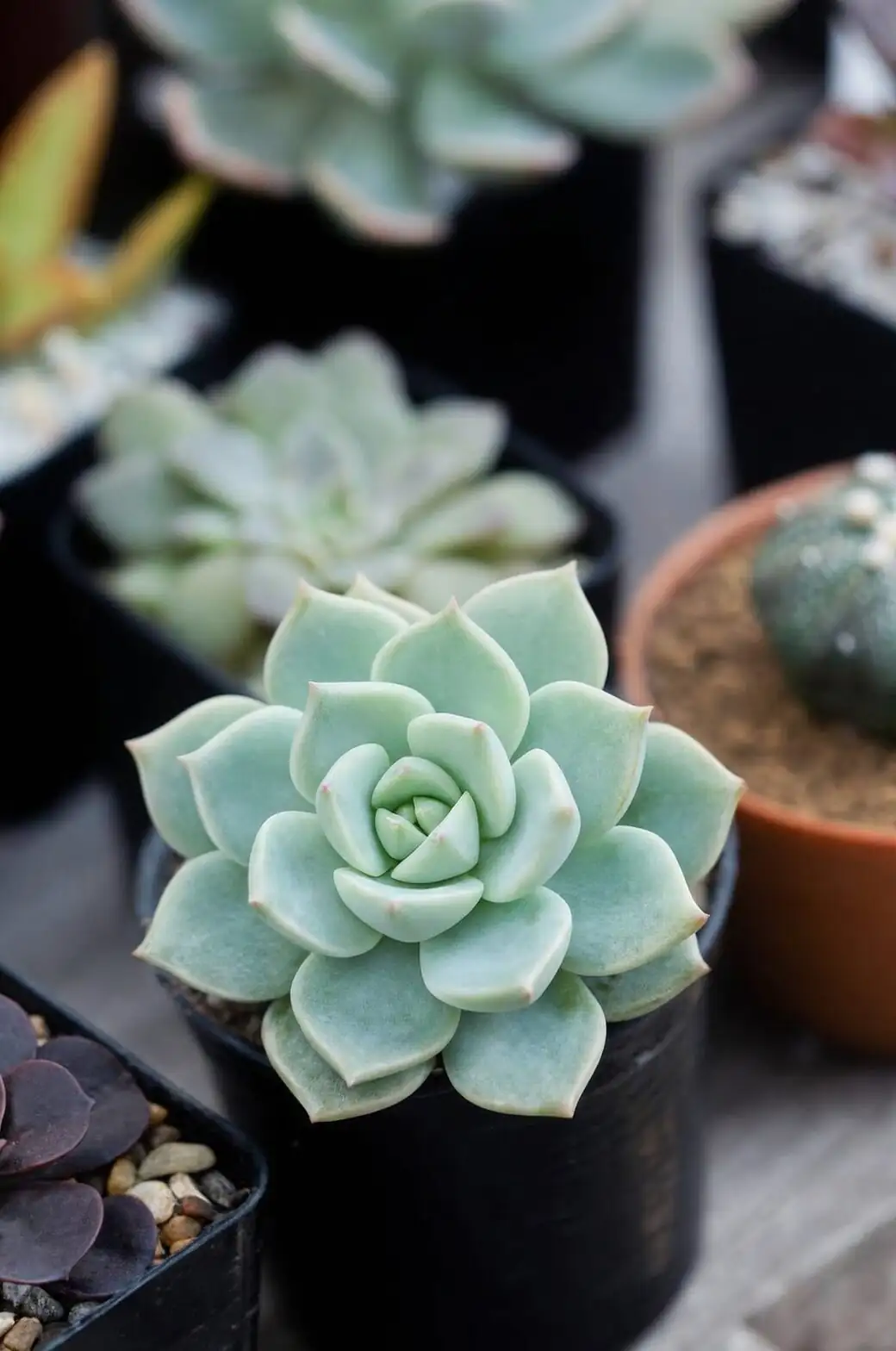
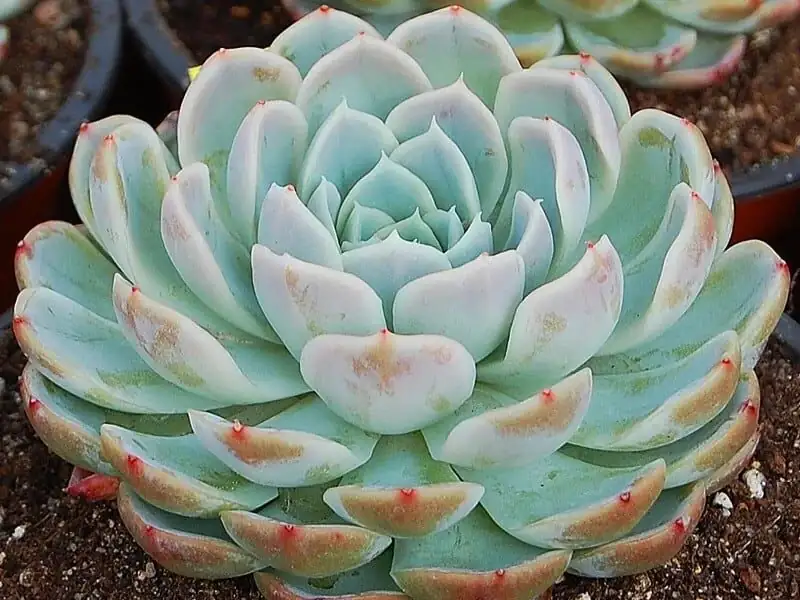
If you’ve ever met Mexican snowball (Echeveria elegans), you know the instant crush: a perfectly symmetrical, lotus-like rosette dusted in a soft, frosty bloom. That “frost” isn’t dust or chalk—it’s epicuticular wax (farina), a plant-made sunscreen and raincoat rolled into one. And yes, fingerprints really do matter here. Let’s dive into the fun science hiding on those powder-blue leaves and learn how to keep that glacial glow flawless.
The frosty secret: epicuticular wax 101
Echeveria elegans evolved in semi-arid Mexico to handle strong sun and sparse rain. Its pale, powdery coating is a thin layer of epicuticular wax crystals sitting on top of the leaf cuticle.
- What it’s made of: long-chain, water-repelling hydrocarbons and related waxy compounds. Think of millions of microscopic “tiles” spread over each leaf.
- Why it looks pale: those tiny crystals scatter light like frosted glass, giving that blue‑gray to blue‑green matte finish (sometimes with a shy pink blush).
How the wax beats the sun
- Micro-sunscreen: The wax reflects and scatters part of the incoming light—including some UV—so the leaf tissues heat up less under strong sun.
- Color trick: The glaucous, bluish tone comes from light scattering, not pigment alone. It’s elegant physics doing plant skincare.
Why water beads—and why that helps
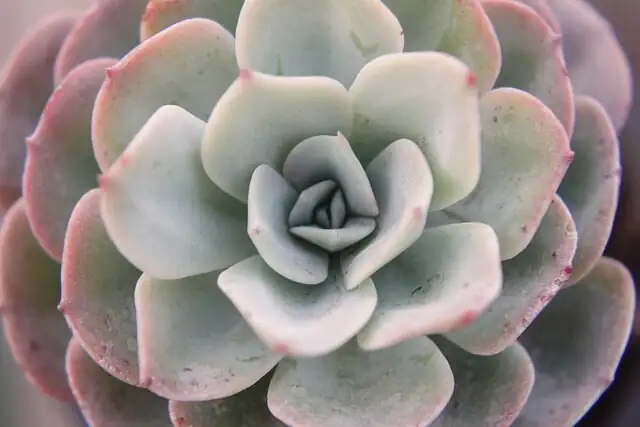
- Super hydrophobic: Water forms crisp beads that roll off, taking dust with them. It’s a built-in, self-cleaning coat.
- Drought defense: The wax reduces surface wetting and slows moisture loss, helping the plant ride out dry spells.
- Important caveat: Even with water-repellent leaves, water trapped in the rosette can linger and invite rot. Always water the soil, not the crown.
A slippery slope for tiny climbers
- That crystalline layer is a bit like talc to insects—some find it harder to grip, which can reduce surface browsing. It’s not armor, but it is inconvenient footwear for pests.
Fingerprints: tiny smudges, big consequences
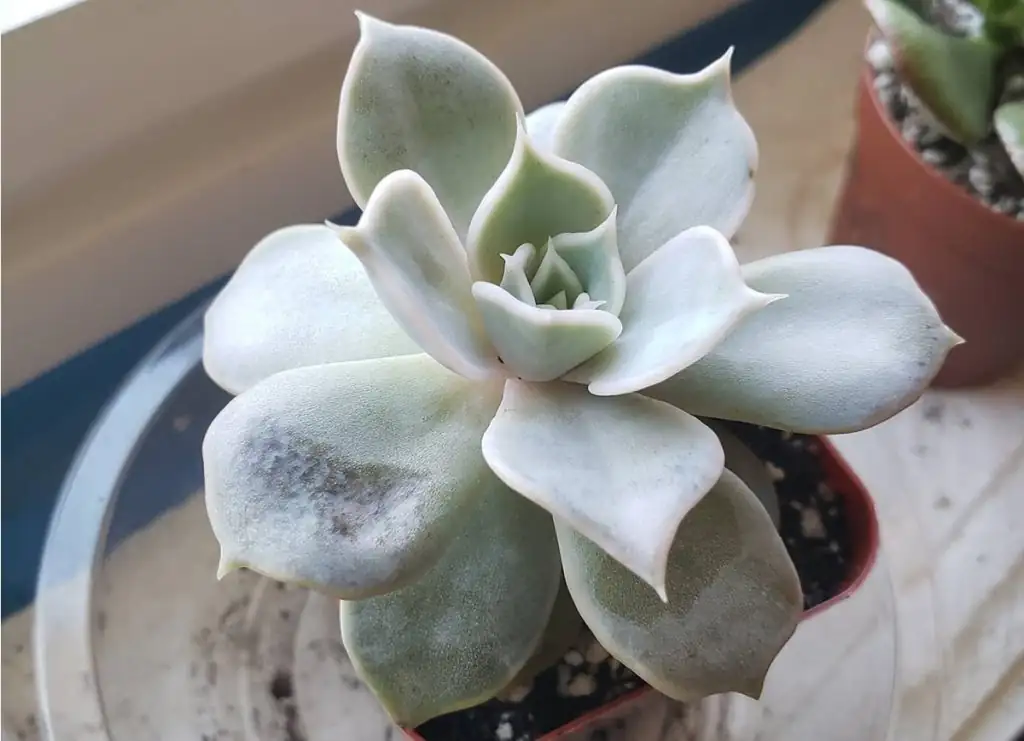
Epicuticular wax is delicate. Touch it, and you’ll rub it off. Those finger-shaped smudges don’t “heal” on that leaf.
- What a fingerprint does:
- Removes the protective “sunscreen” in that patch, making it more vulnerable to sun stress.
- Leaves a permanent cosmetic mark until the leaf is replaced naturally.
- Handle like a pro:
- Move the plant by the pot or hold the very base of the rosette.
- Use a soft air puff or a clean, soft brush (makeup brush works) to whisk away dust.
- Treat pests with targeted methods (e.g., isopropyl alcohol swabs or a gentle mist) to avoid wiping the bloom.
Meet the plant behind the glow
- Name: Echeveria elegans (Mexican snowball; also called Glaucous Echeveria, Mexican Gem, Pearl Echeveria, White Mexican Rose; Chinese: 玉蝶)
- Family/Genus: Crassulaceae, Echeveria
- Origin: Mexico, especially semi-arid areas (often reported from Hidalgo)
- Look and size:
- Tidy rosettes about 8–15 cm (3–6 in) wide and around 10 cm (4 in) tall out of bloom
- Powdery blue‑gray to blue‑green leaves
- Slender flower stalks raise it to about 10–20 cm (4–8 in) in bloom
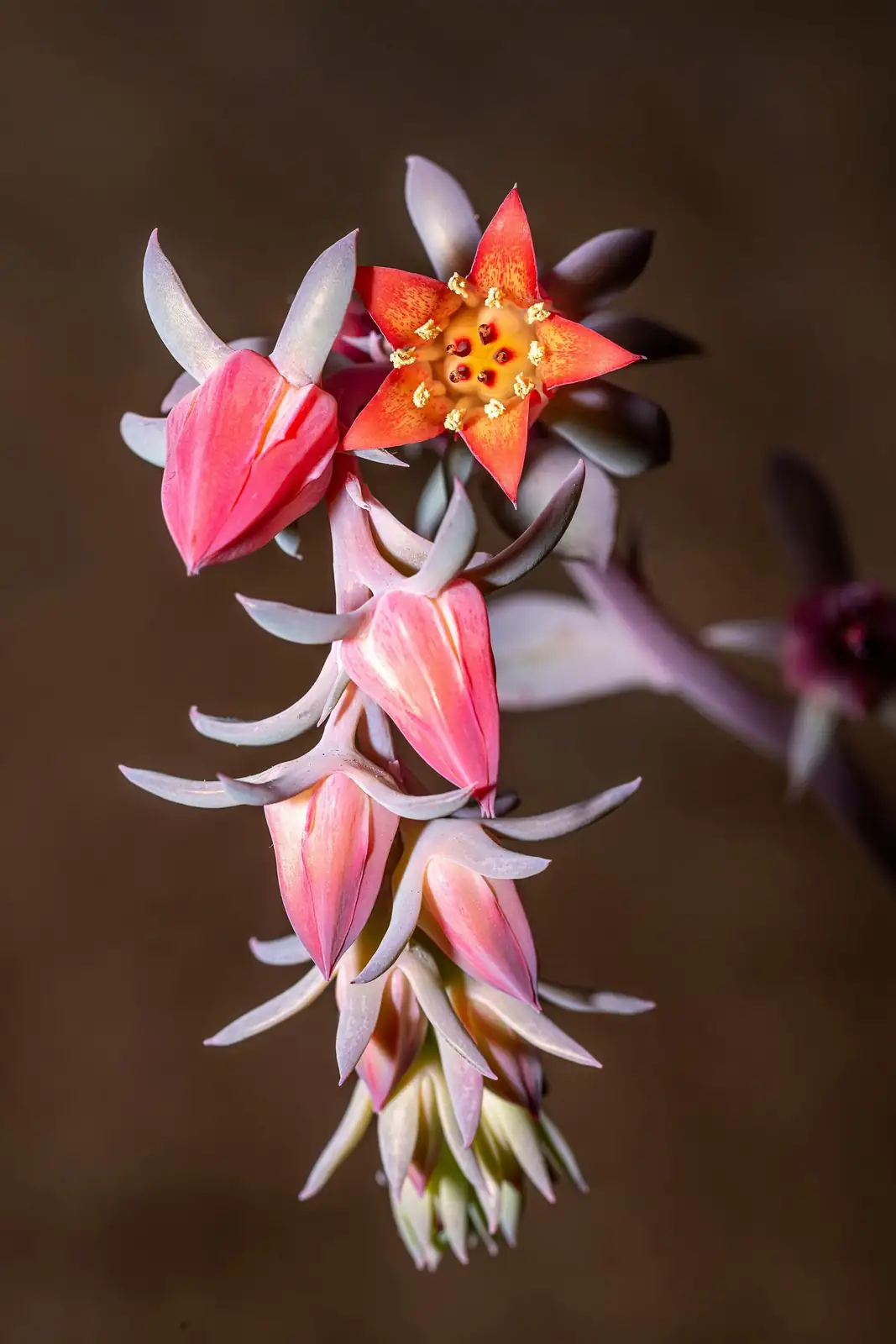
- Blooms: Nodding, bell-shaped flowers—pink/red to coral outside with yellow tones inside, mainly late spring to summer
- Habit: Compact, offsets readily to form charming clumps
Care that keeps the “snow” intact
Priorities: bright light, fast drainage, and a “hands-off-the-leaves” policy.
Light
- Bright light to full sun (aim for 4–6+ hours). In very hot climates, offer light afternoon shade to prevent scorch.
- Too little light = stretched stems and a flatter, more open rosette. Acclimate new plants to stronger sun gradually (a few days behind a sheer curtain helps).
Watering
- Use a soak-and-dry rhythm: water deeply, then wait until the mix is bone-dry.
- Seasonal guideline (adjust for heat, pot, airflow):
- Spring–Summer: roughly every 7–14 days
- Autumn: often every 2–3 weeks
- Winter: very sparing—every 3–5+ weeks indoors, or even 1–2 times total if kept cool
- Golden rule: never pour water into the rosette. The hydrophobic wax won’t save a soggy crown.
Soil and pot
- Very fast-draining cactus/succulent mix with lots of mineral grit (pumice, coarse sand).
- Pot with drainage holes is non-negotiable.
- Repot every 1–2 years (early spring is ideal) and let root nicks callus 1–2 days before watering.
Temperature, humidity, airflow
- Best growth around 15–27°C (59–81°F), sweet spot near 18–25°C (64–77°F).
- Frost tender: keep safely above about 5–10°C (41–50°F).
- Prefers dry air and strong airflow; avoid stagnant humidity. If you must raise local humidity in extreme heat, mist the air near the plant—don’t wet the rosette.
Feeding
- Light feeder: 1/4-strength cactus/succulent fertilizer every 4–8 weeks in spring–summer. Skip winter.
- Avoid splashing fertilizer solution on the leaves (wax + salts = spots).
Propagation: clone your snowball
- Offsets (pups): separate when they have their own roots.
- Leaf propagation: remove a healthy leaf cleanly, callus for several days, lay on dry gritty mix, and mist very sparingly until roots/pups form.
- Rosette/stem cuttings: let cuts callus, then root in a gritty medium.
- Timing: year-round in warm, bright conditions; late summer to early autumn is especially reliable. Pot up when roots are about 2–3 cm (0.8–1.2 in).
Pro tip: Propagate over a clean surface and handle the rosettes by their base to preserve the bloom.
Common oops and quick fixes
- Rosette stretching and opening: almost always low light (sometimes paired with overwatering). Move to stronger light and let soil fully dry before watering.
- Lower leaves turning translucent or mushy: overwatering and/or poor drainage. Dry out, switch to gritty mix, and keep water out of the crown.
- Pests: mealybugs (leaf axils), aphids on flower stalks, scale, thrips; root-zone issues can include root-knot nematodes. Treat promptly—alcohol swabs or insecticidal soap for mealy/scale; improve light/airflow/drainage to prevent recurrence.
- Diseases: leaf spot, rust, and the classic root rot in wet soil. Cultural care is the best defense.
Safety, symbolism, and a tiny backstory
- Safety: Generally considered low-toxicity to people and pets, but nibbling may cause mild stomach upset. Best kept out of reach of curious mouths.
- Symbolism: Often linked with resilience, enduring love, and quiet, lasting beauty—fitting for a plant that keeps its form through dry spells. “Flower language” for succulents is modern and more poetic than historical: the meaning comes from their stoic survival strategy and the way they shareable-offset into “growing families.”
- History note: The genus honors Mexican botanical illustrator Atanasio Echeverría y Godoy. E. elegans earned global fame for its compact shape, forgiving nature, and eagerness to make offsets—plant friendship in action.
Why the wax makes your care easier (and trickier)
- Easier: UV buffering, slower water loss, self-cleaning beads, and a bit of slip for would-be leaf climbers.
- Trickier: Leaves show every touch, and water or fertilizer splashes can leave marks. The best caretaker’s move is restraint—water the soil, not the rosette; move the pot, not the leaves.
Nerd corner: wax wonders beyond Echeveria
Across plants, epicuticular wax comes in many micro-shapes that change how it behaves—some scatter light better, some bead water more. In the succulent world, species like Dudleya brittonii are famous for ultra-strong UV reflectivity, and materials scientists even study plant waxes to design self-cleaning, water-repellent surfaces. Your Mexican snowball’s “frost” is part of a much bigger saga of plant physics inspiring human tech.
At-a-glance placement ideas
- Sunny windowsill (east or south), bright balcony/patio, or strong grow lights indoors
- Shelter from prolonged rain outdoors
- Ease newly purchased plants into stronger sun gradually
Keep the bloom, keep the magic: admire the frost from a respectful distance, give it bright light and a gritty bed, and let this little “stone rose” show you how stylish survival can be.