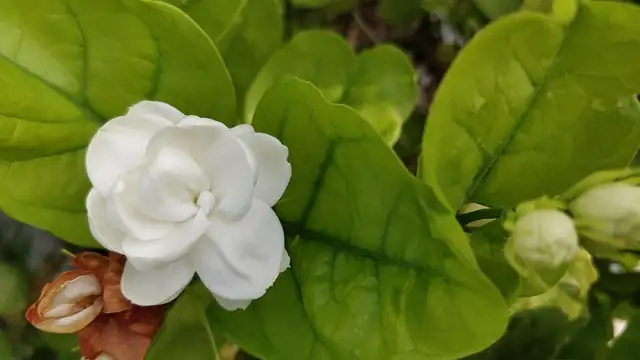
Step outside on a warm evening and Arabian jasmine (Jasminum sambac) turns the air into velvet—waxy white flowers glowing like tiny moons, fragrance dialed up to “irresistible.” Here’s the fun science behind that twilight magic, plus how to grow more blooms (and more plants) with almost ridiculous ease.
Meet Arabian jasmine, the evening perfumer
- Evergreen to semi-evergreen shrub from tropical Asia (especially India, Pakistan, and the Himalayan foothills of western China), now beloved across South and Southeast Asia and warm, subtropical regions worldwide.
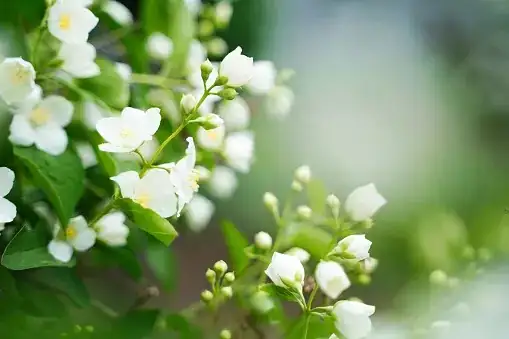
- Glossy, deep-green leaves and famously waxy white blooms, often in clusters that open progressively.
- Bushy by nature but happy to clamber; keep compact in a pot or train onto a small trellis.
- Flowers scent tea and star in perfumery and festive garlands; aliases include Mogra, Pikake, Sampaguita, Belle of India, Maid of Orleans, and more.
Why the scent peaks at dusk (and goes wild in warm weather)
Evening is showtime. Here’s the quick, science-lite why:
- Night pollinator strategy: White flowers read like neon to night-active moths. The plant times its strongest scent release to the evening to guide them in.
- Built-in clock: A floral “circadian” rhythm cues aromatic oils to surge late in the day. Buds often open around dusk, and the perfume crests after sunset.
- Heat helps: Warmth turbocharges both scent production and volatility. On balmy nights, those sweet, heady molecules evaporate more readily, so you smell more of them, farther.
- Clustered blooms: Sambac flowers open in succession, so your plant keeps a steady evening perfume rather than a one-night wonder.
The secret behind those waxy white blooms
- Moonlit reflectors: White petals are perfect for low-light visibility. Think of them as tiny reflectors signaling, “Landing strip this way.”
- Built-in perfume vault: That waxy, slightly leathery petal surface (a protective cuticle) helps lock in moisture and slows fragrance loss—so blossoms last better in heat and keep their scent longer.
- Heat and drought resilience: The same waxy finish reduces petal wilt in hot, sunny conditions, helping the plant look pristine while it perfumes the night.
Singles vs. doubles: stars and tiny rosettes
Jasminum sambac comes dressed for every party—from starry singles to many-petaled rosettes that mimic miniature roses.
- Single-flowered (e.g., Maid of Orleans)
- Look: Distinct, star-shaped petals—classic jasmine.
- Vibe: Simple, breezy, abundant; clusters open in sequence for steady scent.
- Bonus: Often quick to rebloom and freely branching.
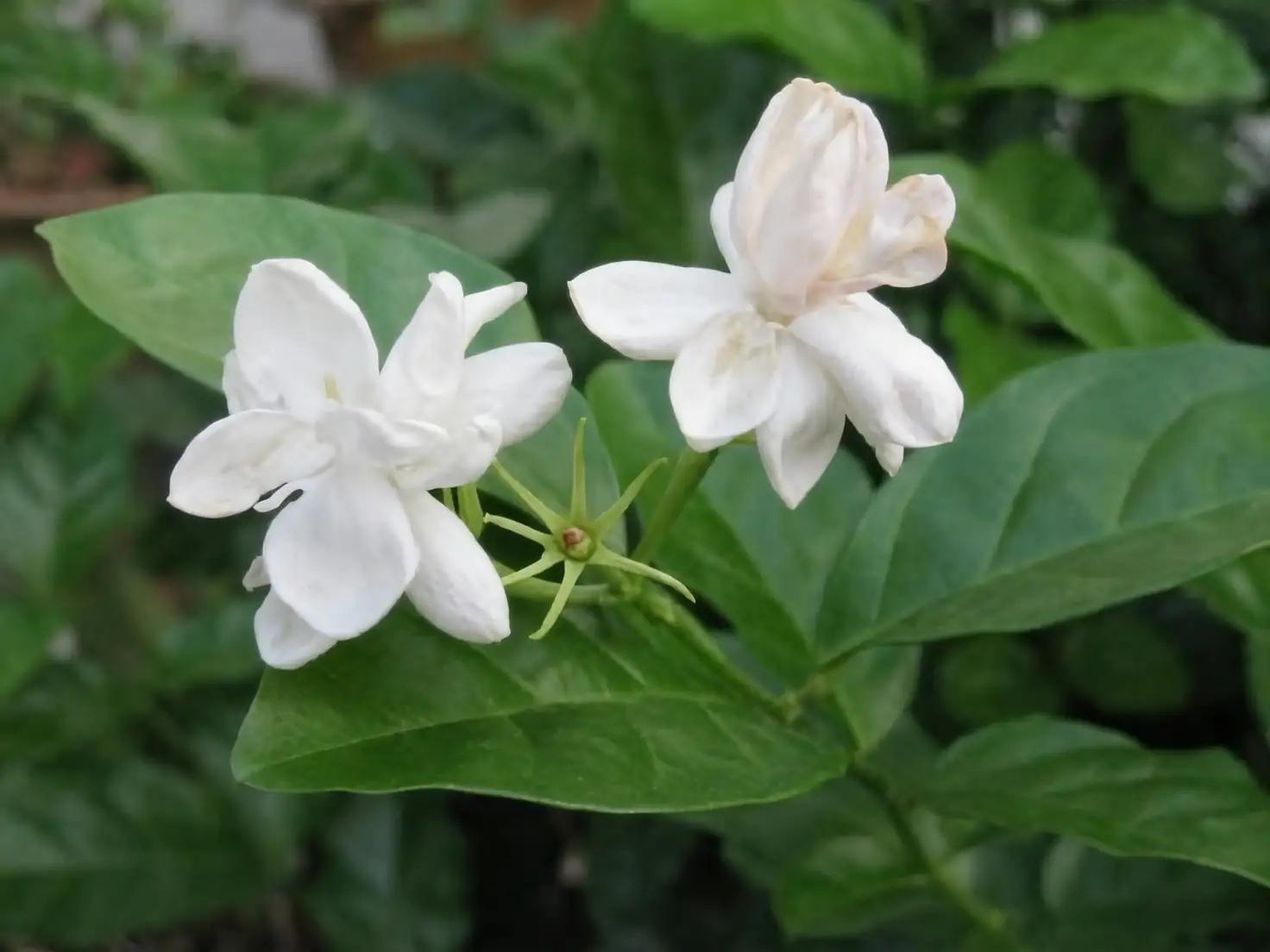
- Double-flowered and rosette forms (e.g., Grand Duke of Tuscany, Belle of India)
- Look: Layers upon layers of petals, like a tiny white rose.
- Vibe: Luxurious and long-lasting; the bloom can hold on the plant for days.
- Science-lite bit: Doubling happens when some reproductive parts “turn into” extra petals (petal-ification), trading pollen for petal count—and that sumptuous, sculpted look.
Fragrance? Both are richly scented. Singles often feel light and luminous; doubles can read denser and creamy-sweet—delicious either way.
Heat-fueled reblooming: how warmth keeps the show going
Arabian jasmine loves sun and sizzle. In strong light and warm conditions (about 25–35°C / 77–95°F), it cycles through new growth and buds repeatedly:
- New growth = next flowers: After a flush, prune to nudge vigorous new shoots—that’s where the next wave of buds forms.
- Warmth and sun: Aim for 6–8+ hours of direct sun. Bright heat keeps metabolism humming and fragrance full.
- Even moisture: Keep the soil evenly moist (not soaked). Drought spells often mean leaf drop and fewer buds.
- Result: From summer into autumn, and nearly year-round in frost-free climates, you’ll enjoy rolling waves of bloom.
Ultra-easy layering: root new plants while still attached
Propagation that feels like a magic trick. No fuss, almost no fail.
- What is layering? You encourage a still-attached stem to grow roots, then cut it free later—instant baby plant, already acclimated.
- How to do it
- Pick a flexible, healthy stem with a leaf node.
- Gently bend it down to a pot of moist, free-draining mix beside the mother plant.
- Slightly nick the underside of the node (optional), dust with rooting powder (optional).
- Pin or weigh the node so it stays in firm contact with the mix; cover lightly.
- Keep evenly moist and bright-warm.
- Timing
- Roots often start forming in 2–3 weeks.
- Separate and pot up comfortably after about 8–10 weeks.
- Tip: Layer a few nodes at once for a fuller, faster new plant.
Grower’s cheat sheet (sun, water, food, snip!)
- Light: Full sun to bright light; 6–8+ hours direct sun = best bloom and fragrance. Partial shade is OK in fierce afternoon heat.
- Temperature: Warm-loving. Happy around 15–24°C (59–75°F) if light is strong; grows best 25–35°C (77–95°F). Protect below 10°C (50°F); frost can kill it. Best outdoors year-round in USDA Zones 10–12 (sometimes warm 9 with protection).
- Water: In active growth, water when the top 2–3 cm (about 1 in) dries; soak thoroughly and drain. In hot spells, potted plants may need water every 2–3 days, sometimes daily in small pots. Lighter watering in winter.
- Humidity: Prefers 50%+; in dry homes, mist in the morning, use a pebble tray, or run a humidifier to deter spider mites.
- Soil: Rich but free-draining; a loam-based mix with perlite/vermiculite (and optional bark), slightly acidic to near-neutral (pH ~6.5–7.5).
- Feeding: Spring through early fall, feed weekly or every 1–2 weeks. If bloom is shy, switch to a bloom-support formula (higher P/K) and ease off nitrogen.
- Pruning: Pinch young tips for bushiness. After each main flush, prune back to spark strong new shoots—the next bloom zone.
- Repotting: Refresh annually in spring or post-bloom. Step up pots modestly (about 2.5–5 cm / 1–2 in wider) to avoid soggy roots.
Common hiccups and quick fixes
- Not flowering?
- Usual culprits: Not enough sun, too much nitrogen, missed post-bloom prune, inconsistent moisture, or temps too cool for bud set.
- Fix: Move to maximum sun, balance feeding, prune after a flush, and keep moisture steady.
- Yellowing leaves?
- Often low light, nutrient stress (especially nitrogen), or watering/root issues. Correct light and moisture; feed sensibly.
- Pests
- Watch for aphids, spider mites (a big one indoors), whiteflies, scale, thrips, and occasional leaf-rollers.
- Response: Improve airflow, rinse foliage, and treat early with insecticidal soap or horticultural oil; repeat as needed.
- Leaf or tip dieback in cold, or spotting in stagnant, wet conditions
- Prevention: Keep warm, use well-drained soil, and avoid water sitting on leaves late in the day.
Culture, symbolism, and “flower language”
- Across Asia, Arabian jasmine crowns ceremonies, perfumes tea, and weaves into garlands and leis. It’s famously iconic as sampaguita in the Philippines and pikake in Hawaii.
- Symbolism: Love, purity, and faithful devotion—virtues celebrated in weddings and festive rites.
- Where did that “flower language” come from?
- Blended roots: Victorian-era floriography met long-standing Asian traditions that prized jasmine’s pure white bloom and gentle strength. Today many gardeners add a modern twist: “sunshine toughness”—give it sun and a good haircut, and it bounces back blooming.
Fast cultivar picks for different looks
- Maid of Orleans (single): Starry, classic jasmine look; abundant clusters and a luminous evening scent.
- Belle of India (often semi-double/double forms): Slender, elegant petals with a refined, layered bloom.
- Grand Duke of Tuscany (double/rosette): Sumptuous, rose-like pompoms; blooms can linger beautifully on the plant.
Where it shines
- Balconies, bright windows, and sun-splashed patios.
- Small trellises or arbors where a light clamber is welcome.
- Warm gardens where summer evenings call for a natural perfume.
Safety note
- Generally considered low-toxicity and widely used to scent tea (flowers only). Still, don’t let pets or kids chew on plants—any foliage may upset sensitive stomachs.
- Traditional cautions highlight that the root may be unsafe to ingest. Avoid medicinal/internal use without professional guidance.
Ready to make your evenings smell like a summer holiday? Give Arabian jasmine sun, warmth, steady water, and a post-bloom trim—and let those waxy white stars turn your nights into a private perfumery. Layer a few stems while you’re at it; by the time the next flush arrives, you’ll have a jasmine chorus.