

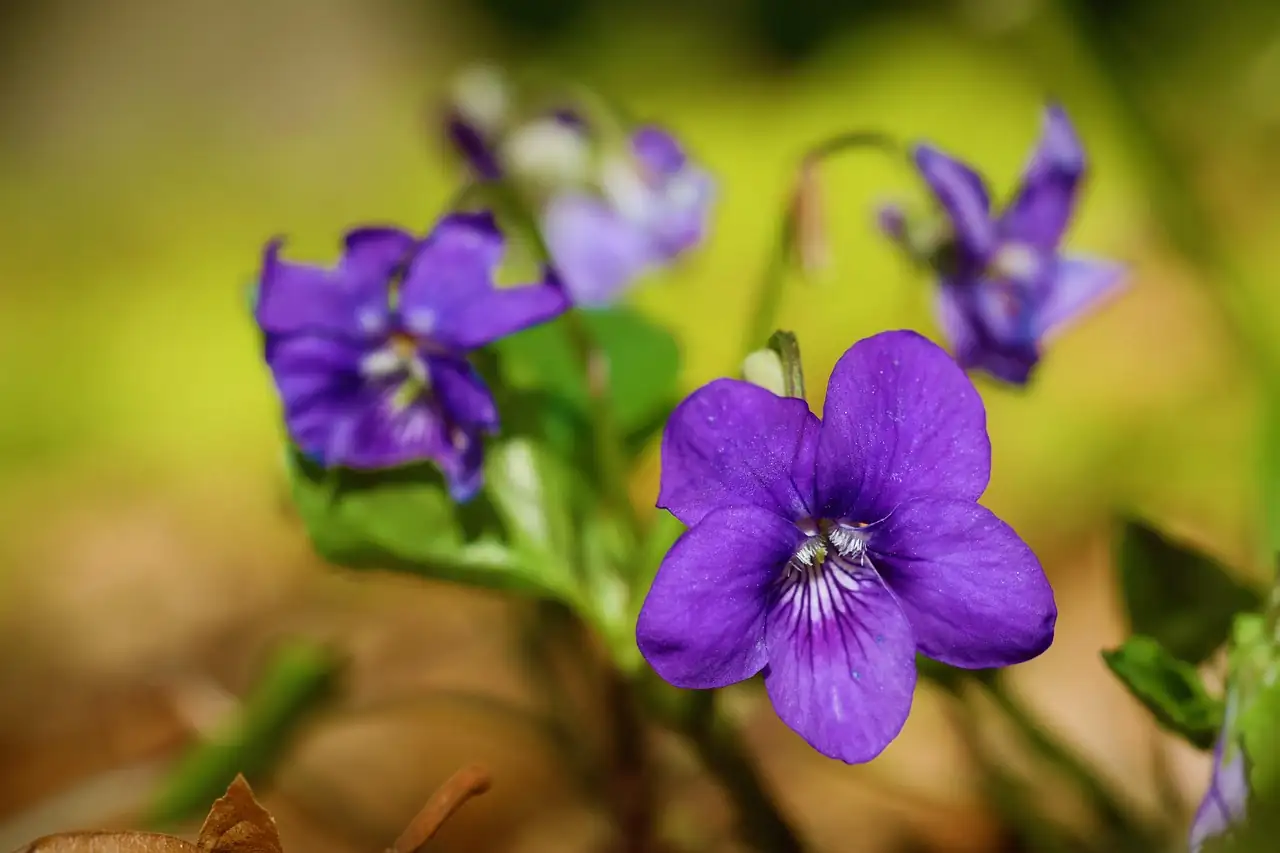
Lean in to sniff a sweet violet, and—poof—the fragrance vanishes. It’s not your imagination; it’s chemistry doing a magic trick. Viola odorata, the classic “English” or “sweet” violet, hides its perfume behind ionones, molecules that briefly switch off your ability to smell them. That ephemeral whisper, plus the plant’s botanical quirks, explains why true violet perfume is one of perfumery’s rarest luxuries—and why most “violet” fragrances you love are crafted with headspace analysis and clever synthetics.
Meet the plant behind the myth
Sweet violet (Viola odorata) is a low-growing, mat-forming perennial native to Europe, North Africa, and West Asia. It thrives in cool, dappled woodland light and carpets spring with dainty, nodding flowers—usually deep purple to violet-blue, sometimes white or palest lavender. The leaves are heart-shaped, softly hairy, and form a lush, ground-covering rosette.
- Height and habit: typically 5–15 cm, spreading gently by stolons
- Best conditions: partial to full shade; fertile, humus-rich, evenly moist soil; cool temps (about 15–20°C)
- Garden perks: edible flowers and young leaves; excellent fragrant ground cover; very cold hardy (USDA 3–9)
Flower vs. leaf: two very different violets
Perfumery often lists “violet” and “violet leaf” as if they’re interchangeable. They aren’t.
- Violet flower note: powdery-sweet, airy, dewy, and romantic—what many people imagine as “classic violet.” Fresh blooms even carry a faint, peppery sparkle.
- Violet leaf note: cool, green, and watery—often described as cucumber-like with a metallic sheen and cut-grass snap. It’s crisp, ozonic, and used as a modern “fresh” accent in many compositions.
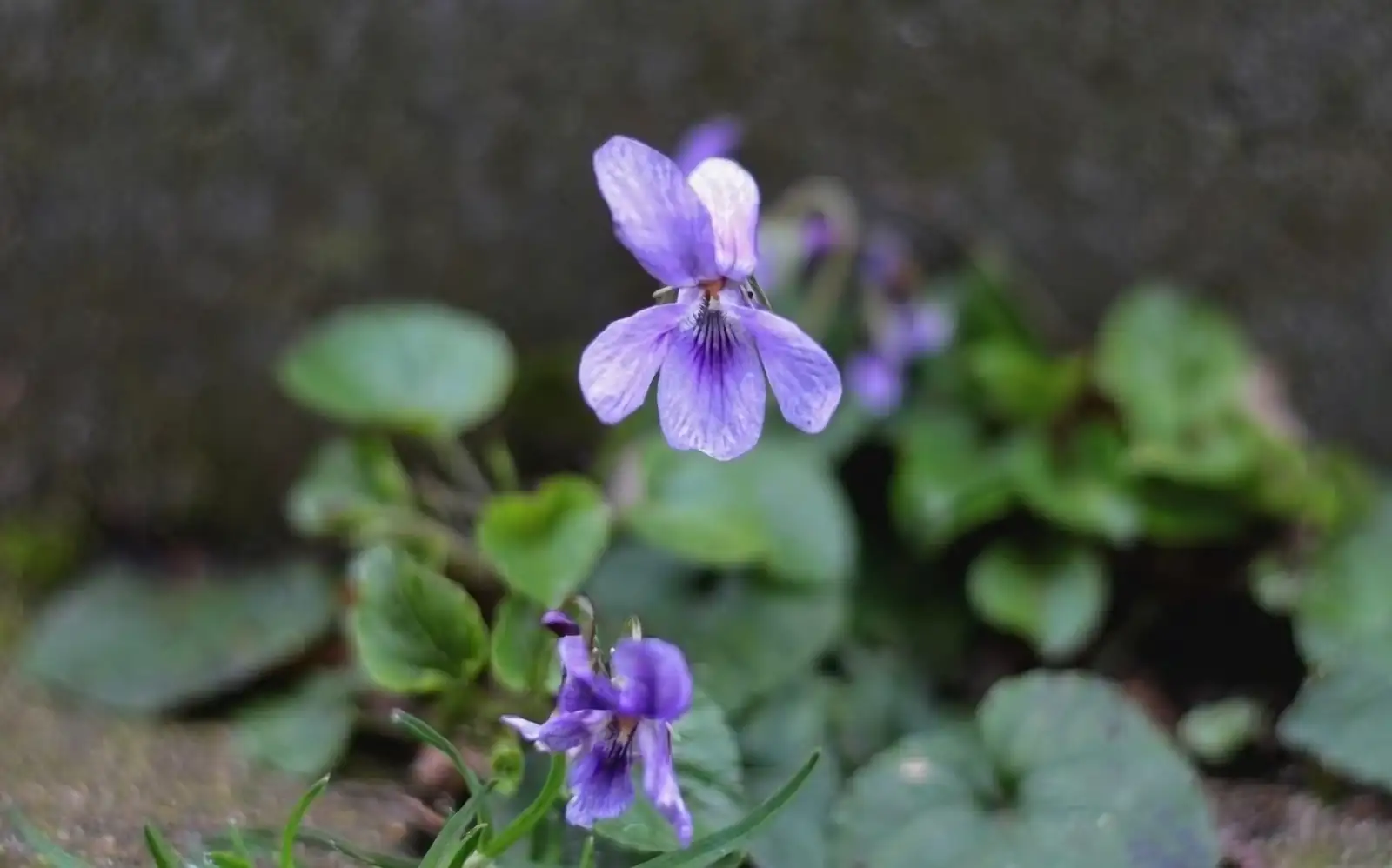
You’ve likely smelled the leaf note in luminous, green-leaning fragrances and the flower note in retro-chic, powdery perfumes—even if both were built without a drop of true flower extract.
The ionone illusion: why violet seems to disappear
The key to the flower’s signature is beta-ionone, part of a family of violet-y molecules (ionones and methyl ionones). These odorants can temporarily desensitize specific olfactory receptors; after your first deep sniff, your nose briefly “goes blind” to them. Give it a few minutes, and the magic returns. This coy hide-and-seek is a hallmark of sweet violet and a reason its scent feels like a memory: present, then gone, then back again.
A quick chemistry sketch:
- Ionones are derived from carotenoids in the plant. Their scent spans from candied-powdery (beta-ionone) to more woody-floral or fruity nuances (alpha- and gamma-ionone, methyl ionones).
- In formulae, tiny tweaks in structure or dose swing the effect from airy makeup-powder elegance to plush, velvety “lipstick” florals or even soft woods.
Why true violet extraction is so costly (and why most “violet” is imagined)
Here’s the perfumer’s headache:
- Vanishingly low yield: Fresh violet flowers contain almost no essential oil. Steam distillation ruins the delicate aroma; solvent extraction historically produced minute quantities and a scent that skewed muddy or leafy rather than that gossamer bloom-in-air.
- Labor and perishability: Violets bruise and fade quickly. It takes an impractical mass of flowers to produce a trace of usable material.
- Reality check: What you can buy naturally and reliably is violet leaf absolute (green, cucumber-metallic). True violet flower absolute is so rare, unstable, and expensive that it’s virtually a unicorn in modern perfumery.
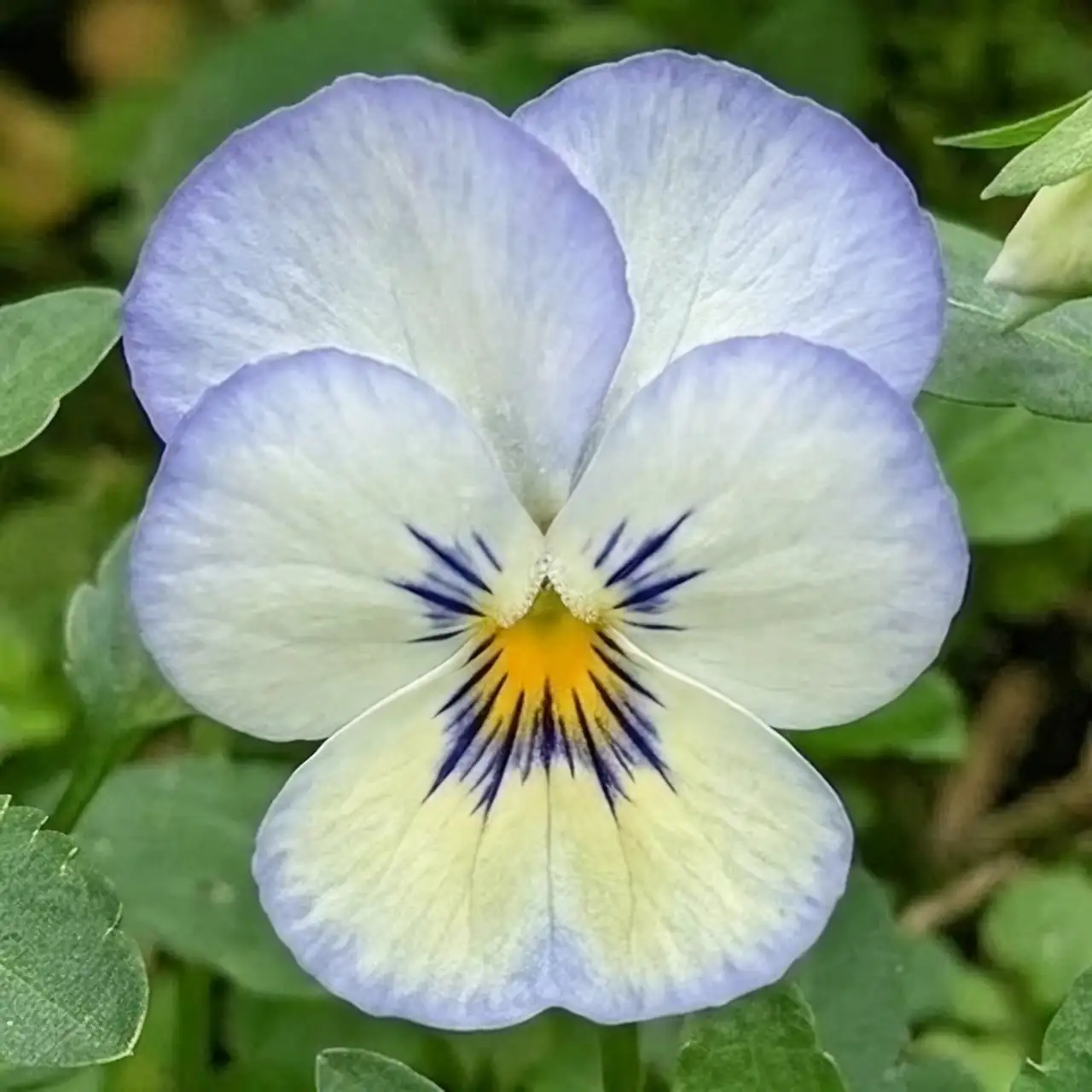
Result: Most “violet” perfumes you love rely on ionones, methyl ionones, and other supporting materials (sometimes with a touch of orris root, rich in violet-like irones) to recreate the flower’s aura.
Headspace to the rescue: bottling a living breath
Headspace technology changed the game. Perfumers place a dome over living blooms and capture the actual scent molecules floating around the flower. Gas chromatography-mass spectrometry (GC-MS) decodes the bouquet: not just ionones, but the delicate trace volatiles that give a violet its dew-kissed lift.
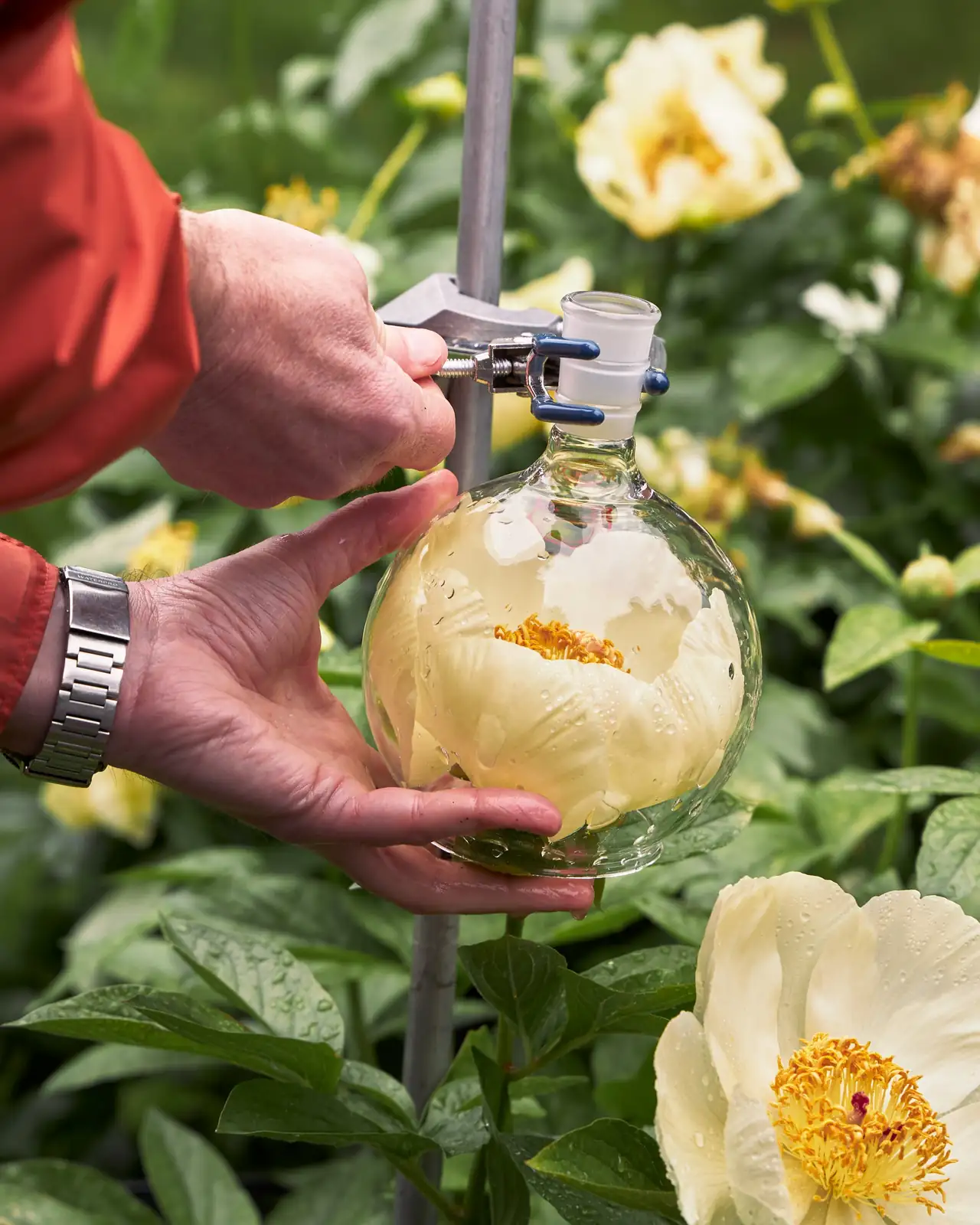
What happens next:
- Analysis: The living “scent map” reveals an orchestra of tiny components that don’t survive traditional extraction.
- Reconstruction: Perfumers rebuild the profile with a palette of safe, stable ingredients—ionones and methyl ionones for the violet heart; airy musks and lactones for the softness; traces of citrusy or green facets to mimic the sparkle.
- Leaf vs. flower: Headspace also helps separate the cool-crisp leaf story from the wistful, powdery flower—each becoming a distinct creative path.
How perfumers paint “violet”
Think of violet not as a single note but as a style with branches:
- Petal-powder classic
- Core: beta-ionone and methyl ionones
- Accents: orris/irones for velvety luxury; rose or heliotrope for makeup-powder nostalgia; soft musks for diffusion
- Mood: vintage lipstick, cashmere powder, candied Parma violets
- Dewy-modern flower
- Core: ionones at airy doses
- Accents: watery musks, muguet materials, pear-like lactones for translucence
- Mood: petal-fresh and luminous rather than retro
- Leafy-green chic
- Core: violet leaf absolute or synthetics that replicate its cucumber-metallic sheen
- Accents: grassy, ozonic, or tea-like notes; crisp woods
- Mood: clean-shirt freshness, often found in contemporary masculinities and greens
Want sniffable contrasts?
- Flower-leaning icons often feel powdery, plush, or “lipsticky.”
- Leaf-forward signatures spotlight cool greenery—the famous effect that helped define fresh-woody masculines and many crisp unisex styles.
Garden to bottle: the paradox of a fragrant edible
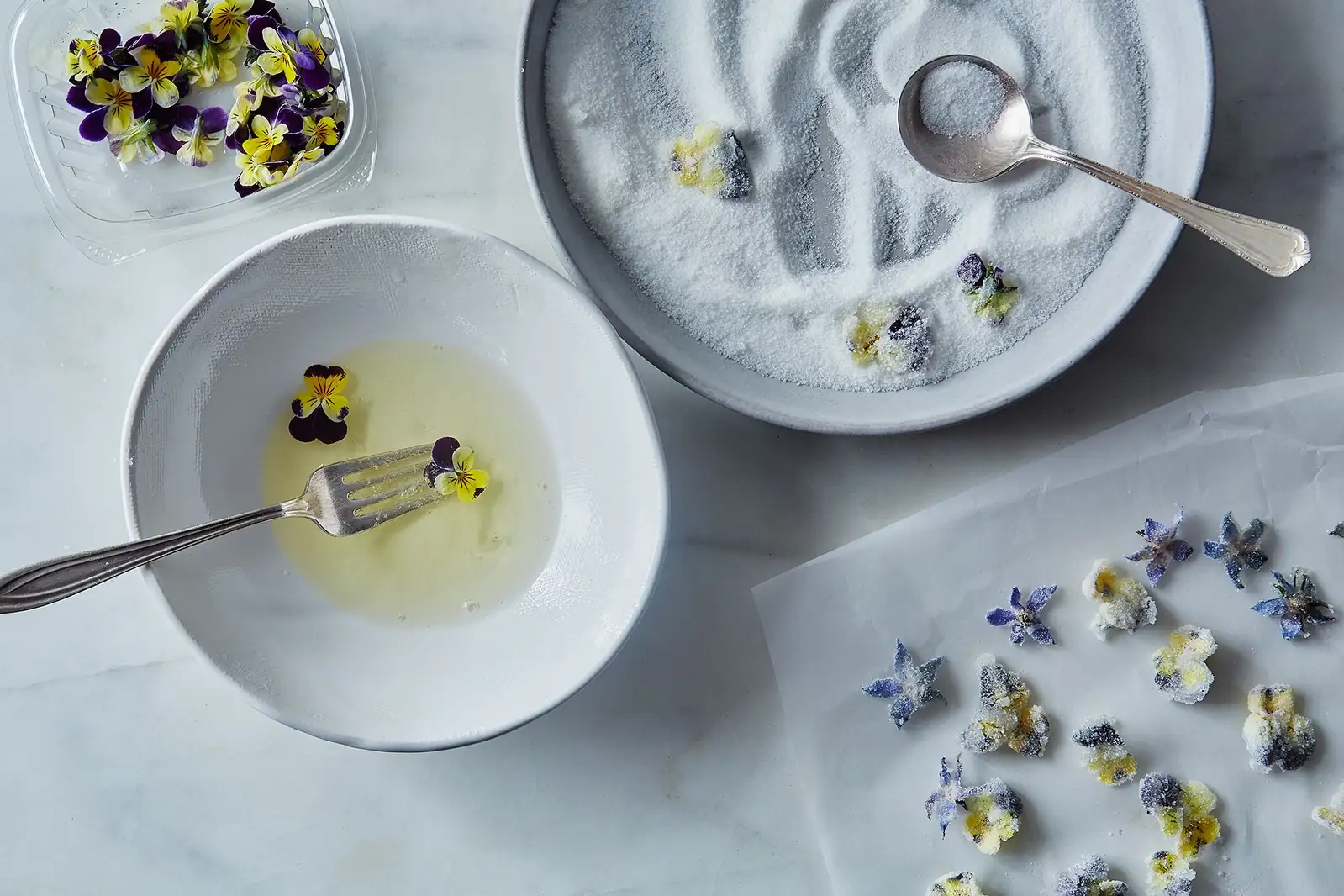
It’s charmingly ironic: in the garden, sweet violets are easy and generous with fragrance; in the still, they’re resistant and secretive.
- Easy to grow: keep soil evenly moist, shade them from harsh sun, and top-dress with compost in spring. They’re hardy, forgiving, and may rebloom in autumn.
- Edible romance: flowers and young leaves are edible—think sugared violets on cakes, spring salads, and violet tea. Avoid the roots, which can upset the stomach.
- Old-world sweets: from crystallized Violettes de Toulouse to chalky Parma Violets, the taste-memory of violet fueled a century of candy and, by extension, a whole genre of perfumery.
Symbolism, straightened out
Violet’s “language of flowers” reputation—modesty, faithfulness, remembrance—is a cultural code, not a botanical fact. In the Victorian era, people used bouquets to send coded messages; shy, nodding violets stood for quiet devotion. Earlier, Greeks and Romans wove violets into myth, and European courts embraced them as emblems of loyalty. History even tucks violets into the Napoleonic romance. These meanings endure because they fit the flower’s behavior: low to the ground, early to bloom, fragrant but elusive.
Quick answers to the most-asked questions
- Why does the smell “disappear” after one sniff?
- Beta-ionone in the flower temporarily dulls the receptors that detect it. Wait a few minutes, and your perception returns—one reason violet feels haunting and hard to pin down.
- If leaf absolute is available, why not just use that for “violet”?
- Leaf absolute smells green-cool and cucumber-metallic—beautiful, but not the powdery-sweet petal impression most people expect from “violet.” Perfumers choose leaf or flower effects deliberately, or blend both for contrast.
- Is natural violet perfume always “better”?
- Not necessarily. The living-flower scent is hard to extract faithfully. Headspace-guided accords built with ionones often smell more like a real violet in the air than ultra-rare natural extracts do.
For the violet-curious nose: how to train your senses
- Smell a living bloom in cool morning air; note the dewy, sugar-powder lift and gentle spice.
- Compare a green-leaning fragrance known for violet leaf to a powdery “violet” floral. You’ll never confuse leaf and flower again.
- Revisit after a few minutes if it “disappears”—you’ve likely ionone-faded your receptors.
Growing and caring for your own Viola odorata (quick guide)
- Light: partial to full shade; woodland dapple is ideal.
- Water: keep soil evenly moist, not sodden; reduce overhead watering to avoid mildew.
- Soil: fertile, humus-rich, well-drained; pH around 6.0–7.0.
- Feeding: compost in spring; optional light liquid feed during growth.
- Maintenance: deadhead spent blooms; thin crowded mats in autumn for airflow.
- Propagation: divide clumps or root runners in spring or fall; seeds will also self-sow via discreet cleistogamous flowers.
Safety and kindness
- Generally non-toxic to people and pets; flowers and young leaves are edible.
- Common garden issues: aphids, mites, slugs/snails; watch for powdery mildew in still, damp air—thin plants and water at the base.
The violet takeaway
Viola odorata is a study in paradox: easy to grow, hard to bottle; unabashedly fragrant, yet teasingly elusive. Ionones lend the flower its powdery halo and its vanishing act, while headspace analysis and modern synthetics help perfumers rebuild the breath of a bloom that refuses to distill. Learn to tell leaf from flower, and the whole violet family opens like a fan—cool green on one rib, tender powder on another—quietly faithful to spring, memory, and the softest kinds of love.


