

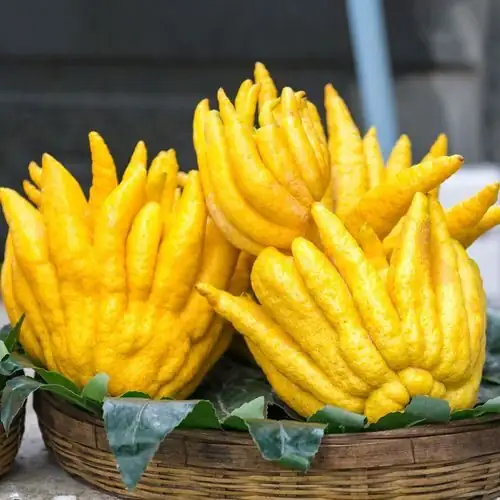
If you’ve ever lifted a Buddha’s hand citron to your nose, you know the moment: a sunburst of sparkling lemon that perfumes the room before you even slice the rind. Citrus medica var. sarcodactylis is scent-forward by design—its fingered, bright yellow fruit is practically an essential-oil bottle in botanical form. Here’s how that perfume works in plain English, how ripeness and storage change the scent, and how growers can coax the most fragrant harvest from this beloved citrus.
What you’re actually smelling: the “band members” of Buddha’s hand aroma
Think of the fruit’s fragrance as a band where each molecule plays a part. The peel carries tiny oil glands loaded with volatiles—lightweight, jump-into-the-air compounds your nose catches fast.
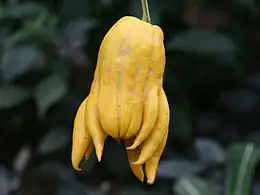
- Limonene: The lead guitarist. Smells like fresh, zesty lemon peel with a clean, slightly woody edge. It’s the dominant molecule in most citrus peels and gives Buddha’s hand its immediate “wow” factor.
- Citral (neral + geranial): The bright vocals. Think lemon drop candy and fresh lemon zest—sweet, tangy, and very “lemon-citrus.” Citral is why a fully yellow Buddha’s hand smells so mouthwatering.
- γ-Terpinene: The rhythm section. A round, citrusy-terpenic tone that fills out the lemon impression and supports limonene’s sparkle.
- α-Terpineol and linalool (traces): The soft-focus lights. Gently floral, slightly lavender/neroli-like accents that add polish and lift.
- Other supporting whispers: Depending on plant, season, and part of the plant, you may catch faint rosy-green notes (geraniol) or violet-powdery nuances (ionones in traces). They’re subtle but help the overall “expensive citrus” vibe.
Together, these notes create a scent that reads even “purer” and cleaner than a regular lemon, with less of the juicy-orange tang and more crystalline, sherbet-bright lemon.
How ripeness reshapes the perfume
The fragrance changes as the fruit matures and as its oils age—just like coffee beans or tea leaves.
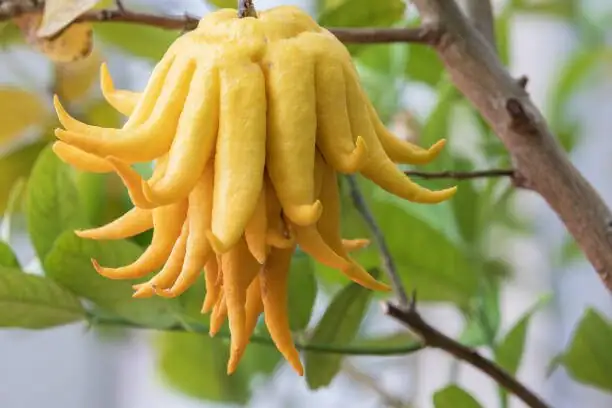
- Early (green to yellowing): Brighter, greener terpenes. More “zesty peel” and piney-fresh tones; less sweet lemon-candy effect.
- Fully ripe (evenly golden yellow, unblemished): Peak perfume. Oil glands are plump, limonene and citral sing, and a single fruit can scent a room for days.
- Overripe or bruised: Oils start oxidizing. The scent dulls, turning pithy, musty, or slightly solvent-like. You lose sparkle and sweetness.
A quick sniff test: if it’s strongly fragrant through the rind and uniformly yellow, you’re at scent peak.
Storage matters: keeping the sparkle intact
Volatile citrus oils are fragile. Heat, harsh light, and stale air can flatten the aroma or push it into off-notes.
Do this to preserve fragrance:
- Keep fruit cool, dark, and ventilated: Aim for a breathable bowl in a shaded spot around 8–12°C (46–54°F) for harvested fruit. For potted display plants in winter, a bright, cool place at 5–12°C (41–54°F) holds fruit and reduces stress.
- Handle gently: Don’t squeeze or scrub hard—the oil glands sit right at the surface.
- Avoid sealed plastic: Traps moisture and speeds mold; use a loose paper wrap if needed.
- Keep off sunny windowsills: UV and heat speed oxidation.
Avoid:
- Extreme cold: Prolonged temps near freezing can damage the peel and mute scent.
- Hot kitchens: Warm counters fade top notes fast.
- Long storage after cutting or zested surfaces: Exposed oils oxidize quickly—use promptly.
Tip for cooks: Capture peak aroma by making citrus sugar or salt right after zesting; the crystals “lock in” those volatiles.
The grower’s playbook for maximum fragrance
Buddha’s hand is an evergreen citrus shrub from tropical regions of China and India, best grown in containers for easy winter protection. Strong scent starts with plant health plus a few aroma-forward choices.
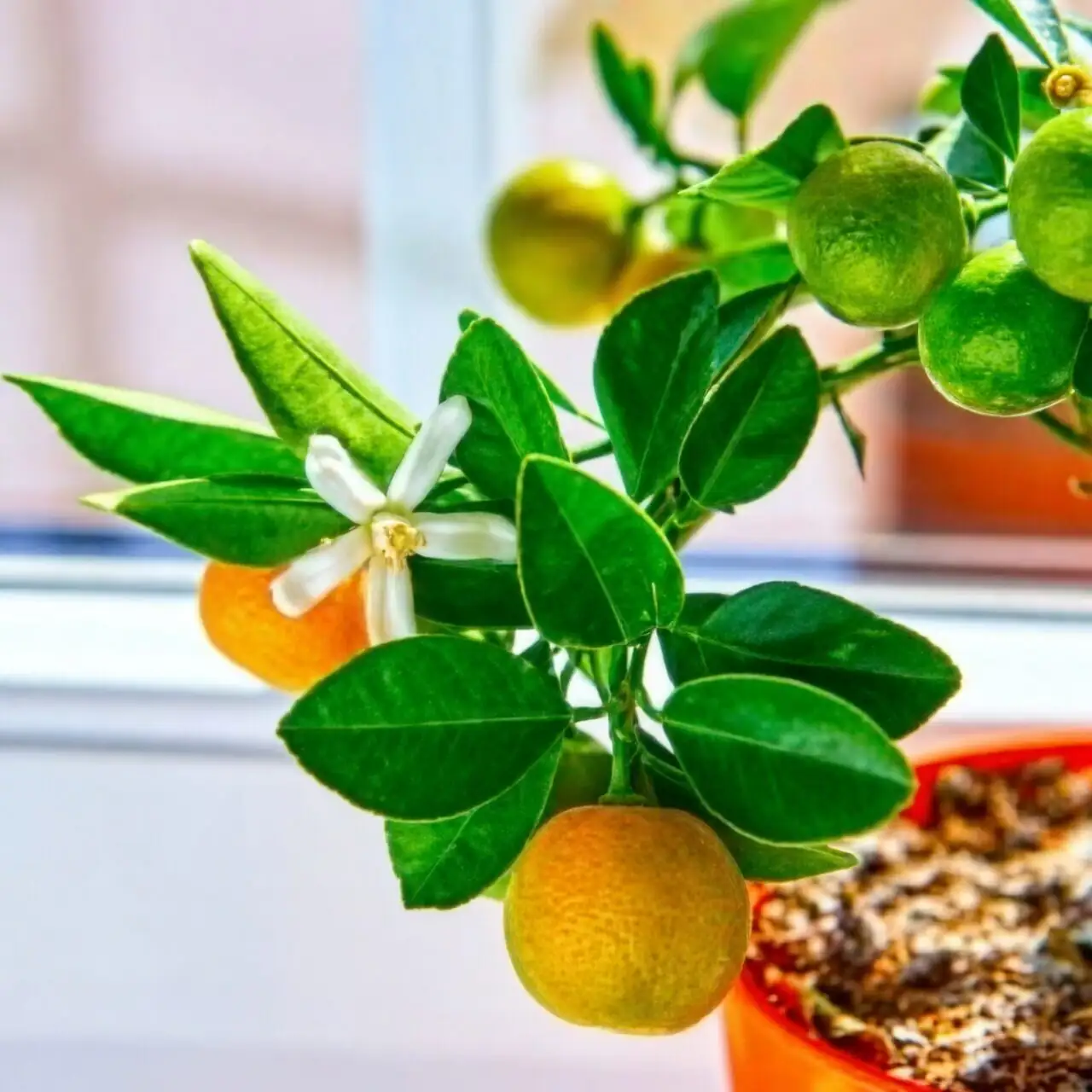
Light, temperature, and airflow
- Light: Bright light with some direct sun is ideal. Provide light midday shade in harsh summer sun to prevent leaf scorch.
- Temperature: Warm-growing at 22–28°C (72–82°F). Avoid prolonged indoor lows below 8°C (46°F) or highs above 35°C (95°F). Cold injury can occur below about 4°C (39°F).
- Airflow: Good ventilation reduces pests and keeps foliage dry and fragrant.
Why this boosts scent: Healthy, sun-fed rind develops fuller oil glands; heat extremes and stress can mute perfume or cause fruit drop.
Watering and soil (this is the make-or-break)
- Watering mantra: Water thoroughly, then wait until the top layer begins to dry. Keep evenly moist in active growth; a bit drier in winter. Never let the pot sit in water—waterlogging is a common trigger for leaf and fruit drop.
- Soil: A fertile, free-draining, slightly acidic mix—loam-based soil with compost/leaf mold plus coarse sand for drainage. Avoid alkaline media.
Why this boosts scent: Stable moisture and good drainage prevent stress, allowing fruits to reach full color and oil richness.
Feeding for fragrant fruit
- Year 1 after potting: Skip fertilizer.
- Year 2: Feed about every 2 weeks during active growth with a citrus fertilizer or balanced feed that includes micronutrients.
- Year 3 onward: Pause feeding when flower buds appear; once fruit has set, feed about weekly during active growth.
- Advanced tweak: Some growers apply a monopotassium phosphate foliar spray 1–2 times at bud stage to support fruit development (follow label directions).
Pruning, thinning, and fruit quality
- Thin smartly: Reduce some spring blossoms and keep more of the summer set for better-shaped, better-quality fruit. Aim for about one fruit per branch.
- Structure first: In early spring (before new growth), remove crowded or weak branches and keep shorter fruiting spurs. Light summer pruning maintains shape and airflow. Preserve strong autumn shoots—they often fruit next year.
Why this boosts scent: Fewer, better-fed fruits concentrate resources into rind quality—where the perfume lives.
Repotting rhythm
- Repot about every 2 years in early spring into a slightly larger container with fresh, free-draining mix. Lightly prune the top to balance any root work.
Pest watch, because pests steal perfume
- Common culprits: Aphids and scale. They exude sticky honeydew that invites sooty mold, muting leaf respiration and overall vigor.
- Early action: Improve airflow, prune dense spots, and treat with citrus-safe horticultural oil/soap as directed. Copper products may be used if fungal issues arise.
Harvest timing and kitchen tricks for peak aroma
- Harvest cue: Even, bright yellow fruit, strongly fragrant through the peel.
- Best time to pick: Cool morning or evening to avoid volatilizing top notes.
- Quick wins with the rind:
- Candy it: Classic way to preserve perfume in a stable, delicious form.
- Zest into sugar or salt: Store sealed; the aroma intensifies over days.
- Infuse: Spirits, syrups, honey, or tea blends capture the high notes beautifully.

Note: The fruit is mostly rind and pith with minimal pulp—that’s normal and exactly why the scent is so intense.
Safety notes
- Generally non-toxic and the rind is widely used in food.
- Citrus oils can irritate sensitive skin; wash hands after heavy handling.
- Curious pets that chew plants may get mild stomach upset—discourage nibbling.
A quick profile for context
- Common names: Buddha’s Hand, Buddha’s Hand Citron, Fingered Citron
- Family/genus: Rutaceae, Citrus
- Habit: Evergreen, woody shrub; typically 60–150 cm (2–5 ft) in containers with glossy green leaves and multiple flushes of sweetly fragrant blossoms.
- Best placement: Outdoors in warm seasons with bright sun and light midday shade; indoors for winter at 5–12°C (41–54°F) near a bright east/south window.
Culture and “flower language”
In East Asia, Buddha’s hand symbolizes good fortune, longevity, and blessings—its fingered shape resembles a hand offering benediction. When displayed during festivals or the Lunar New Year, it’s not just decoration; it’s a scented wish for prosperity and peace. The “language” here is visual and aromatic rather than floral—few fruits communicate so clearly, simply by looking and smelling auspicious.
Troubleshooting scent: quick diagnostic
- Weak aroma, pale color: Increase light (with gentle midday shade), check feeding schedule, and avoid overwatering.
- Fruit drop before yellowing: Improve drainage, water consistently, and keep temperatures steady.
- Sooty leaves, dull scent: Check for scale/aphids and treat early; rinse leaves gently after treatment to restore leaf shine and respiration.
The takeaway
To unlock the Buddha’s hand’s legendary scent, grow it bright, warm, and steady; water with care; thin for quality; and harvest fully golden fruit. Store cool and dark, handle like a ripe peach, and capture the perfume immediately in sugar, salt, or candy. Do that, and a single fruit can perfume your space for days—living proof that great citrus is 90% rind and 100% magic.