
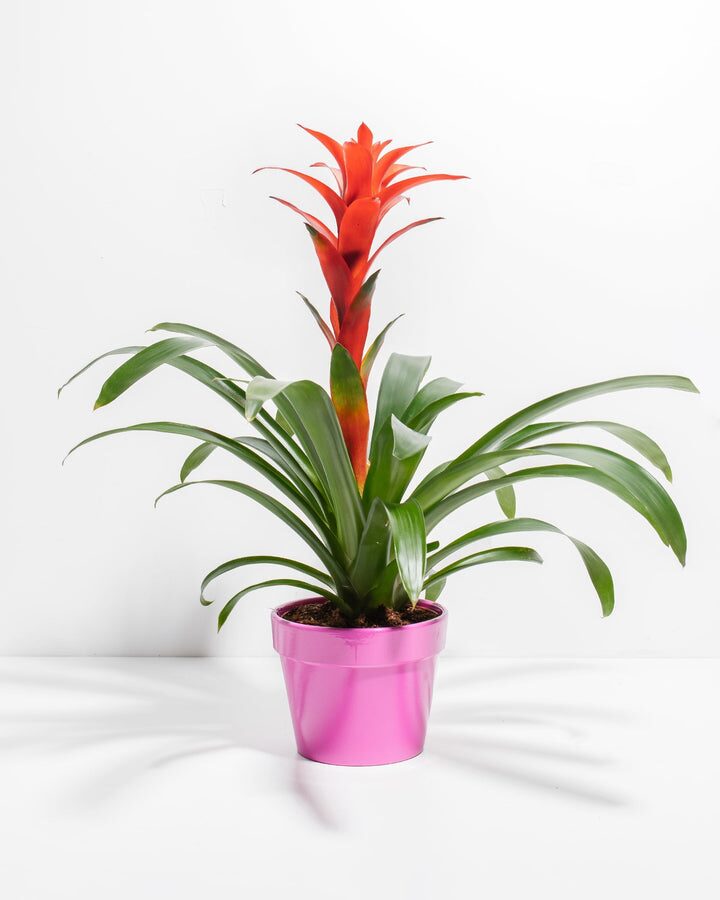
Guzmania insignis bursts onto a windowsill like a tiny red comet—and in Chinese it goes by the unforgettable name “Hong Yun Dang Tou” (鸿运当头). Roughly, it means “good fortune right at the forefront” or, more poetically, “rising luck right on top.” One look at its upright scarlet bracts and you see why: the plant wears its luck like a crown.
While Guzmania’s roots trace back to the Andes of South America, it has been joyfully adopted across Chinese-speaking cultures as a festive gift plant. Its bold, long-lasting display brings a celebratory spark to homes and businesses alike—especially around the New Year.
What’s in the name: Hong Yun Dang Tou
- Hong Yun (鸿运) = grand good fortune, auspicious luck
- Dang Tou (当头) = right at the head/top/forefront
Flower language in China isn’t a single codified system; it often grows from color symbolism, auspicious wordplay, and visual metaphors. Here, the message is delightfully literal: Guzmania’s bright red “flower” (actually bracts) rises straight up from a neat rosette, like a torch or pennant declaring, “Luck leads the way.”
- The red bracts: Red is the color of prosperity, joy, and celebration. In homes and shops, a red focal point signals vitality and success.
- The upright form: The arrowing, vertical spike suggests momentum, elevation, and a good start—ideal for new beginnings.
- The timing: These bracts are long-lasting and often seen in early spring under indoor culture—perfectly in step with Lunar New Year.
Botanical note: The true flowers are small and nestled within the bracts. Guzmania forms a tidy rosette of glossy leaves with a central “cup”—a natural tank that holds water. After blooming, the mother rosette slowly declines, but it produces offsets (pups) that carry on the show.
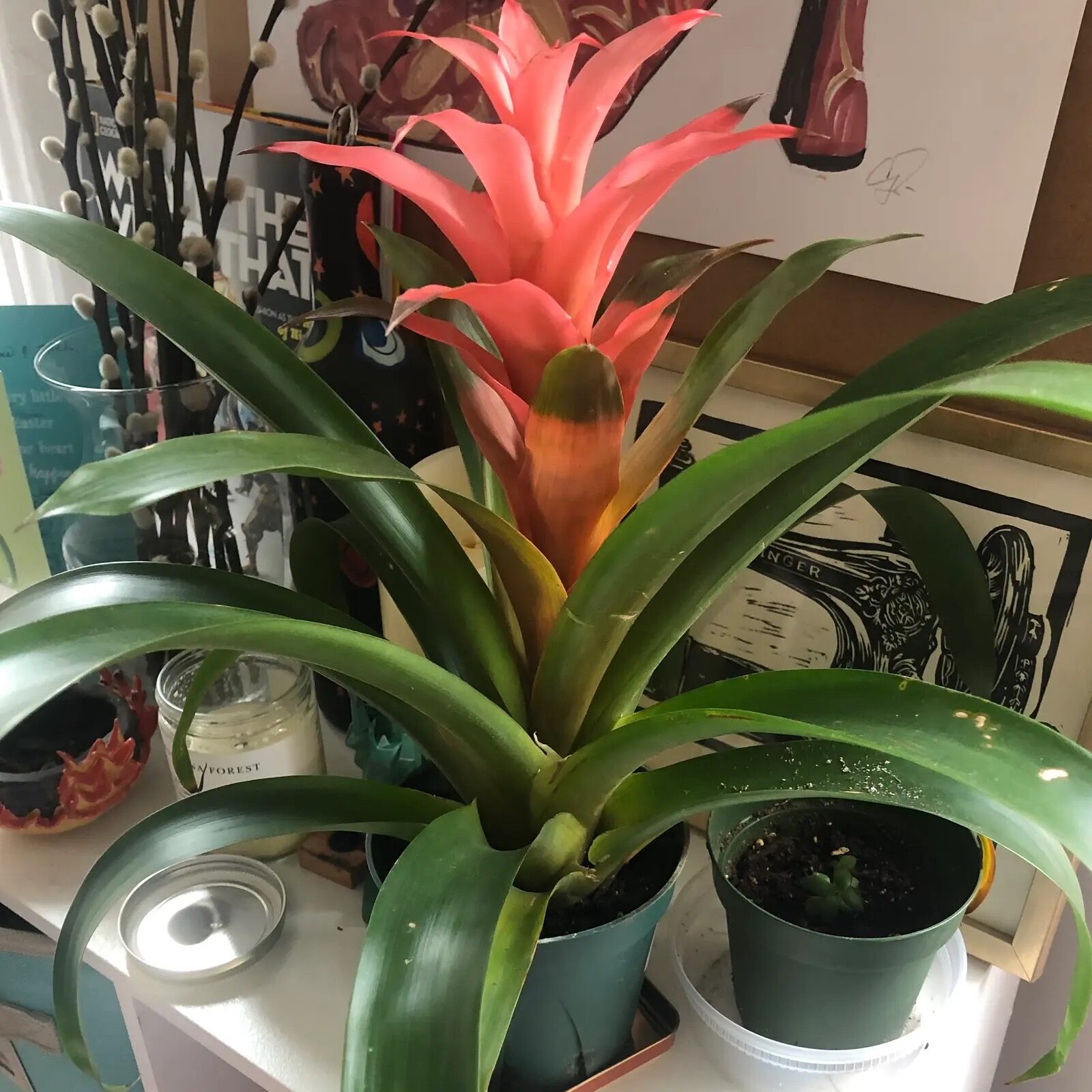
Flower language, unpacked
- How it arose: Rather than a strict handbook of meanings, Chinese “flower language” often springs from how a plant looks, what its name sounds like, and its festive resonance. Guzmania’s name and posture make it a model of “luck rising to the top.”
- What it conveys today: Good fortune, prosperity, and thriving business—ideal for doorways, reception desks, living rooms, and anywhere a celebratory accent meets bright filtered light.
Perfect moments to gift “rising luck”
- Lunar New Year: A classic centerpiece to welcome prosperity into the year ahead.
- Store openings and business launches: Place at reception or near the main entrance to signal success and draw auspicious attention.
- Housewarmings: A bright, space-conscious gift for a sunny, filtered-light spot.
- Promotions, graduations, or new roles: The upright red spike feels like a visual “level up.”
Gifting etiquette and tips:
- Choose a symmetrical rosette with firm, glossy green leaves and an upright, sturdy spike; bracts should be bright red with no blemishes or signs of chilling.
- Dress the pot in red and gold wraps or a lacquered cachepot for maximum festivity.
- Add a simple blessing on the card, e.g., “鸿运当头, 大吉大利” (Luck to the fore, great fortune and success).
- Include a one-line care note: “Bright, filtered light; keep the leaf cup water fresh; avoid cold drafts.”
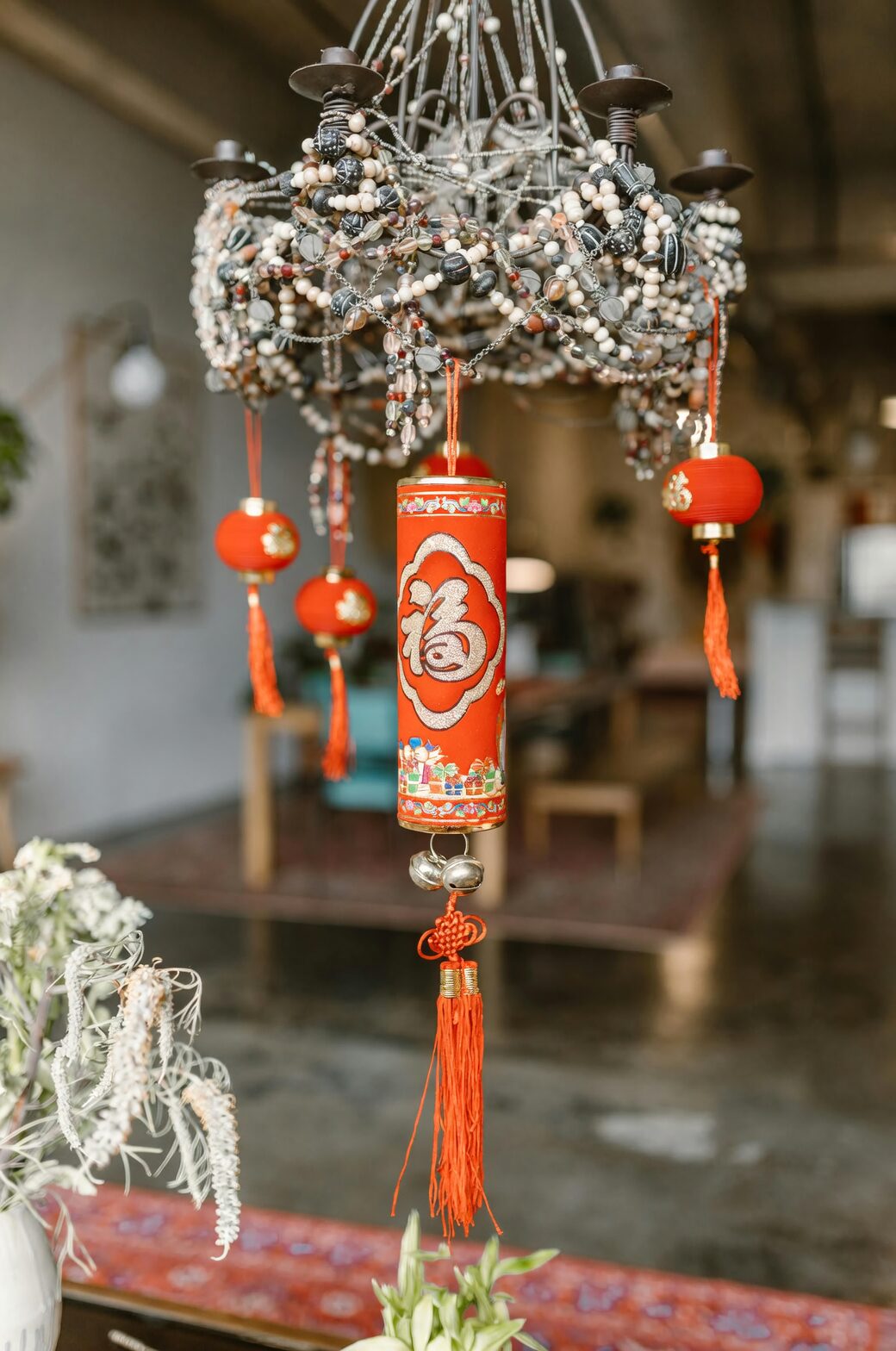
Feng shui placements that align with plant health
Think harmony between energy flow and horticulture—good qi and good care go hand in hand.
Where it shines (with bright, indirect light and warmth):
- Entry or foyer (Ming Tang): A welcoming red beacon to “call in” auspicious energy—place where it catches the eye, not in the door’s direct draft.
- South sector (Fame/Recognition): Red fire energy suits this zone; provide filtered light to avoid summer scorch (about 50% shade and good airflow).
- Southeast sector (Wealth/Prosperity): A living emblem of growth for shared spaces like the living room; an east-facing window is often ideal.
- Office reception or desktop: Signals rising luck for business—keep away from chilly air-con blasts and harsh sun.

Avoid:
- Harsh midday/afternoon sun in summer (can scorch bracts and leaves).
- Dark corners (colors dull, vigor drops).
- Cold window glass at night in winter, or any spot below 10°C/50°F.
- Stagnant water sitting in the central cup for long periods.
Quick care (because luck loves good stewardship)
- Light: Bright, filtered/indirect light. In winter, give the brightest spot you can but keep foliage off cold panes; in summer, avoid strong midday sun.
- Temperature: Warmth-loving—16–28°C (61–82°F). Keep above 10°C (50°F).
- Humidity: Moderate to high is best; light misting helps in hot weather or dry autumn air.
- Watering:
- Keep the potting mix lightly moist in spring; never soggy.
- The central leaf cup can hold water—refresh regularly to prevent stagnation. If the cup dries out, leaves can dull and yellow.
- In winter, growth slows—let the mix dry slightly between waterings.
- Feeding: During active growth, feed every ~2 weeks with very dilute balanced fertilizer (slightly higher P/K supports blooming). Apply to the mix and/or lightly into the cup; avoid strong concentrations.
- After flowering: The mother rosette declines and pups form at the base. When pups are about 10–12 cm tall, separate in spring, pot in a loose, airy mix, and keep warm (20–25°C/68–77°F) with higher humidity. Rooting takes about a month—an elegant symbol of continuity and renewal.
- Grooming: Remove yellowing leaves promptly and keep foliage glossy by wiping with a soft, damp cloth.
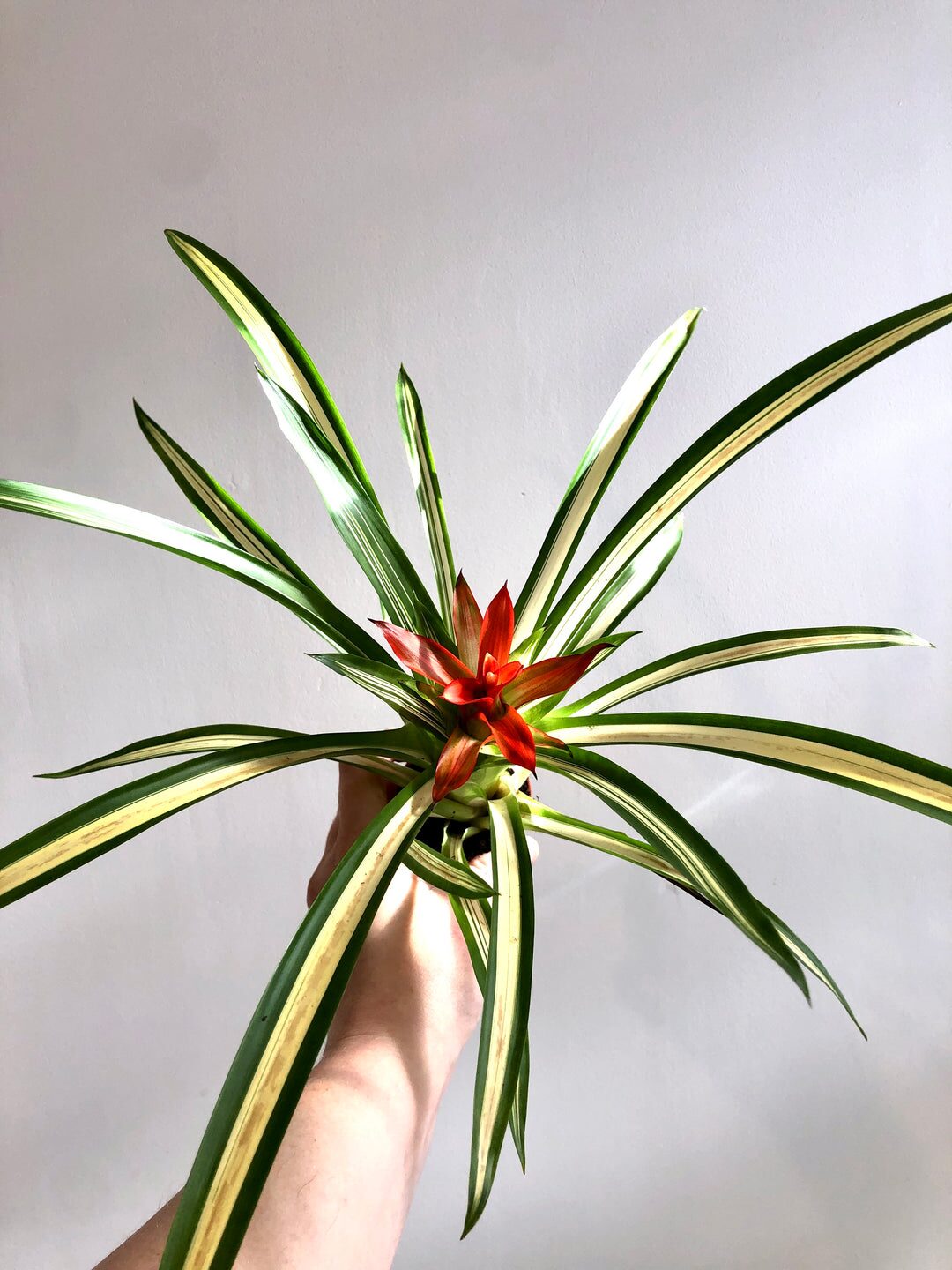
Selecting the best “Hong Yun Dang Tou”
- Look for:
- A tidy, symmetrical rosette; firm, glossy leaves without tears or spots.
- An upright, sturdy spike with vivid red bracts—no wilting or cold damage.
- A size that suits indoor life (commonly sold in 12–15 cm/4.7–5.9 in pots).
- Growing medium: Choose a loose, airy, fast-draining mix—peat/leaf-mold with coarse sand, or a bromeliad/orchid-style blend.
FAQ: Why are my Guzmania leaves turning yellow?
- Most often:
- Too much direct summer sun (scorch). Move to bright, filtered light.
- The central cup dried out. Keep a little clean water in the cup and refresh it regularly.
- Normal post-bloom aging. The mother rosette naturally declines while pups take over.
- Low light can also contribute—brighten the spot gradually.
A final flourish
Guzmania insignis doesn’t just hint at luck—it hoists it like a banner. Its upward-sweeping red bracts perform the very message its name proclaims: luck at the forefront. Place it where you’ll see it daily, keep its cup water fresh and its light filtered, and let this tropical “torch” warm your space with color, confidence, and that unmistakable feeling of rising fortune.