

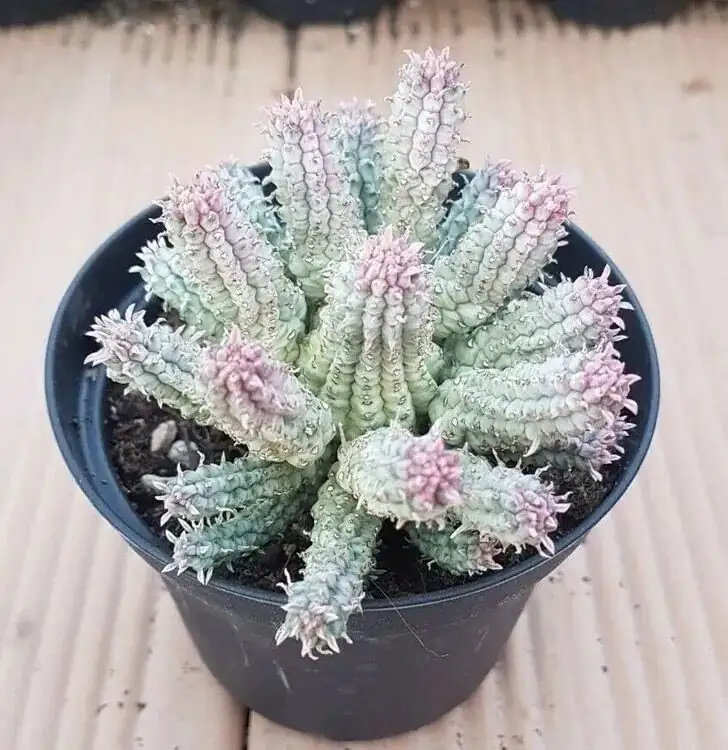
If a corn cob, a coral reef, and a candelabra had a tiny houseplant baby, you’d get Euphorbia mammillaris. Better known as Red Coral Spurge (aka “Corn Cob Euphorbia”), this South African oddball wins hearts with ribbed, gray‑green stems bristling with short red spines, surprising “flowers” that aren’t really flowers, and a branching habit that turns a single wand into a sculptural clump. It’s quirky, tidy, and happiest basking in bright light—perfect for a sunny sill with a taste for the unusual.
Meet Red Coral Spurge (Euphorbia mammillaris)
- Origin: Cape Provinces of South Africa
- Family: Euphorbiaceae (not a cactus, even if it looks like one)
- Look: Compact, upright, ribbed stems in a gray‑green hue, edged with short red to reddish‑brown “spines”
- Size: Typically to about 30 cm (12 in) tall; clumps can spread 20–40 cm (8–16 in) wide over time
- Vibe: Strongly architectural—like living modern art for bright windows
The Oddities Roundup
1) Milky latex: the houseplant with built‑in “do not touch” signage
Euphorbia mammillaris bleeds a white, milky sap when nicked. It’s the plant’s self‑defense system—effective, and irritating to skin and very dangerous to eyes. Handle with gloves and avoid touching your face. Snip, then let any cuts dry and callus before rooting.

2) Cyathia “flowers”: the decoy blossoms
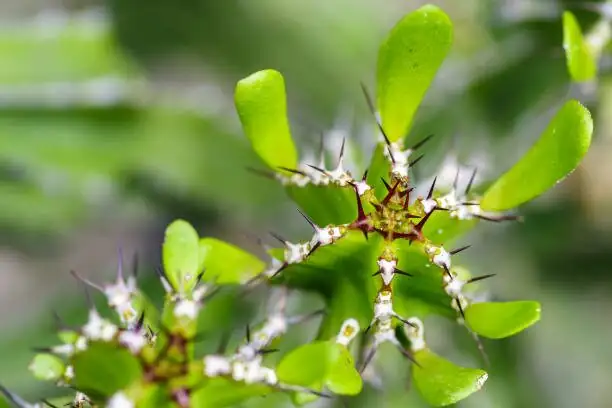
Those tiny, easily missed blooms at the stem tips? They’re cyathia—specialized Euphorbia structures, not typical petals. Expect yellowish‑green accents from spring to summer (timing is often variable indoors). Think of them as minimalist jewelry on an already striking outfit.
3) Red spines: fierce—yet not quite spines
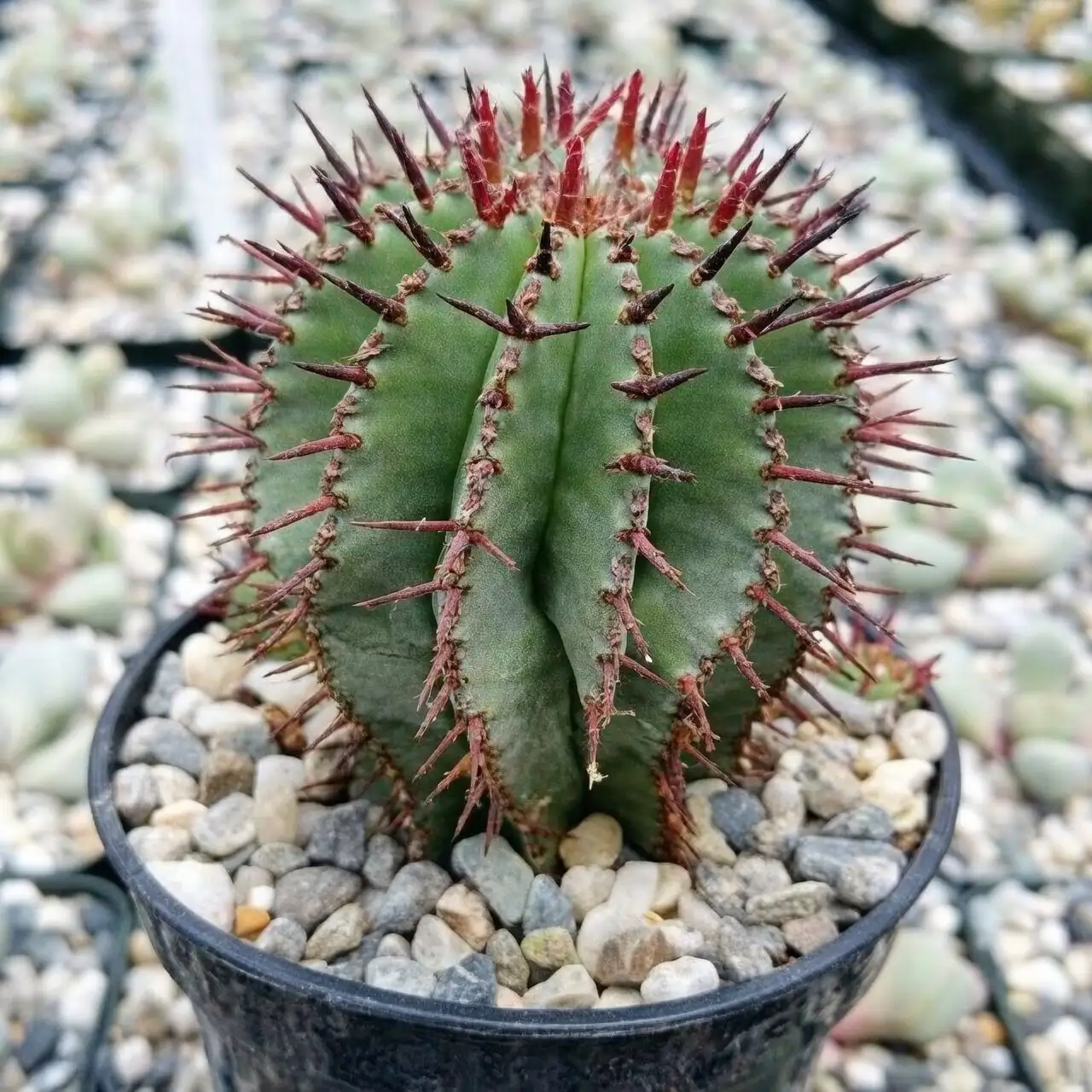
The short red to reddish‑brown prickers aligned along the ribs give a coral‑like sparkle. They’re often mistaken for cactus spines, but in Euphorbia they’re better thought of as hardened, spine‑like remnants—more for looks than for serious defense. Still: they can prick, so go easy.
4) Sun‑stress color play
The base color is a dignified gray‑green, but strong light can deepen the contrast and make those red “spines” pop. In very bright, cool conditions, you may even see a subtle blush on stem tips. Variegated selections are notorious for pink highlights under sun—acclimate slowly to prevent scorch.
5) Branching habits: from wand to chorus line
It often starts as a single column, then branches into a tight clump over time—like a chorus line of little corn cobs. The silhouette stays neat and vertical, with a pleasing rhythm of ribs and spines. You can prune to shape, and it’ll respond by branching more.
Care, without the drama
Light
- Bright light to full sun; aim for 4–6+ hours of direct sun daily.
- Acclimate to stronger sun gradually to avoid scorching.
Water
- Water thoroughly, then let the mix dry out completely before watering again.
- Typical rhythm: every 10–21 days in spring–summer; every 3–6 weeks in winter, depending on light and warmth.
- Never let the pot sit in water.
Soil
- Very fast‑draining cactus/succulent mix.
- Boost drainage with mineral grit or pumice.
Temperature and humidity
- Prefers 18–30°C (64–86°F).
- Keep above 10°C (50°F); not frost hardy (USDA 10–11).
- Low to average indoor humidity suits it fine; stagnant dampness is a no‑go.
Feeding
- Light touch: diluted cactus fertilizer (about 1/4–1/2 strength) every 4–6 weeks in spring–summer.
- Skip feeding in winter.
Pruning and propagation
- Prune to shape or remove damaged stems—wear gloves and eye protection.
- For cuttings: allow cut surfaces to dry and callus for several days, set in a dry, gritty mix, and begin very light watering only after roots form.
Repotting
- Every 2–3 years or when root‑bound, ideally in spring.
- Choose a pot with drainage; size up just one step to reduce rot risk.
Styling and display ideas
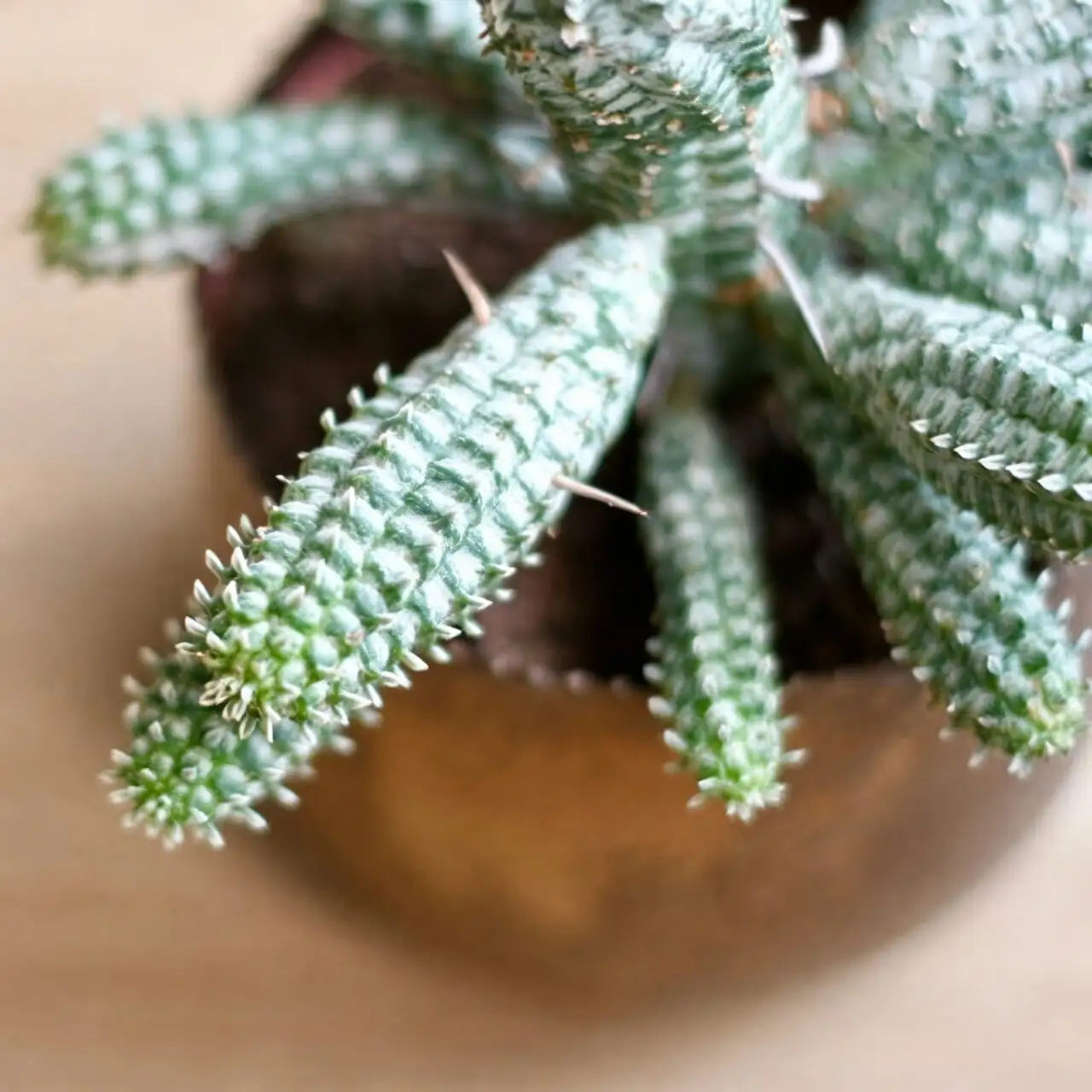
- Line up a trio on the sunniest windowsill for instant architectural drama.
- Use a low, wide planter with sandy top‑dress and a few lava rocks for a desert‑gallery vibe.
- Summer outdoors on a warm, sheltered patio; bring inside before nights dip below 10°C (50°F).
Buying and plant health checklist
- Choose plants with firm, unwrinkled stems and even color.
- Avoid soft spots, blackened bases (rot alert), or cottony mealybugs tucked into ribs.
- Common pests: mealybugs and scale. Treat early with isopropyl alcohol swabs or horticultural soap.
- Biggest killer: root rot from cold, wet soil—fight it with fast drainage, warmth, and patience between waterings.
Safety first
- Toxic/irritant latex sap. Keep away from children and pets.
- Wear gloves; avoid contact with eyes and broken skin.
- If a stem breaks, blot sap with a paper towel and let it dry.
A quick year‑round playbook
- Spring: Increase light and watering; repot if needed; begin light feeding.
- Summer: Maximize sun; water only when fully dry; monitor for pests.
- Autumn: Taper feeding; reduce watering.
- Winter: Keep bright but much drier; protect from cold and drafts.
FAQ, fast
- Is it a cactus? No. It’s a Euphorbia (spurge). It mimics cacti in shape—a case of convergent evolution—but has milky sap and cyathia instead of typical cactus flowers.
- Why is my plant soft at the base? Likely rot from overwatering or cold, wet soil. Stop watering, improve light and warmth, and if needed, save healthy tips as cuttings and re‑root in a dry, gritty mix.
- Can I touch the red spines? Best not. They can prick, and broken stems release irritating sap. Use gloves and tools when moving or pruning.
- How big will it get? Around 30 cm (12 in) tall, forming clumps about 20–40 cm (8–16 in) wide over time.
Meaning and lore
With its bristling ribs and drought‑tough poise, Red Coral Spurge often symbolizes resilience and protection—a pint‑sized fortress in a pot. Its cactus‑like disguise tells a bigger story too: many Euphorbias evolved similar silhouettes to true cacti despite being unrelated, a botanical plot twist called convergent evolution. Looks alike, lineage apart.
Fun facts
- Euphorbias can look startlingly cactus‑like even though they’re distant relatives—evolution found the same desert‑smart shapes twice.
- Those “flowers” are cyathia: Euphorbia’s clever, pared‑down bloom structures that put function over frills.
Quirky, compact, and characterful, Euphorbia mammillaris makes an easygoing companion for sunny spaces—just add bright light, fast drainage, and a dash of respect for that milky latex, and you’ve got living sculpture with a sense of humor.