

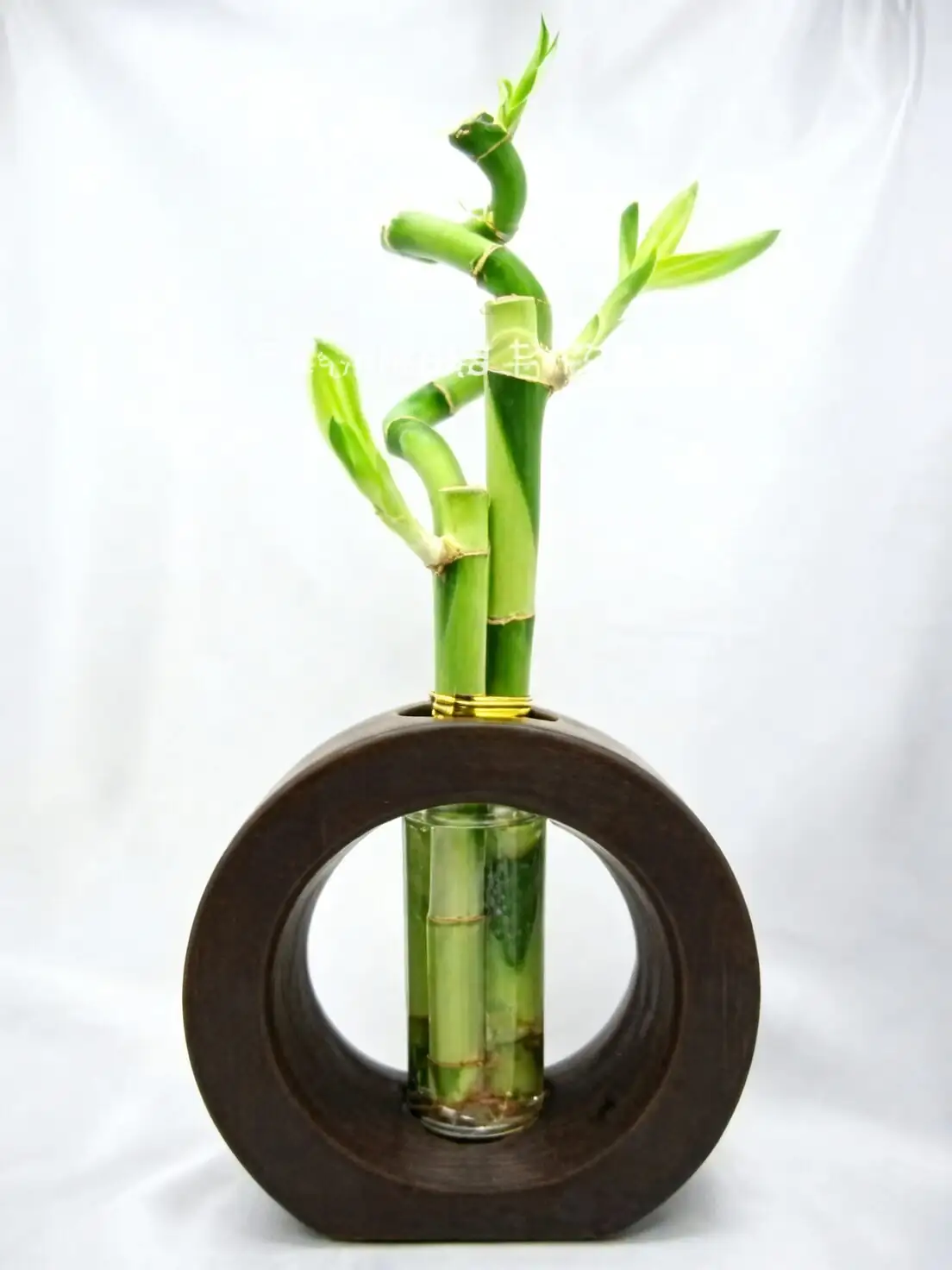
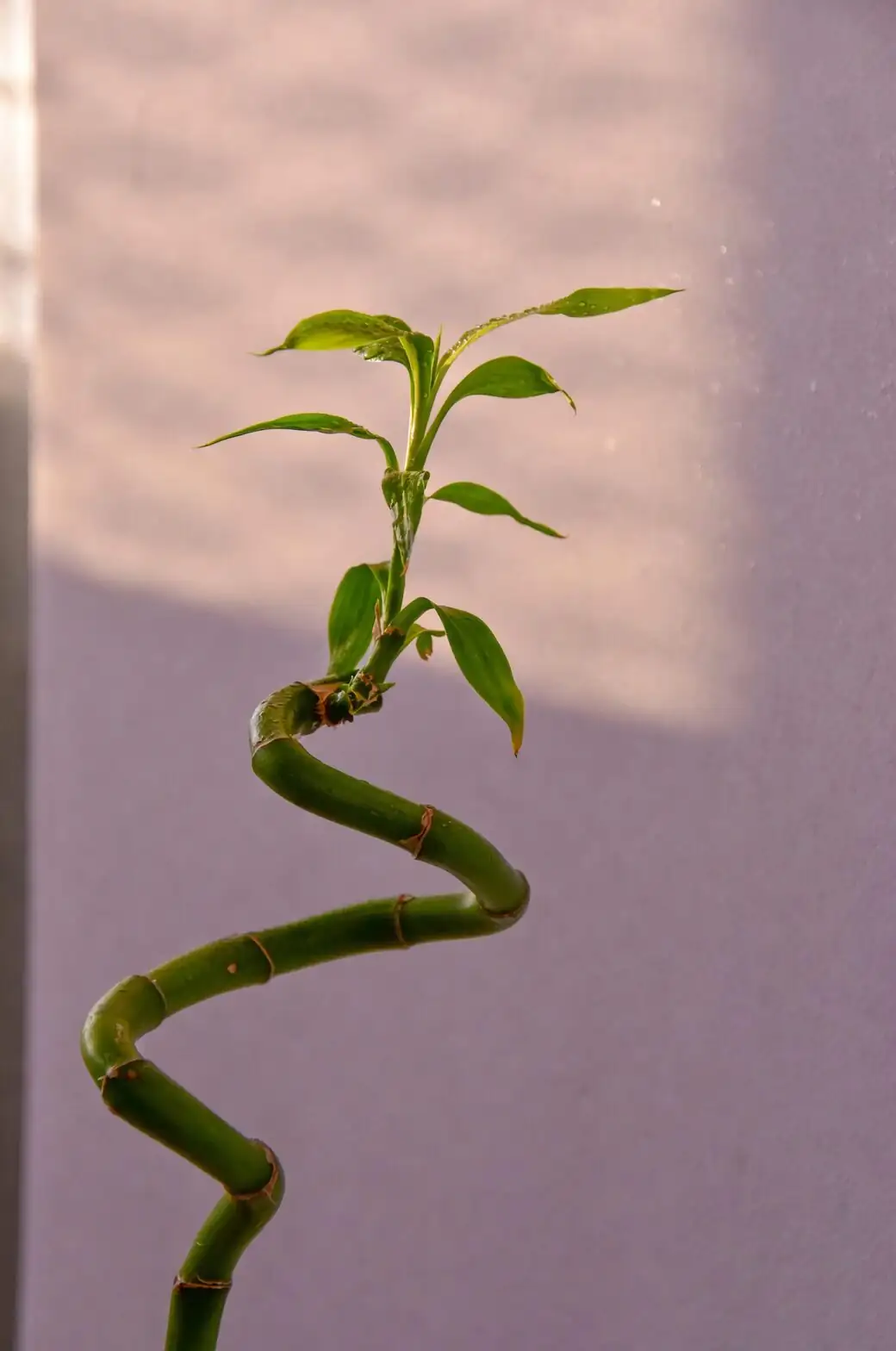
Meet the plant that bends light into art. Dracaena sanderiana—better known as lucky bamboo—isn’t a true bamboo at all, but a warm-loving dracaena with cane-like stems and glossy leaves that just happens to be a natural at sculpture. Spirals, braids, corkscrews: they aren’t glued, wired, or forced. They’re grown—guided by light, time, and a gentle hand. Here’s how to make those curves and weaves, safely, without stressing the plant.
The science that makes spirals possible
- Phototropism: Lucky bamboo shows positive phototropism—its stem and new growth bend toward light. Inside the stem, plant hormones redistribute to the shaded side, pushing cells there to elongate and tilt the tip toward the brightest direction. Use a one-sided light source and you can “steer” the stem, turn by turn.
- Growth tempo: This is not instant origami. In warm, bright, indirect light (especially 25–30°C / 77–86°F), a noticeable lean can form in 1–3 weeks. Cooler, dimmer rooms slow the process.
- Why it matters for plant health: Spirals happen by guiding the direction of new growth—not by sharply bending existing wood. Let the plant choose the curve as it grows, and you’ll avoid splits, kinks, or internal damage.
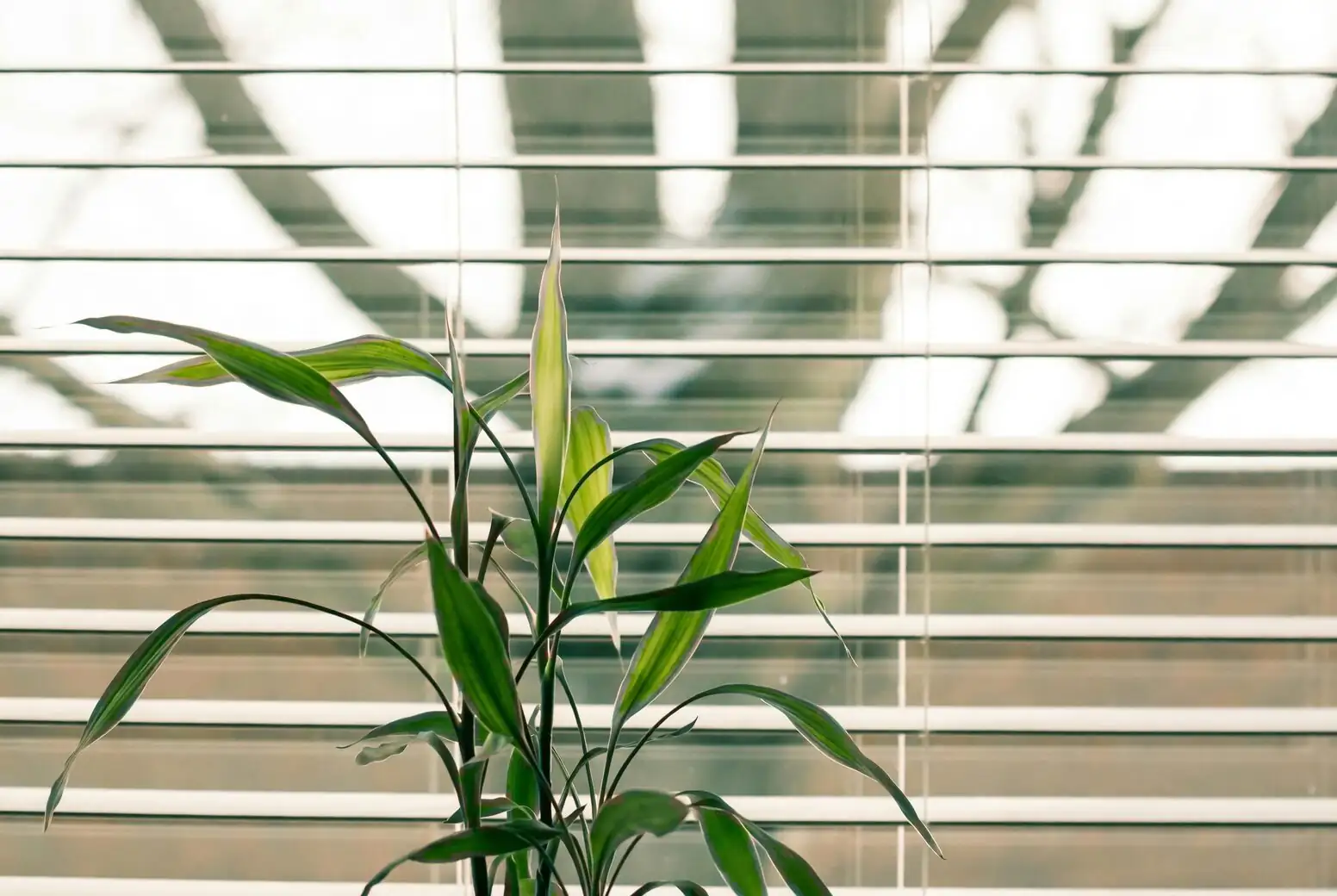
Before you shape: set the stage for stress-free training
- Light: Bright, indirect, evenly warm conditions are ideal. Think 50–70% filtered light—an east window, or a south window with a sheer curtain. Avoid harsh, direct sun that can scorch leaves through glass.
- Temperature: 18–30°C (64–86°F). Growth and pliability are strongest around 25–30°C (77–86°F). Keep above 10°C (50°F).
- Humidity: Aim for 50%+. In hot, dry spells (or while rooting new cuttings), mist 2–3 times per day to reduce brown tips.
- Water vs. soil culture:
- Water culture: Keep roots submerged in clean, preferably dechlorinated water. Change weekly once rooted; for fresh cuttings, every 3–4 days. Rinse containers (and any decorative pebbles) regularly to deter algae and rot.
- Soil culture: Use a fertile, well-drained houseplant mix. Keep evenly moist in spring–summer; slightly drier in winter while still warm.
- Feeding: Light and infrequent. A dilute balanced fertilizer about every 2 months in soil, or a very weak nutrient solution about every 2 weeks in water culture. Overfeeding leads to soft, floppy growth that’s harder to train neatly.
- Pruning mindset: The species tolerates pruning well. If a cane gets top-heavy or too tall, cut it back to about 15 cm (6 in) above the base; it typically re-sprouts from nodes. The top can be rooted as a new plant.
How to grow a spiral: the “light tunnel” method
You’re going to build a one-sided “window” of light and rotate gradually.
What you’ll need:
- A healthy cane 30–60 cm (12–24 in) tall with an active growing tip
- A cardboard box with one side removed (or a three-sided screen)
- A bright, indirect light source
- A stake and soft plant ties (for tall canes)
- A marker or tape to track rotation
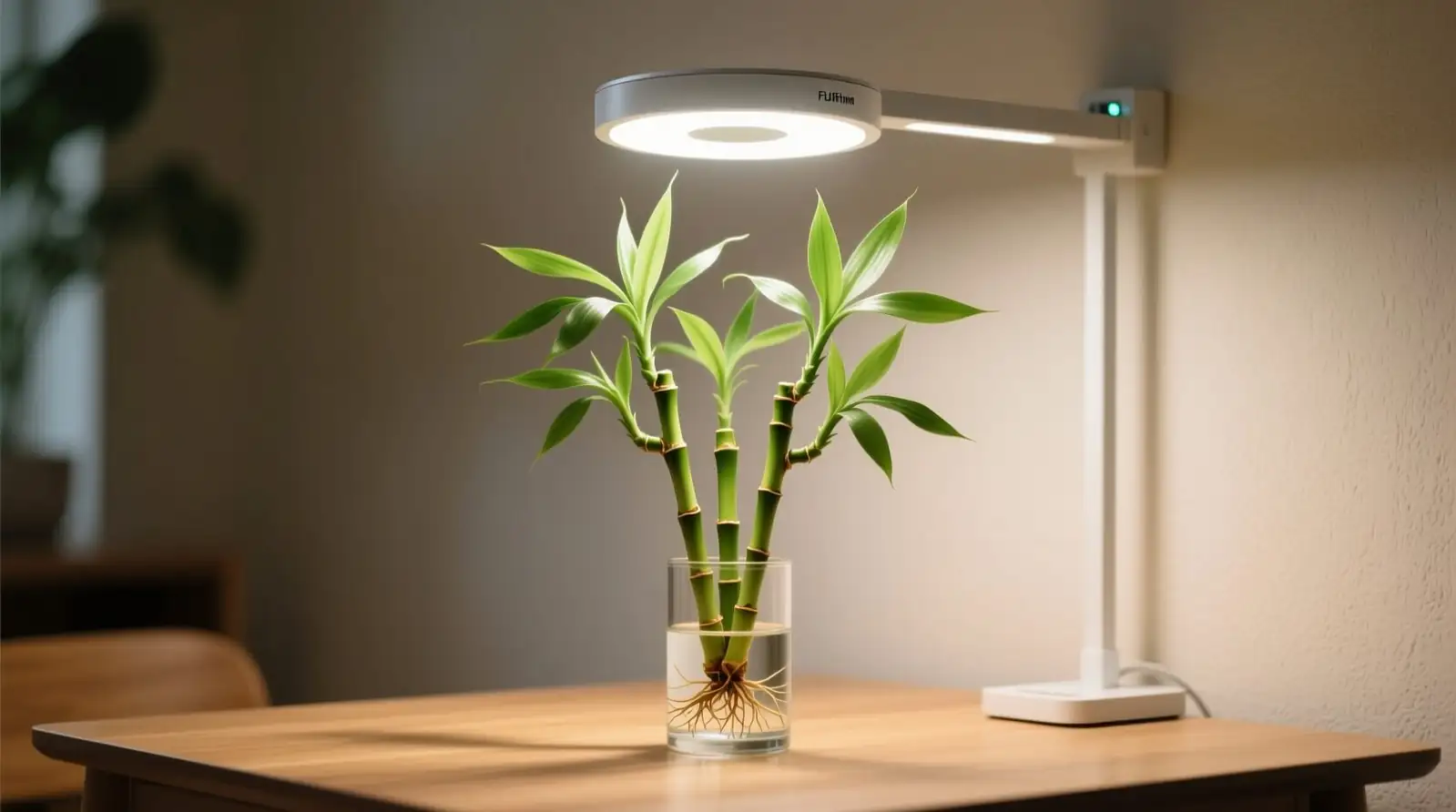
Step-by-step:
- Box the plant. Place the plant inside the box so three sides and the top are shaded; the open side faces your light source. This creates a strong directional cue.
- Wait for the lean. Over 1–3 weeks (faster in warmth), the tip will curve toward the light and try to point upward again.
- Nudge the curve. Rotate the pot a small amount—about 10–30 degrees—in the same direction each time. Do not twist more than needed; small, regular nudges yield the cleanest spiral.
- Repeat the rhythm. Each time the tip turns vertical again, rotate slightly. A quarter-turn every 10–14 days in prime conditions is a good starting cadence; cooler rooms may need 2–4 weeks between turns.
- Manage weight. If the crown gets heavy, lightly thin the newest leaves rather than stripping the cane bare. Keep enough foliage to power growth. Stake loosely if needed.
- Be patient. One full, elegant loop can take several months. Multi-turn spirals often take 9–18 months, depending on height and vigor.
Pro trick used by growers: Laying the plant on its side under overhead light makes the tip reach up, creating the first bend quickly. After a few weeks, reposition and repeat for subsequent turns. Always cushion the cane, keep humidity up, and never force a set bend.
How to braid lucky bamboo without stress
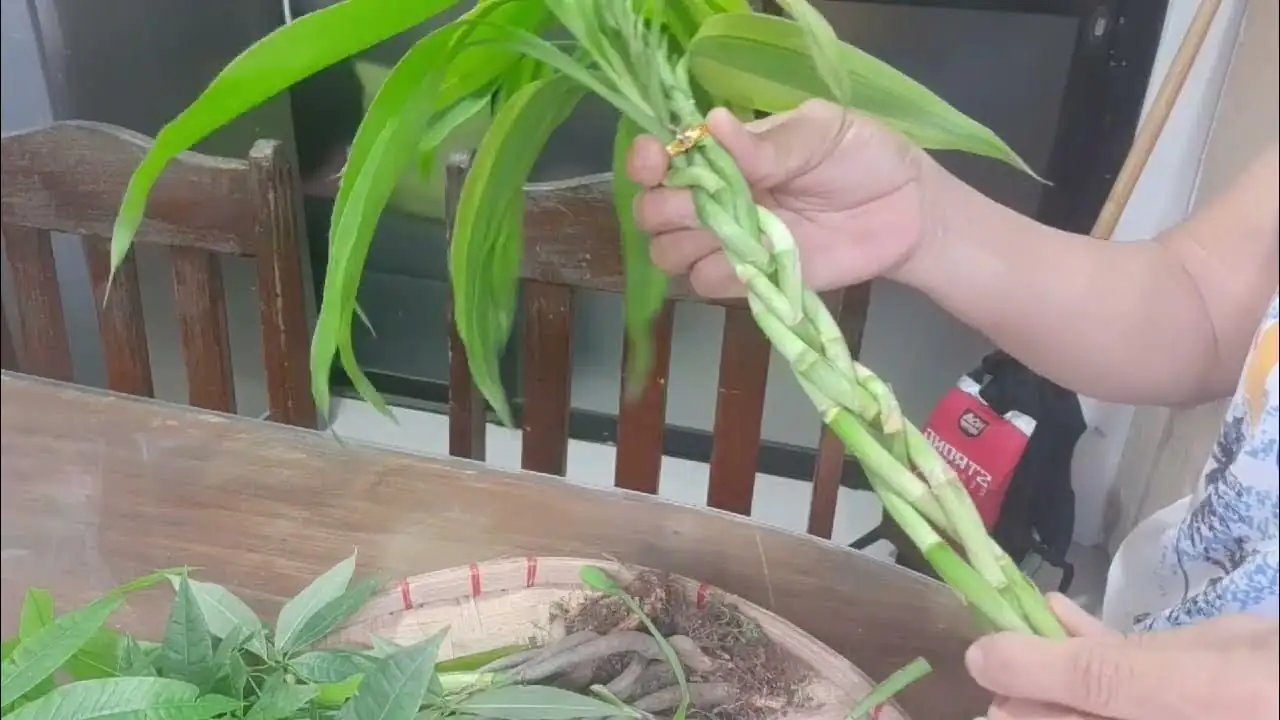
Braided forms begin with three similar canes growing close together. The secret is to weave slowly while stems are young and pliable, and to keep the ties soft and loose.
You’ll need:
- Three healthy canes of similar height and thickness
- A wide container. In soil, plant them 5–7 cm (about 2–3 in) apart in a triangle; in water, use a wide vase with clean pebbles to anchor roots.
- A slim stake and soft ties (floral tape, cloth strips)
Steps:
- Start when stems are supple. Begin braiding when canes are flexible—often under 1 cm (about 3/8 in) thick and 25–40 cm (10–16 in) tall. Thicker, woody stems are more prone to cracking.
- Begin the weave. Gently cross the right cane over the middle, then the left over the new middle—like braiding hair. Work just a few centimeters at a time.
- Tie softly. Secure the braid every 5–8 cm (2–3 in) with soft ties. Use a figure-eight loop between cane and stake to prevent rubbing. Keep ties snug but not tight; you should be able to slide a toothpick under them.
- Go gradually. Extend the braid in short sessions over several weeks as new growth elongates. Don’t force a full braid in one day.
- Maintain. Check ties monthly and loosen as stems thicken. Keep the crown light so the braid doesn’t torque. In water culture, ensure roots stay submerged and containers stay clean.
Safety notes:
- Never wire tightly like bonsai—dracaena bark is thin and scars easily.
- Don’t crush nodes (the slightly raised rings); they’re your plant’s sprouting points.
- If a cane creaks or resists, pause. Give it time to grow, then continue.
Rotation schedules and staking, dialed in
- Spiral rotation guide:
- Bright, warm room (25–30°C): Rotate 10–30 degrees every 10–14 days as the tip re-orients.
- Moderate room (18–24°C): Rotate every 2–4 weeks.
- Tip: Make a tiny pencil mark on the pot rim to track consistent direction.
- Staking that supports, not strangles:
- Use a slim bamboo stake or chopstick, placed close to the cane.
- Tie below a node to reduce slipping; use soft materials and figure-eight loops.
- Re-check ties monthly; loosen as the stem thickens.
- Remove stakes once the form holds on its own.
Timing your cuts and starts
- Best season to shape and propagate: Early to midsummer (June–July) when growth is fastest, humidity is higher, and stems are most pliable.
- Propagation basics:
- For soil: Cut 10–15 cm (4–6 in) cane sections; root in a light mix at 25–30°C with higher humidity. Expect 3–4 weeks to root.
- For water: Take an 8–10 in tip cutting, remove lower leaves, place in clean water, and change every 3–4 days. Roots often appear in about 3 weeks.
- Hygiene helps: Sterilize tools; dust cuts with powdered charcoal if you like traditional rot-prevention.
Troubleshooting your living sculpture
- The spiral looks wobbly or irregular:
- Use smaller, more frequent rotations. Ensure light is clearly from one direction (box method helps).
- The plant keeps straightening:
- Too much ambient light from multiple directions. Strengthen the directional cue with a shade box or move closer to a single bright, filtered source.
- Top-heavy flopping:
- Lightly thin the newest leaves or prune and re-root the tip. Stake temporarily.
- Yellowing leaves or mushy canes:
- Often cold damage, harsh sun, or stagnant/dirty water. Warm the plant, provide bright indirect light, refresh water weekly, and remove any rotting roots.
- Brown leaf tips:
- Air too dry, or fertilizer/water quality issues. Raise humidity and reduce feeding; try dechlorinated water in water culture.
- Pests (scale, thrips, occasional aphids):
- Treat early with insecticidal soap or horticultural oil. Isolate if needed and improve airflow.
Quick care snapshot for shape artists
- Light: Bright, indirect; shield from harsh midday sun.
- Temperature: 18–30°C; strongest growth at 25–30°C. Never below 10°C.
- Humidity: 50%+; mist during hot, dry spells or while rooting.
- Water: Soil—keep evenly moist in spring–summer; slightly drier in winter. Water culture—keep roots submerged; change weekly (3–4 days for fresh cuttings).
- Feeding: Very light, infrequent. Avoid soft, leggy growth.
- Pruning: Confidently cut to manage height; expect re-sprouting from nodes.
Symbolism, numbers, and what it really means
Lucky bamboo’s fame grew alongside feng shui-inspired décor and gifting. It’s associated with prosperity, harmony, and longevity; arrangements often pair elements—pebbles (earth), the plant (wood), water, a red ribbon (fire), and sometimes a metal coin. Consider the “language” of stem counts as cultural symbolism rather than botany: it’s a meaningful tradition for many people, but your plant’s true “luck” still comes from sound care, clean water, and kind light.
Finishing touches: design ideas to try
- Gentle corkscrew: A single, tall cane guided with the box method—minimalist and striking.
- Double helix: Train two canes into matching spirals around a shared stake for symmetry.
- Braided trio in a wide glass: Anchor roots with rinsed pebbles and rinse them during weekly water changes to keep things pristine.
- Pruned-and-paired: After topping a too-tall cane, root the cutting and train both original and offspring into complementary curves.
Safety note for homes with pets
Like many dracaenas, lucky bamboo is toxic to cats and dogs if chewed. Place arrangements out of reach.
Shaping Dracaena sanderiana is slow magic: one small turn, one new leaf, one bright day at a time. With warmth, clean water, and directional light, your plant will do the bending for you—no force, no stress—until the curve in your vase looks like it’s been drawn with a compass.