

If you’ve ever wondered why the “same” ivy can look like two different plants—cute, starry-lobed leaves one moment and smooth, diamondy ovals the next—you’ve already met Hedera helix L.’s split personality. English ivy lives a double life: a youthful, wall-hugging climber and a mature, self-possessed shrub that finally decides to flower in fall. Understanding what flips that switch—from leaf shape to bloom time—turns ivy from a mysterious shapeshifter into a masterclass in plant development.
Two lives in one vine: juvenile vs. adult ivy
Hedera helix (English ivy, a European and North African native) is evergreen and famously adaptable, indoors or out. But it doesn’t grow the same way from start to finish.
Juvenile shoots: the climber you know
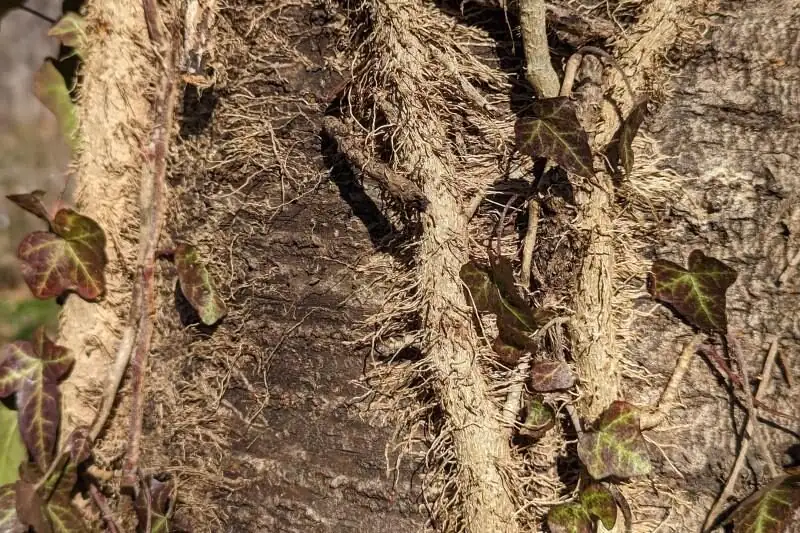
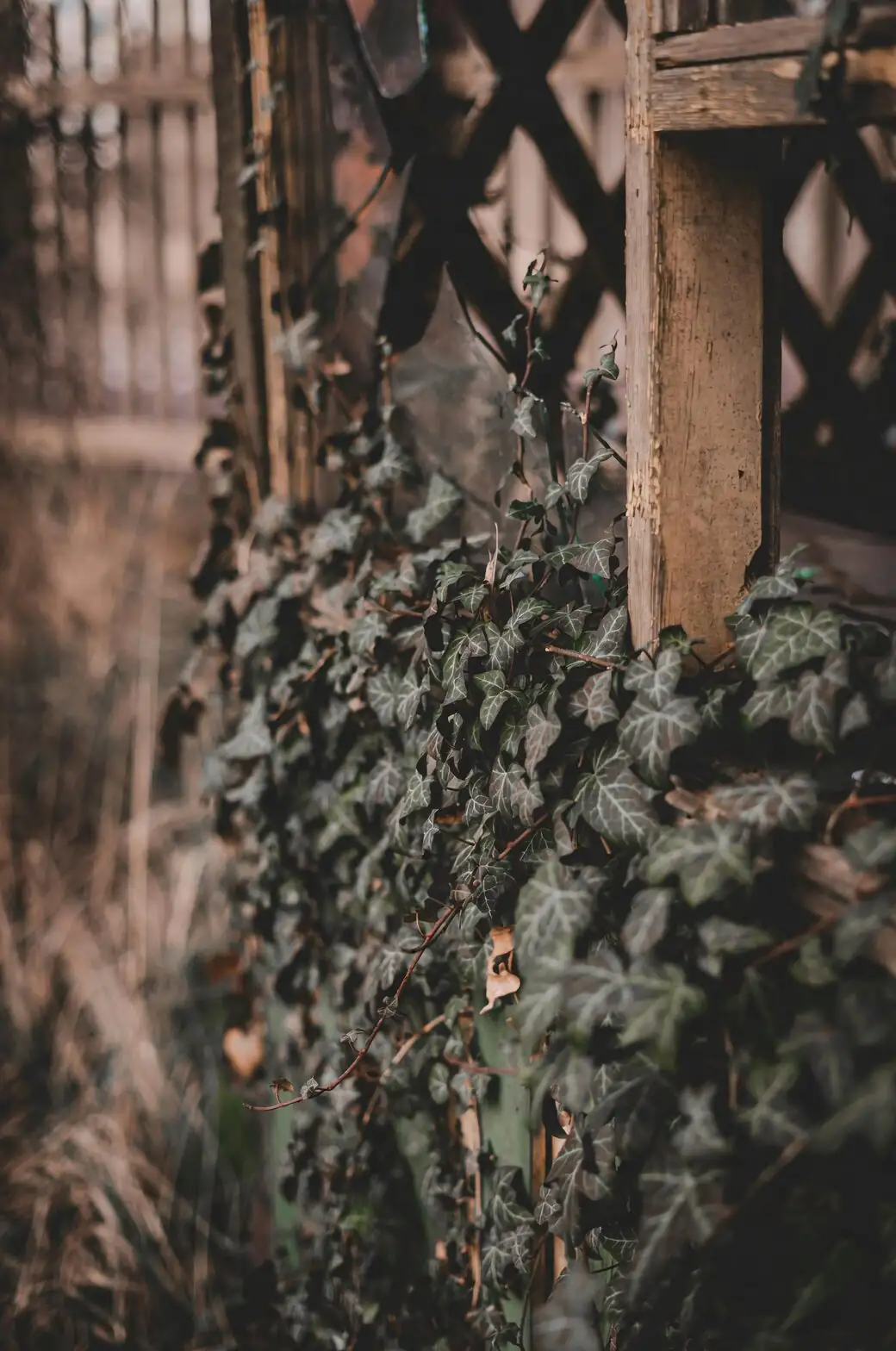
- Leaf shape: typically 3–5 lobed with a heart-shaped base—the quintessential “ivy” look.
- Texture and arrangement: glossy to waxy leaves, alternately arranged along the stem.
- Behavior: climbs and trails vigorously; stems readily root where they touch soil.
- Tools of the trade: produces aerial (adventitious) rootlets that stick to bark, brick, and stone.
- Reproduction: strictly vegetative—no flowers at this stage.
Adult shoots: the self-supporting bloomer
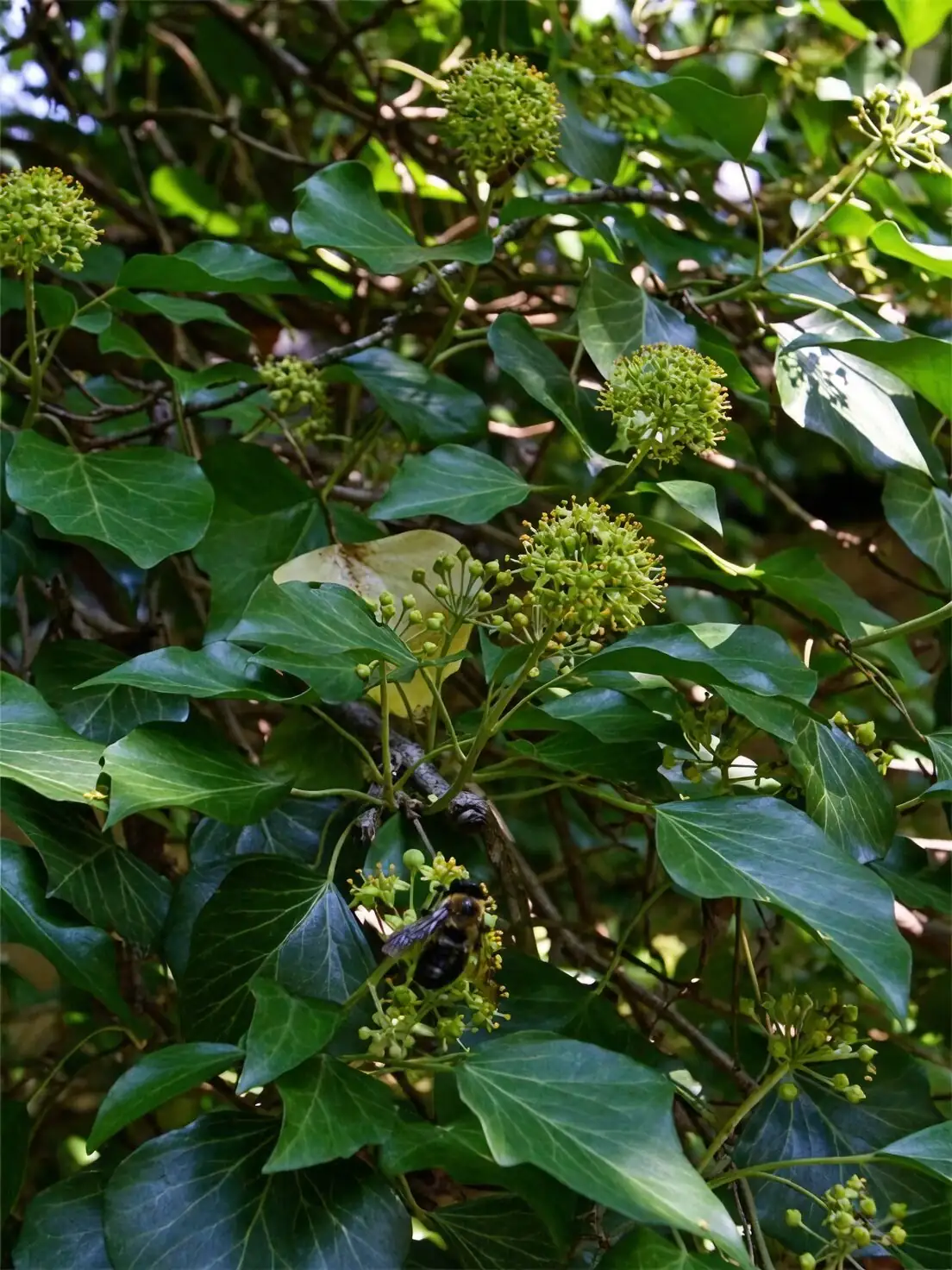
- Leaf shape: ovate to rhombic, usually entire (unlobed)—often mistaken for a different species.
- Behavior: becomes more self-supporting (shrubby), and climbing rootlets are largely absent.
- Reproduction: produces greenish-white to greenish-yellow flowers in rounded clusters (umbels) in fall, followed by winter berries.
- Physiology: adult foliage tends to trade some wintertime photosynthetic punch for greater cold-hardiness—useful high in the canopy where chill bites harder.
Botanists call this dramatic, life-stage-driven makeover “heteroblasty” or vegetative phase change—one of the cleanest examples you’ll see in a common garden plant.
How ivy climbs: tiny rootlets, big engineering
Juvenile ivy doesn’t use tendrils or twining stems. Instead, it sprouts short aerial rootlets along the stem that:
- Press into a surface’s microscopic nooks and crannies for mechanical grip.
- Develop small, flattened pads that exude a sticky, polysaccharide-rich mucilage—think plant-made glue that “sets” as it dries.
- Multiply contact points so the vine distributes its weight and resists peel-away forces.
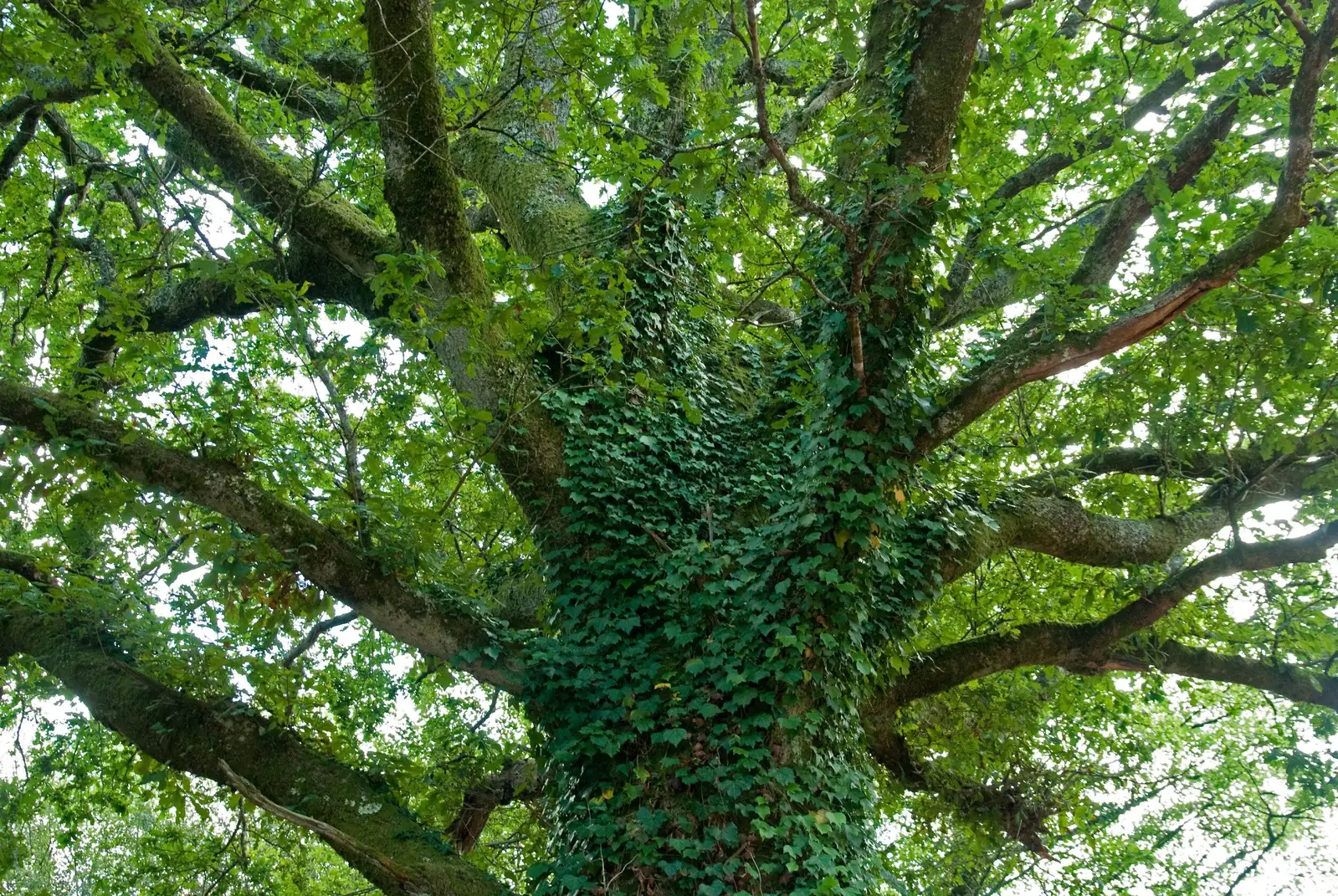
Crucially, ivy isn’t a parasite. Those rootlets don’t tap your tree for food or water; the plant feeds itself via photosynthesis. Problems start only when unchecked growth adds weight, shade, and wind sail high in a canopy, or when roots exploit failing mortar on old masonry.
Why ivy only blooms in maturity
Flowering in English ivy is not about calendar age alone; it’s about life stage. In the juvenile phase, the plant’s job is exploration—spreading, climbing, and banking energy. Once a portion of the plant transitions to the adult phase, it gains reproductive competence and reallocates resources to blooms and fruit.
What flips that internal switch? In many woody plants (ivy included), a well-studied developmental “seesaw” gradually tips: juvenile programs dominate early growth, then wane to reveal adult traits and flowering ability. Think of it as ivy earning its stripes only after years of steady growth and stability.
The fall flowering turn: triggers that matter
After a stem segment has matured into the adult phase, seasonal cues nudge ivy toward autumn blooms:
- Shortening daylength and cooler nights through late summer and early fall
- Strong, steady light on adult shoots (often at the tops of walls or tree trunks)
- A period of unimpeded growth—constant trimming delays adulthood and therefore flowering
This is why outdoor, well-established ivy often flowers high up and late in the year—and why the same plant in a pot or kept neatly clipped rarely ever does.
Spotting the switch in your garden
Look for these tells:
- Leaves shift from lobed to mostly unlobed on certain branches.
- Climbing rootlets dwindle on those same, now-sturdier shoots.
- Side branchlets appear with rounded heads of small, greenish-yellow flowers in fall.
If you want flowers:
- Let one leader climb and stop shearing it back.
- Give it bright, indirect light to open shade; variegated cultivars need a bit more brightness.
- Outdoors, maturity plus late-summer conditions do the rest; indoors, flowering is uncommon due to light and constant juvenile regrowth.
Flowers, fruit, and a bustling autumn buffet
English ivy’s blossoms are modest but mighty: nectar-rich, fall-blooming umbels that fuel late-season pollinators. Berries follow into winter and feed birds, which help disperse seeds. Reminder: leaves, sap, and berries are toxic to people and pets; handle with care and keep out of reach.
Care that supports either life stage
- Light: part shade to full shade is ideal outdoors; bright, filtered light indoors. Avoid hot afternoon sun. Variegated forms need a bit more light to hold color.
- Water: aim for evenly moist, not soggy. Let the top 2.5 cm (1 in) of potting mix dry, then water thoroughly. Dry air invites spider mites—boost humidity where possible.
- Temperature: grows best around 21–32°C (70–90°F) as a houseplant; keep indoor plants above 10°C (50°F).
- Pruning: spring trims and tip pinching keep juvenile plants dense and tidy; heavy clipping keeps the plant juvenile. To see flowers, designate one section to grow on with minimal pruning.
- Propagation: almost effortless from stem cuttings or by layering—stems root wherever they touch soil.
Myth-busting ivy
- “Ivy strangles trees.” It doesn’t siphon sap. The risks are weight, wind leverage, and shading of the host’s own leaves.
- “Aerial roots feed on masonry.” They adhere to texture and may exploit already-crumbling mortar but don’t “eat” stone.
- “It flowers every year if healthy.” Only adult shoots flower, and chiefly in fall; constant pruning or low light keeps ivy in an ageless youth.
A note on symbolism
Ivy’s reputation for fidelity, devotion, and steadfast love is centuries old. Evergreen leaves suggested endurance through hardship; its clinging habit symbolized attachment and loyalty. In classical Europe, ivy garlands honored Dionysus/Bacchus; in Victorian flower language it came to mean constancy in marriage and friendship. The meanings endure because the plant truly lives them—holding fast, year in and year out.
Grow with care, grow with conscience
English ivy is a beautiful, durable ornamental—trailing from baskets, carpeting shade, scaling stone, even trained into topiary. In many regions outside its native range, however, it can be invasive. Before planting outdoors, check local guidance, keep it contained, and prune responsibly.
—
In the end, Hedera helix’s “two lives” aren’t a riddle—they’re a strategy. The lobed, elastic juvenile phase conquers space with sticky rootlets; the unlobed, settled adult phase claims time, flowering when days shorten and autumn arrives. Give it room to climb and a season’s patience, and you just might witness ivy’s quiet turn from wanderer to gardener of the fall.