

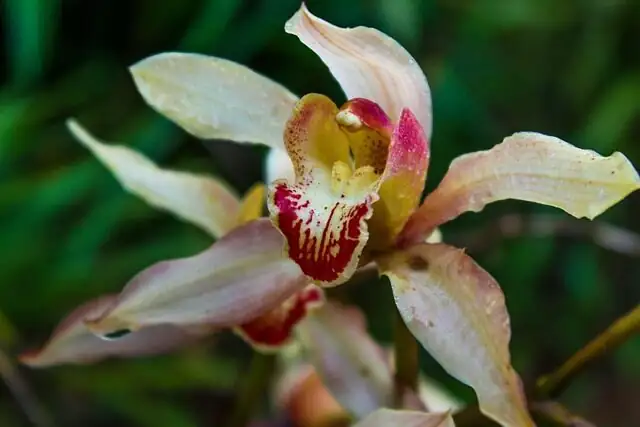
Think orchids are summer divas? Meet Cymbidium goeringii—the Chinese Cymbidium, or Spring Orchid—a cool-weather contrarian that perfumes the room while your garden sleeps. This beloved East Asian classic trades flashy displays for quiet elegance: neat clumps of deep-green, grassy leaves, a few waxy, star-shaped blooms from winter into spring, and a fragrance so rich and sweet it’s been praised for centuries.
Here’s the fun, counterintuitive side of growing this legend—and exactly how to make it thrive.
The delightfully counterintuitive truths about Cymbidium goeringii
1) It blooms when you’re wearing a sweater
This orchid doesn’t fear the cold—within reason, it needs it. Flower buds are encouraged by cool conditions around 12–13°C (54–55°F). That means autumn’s gentle chill is your friend.

- What to do:
- As nights cool in fall, keep the plant bright and airy, not soggy.
- In winter, give it brighter light than summer (a bright windowsill or balcony with softened sun is great).
- It can tolerate brief dips to about -8 to -5°C (18 to 23°F) if kept drier and protected, but avoid prolonged freezing.
2) Modest flowers, massive perfume
Forget dinner-plate blooms—this species is about refined, starry, wax-like flowers, often greenish to yellow-green with delicate markings. The shocker is the scent: intensely sweet, famously one of the finest among flowers.
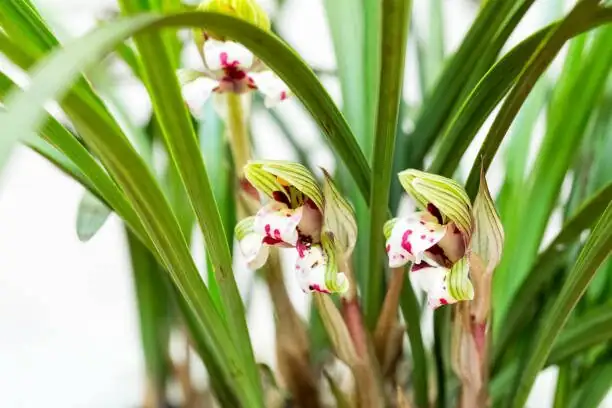
- Pro tip: Cool, bright winter conditions amplify the perfume. Place near a bright, cool window (with humidity support) and let the fragrance do the talking.
3) Cool nights flip the “bud switch”
Heat is the enemy of bud initiation; consistent cool is the cue.
- Aim for:
- Day: roughly 15–25°C (59–77°F).
- Nights in early fall: mid-50s°F to nudge buds.
- Avoid heat spikes above 35°C (95°F)—growth sulks and buds may stall.
4) The moss-pot myth (and what actually works)
You’ll hear that Cymbidium goeringii “must” be grown in pure moss. Not true. What it must have is air around the roots and a mix that drains fast yet never bakes bone-dry.
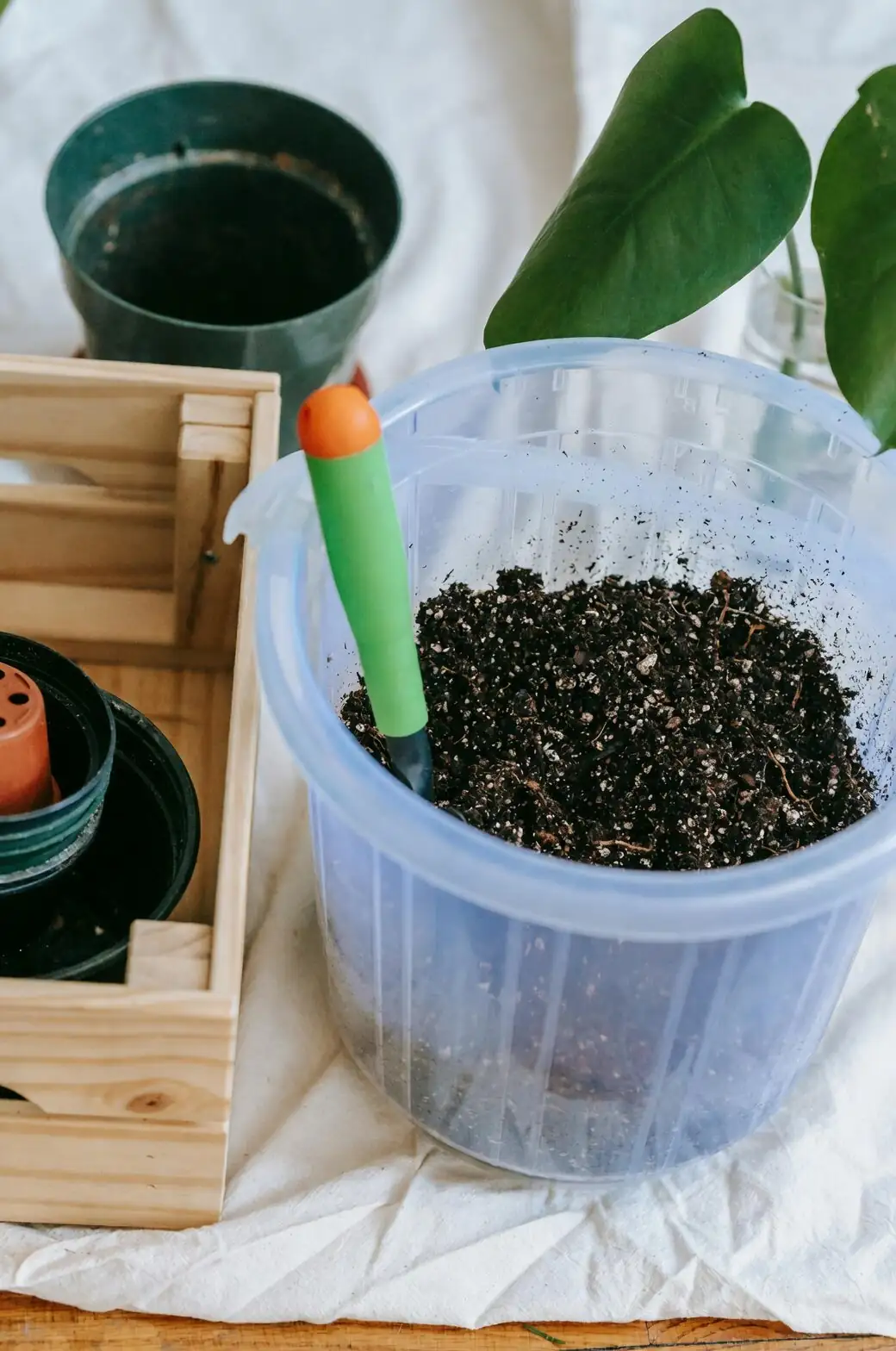
- Your options:
- Classic airy blends: leaf mold, peat, a touch of moss or coconut coir, with charcoal, pumice, brick chips, and vermiculite. Adjust to your climate and watering style.
- Moss-dominant setups can succeed—but only with excellent ventilation and razor-precise watering.
- Granular, stone-forward mixes used by specialists (for example, graded Hyuga pumice with Kanuma and perlite) also work. Rinse fines, layer coarse-to-fine, and keep drainage lively.
The real secret isn’t an ingredient—it’s the balance of moisture and airflow.
5) Shade-lover that still craves brightness
C. goeringii likes bright shade, not harsh sun.

- Summer: 60%–80% shade with excellent airflow.
- Winter: brighter light is welcome, but soften midday rays and bolster humidity on sunny windowsills.
Grower’s playbook: simple rules, stellar results
Light
- Bright shade to dappled/filtered light.
- Avoid scorching midday sun.
- Typical sunny windowsills can be too bright and too dry unless you diffuse light and add humidity.
Temperature
- Best growth: 15–25°C (59–77°F).
- Cool nights around 12–13°C (54–55°F) support bud initiation.
- Brief cold spells to -8 to -5°C (18–23°F) are tolerated if drier and protected.
- Growth slows above 35°C (95°F).
Humidity and airflow
- Baseline 50%–60%; during active growth, 80%–90% can be superb.
- Winter target around 60%–70% with steady air movement.
- Strong airflow is nonnegotiable—stagnant, humid air invites trouble.
Watering (make-or-break)
- Summer: water more, but never let the mix stay soggy; protect from heavy rain.
- Autumn: water in the morning.
- Winter: water less overall; on sunny days, do it around midday so crowns dry before night.
- Use clean water; let tap water sit to dissipate chlorine and warm to room temp.
- Never let water pool in the plant’s center; don’t splash dirty water on leaves.
Feeding
- During active growth, apply very dilute fertilizer every 2–3 weeks.
- Pause feeding in winter and around flowering.
- Some growers alternate a weak nitrogen source with a bloom-supporting feed like monopotassium phosphate at low concentration.
- Skip fertilizing on overcast/rainy days, and keep solution out of the crown.
Potting and repotting
- Repot every 2–3 years, letting the medium dry slightly first to reduce root breakage.
- Use a deep, well‑drained pot; place coarse drainage (shards/brick chips) at the base.
- Spread roots, firm gently, and leave about 2 cm (0.8 in) headspace; top-dress if you like.
- Many pot 3–5 shoots together for a refined, fuller clump.
- After repotting, water thoroughly once, then recover in bright shade with good airflow.
Propagation by division
- Best around March or around September, before new roots extend.
- Divide into modest pieces (often 2–3 growths per division).
- Dust cuts with sulfur and keep divisions in bright shade until established.
Placement
- Outdoors: shaded, ventilated spot most of the year.
- Indoors (winter): near a bright window/balcony; soften sun, add humidity (tray or humidifier), and keep air moving.
Troubleshooting the paradoxes
- Buds shriveling or stalling?
- Check for heat spikes, drought–soak cycles, or sudden media saturation. Keep cool, steady moisture—not sopping wet.
- Leaves spotting or bases going mushy?
- That’s often stagnant air plus persistent wetness. Increase airflow, reduce humidity in muggy, still weather, and refresh media. Use an orchid-safe fungicide if necessary and locally allowed.
- Plant getting smaller with fewer leaves?
- Roots are likely stressed. Ensure the mix is airy, watering is even (not waterlogged or bone-dry), light is filtered, and humidity is boosted—especially in dry homes. Water quality can matter.
Choosing a plant the smart way
- Look for firm, plump pseudobulbs and clean, unspotted leaves.
- Avoid sour-smelling pots or sodden media.
- Bonus points for visible, active roots and at least one strong new growth (season permitting).
Flower language, history, and why it matters
In East Asian culture, Cymbidium goeringii is celebrated less for spectacle and more for character. Its “flower language” evokes purity, elegance, and refined integrity—the kind of quiet virtue cherished by scholars and artists. Classical writings praise its fragrance as among the finest scents in the floral world. Unlike bouquet symbolism invented for greeting cards, this meaning grew from centuries of literati appreciation: the orchid as a metaphor for inner nobility, modest in form yet impossible to ignore once its perfume unfurls.
Quick seasonal calendar
- Summer: 60%–80% shade; water more but avoid heavy rain soaking. Strong airflow.
- Autumn: let nights cool for bud initiation; water in the morning; stay even, not soggy.
- Winter: move to brighter indoor light; water less, ideally at midday on sunny days. Pause most feeding; enjoy the fragrance.
- Spring: bloom winds down; as new growths start, resume very dilute feeding.
Safety note for pets and people
Cymbidium orchids aren’t widely cited as seriously toxic, but chewing or ingestion may cause mild stomach upset. Keep out of reach of nibblers.
Five fun, nerdy facts to tell your plant friends
- It’s a clump-forming, sympodial orchid with tidy, evergreen, strap-like leaves—more “zen garden” than jungle.
- Short spikes carry just a few starry, waxy flowers—yet their sweet scent can define a room’s mood.
- The cool-night cue for buds means autumn breezes are a cultivation tool, not a threat.
- Some masters raise it in very simple, moss-heavy pots—proof that airflow and careful watering matter more than fancy recipes.
- It’s a traditional potted orchid across East Asia, beloved precisely because it rewards patience and balance in light, moisture, and air.
Cymbidium goeringii doesn’t ask you to recreate summer—it asks for poise. Give it bright shade, cool cues, an airy mix, and measured watering, and it will repay you in winter with starry flowers and a legendary perfume that feels like a secret shared.