

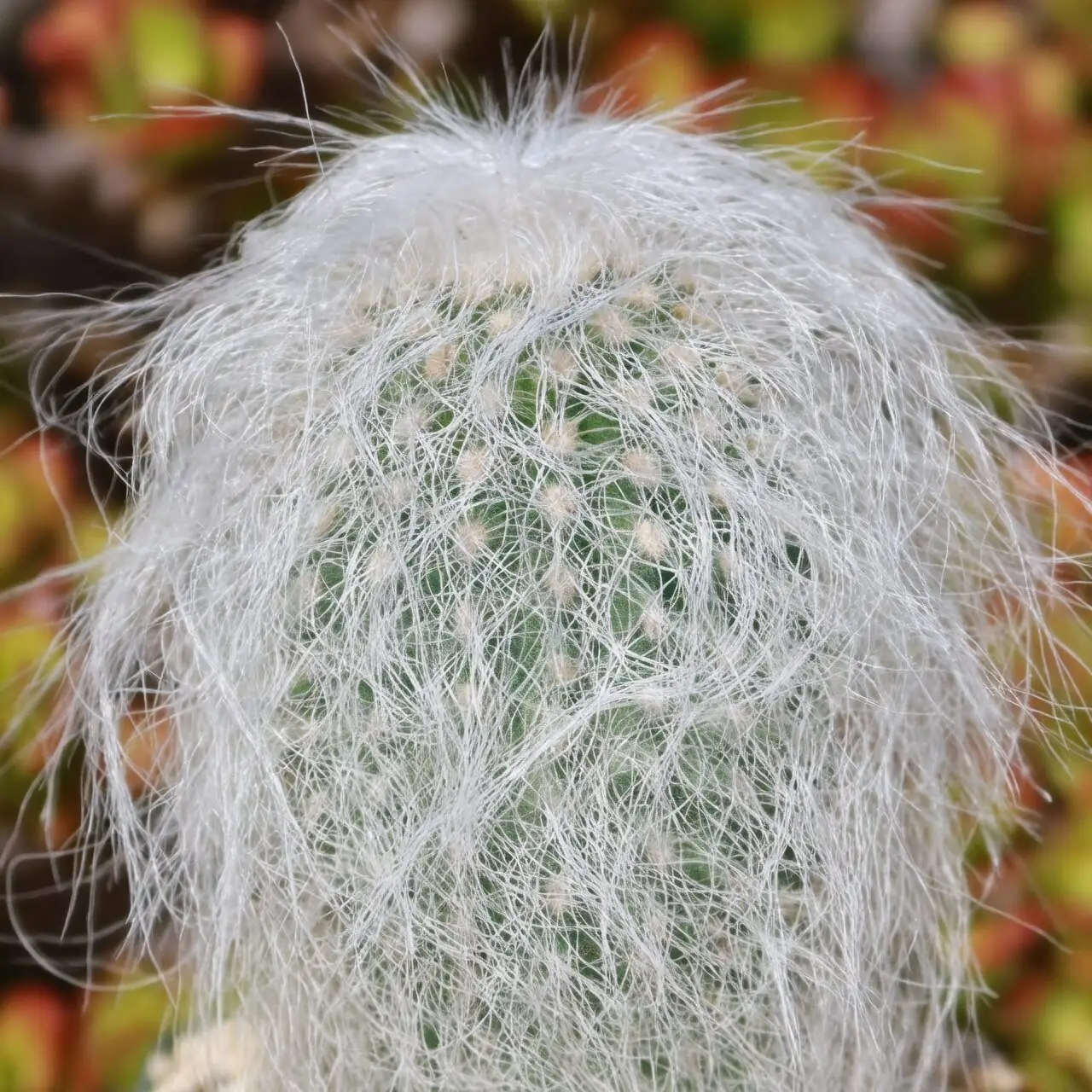
Picture a cactus wearing a lab coat and a long white beard. That’s Cephalocereus senilis—the Old Man Cactus—showing off one of botany’s coolest hacks: a living, physics-savvy “wool coat” that bends harsh desert light, smooths out temperature swings, and turns small pests into big quitters. And yes, all that matters indoors too.
Meet the Old Man Cactus (Cephalocereus senilis)
- Origin: Endemic to east-central Mexico (notably Hidalgo and Veracruz) on sun-blasted, arid limestone slopes.
- Habit: Upright, usually unbranched columns that can clump with age; densely wrapped in long, silky, silver-white hairs—especially on younger growth.
- Flowers: Red, yellow, or white in nature, typically in summer—but blooming is uncommon in indoor or container culture.
- Indoors: A slow, tidy showpiece about 30 × 10 cm (12 × 4 in) in a typical pot, growing taller with time and strong light.
Wool science: a trichome explainer (with a cactus twist)
When people say “trichomes,” they usually mean tiny hairs from a plant’s outer skin. In cacti, the white “wool” of Old Man Cactus is largely made of hair-like, spine-derived fibers emerging from areoles—functionally trichome-like in how they manipulate heat, light, and critters.
Think of this fluffy layer as a smart, multi-tool surface:
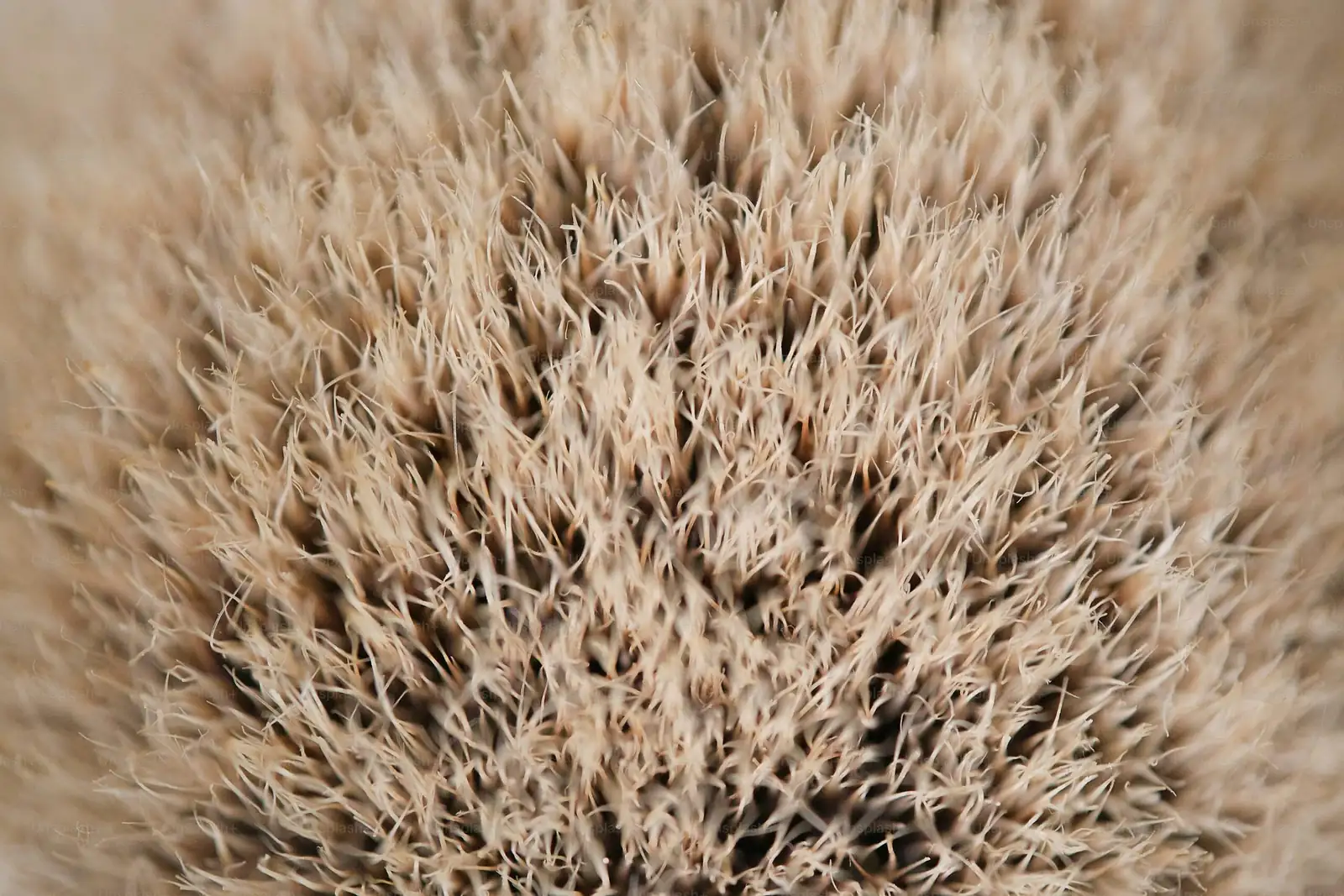
1) A built-in light diffuser
- The long, bright-white fibers scatter and reflect intense sunlight before it hits green tissue.
- Result: Lower light stress, less UV damage, and a cooler stem under the desert sun.
- Indoors impact: Strong light is still essential for dense, healthy “wool,” but the plant tolerates more direct sun than most houseplants once acclimated.
2) Temperature buffering (day and night)
- By reflecting solar energy and trapping a thin layer of still air, the “wool” helps keep the stem cooler by day and slows radiative heat loss by night.
- In habitat, that reduces scorching afternoons and mitigates chilly desert nights.
- Indoors impact: It’s more forgiving of bright window sills and temperature swings, but still prefers 10–32°C (50–90°F) and frost protection.
3) A boundary layer that tamps down water loss
- The hairs create a calm, slightly more humid micro-layer right at the stem surface, reducing evaporative demand on the plant.
- Indoors impact: Don’t confuse this with needing high humidity. Old Man Cactus actually prefers low humidity and excellent airflow. The plant makes its own microclimate—your job is to keep the “beard” dry and the room airy to deter pests and fungi.
4) Deterrence—with a side of deception
- The silky coat is awkward for insects to navigate and masks the formidable spines beneath. Many would-be herbivores give up.
- Indoors impact: It’s a passive shield, but the fluff can also hide mealybugs and scale. Inspect closely at the base of hairs and around areoles.
Why younger stems look extra fluffy
- The hair layer is densest on younger growth, which needs the most protection while tissues are thin and green. As stems mature and toughen, the outer layer may appear slightly less cloud-like—but the plant keeps the protective strategy in place where it matters most.
What the “wool” means for indoor care
Treat the beard like performance gear: keep it clean, bright, and dry so it can do its job.
Light: more than a nightlight
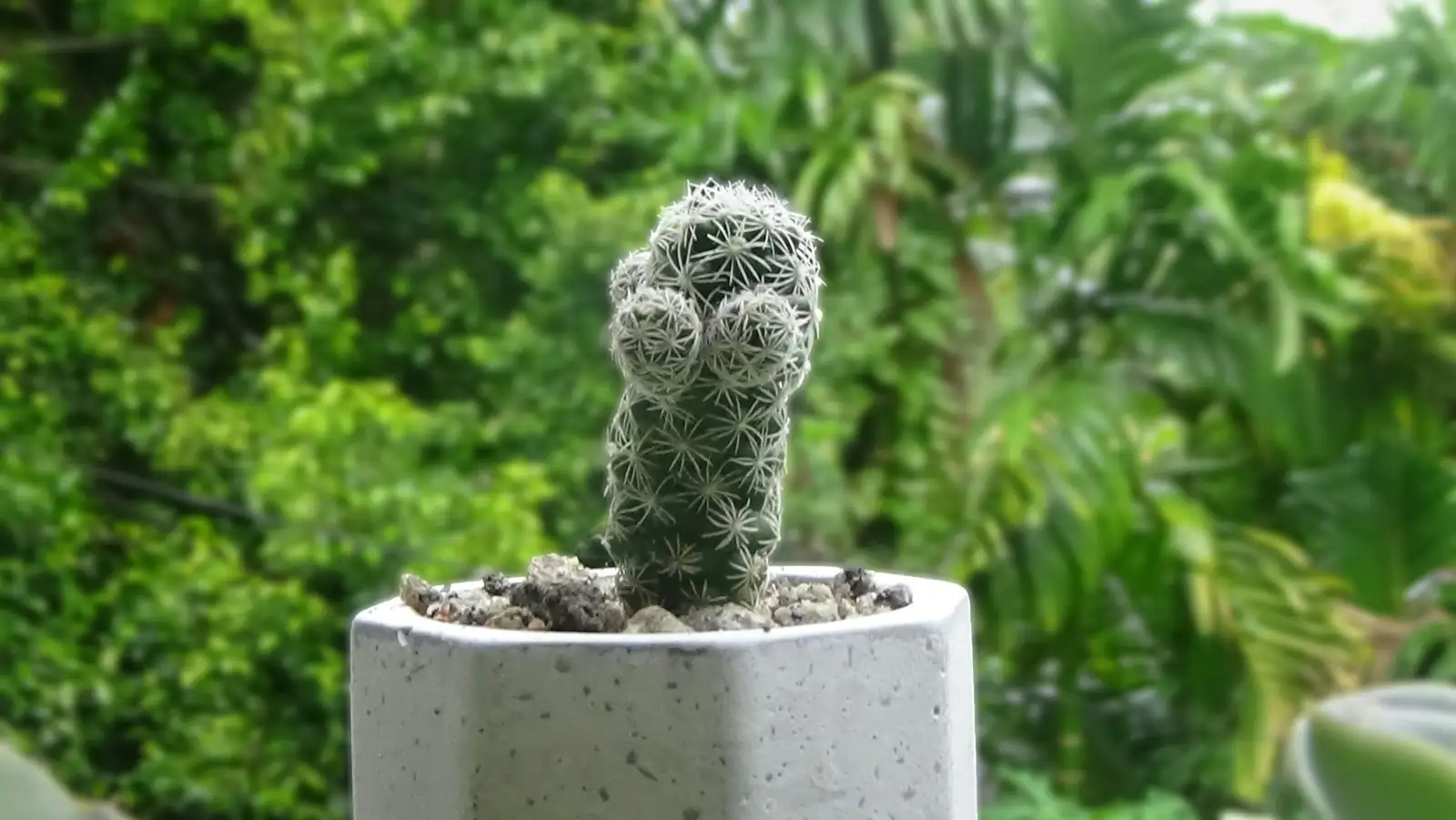
- Aim for full sun in the brightest window, sunroom, or greenhouse.
- In very hot summers, provide bright light with light afternoon shade outdoors—especially right after moving it outside.
- Acclimate gradually to outdoor sun to prevent scorch.
Water: deep drinks, long pauses
- Water thoroughly, then wait until the top 1–2 cm (0.4–0.8 in) of mix is completely dry before watering again.
- Winter rest: reduce drastically to just 1–2 waterings for the entire season (or none if kept cool). Cold + wet = rot risk.
Humidity and airflow: crisp, not clammy
- Prefers low humidity with steady air movement.
- Do not mist; keep the white hairs dry to deter pests and fungal issues.
Soil and pot: think desert, not sponge
- Use a very fast-draining cactus mix. A great DIY: equal parts potting soil, coarse sand, and perlite/pumice.
- Pot choice: a slightly undersized, unglazed pot helps moisture evaporate quickly.
Feeding and seasons
- Feed monthly in spring and summer with a cactus fertilizer (label rate or slightly diluted).
- Stop feeding in fall and winter.
Winter placement
- Keep it cool and very bright; protect from frost and aim to stay above ~5°C (41°F).
Grooming the beard (without ruining it)
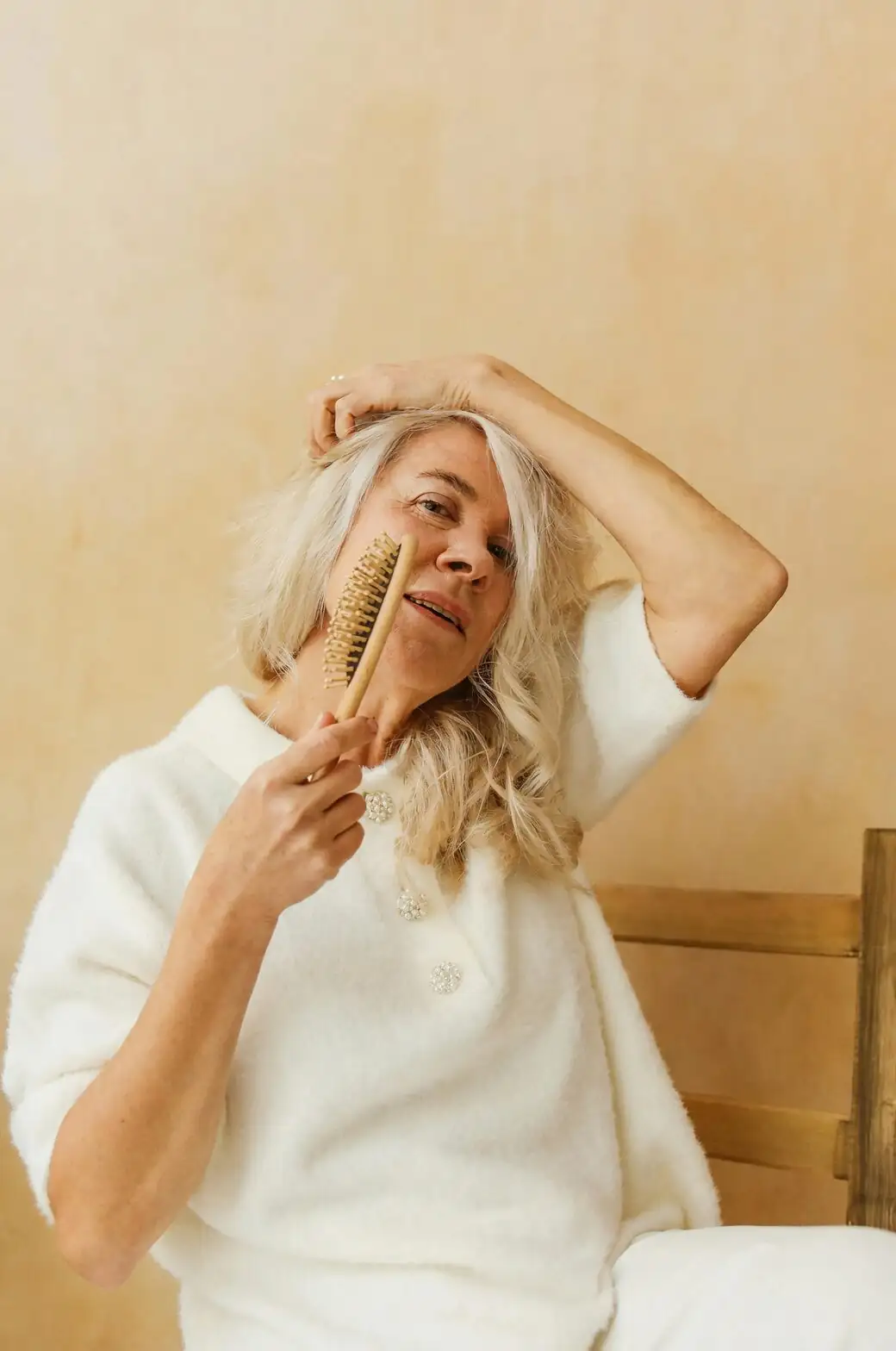
- Dust gently with a soft brush or a puff of air. Avoid wetting the hairs; water can mat fibers and invite fungus.
- Spot-treat pests early: insecticidal soap or horticultural oil works, but use sparingly and carefully to avoid gumming up the “wool.” A cotton swab helps target mealybugs in crevices.
Common pitfalls (and easy fixes)
- Overwatering or slow-draining soil: switch to a grittier mix and lengthen intervals.
- Low light = lanky growth and sparse hair: move to a brighter window or supplement with strong, full-spectrum light.
- Sudden sun exposure after a dim spell: acclimate over 1–2 weeks.
- Damp, stagnant rooms: increase airflow; never mist.
Blooming: why your plant probably won’t
- In containers—especially indoors—flowering is uncommon. In nature, it can produce red, yellow, or white blooms, often in summer.
- Enjoy it primarily for the architecture and that dazzling silver-white coat.
Safe handling (those spines hide well)
- Not known to be poisonous, but hidden spines can injure skin and cause irritation.
- Handle with gloves; keep out of reach of children and pets.
Buying, repotting, and propagation
- Buying tips:
- Choose a firm, upright plant free of soft spots (especially at the base).
- Look for clean, dry hair, not damp or matted patches.
- Wear gloves—spines lurk under the fluff.
- Repotting:
- Young plants: every spring. Mature plants: about every 2 years.
- Only size up slightly to avoid lingering wet soil around roots.
- Propagation:
- Most often from seed. Older clumps may sometimes produce basal offsets—let cut surfaces callus, then pot into a dry, gritty mix.
Where it comes from, what it symbolizes
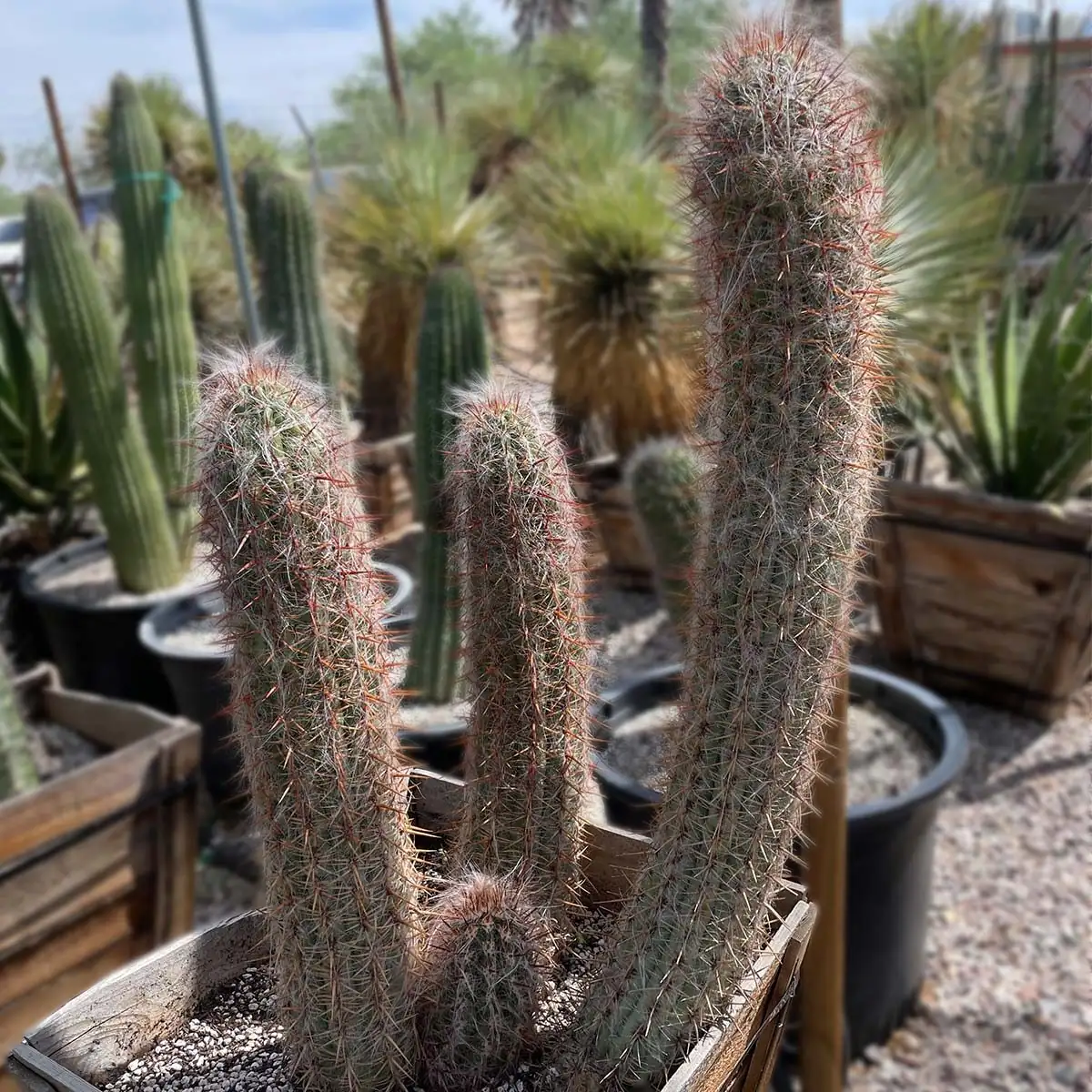
- Habitat: Arid limestone slopes in east-central Mexico, under full sun and big skies.
- Symbolism and “flower language”:
- Often associated with longevity, resilience, and quiet wisdom—an easy leap from its slow, steady growth and “old man” beard.
- These meanings are cultural rather than botanical: they arise from how people see the plant’s form and life history, not from a traditional floriography system. In other words, the message is metaphor, not an ancient code.
Quick reference
- Light: Full sun; brightest window indoors. Light afternoon shade in extreme heat after moving outside.
- Water: Soak, then let the top 1–2 cm dry. Winter: 1–2 waterings total (or none if kept cool).
- Temperature: 10–32°C (50–90°F). Protect from frost; aim to stay above 5°C (41°F).
- Humidity: Low, with good airflow. Keep hairs dry.
- Soil: Very fast-draining cactus mix; equal parts potting soil, coarse sand, perlite/pumice works well.
- Feeding: Monthly in spring/summer; stop in fall/winter.
- Hardiness: Best as a container plant; outdoors year-round only in warm, frost-free climates (roughly USDA Zone 10–11).
Bottom line: The Old Man Cactus’ “wool” isn’t just for looks—it’s a precision-engineered, spine-derived shield that manages light, temperature, and tiny threats. Give it strong sun, sharp drainage, and dry air, and it will repay you with years of dignified, silver-white charisma.