What if a houseplant could live long enough to become a family story, blush ruby at the edges in bright sun, toss out tiny starbursts of winter flowers, and clone itself from a single leaf? Meet Crassula ovata—the jade plant, friendship tree, lucky plant—an irresistibly durable succulent that’s equal parts science marvel and sentimental heirloom.
Meet Crassula ovata: the cheerful “mini-tree” you can keep for decades
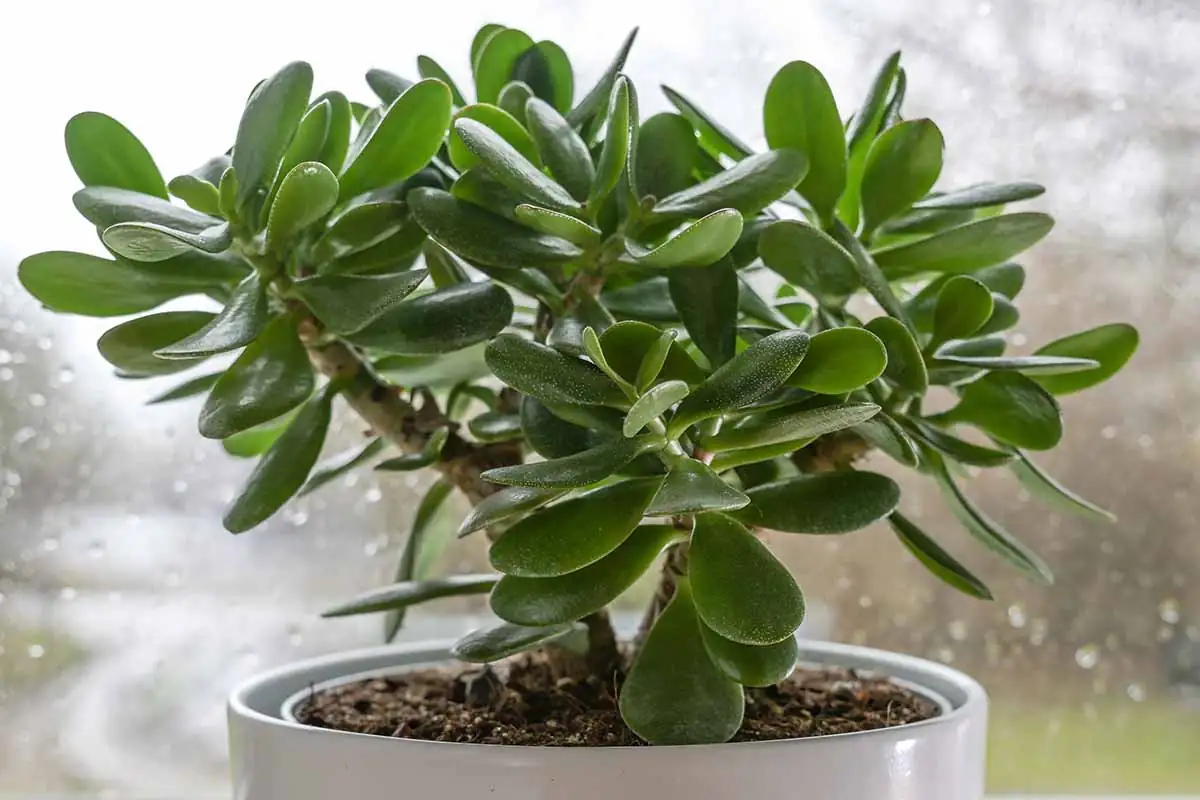
Native to the KwaZulu-Natal and Eastern Cape of South Africa and Mozambique, jade plants build themselves like little trees: thick, glossy, oval leaves perched in opposite pairs; sturdy, branching stems that gradually turn brown and trunk-like; and a rounded, upright habit that looks ready-made for bonsai shaping. Indoors they typically reach 2–3 ft, but in frost-free climates outdoors they can top out near 8 ft. As they age, the bark may peel in fine horizontal strips—part of that endearing miniature-tree look.
Common nicknames—money plant, dollar plant, friendship tree—hint at why jade is gifted so often. It’s genuinely long-lived, famously easy, and symbolically tied to luck, prosperity, friendship, and longevity.
Why jade leaves turn red: built-in “sunglasses” for sunny days
That red edging on jade leaves isn’t a problem—it’s plant physiology showing off. Under strong light (and often with cooler nights or drier soil), jade produces protective pigments called anthocyanins. Think of them as botanical sunscreen and sunglasses rolled into one: they help protect leaf tissues from light stress while allowing the plant to keep photosynthesizing.
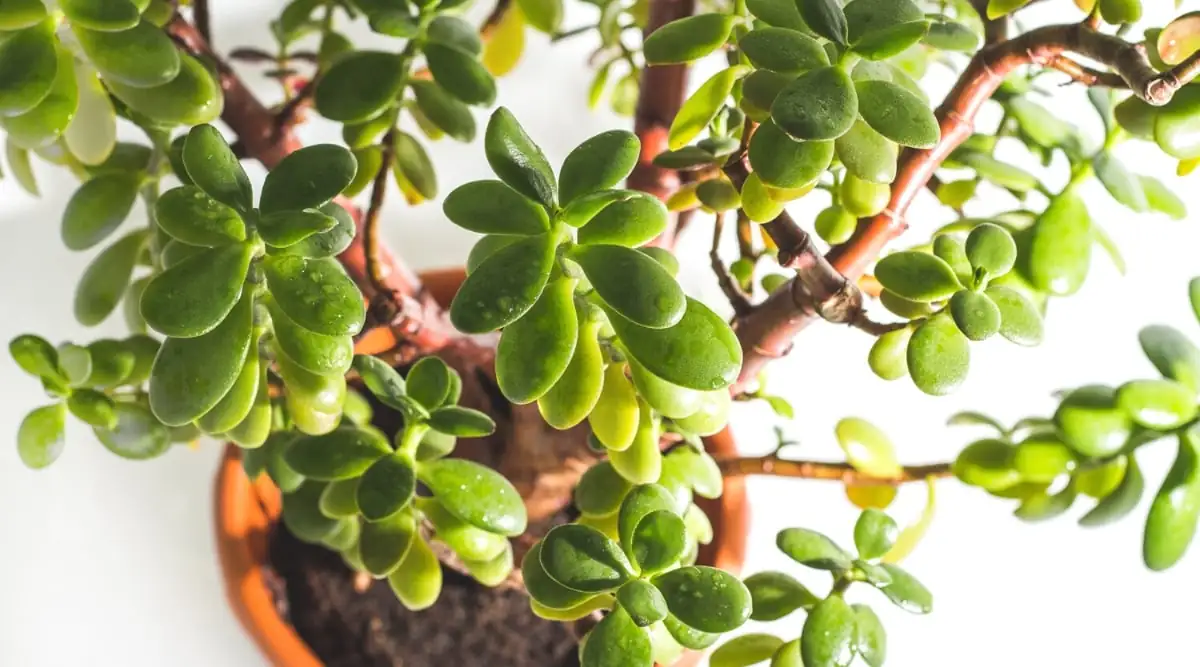
How to coax a healthy blush without burn:
- Aim for 4–6 hours of strong light daily. A south- or west-facing window is prime real estate.
- Acclimate gradually if moving from dim to bright spots to prevent sunburn.
- Keep air moving and avoid hot, enclosed windows where leaves can scald.
Bonus physiology: Like many succulents, jade practices CAM photosynthesis, opening leaf pores mostly at night to conserve water—one reason it stays so plump and unfazed by dry indoor air.
Heirloom longevity: why jade plants become family keepsakes
A well-cared-for jade can outlast trends, apartments, and even a few house moves. Here’s the “why” behind that longevity:
- Water storage: Thick leaves and stems are living canteens, letting the plant cruise through dry spells.
- Forgiving roots: It likes to be slightly root-bound and grows steadily rather than explosively, reducing repot stress.
- Structural toughness: Stems thicken with age, forming a strong, branching framework that you can prune and shape over the years.
Care habits that keep jades thriving for decades:
- Watering: Soak thoroughly, then let the mix dry out completely. In spring/summer that’s often weekly or less; in winter, sometimes just once a month. Never let water sit in a saucer.
- Light: Bright is best. Younger plants like bright indirect light; older plants often relish some direct sun.
- Soil: Fast drainage is essential. Use a succulent/cactus mix or a potting mix amended with perlite at roughly 2:1 (potting mix:perlite).
- Temperature: 65–75°F (18–24°C) is ideal; cooler winter nights around 55°F (13°C) are beneficial. It isn’t frost-hardy—bring it in when temps approach 50°F (10°C).
- Pruning: Early spring is shaping season. Cutting back to a side branch encourages a bushier, stronger plant—great for bonsai-style silhouettes.
- Repotting: Every 2–3 years for youngsters; 4–5 years for mature plants. Repot in early spring, wait about a week to water, and about a month to fertilize.
Symbolism note: In feng shui, jade often occupies the southeast “wealth corner” of a room or office—one reason it’s a perennial pick for housewarming or business-opening gifts.
Starry winter blooms: how to unlock the show
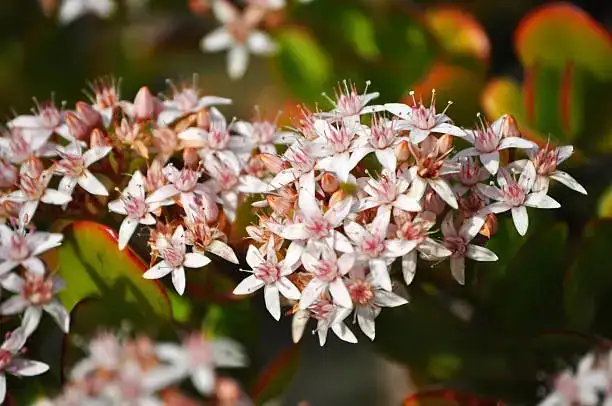
Jade’s winter flowers are tiny, five-petaled stars—white to soft pink, lightly sweet-scented—clustered in rounded sprays at the stem tips. Indoors, flowering is a special event, but you can nudge it along by mimicking its native seasonal cues:
- Shorter days and long, dark nights: Avoid bright artificial light at night in fall/winter.
- Cooler nights: Around 55°F (13°C) helps trigger buds.
- Lean watering: Reduce frequency in fall/winter—let that mix go fully dry between sips.
- Maturity and snug roots: Older plants in slightly tight pots bloom more reliably.
- High light: Keep it bright, especially through late fall into winter.
When everything clicks, the plant rewards you with clusters about 2 in (5 cm) across, each star roughly 0.6 in (15 mm) wide—an unexpected snowfall of flowers right when the rest of the houseplants are napping.
A single leaf to start a new plant: the propagation magic
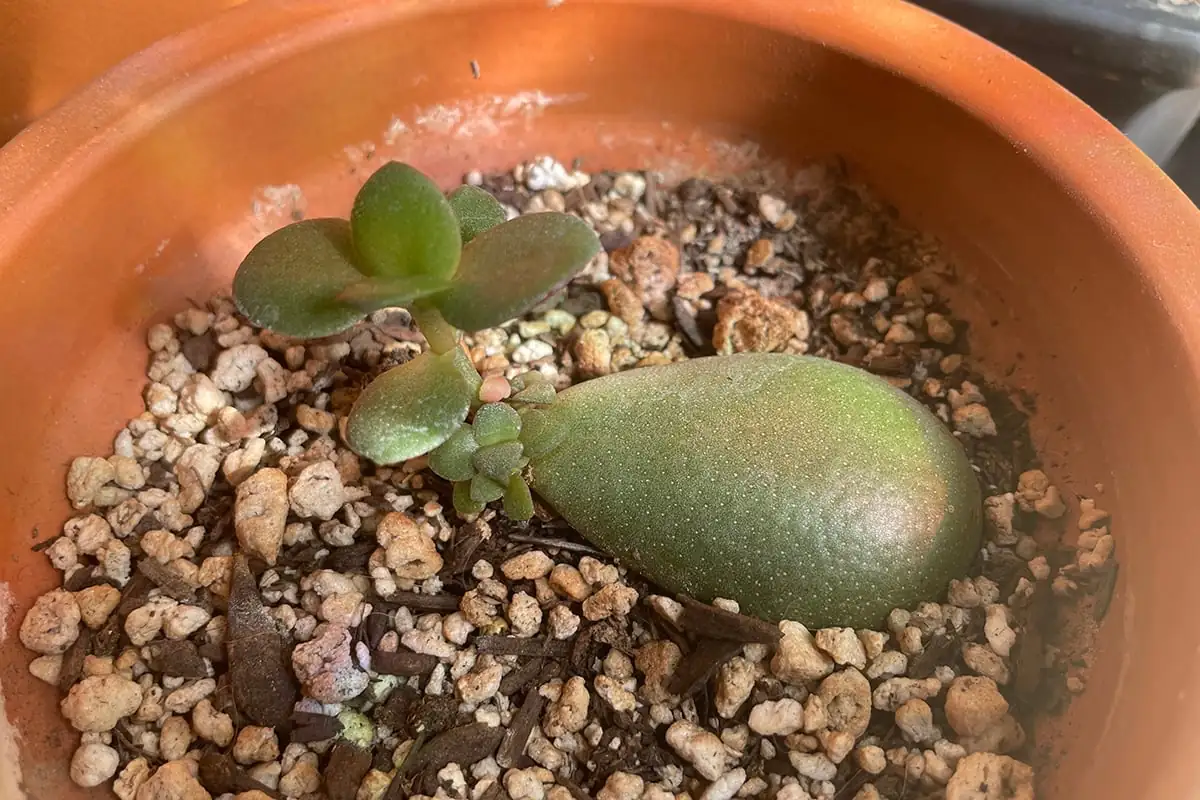
Jade’s superpower is how easily it makes more jade. A dropped leaf can start a new plant if it has the leaf base attached and the conditions are right.
Two trusty methods:
- Leaf cuttings
1) Gently twist off a firm, healthy leaf with its attachment point intact.
2) Let it dry for a few days until the end calluses.
3) Lay it on top of lightly moist, fast-draining mix. Don’t bury it.
4) Keep warm and bright, barely misting the soil surface. Roots and tiny plantlets often appear in 1–2 weeks; water very lightly until growth picks up, then transition to soak-and-dry.
- Stem cuttings
1) Take a 3–4 in (7.5–10 cm) tip cutting.
2) Let it callus for a few days.
3) Insert into lightly moist succulent mix; provide bright light and minimal water at first.
4) Increase watering gradually as roots establish.
Best season: spring and summer. Biggest pitfalls: overwatering (rots the cutting) and burying leaf cuttings too deep.
Why it works: those chubby leaves are energy banks. They store water and carbohydrates, powering root and bud formation even with minimal watering.
Bright light, cool nights, and other care sweet spots
- Sunlight: At least 4–6 hours of strong light daily. Low light leads to stretched, leggy growth.
- Placement: South- or west-facing windows are ideal. Summer outdoors? Try bright shade/filtered sun and acclimate slowly.
- Humidity: Dry air is perfect—no humidity boosts needed.
- Fertilizer: Light feeder. Use a diluted cactus/succulent or balanced houseplant fertilizer every 2–4 weeks in spring/summer. Stop feeding in fall and winter. Water first, then fertilize.
- Hardiness: USDA 9–11 outdoors; grow as a houseplant elsewhere or overwinter indoors.
Common mishaps and quick fixes
- Mushy stems or leaves, soil staying wet: Classic overwatering/root rot. Unpot, trim rotten roots, repot in sharply draining mix, and water less often.
- Leggy, stretched stems: Not enough light. Move to a brighter window and prune back to encourage branching.
- Pests: Mealybugs, scale, aphids, spider mites. Dab visible pests with a cotton swab dipped in rubbing alcohol; repeat weekly until gone. Improve airflow and avoid sticky honeydew buildup.
- Powdery mildew: Uncommon indoors but possible with stagnant air. Improve circulation and keep leaves dry.
- Pet safety: Mildly toxic to cats, dogs, and horses if ingested (may cause vomiting, lethargy, poor coordination). Keep out of reach; sap can irritate sensitive skin.
Cultivar curiosities you might spot
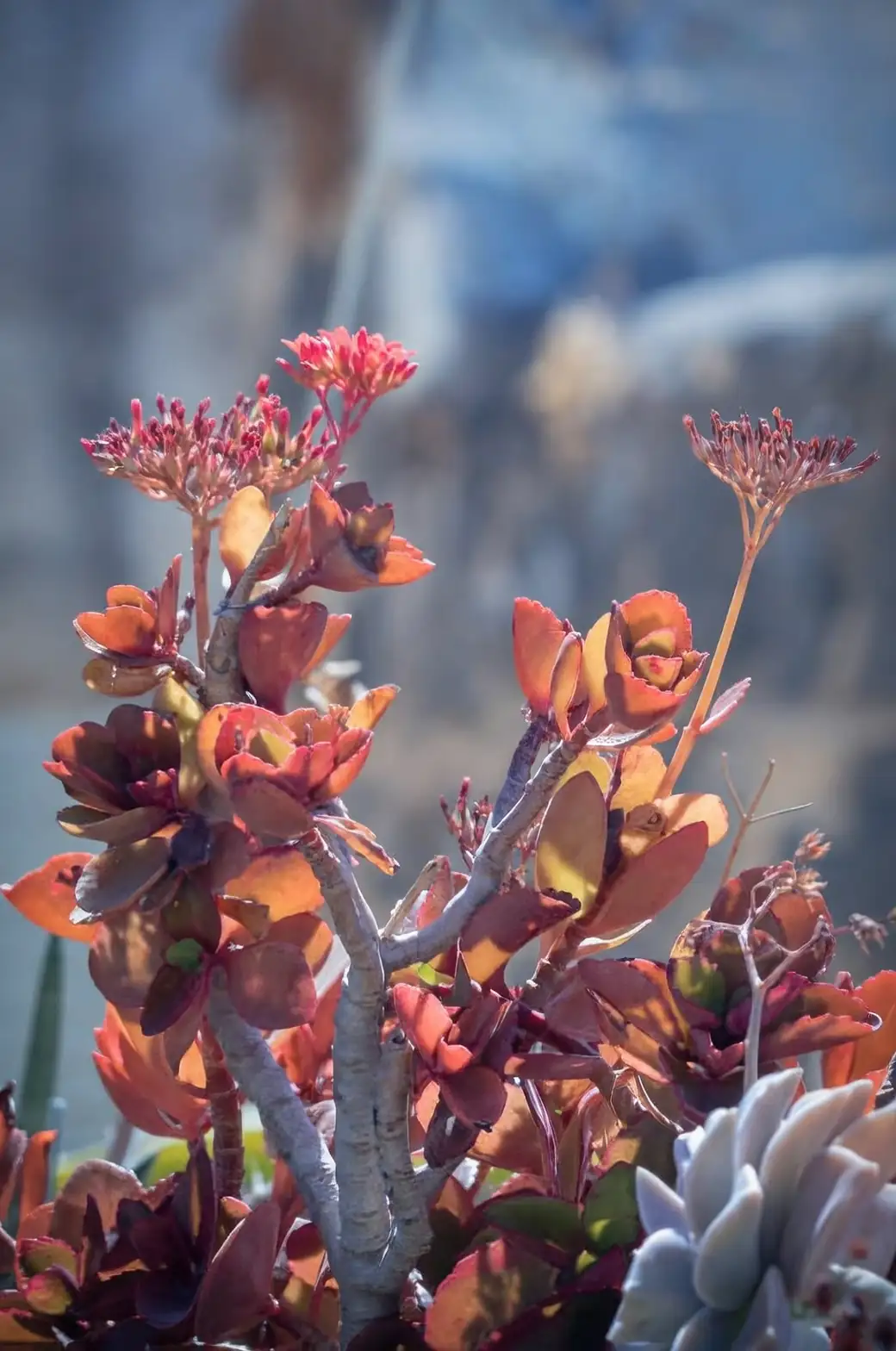
- ‘Hummel’s Sunset’: Golden and green variegation that glows with red edges in strong light—like a permanent autumn sunset on your windowsill.
- ‘Gollum’ and ‘Hobbit’: Playful, tubular or spooned leaves on compact plants. Same easy care, same winter star-flowers when conditions line up.
All are variations on the same resilient theme: woody, branching jade with thick, water-storing leaves.
A simple seasonal rhythm
- Spring: Growth resumes—prune/shape, repot if needed, begin light feeding, and increase watering on a soak-and-dry schedule.
- Summer: Peak growth—steady watering, optional outdoor vacation in filtered sun, light feeding continues.
- Fall: Shorter days—taper watering, stop feeding, and keep nights darker and cooler.
- Winter: Rest and (maybe) bloom—very bright light, minimal water, cool nights, and no drafts.
Quick answers to common questions
- How often should I water? Only when the mix is completely dry. Weekly or less in spring/summer; as little as monthly in winter.
- Why is my jade dropping leaves? Usually water stress—either too much or too little. Sudden cold can also trigger drops. Check moisture and keep temps stable.
- How do I get flowers? Give a mature plant bright light, cool nights around 55°F (13°C), reduced watering in fall/winter, and long, dark nights.
- Why is it leggy? It wants more light. Move to a sunnier spot and prune to promote bushier growth.
- Is it safe for pets? It’s mildly toxic if eaten—call your vet if symptoms appear.
Fun facts to share over coffee
- A jade can live for decades—many become true family heirlooms.
- Bright sun can paint red edging on the leaves—those protective pigments act like natural sunscreen.
- A single fallen leaf can root and start a new jade under the right conditions.
- Indoor flowering is uncommon, which is why winter-blooming jades feel extra lucky.
In short: give your jade bright light, lean watering, and a cool, restful winter—and it will repay you with sculptural good looks, gentle resilience, and the occasional constellation of winter stars. It’s the friendly, science-savvy houseplant that just keeps on giving.