

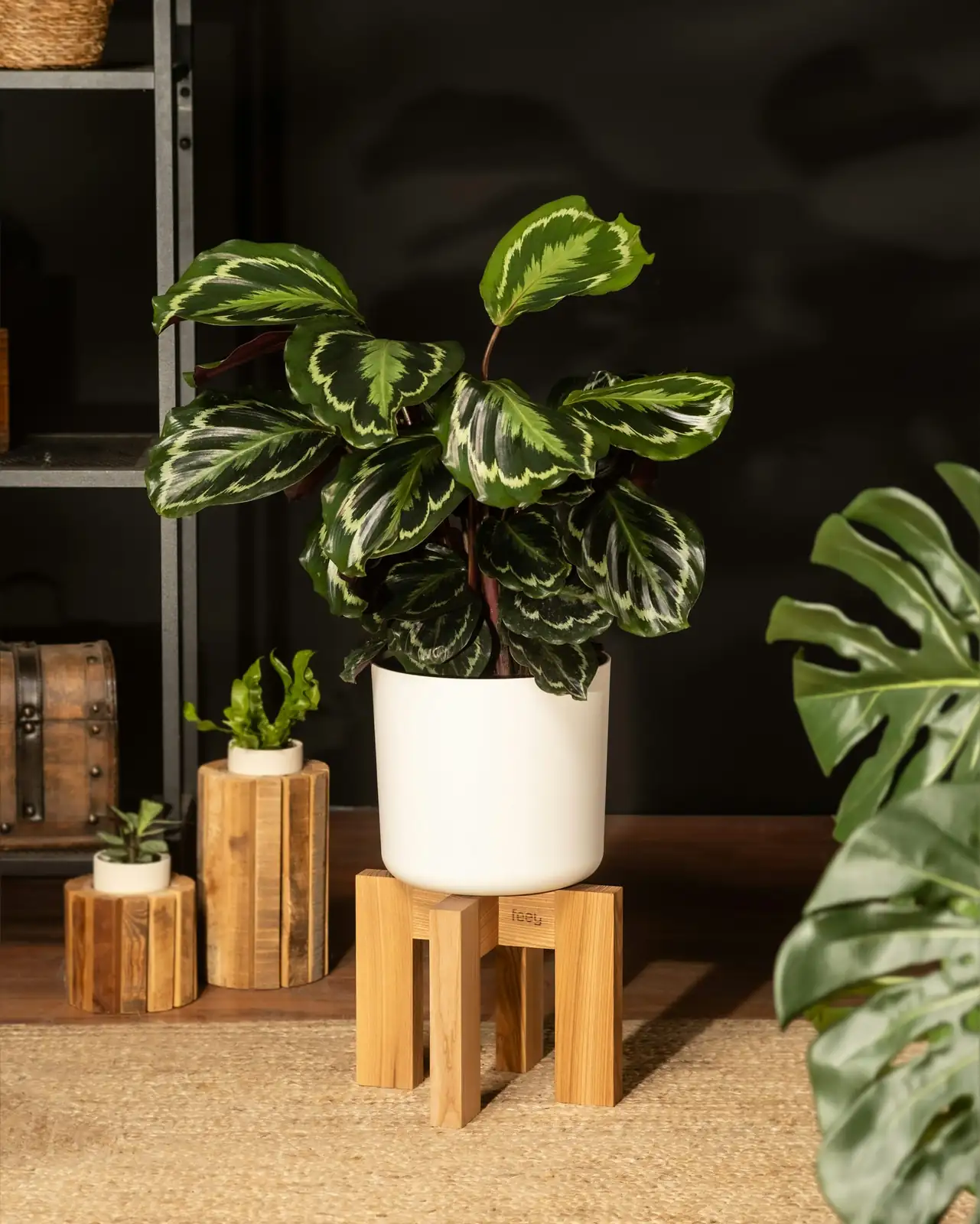
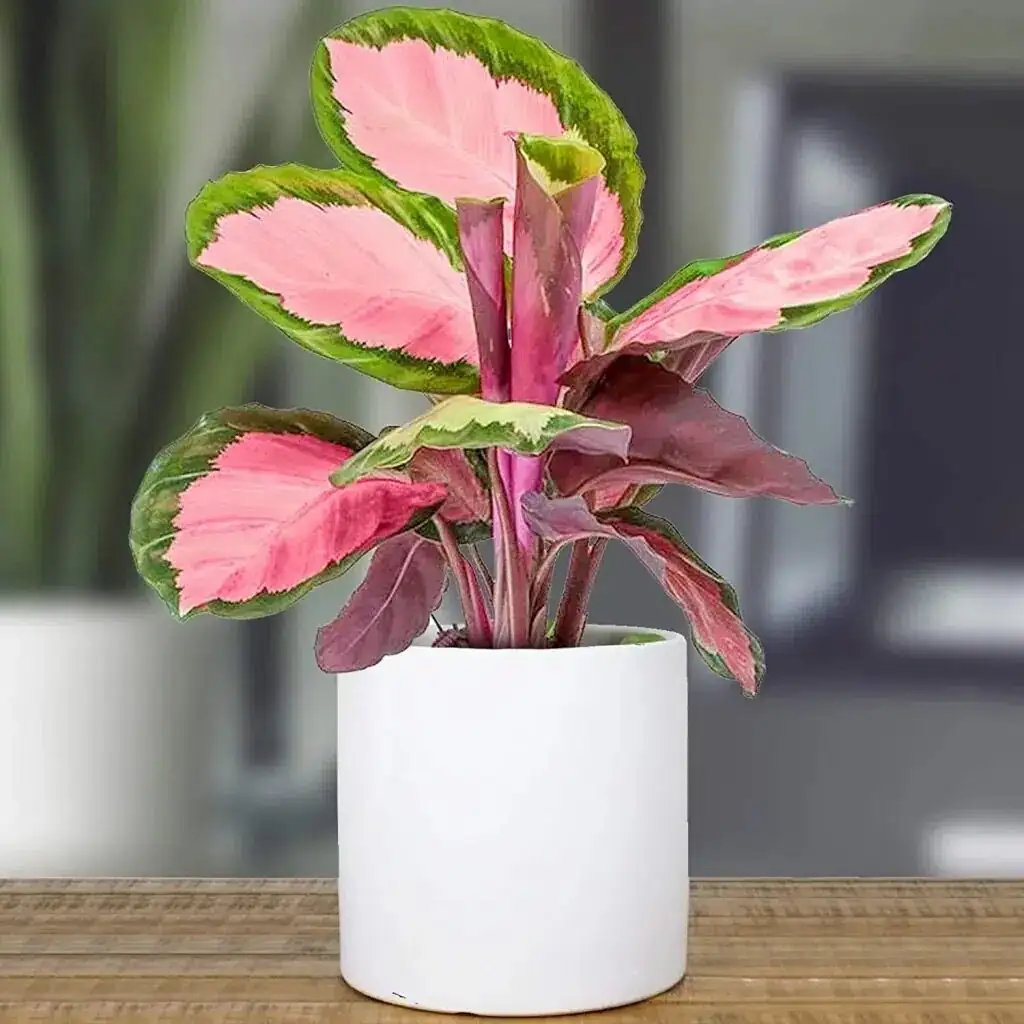
If you’ve ever caught your Rose-painted Calathea raising its leaves at dusk like a tiny troupe of stage performers taking a bow—congrats, you’ve witnessed plant biomechanics in action. Goeppertia roseopicta doesn’t just look dramatic; it runs on leaf physics, pigment optics, and rainforest engineering that make it surprisingly well-suited to modern living rooms.
Meet Goeppertia roseopicta (aka Rose-painted Calathea)
- Family: Marantaceae (the “prayer plant” clan)
- Origin: Northwestern Brazil, warm and humid forest understories
- Aliases you’ll still see: Calathea roseopicta, Rose Calathea, Prayer Plant
- Size and shape: 30–60 cm (12–24 in) tall and wide, forming a dense, upright-from-the-base clump
- The look: Broad, oval leaves with bold, painted markings and a purplish to reddish-purple underside that glows when you place it at eye level
- Flowers: Small and rarely showy indoors—this plant is all about the foliage
Give it bright, indirect light (or gentle medium light), steady warmth, and humid air, and it will flush new leaves fast. Blast it with harsh midday sun or dry air, and you’ll earn crispy edges in record time.
The nightly leaf dance: nyctinasty
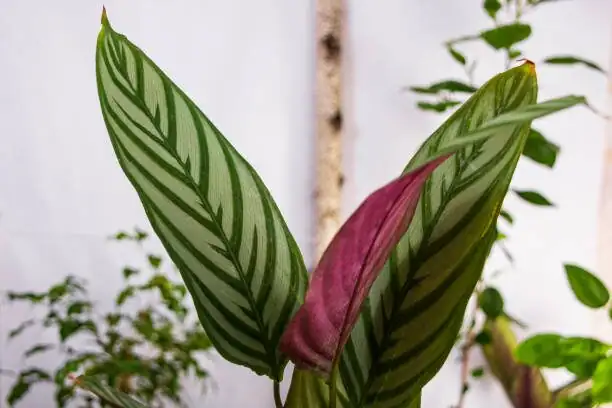
The “prayer plant” nickname comes from nyctinasty—the daily rise-and-rest choreography where leaves lift up at night and relax by day. It’s not superstition; it’s hydraulics.
Pulvinus 101: the leaf’s tiny hinge
Think of the petiole (leaf stalk) as having a wrist joint at the base: the pulvinus. Inside are motor cells that pump ions (like K+ and Cl−) in and out, shifting water pressure between flexor and extensor sides. Result: the leaf actually moves, powered by turgor changes. A built-in circadian clock cues this cycle, and light-sensing pigments help fine-tune timing.
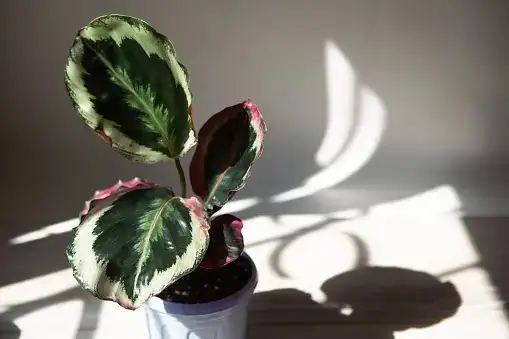
- Day: Extensor cells swell, leaf spreads to catch diffuse light.
- Night: Pressure shifts, leaf angles upward in that classic “prayer” pose.
Why move at all?
Botanists propose multiple benefits working together:
- Reduce nighttime moisture loss
- Shield tender surfaces from nighttime chills or droplets
- Reposition to maximize gentle morning light
Indoors, you’ll see the best “show” when the plant is warm, evenly moist, and comfortably humid—conditions that keep those motor cells plumped and responsive.
Make the movement pop at home
- Place it where dusk/dawn light is noticeable (near an east window is perfect).
- Keep temperatures steady and avoid drafts—abrupt chills can dampen the dance.
- Maintain even root moisture; leaves move best when the whole plant is well-hydrated but not waterlogged.
Purple undersides, explained: the anthocyanin advantage
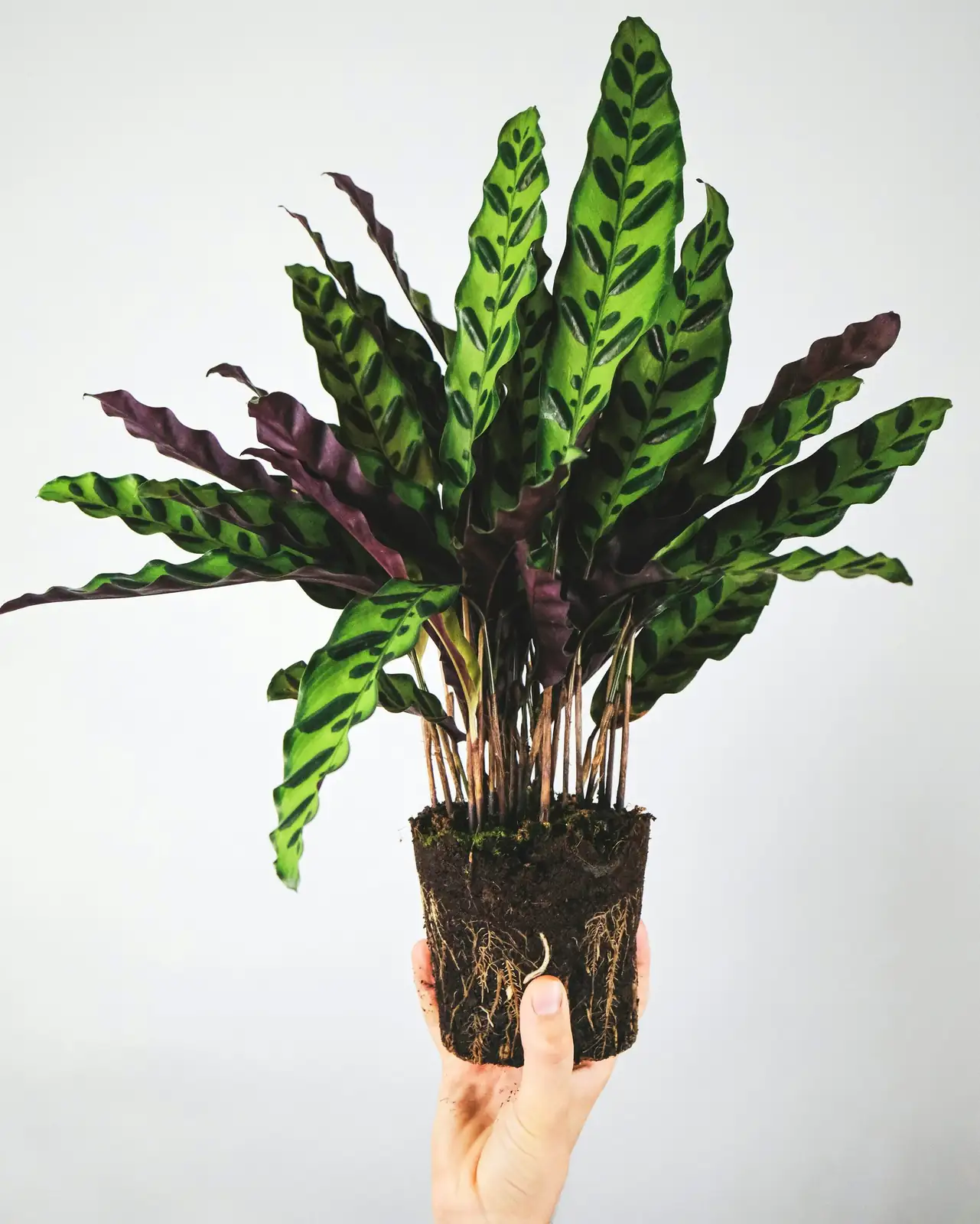
Flip a leaf and you’ll see that moody, purplish-red underside. That color comes from anthocyanins—pigments that do more than serve looks.
Anthocyanins = living sunglasses (and clever reflectors)
- Light management: In low, filtered forest light, pigments on the underside can help manage stray, longer-wavelength light bouncing around the understory, nudging it back through chloroplasts where it can be used. Indoors, this can translate to surprisingly good performance in bright, indirect light while reducing stress from brief overexposure.
- Photoprotection: Anthocyanins act like built-in shades, helping buffer excess light and serving antioxidant roles when conditions get intense (think hot windows or sporadic strong rays).
- Aesthetic bonus: That purple glow makes the plant look richer—especially when displayed at eye level or on a pedestal where you can see the underside.
Note: The depth of purple can vary with light levels, leaf age, and overall health. A change in intensity doesn’t automatically mean trouble; read the whole plant’s posture and new growth before you panic.
Geeky optics for your living room
- Aim for low to medium light or bright, indirect light.
- If near strong sun, provide about 50%–70% shade (sheer curtains work wonders).
- East-facing light is often ideal; south-facing windows are fine with filtering.
Care that supports the science (and the style)
Light
- Best: Bright, indirect light; gentle medium light is fine too.
- Avoid: Direct midday sun that causes scorch and crispy margins.
Temperature
- Ideal: 18–24°C (64–75°F)
- Keep above 8°C (46°F) in winter; avoid below 5°C (41°F).
- In hot spells, keep it under 32°C (90°F) with good airflow and added humidity.
Humidity
- Sweet spot: 60%–70%
- Boost with a humidifier, pebble tray, or plant clustering. Dry air plus strong light = browning or scorched patches.
Watering
- Goal: Evenly moist, never soggy.
- Water when the top 2–3 cm (0.8–1.2 in) feels dry; soak thoroughly and let excess drain.
- In winter, water less as growth slows; constantly wet soil risks rhizome/root rot.
- Light misting is okay for a quick boost, but avoid water sitting on leaves for long (especially overnight).
Soil and potting
- Mix: Loose, moisture-retentive but free-draining—peat/coco base with perlite and/or coarse sand.
- Repot: Spring, when rootbound or when the mix breaks down (often yearly for fast growers). Size up gradually.
Feeding
- Growing season (roughly May–September): Every 2 weeks with a gently diluted, balanced houseplant fertilizer. Avoid splashing fertilizer onto leaves.
- Pause or sharply reduce feeding in winter if growth slows.
Pruning and propagation
- Prune: Remove yellowing or damaged leaves at the base. Thin crowded clumps to improve airflow.
- Propagate: Divide in late spring to early summer. Each division should have roots and several leaves. Small pieces can root in lightly moist sand/perlite, then move to a standard mix.
Hardiness and placement
- Not frost hardy; best indoors except in frost-free climates (approx. USDA Zone 11–12).
- Placement: Near an east window, or a south window with filtered light; keep away from heater/AC drafts. Great for living rooms, bedrooms, and home offices.
Troubleshooting with a lab-coat mindset
- Crispy edges or scorched patches
- Likely cause: Too much direct sun and/or low humidity
- Fix: Filter the light, raise humidity to 60%–70%, and keep evenly moist
- Sudden yellowing leaves
- Common triggers: Chilly temps, dry air, too much direct sun, or watering stress
- Fix: Move to bright, indirect light; keep 18–24°C (64–75°F); aim for 60%–70% humidity; water to maintain even moisture (not soggy). Expect healthier new growth once conditions stabilize.
- Purple underside looks paler
- Possible reasons: Normal variation with light level or leaf age; plant may produce fewer anthocyanins under certain conditions. Ensure bright, indirect light and balanced care. If other symptoms appear (spots, mushy lesions), address potential disease and improve airflow—avoid leaving leaves wet overnight.
- Leaf spot/blight in stale, wet conditions
- Response: Improve airflow, avoid wetting leaves at night, remove affected foliage promptly.
- Pests (mealybugs, scale—often on undersides)
- Tactics: Rinse and wipe; treat with a mild soapy spray (spot-test first); repeat every 5–7 days for several rounds.
Display tricks: make the drama visible
- Put it at eye level so the purple undersides show—bookshelf edges, plant stands, console tables.
- Pair with warm wood or matte black pots to amplify the painted stripes.
- Group with other humidity lovers to create a comfy microclimate.
A year with your rose-painted calathea
- Spring: Repot/divide if needed; keep evenly moist; restart feeding as growth picks up.
- Summer: Peak growth—water more often; provide 50%–70% shade from strong sun; keep humidity high.
- Autumn: Boost humidity as indoor air dries; watch for yellowing/crisping.
- Winter: Keep above 8°C (46°F); water more sparingly; pause fertilizing if growth slows.
Safety, symbolism, and names
- Pet safety: Generally considered non-toxic to cats and dogs—another reason it’s great for living rooms and home offices.
- Symbolism: Often linked with quiet beauty and “living art,” thanks to those painted leaves. As a prayer-plant relative, it’s also associated with gentle daily rhythms—the calming rise-and-rest of nyctinasty you can watch over your morning coffee.
- “Flower language” note: While traditional floriography focused on bouquets, modern houseplant culture gives G. roseopicta meaning through its movement and pattern—patience, steadiness, and an everyday reminder that living things follow their own clocks.
- Names and taxonomy: You’ll see it sold as Calathea roseopicta, but it’s now correctly placed in Goeppertia. Old tags linger; the plant, thankfully, doesn’t mind.
Why it thrives indoors
- Understory pedigree: Evolved for filtered light, which matches bright, indirect household light.
- Pulvinus mechanics: Built-in motion system keeps leaf angles optimized without you lifting a finger.
- Anthocyanin armor: Purple undersides help manage tricky light while looking gorgeously dramatic.
Set it up with steady warmth, humidity in the 60%–70% range, and a consistent watering rhythm, and your Rose-painted Calathea will reward you with fresh leaves, nightly leaf-ballet, and that unmistakable purple glow.