
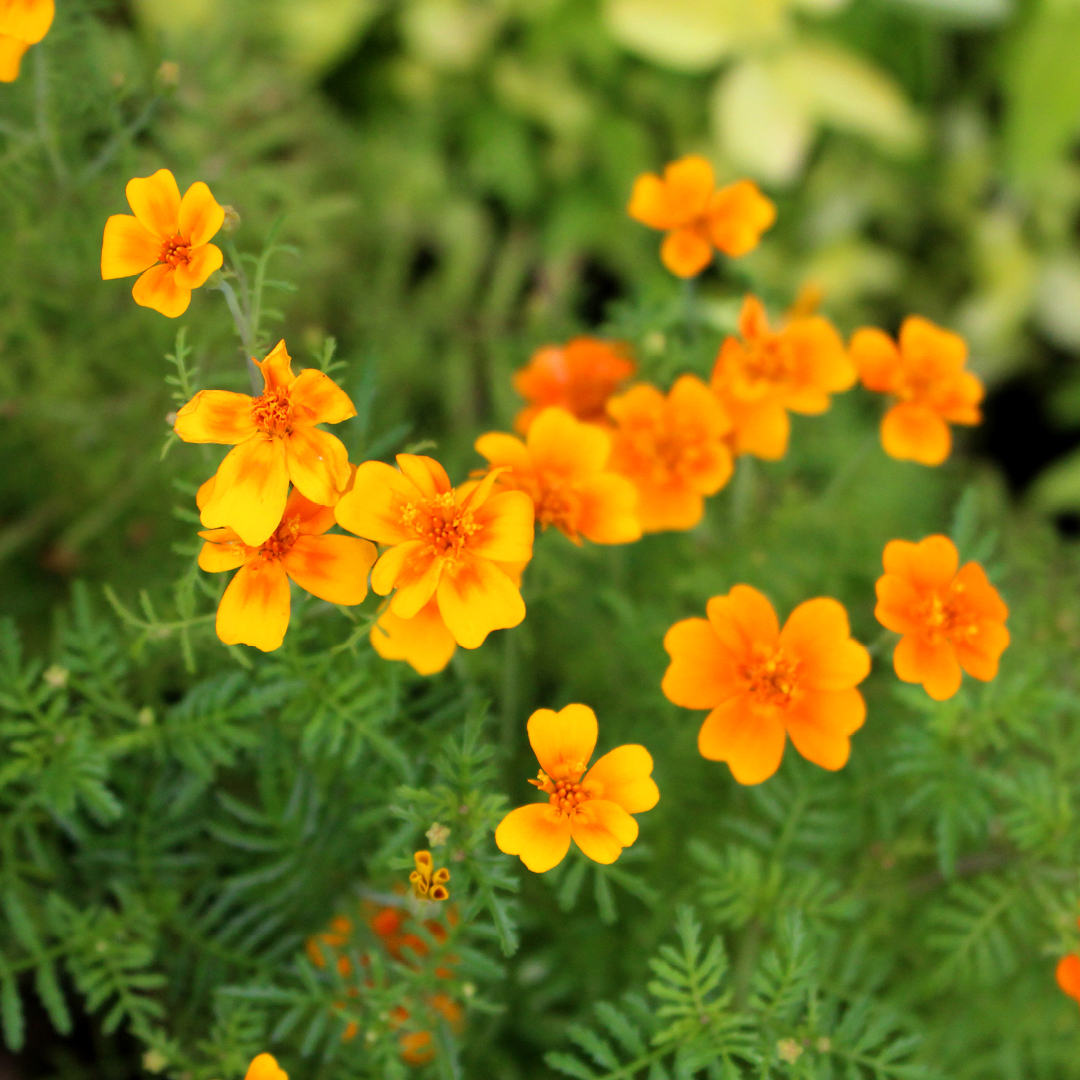
Meet French marigold (Tagetes patula): a pint-sized powerhouse that smells like spice, blooms like a little firework, and moonlights as a soil‑health ally. Native to Mexico and Central America, this compact annual is as happy edging a sunny path as it is tucked among tomatoes—where it does a bit of quiet chemistry on your behalf.
Quick snapshot
- Size and habit: 15–30 cm tall, 15–20 cm wide; compact and bushy, with finely divided, fern‑like leaves
- Flowers: Frilly, semi- to fully double in glowing yellows, oranges, reds, and bicolors (1–3 in across)
- Season: Early summer to frost, with a pause in extreme heat and a second wind as temperatures cool
- Vibe: Easy, drought-tolerant once established, sun-loving, long-blooming—and often lightly self-seeding
The spice behind the scent: leaf chemistry you can smell
Brush the foliage and you’ll catch that unmistakable, pleasantly spicy note. That aroma isn’t just for humans—it’s a complex cocktail of plant-made compounds that telegraph “do not snack” to many herbivores and insects.
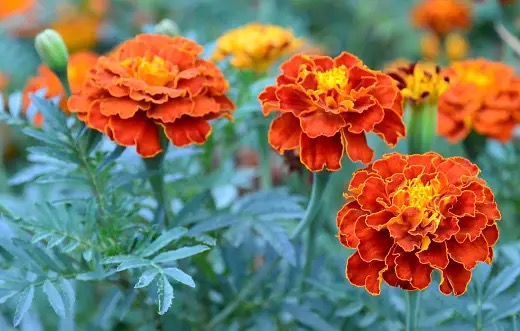
- Volatile terpenes: The essential oils of Tagetes patula are rich in zesty, green, and citrusy terpenes (a family that includes compounds such as linalool, limonene, and the marigoldy “tagetone/ocimenone” types). These evaporate easily, so you smell them whenever you handle the plant.
- Sulfur-tinged thiophenes: Marigolds are also famous for photoreactive thiophenes, notably alpha‑terthienyl. When roots and residues release these molecules into the soil—and when light and oxygen are present—they can generate reactive species that are rough on microscopic pests, including certain nematodes.
Together, these compounds help explain the “strong, spicy” reputation—and some of the plant’s clever ecological tricks.
Why deer and rabbits usually keep moving
French marigold’s leafy oils shout louder than a motion sensor light to browsing mammals. The dense, resinous scent and taste are unappealing to many deer and rabbits, so garden raids tend to pass right by. Resistant doesn’t mean invincible—very hungry animals will sample almost anything—but in most gardens, Tagetes patula is a solid, low‑browse choice.
Underground superpower: how French marigold helps with root‑knot nematodes
Root‑knot nematodes (Meloidogyne spp.) are microscopic plant parasites that cause swollen, knotty roots, stunted growth, and yield losses. Here’s where French marigold shines.

- Chemical defense: Research shows Tagetes species (including T. patula) produce the thiophene alpha‑terthienyl and other bioactive compounds that can suppress populations of plant‑parasitic nematodes in soil. Some effects are direct (toxic to certain nematodes), others are indirect (shifting the microbe community).
- Best use in gardens: Think prevention and population knockdown rather than a cure for already-infected roots. Effectiveness varies with marigold variety, nematode species, and planting density.
Practical tips for nematode‑troubled beds:
- Grow as a dedicated warm‑season cover: Plant French marigolds thickly and let them occupy the bed for a full season; keep weedy host plants out so nematodes can’t hop hosts.
- Or interplant smartly: Thread marigolds through veggie rows (classic with tomatoes and peppers). Use a regular, not sparse, spacing to maximize root presence in the soil profile.
- Finish strong: At season’s end, cut and incorporate residue or chop-and-drop onto the bed. Decomposing roots and shoots continue to release helpful compounds.
Note: Marigolds are a tool in an integrated approach—good sanitation, crop rotation, and resistant vegetable varieties remain important.
Quick to sprout, generous with surprises
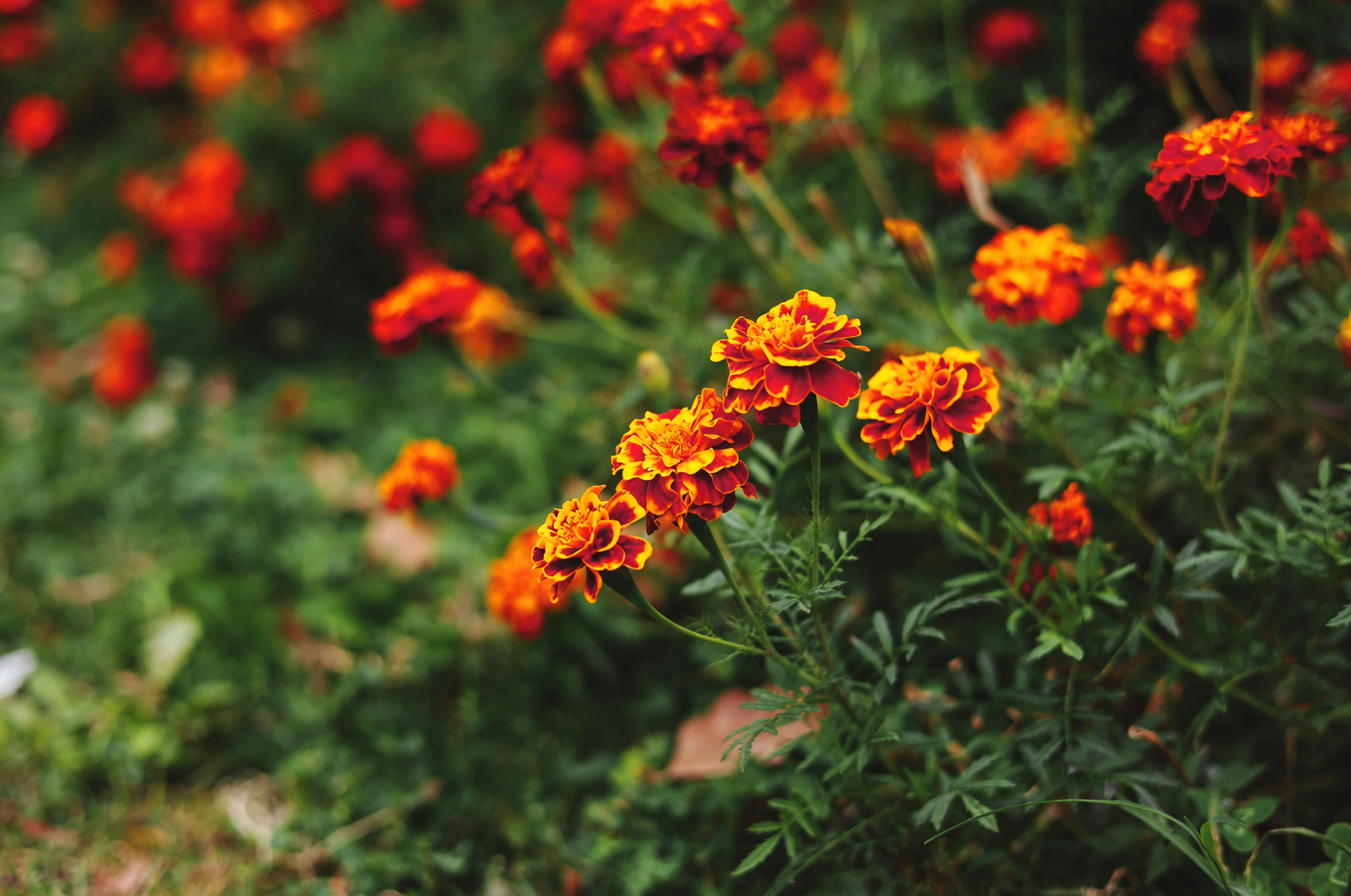
- Speedy starts: From seed, French marigolds germinate in about 7–14 days with warm soil around 21–24°C (70–75°F). Sow 6 mm (1/4 in) deep after frost, or start indoors 6–8 weeks prior.
- Volunteer magic: Leave a few late blooms to mature and you may find cheerful, self‑sown seedlings next season—a gentle, not weedy, habit that many gardeners grow to love.
How to grow it like a pro
Sun and temperature
- Full sun (6+ hours) gives the best flower show; in very hot climates, light afternoon shade is fine.
- Not frost‑hardy. Plants slow near 4°C (40°F) and die with a hard frost. Peak flowering loves 20–24°C (68–75°F).
Soil and water
- Well‑drained soil is key. Moderately fertile, from sandy to clayey if drainage is decent; pH around 6–7.
- Water well at planting; then let the topsoil dry between deep waterings. They handle dry spells but bloom best with steady moisture.
- Containers may need water more often in heat. Always water at soil level to keep foliage dry.
Feeding and grooming
- Go easy on fertilizer; too much nitrogen = leaves over flowers. A balanced, light feed in pots or depleted soils is plenty.
- Pinch early tips to encourage branching.
- Deadhead spent blooms to keep the color coming. If plants stretch, trim back lightly—no more than one‑third at a time.
Spacing and placement
- Space 25–30 cm (10–12 in) apart for a neat, edging carpet or a lively underplanting in veggie beds.
- Dwarf series thrive in 15 cm (6 in) pots (2–3 per pot); standard types are happier in 30 cm (12 in) containers.
Pests and diseases
- Spider mites and thrips are the usual suspects. Start with a firm spray of water; escalate to horticultural or neem oil if needed.
- Crowding plus wet foliage invites powdery mildew, botrytis, and bacterial leaf spots. Space plants well and water the soil, not the leaves.
- Root rot is almost always a drainage or overwatering problem. Sudden collapse can also signal soil‑borne wilts; replant in fresh, well‑drained soil if that occurs.
Companion planting wins (beyond nematodes)
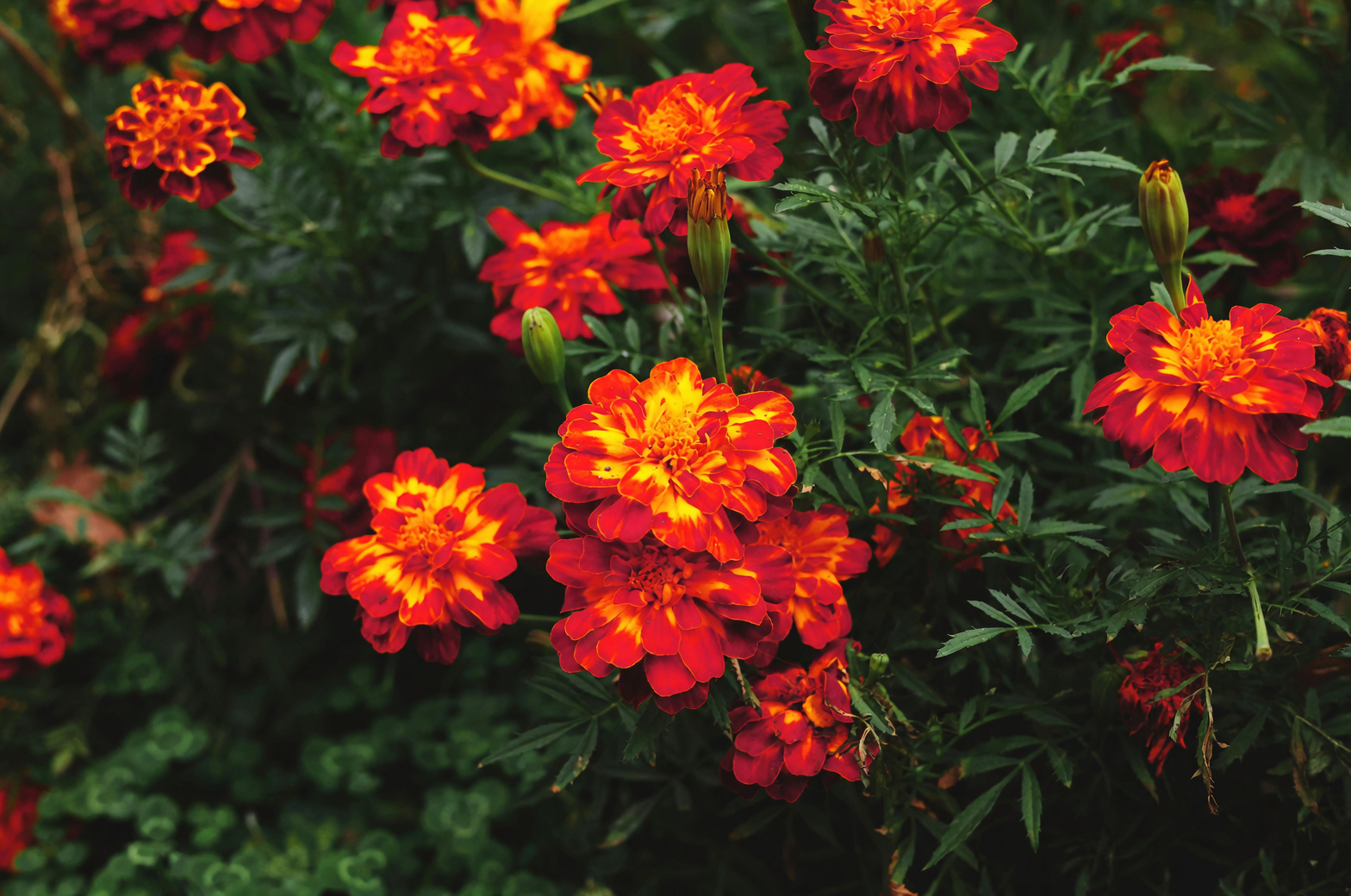
- Among vegetables: Thread plants between tomatoes, peppers, beans, and greens to add color and support beneficial insects.
- For beneficials: Single or open‑centered French marigolds serve nectar to hoverflies and tiny wasps that help with aphids and other pests.
- Reality check: They don’t repel every pest from every crop. Consider them accelerators of garden balance rather than force fields.
Safety notes for people and pets
- Generally low‑toxicity. The sap and aromatic oils can irritate sensitive skin—gloves are wise if you react easily.
- Typically safe around pets with normal garden exposure; chewing any plant in quantity may upset stomachs.
Culture, symbolism, and that “French” misnomer
Despite the common name, French marigold’s roots are Mexican and Central American. The “French” label likely stuck through European horticulture, where the plant rocketed to popularity in formal bedding schemes.
Flower language and meaning:
- Warmth and affection: The sunburst palette naturally reads as joy, steadfast love, and exuberance.
- Bittersweet notes: In other traditions, marigolds symbolize grief or remembrance—the same fragrant glow appears in altars and pathways for Mexico’s Day of the Dead, where blooms are thought to guide spirits home.
- Protective charm: Folk beliefs often cast marigolds as warding plants, their strong scent a symbolic shield against negativity.
Rather than a single, ancient “definition,” these meanings grew from long use in gardens and rituals, where color, fragrance, and abundance shaped the stories we tell about them.
Notable series and classics to try
- Time‑tested favorites: ‘Naughty Marietta’ (rich gold petals with a maroon splash) and ‘Super Hero Spry’ bring bold, bicolored charm.
- Productive series: Bonanza, Durango, Safari, Super Hero, Disco, Janie, and more—ranging from tight edgers to slightly taller, floriferous mounds.
Troubleshooting quick hits
- Tons of leaves, few flowers? Too much nitrogen or too little sun. Dial back feed and chase more light.
- Brown or spotted leaves? Improve airflow, water at the base, and remove worst offenders; watch for leaf spot diseases.
- A mid‑summer bloom lull? Normal in extreme heat; flowers rebound as nights cool.
- Sudden wilt? Check for soggy, poorly drained soil or soil‑borne wilts; replant in fresh, well‑drained ground if necessary.
French marigold may be small, but it’s mighty—perfumed armor up top, quiet chemistry below, and a confetti of blooms from summer to frost. Plant a few this season and let Tagetes patula work its sunny, sciencey magic.