

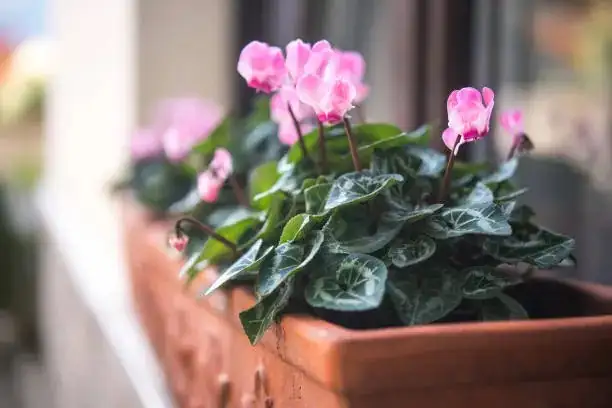
What looks like a flower doing a backflip is actually one of nature’s neatest engineering tricks. Cyclamen persicum—the florist’s cyclamen, a cool-season charmer from the Mediterranean—unfurls buds that start shy and nodding, then snap their petals backward into sleek, swept wings. Why the dramatic move, and how does it work? Here’s a deep dive into the physics, pollinators, and human creativity behind those reflexed petals.
Meet the backflipping bloom
A compact, tuberous perennial in the primrose family (Primulaceae), Cyclamen persicum grows into a neat mound about 15–23 cm tall and wide. Heart-shaped leaves, often marbled in silver, set the stage for slim stems carrying white, pink, red, or purple flowers that bloom through fall into spring—peaking midwinter when most plants are resting. Each petal arcs sharply backward, giving the flower its butterfly-or-rabbit-ear silhouette.
Origin story: Native to Mediterranean regions including Greece, Syria, and Lebanon, C. persicum thrives in cool, bright conditions and loathes heat—exactly why it’s such a beloved winter houseplant.
How a cyclamen petal pulls off its backflip
At first, a cyclamen bud hangs pendant, petals wrapped like a tight little scroll. Then the performance begins.
- Differential growth drives the flip: The inner and outer surfaces of each petal don’t grow at the same rate. As cells on one side elongate faster than those on the other, tension builds and the petal reflexes upward. Think of it like a bimetal strip curling with a temperature change—only here it’s growth rates doing the bending.
- A twist adds finesse: Subtle torsion helps each petal swing up and away one by one, opening a clean, uncluttered stage around the flower’s reproductive parts.
- A precision pollen port: Cyclamen flowers are famously structured for tidy pollen transfer. The anthers typically release pollen through small pores, and the style culminates in a tiny apical opening that functions as the receptive surface for pollen. Research has shown that this microscopic “window” is time-limited during anthesis—an elegant gatekeeper that narrows the pollination window to when the flower is most ready.
Result: Reflexed petals pull the curtains back, spotlighting a slim style and a compact anther cone—streamlining traffic for pollen couriers.

Why turn petals backward? The pollination payoffs
Reflexed petals aren’t just for show; they tilt the odds of successful reproduction.
- Clears the landing zone: With petals swept back, insects face less clutter when they contact the anthers and the style’s tiny opening.
- Keeps pollen drier and cleaner: The upswept form helps shed moisture and stray debris, protecting exposed pollen from getting gummed up.
- Funnels attention to the target: Strong color with a darker “throat” near the flower base focuses visual cues toward the business end—pollen and the receptive style opening.
Pollinators: from buzzers to opportunists
Cyclamen persicum wears many hallmarks of buzz-pollinated flowers—pollen packaged in pores and a form that invites vibration. In wild populations, large bees capable of buzzing (sonicating) the anthers have been documented, but they can be surprisingly rare.
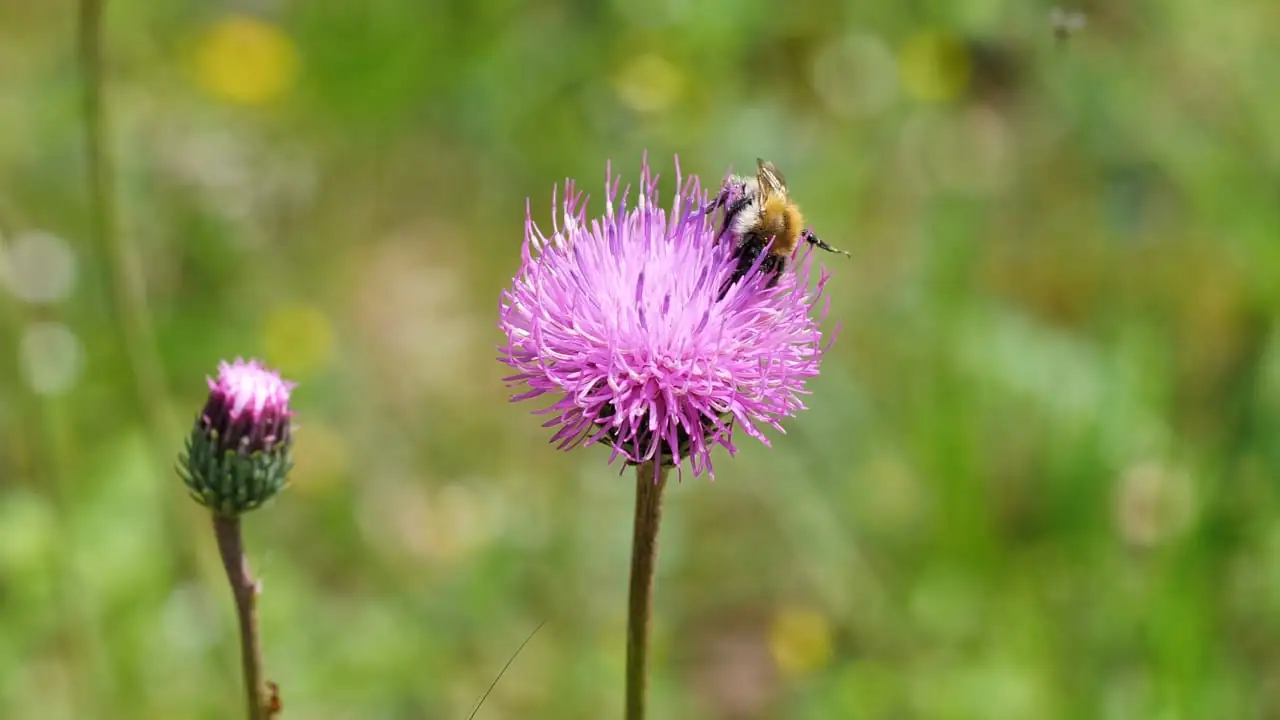
- Ancient partners, modern stand-ins: Field studies in the Levant found that while large buzz-pollinating bees occur occasionally, today’s most frequent visitors and pollinators often include thrips and hoverflies. In winter-flowering populations, tiny primitive moths (micropterigid moths) have been observed feeding on pollen, mating within flowers, and efficiently moving pollen around. It’s a fascinating case where a plant’s classical “syndrome” hints at one guild of pollinators, yet real-world service is delivered by a broader cast.
- A brief window, better precision: That time-sensitive apical opening on the style likely helps focus pollen receipt to peak readiness—useful when your pollinators are a mixed crowd.
Indoors, of course, most florist’s cyclamen set few seeds without help. Growers typically hand-pollinate when seeds are desired, timing it to the flower’s receptive window.
The breeder’s playground: sculpting reflex, ruffles, and color
If wild cyclamen is nature’s origami, then modern cultivars are haute couture. Breeders have leaned into the species’ reflexed architecture and turned it into a design language.
- Playing with the flip:
- Stronger reflex: Lines that hold a sharper, more aerodynamic sweep.
- Long or slim petals: Accentuating the wing-like effect.
- Twisted or “butterfly” types: Gentle torsion for a dynamic, in-flight look.
- Edge artistry:
- Fringed, ruffled, or serrated margins add froth and motion.
- Picotee edges and bicolors outline the petals’ curves and amplify the dark throat at the base.
- Scale and stance:
- Miniature series perch neatly on windowsills; larger-flowered forms make dramatic winter centerpieces.
- Leaf marbling—subtle to bold—now serves as an ornamental element in its own right.
- Fragrance and feel:
- Wild forms can be sweetly scented; many modern florist lines emphasize flower power and form, with lighter fragrance. Some breeding efforts nudge scent back in without sacrificing the winter show.
Behind the scenes, seed production, careful timing of pollination, and even tissue culture play roles in creating consistent, vigorous plants. And although some modern lines show better tolerance to household conditions, C. persicum remains a cool-lover at heart.

Care cues from the flower’s design
Understanding the bloom’s engineering can make you a better cyclamen whisperer.
- Keep it cool and bright (indirect): Flowers last longest at 15–21°C by day, 4–10°C at night. Warm rooms can shorten the show.
- Water from below: The reflexed crown and exposed tuber top are vulnerable to rot if constantly wet. Bottom-watering keeps the “machinery” drier and happier.
- Respect the rhythm: Peak bloom is winter; after flowering, it naturally coasts toward a summer rest. Water less as leaves yellow, keep it mostly dry and cool in summer, then ramp up care again in fall when new leaves and buds return.

Flower language, history, and what it really says
Cyclamen has gathered symbols for centuries around the Mediterranean. Heart-shaped leaves and winter-lights blooms earned it associations with sincere affection, enduring love, devotion—and, in some traditions, gentle goodbyes or resignation. Color lore layers meaning: red for love, white for purity, pink for steadfast affection.
Where does this come from? Much of it traces to classical and later European floriography—Victorian-era “flower language” guidebooks—and Christian iconography in which cyclamen’s heart-like leaves and sorrow-tinged grace sometimes echoed the Virgin Mary’s compassion. Today, these meanings are cultural poetry rather than botanical fact, but the plant’s life cycle reinforces the metaphor: steady devotion through winter, then a quiet fade into rest.
Quick facts to drop into conversation
- The name Cyclamen comes from Greek “kyklos,” meaning circle—an ode to its rounded tuber.
- A happy, mature plant can carry dozens of flowers in a single season.
- As flowers fade, stems often twist and draw developing seed pods downward—another subtle motion in a plant full of graceful mechanics.
- Old-timers called it sowbread, nodding to stories of wild pigs digging and eating the tubers.
- There are 20+ Cyclamen species; C. persicum is the superstar for indoor winter color.
Safety note
Cyclamen is toxic to humans and pets—especially the tuber, which contains irritating terpenoid saponins. Keep it out of reach, and avoid ingestion.
Why the backflip still thrills
Part sculpture, part strategy, the reflexed petals of Cyclamen persicum distill a remarkable balance: they clear the runway for pollinators, highlight precise floral engineering, and hand breeders a malleable canvas for winter’s most elegant houseplant. The next time you see those petals swept back like a troupe of tiny dancers, you’ll know you’re watching a performance millions of years in the making—still evolving, and still captivating.


