

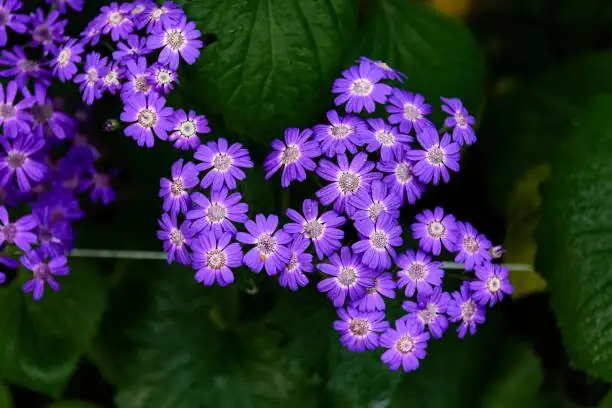
If you’ve ever walked past a florist’s bench in late winter and stopped dead at a dome of electric, almost impossible blue daisies—congratulations, you’ve met Pericallis × hybrida, the florist’s cineraria. This cool-season hybrid, derived mainly from Canary Islands species, is a rare indoor plant that can deliver a convincing “true blue” pop. Why is that blue so special, and how do light and temperature make it sing—or fade? Let’s geek out and get practical.
Meet the plant that makes winter feel like spring
- Botanical name: Pericallis × hybrida (often sold simply as “Cineraria”)
- Family: Asteraceae
- Habit: Compact, mounded foliage crowned by a dense dome of daisy-like blooms
- Prime time: Winter to spring (often stretching into early summer if kept cool and bright)
- Why it’s beloved: Vivid purples, pinks, bicolors—and those standout blues that are surprisingly rare among indoor bloomers
In a nutshell: keep it bright and keep it cool. In cool rooms (ideally 10–15°C / 50–59°F) the plant stays compact, the colors stay vivid, and the show lasts longer. In warmth, stems stretch, leaves thin, and the party ends early.
The fun science of “true blue”
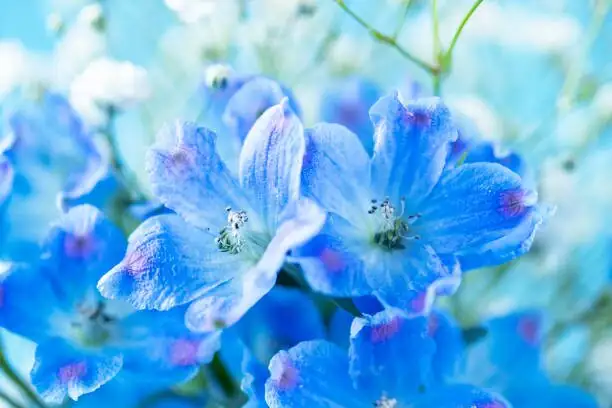
Blue in most flowers isn’t a single pigment. It’s a team effort inside petal cells—chemistry, cell pH, co‑pigments, even metal ions—arranging anthocyanins into a color our eyes read as blue.
Anthocyanins: the color‑shifting artists
- Anthocyanins are the flavonoid pigments responsible for reds, purples, and blues in many flowers.
- Their color shifts with pH inside the petal’s vacuoles:
- More acidic (lower pH) leans red/magenta.
- Slightly higher pH stabilizes purple to blue “quinonoidal” forms.
- Co‑pigmentation: Colorless flavones/flavonols can stack with anthocyanins, deepening and bluing the tone.
- Metal ion complexing (notably seen in some species): can nudge anthocyanins bluer.
- Heat and strong UV can degrade anthocyanins—cool, bright-but-gentle light keeps them crisper.
In blue cineraria cultivars, the pathway often enriches delphinidin‑type anthocyanins (the “bluest” family). An enzyme called F3′5′H is a usual suspect: when active, it pushes production toward the delphinidin branch.
The genes turning blue “on”
Recent research in Pericallis hybrida identified a regulatory switch:
- PhMYB2 (an R2R3‑MYB transcription factor) partners with a bHLH protein (PhbHLH17) to boost genes like F3′5′H and DFR3, ramping up anthocyanin production in blue and carmine forms.
- A related repressor, PhMYB4, can compete for that partner and dial the color back.
Think of it as a mixing board: MYB + bHLH slide the “blue channel” up; a repressor nudges it down. Breeders select cultivars with the mix set to “cobalt.”
Myth-busting pH: potting mix won’t turn pinks into blues
Hydrangea fans know soil chemistry can change flower color. Not here. In Pericallis, the key pH is the microscopic vacuolar pH inside petal cells—set by genetics and cell physiology. Adjusting your watering pH won’t reprogram a magenta plant into a sapphire one.
Why blue looks bluer (or duller): light and temperature
Light intensity and spectrum
- Bright light drives anthocyanin synthesis. Place cineraria at the sunniest bright window you have (east or south is great), but protect from harsh midday scorch.
- Spectral story: under cool‑daylight LEDs or natural daylight (high color‑rendering, 5000–6500K), blues appear clean and saturated. Under very warm, low‑CRI bulbs, blue can look muted or purplish—classic metamerism.
- Pro tip: Photograph your plant in daylight to see its truest blue.
Temperature: the color bodyguard
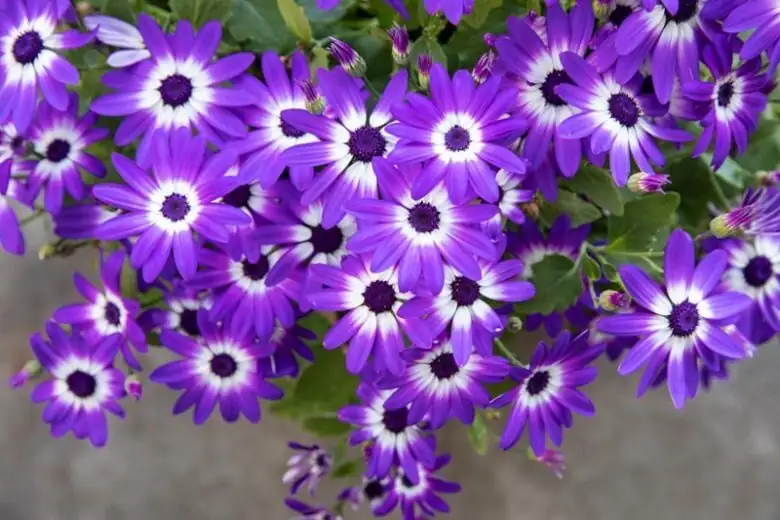
- Cool air (10–15°C / 50–59°F) preserves pigment stability and keeps growth compact, which visually concentrates color in a neat dome.
- Warm rooms (>20°C / 68°F) can:
- Loosen flower clusters and thin leaves, diluting the color impact.
- Shorten bloom life and encourage disease.
- In some cases, speed pigment fade because anthocyanins are less stable with heat.
Breeding choices behind the blues you see
Breeders have stacked the deck for blue by:
- Selecting for high F3′5′H activity and robust MYB–bHLH regulation (more delphinidin).
- Favoring cultivars with co‑pigments that deepen blue.
- Nudging vacuolar pH into a range where blue forms are stable.
- Refining flower architecture so a tight dome of blooms reads as an unbroken “lake” of color.
That’s why blue cineraria can look almost neon compared with other indoor plants: it’s a biochemical victory shown off by a well‑designed canopy of daisies.
Care that keeps the color dazzling
- Light: Very bright indoors near an east or south window. Outdoors in cool weather, morning sun with afternoon shade.
- Temperature: Best between 10–15°C (50–59°F); avoid sustained heat above 20°C (68°F). Protect from frost.
- Water: Keep the potting mix evenly moist, never soggy. Let the surface dry slightly before watering again. Empty saucers.
- Airflow and humidity: Moderate humidity with good air movement. Avoid wetting flowers (prevents gray mold).
- Feeding: Light, regular feeding during growth and bloom—about every 2 weeks with a diluted balanced liquid fertilizer. One or two bloom-boosting feeds (slightly higher P and K) can help as buds swell. Stop when flowering winds down.
- Grooming: Deadhead to keep the dome tidy. After the main flush, cutting stems back to 10–15 cm (4–6 in) sometimes triggers a smaller encore if conditions stay cool and bright.
- Placement hacks for the bluest blue:
- Keep away from heater vents, radiators, and hot drafts.
- Rotate the pot so buds develop on all sides in maximum light.
- If displaying deeper in a room, return it to the window regularly to “recharge” color.
Buying for the best blue
- Pick a naturally compact, evenly domed plant with thick, green leaves.
- Look for about one‑quarter to one‑third of flowers open and lots of tight buds.
- Colors should be saturated; skip plants shedding lots of pollen or sitting in waterlogged mix.
- Check for pests (aphids) and signs of powdery mildew or gray mold—avoid any fuzz or blotching.
Troubleshooting color and form
- Faded or purplish blue, loose canopy: More light and cooler temperatures needed.
- Leggy with big, thin leaves: Too warm and/or too dim—move it cooler and brighter.
- Quick wilting or leaf yellowing: Watering swings. Aim for steady, even moisture and sharp drainage.
- Blotches on petals, fuzzy spots: Improve airflow, avoid wetting blooms, and remove affected parts; gray mold and powdery mildew thrive in stagnant, humid warmth.
A quick note on safety
Guidance varies across references for hybrids once labeled under Senecio/Cineraria. Play it safe: avoid ingestion, keep out of reach of pets and small children, and wash hands after handling.
Flower language: lasting joy with a modern twist
“Cineraria” has long been gifted as a beacon of cheer when days are still cold, so its symbolic meaning leans toward lasting joy and bright endurance. Unlike codified Victorian floriography, this meaning grew from lived experience and modern gifting culture: a winter‑blooming burst of color that holds its own in the chill. If you want symbolism with substance, present it as “winter’s smile that sticks around.”
Fast facts for the curious
- Native heritage: A garden hybrid with roots in Macaronesian Pericallis species (notably from the Canary Islands).
- Size: Typically 20–45 cm tall and wide; commonly sold in 12–20 cm pots.
- Seasonality: Often treated as a short‑lived seasonal showpiece; from seed to bloom is about 3–5 months.
- Taxonomy tidbit: Formerly traded under Senecio/Cineraria; modern horticulture recognizes the florist’s pot plant as Pericallis × hybrida.
Blue, better, best: the take‑home
- Blue is rare indoors because it requires a precise biochemical “recipe.” Pericallis × hybrida nails it.
- You can’t water a magenta plant into being blue—but you can make a blue cultivar look bluer with:
- Very bright, cool conditions
- Daylight‑like viewing light
- Even moisture and crisp airflow
Respect the cool, and your cineraria repays you with one of the truest blues you’ll see on a windowsill all year.