

What if I told you your weeping fig is flowering right now…but the blossoms are hiding in plain sight? Ficus benjamina is a master of botanical misdirection: instead of flaunting petals, it tucks hundreds of tiny flowers inside a hollow, fig-like structure called a syconium. That inside-out bouquet powers one of nature’s coolest plant–insect partnerships—and it explains why indoor growers rarely see “fruit,” never mind seeds. Let’s geek out on the secret life of figs and translate that into practical, beautiful success in your living room.
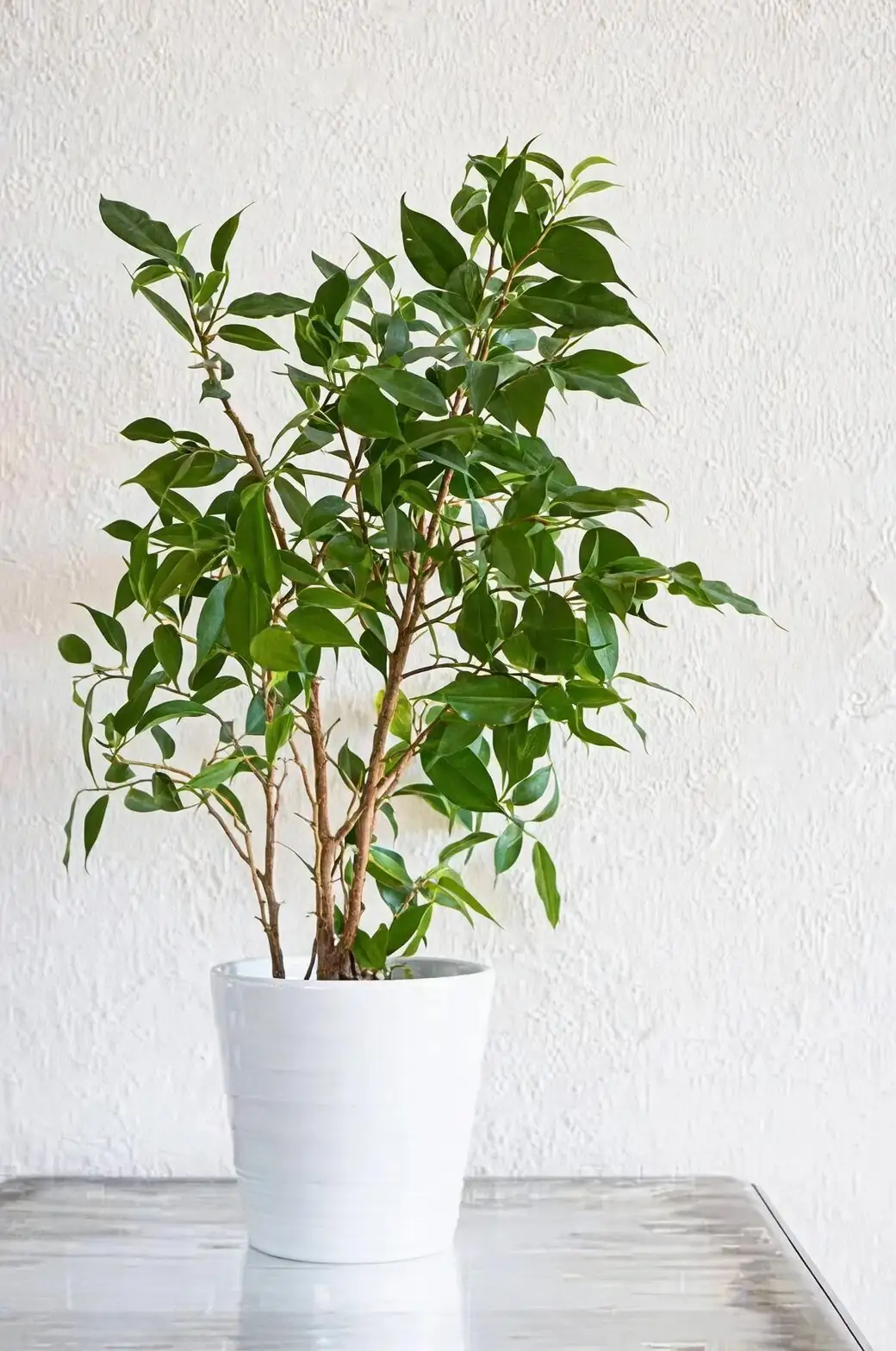
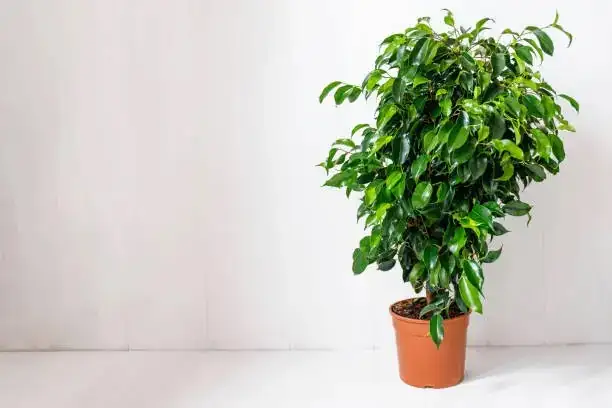
Meet Ficus benjamina (Weeping Fig)
- An elegant evergreen ficus native to tropical and subtropical Asia and northern Australia; widely cultivated across China, India, and Southeast Asia (including Malaysia).
- Outdoors in the tropics it’s a sizable tree; indoors it’s a glossy-leaved, naturally weeping houseplant that prunes and trains beautifully (even bonsai-like).
- Personality quirk: it loves steadiness. Warmth, bright filtered light, and evenly moist—not soggy—soil keep growth graceful. Cold, drought, or sudden changes? Expect leaf drop as its way of “talking back.”
Hidden Blossoms 101: The Syconium, a Botanical Magic Trick
Think of a fig not as a single fruit but as an inverted flower party—hundreds of minuscule flowers lining the inside of a fleshy, hollow chamber.
- Syconium = a hollow, fleshy stem tip that becomes the “fig.”
- Tiny flowers line the inner walls. You won’t see petals outside; everything happens inside.
- There’s a small doorway (the ostiole) at the tip—tiny, shielded scales overlap it like a hatch.
Inside, flowers come in cast members:
- Female flowers (the seed-makers)
- Male flowers (clustered near the ostiole, timing their pollen release late in the show)
- Gall flowers (short-styled, essentially “nursery” flowers for a pollinating wasp’s young)
Botany bonus: figs are “false fruits”—the true fruits are the many tiny seeds (achenes) formed from those pollinated inner flowers.
Pollination: A Tiny Wasp, a Big Story
Each fig species partners with its own specific fig wasp species in an ancient, ultra-precise mutualism.
Here’s the fast, nerdy play-by-play:
- A female fig wasp, dusted in pollen from another fig, squeezes through the ostiole (often losing wings or legs in the process).
- Inside, she lays eggs in the gall flowers and, while moving around, pollinates the long-styled female flowers.
- Time passes. The larvae develop in gall flowers; the fig matures. Wingless males emerge first, mate with females, and help them exit.
- As females depart, they get coated in pollen released by the male flowers positioned near the doorway—then fly off to repeat the cycle in another fig of the same species.
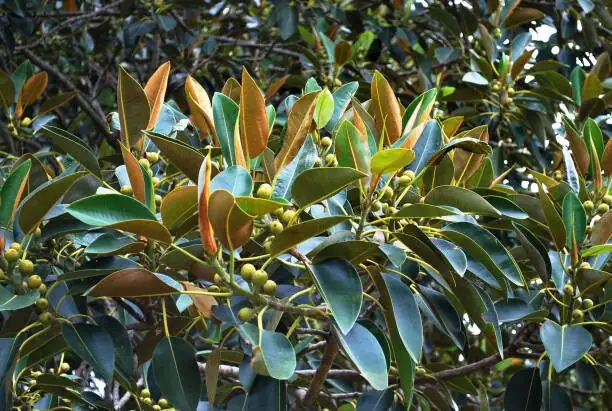
Ecology cameo: when trees do ripen figs outdoors, birds descend in droves to feast on the sugary syconia (and, depending on timing, the protein-rich wasp cargo within).
Why You Rarely See This Indoors
- No specialist wasp, no seed set. Your living room isn’t home to the exact wasp that F. benjamina relies on, so pollination almost never happens indoors.
- Mature, well-lit plants might very occasionally form small, unpollinated syconia, but they’re not showy and typically don’t ripen to anything dramatic.
- Good news for the bug-wary: your weeping fig won’t turn your home into a wasp nursery.
Translation: enjoy Ficus benjamina for what it does best indoors—lush foliage and sculptable form—rather than for flowers or fruit.
Grower’s Guide (in Plain Speak, Powered by Plant Physics)
Light, Temperature, Humidity
- Light: Bright light is ideal; it copes with medium indoor light but truly thrives near bright, filtered windows. Shield from harsh midday sun outdoors.
- Temperature: Sweet spot is 20–25°C (68–77°F). It tolerates heat above 30°C (86°F) if watering is adjusted. Avoid cold—below 5°C (41°F) is risky; sustained indoor temps below 10°C (50°F) commonly cause yellowing and stalled growth. In winter, a steady 13–16°C (55–61°F) feels just right.
- Humidity: Prefers 60–70%. In dry homes, mist or use a humidifier to minimize yellowing and leaf drop.
Watering (the Leaf-Drop Lever)
- Growing season: Water thoroughly and keep the mix slightly moist. Never let the pot sit in a saucer of water.
- Summer cadence: Often every 2–3 days, depending on light, pot size, and heat. An occasional full soak is fine—just let excess drain away.
- Winter: About every 10 days; still avoid “bone-dry for weeks.” Mist if the air is very dry.
- Signals: If the mix dries too far, leaves drop and shoot tips can blacken. Overwatering leads to limp growth and potential root issues.
Feeding, Potting, Pruning
- Fertilizer: During active growth, feed about every 10 days (roughly three times per month) with a balanced houseplant formula—one option is 15-15-30. Ease off in autumn/winter as growth slows.
- Soil: Loose, well-aerated, free-draining potting mix—think houseplant soil blended with coarse sand or perlite.
- Repotting: Spring is prime. Smaller plants (15–20 cm/5.9–7.9 in pots) often get a yearly refresh; larger specimens in ~30 cm (11.8 in) pots typically every two years.
- Pruning: Trim during strong growth to maintain a compact, full silhouette. Remove weak, crossing, or dead branches to boost airflow and light.
Propagation (No Wasps Required)
- Stem cuttings (May–June): Take 10–12 cm (3.9–4.7 in) tip cuttings, keep 2–3 leaves, let the cut end dry briefly, then root in a sandy medium—often ~4 weeks to root.
- Air-layering (May–July): Ring-bark about 1.5 cm (0.6 in) wide, 20–25 cm (7.9–9.8 in) below the tip; pack with moist leaf mold and wrap. Roots in ~2–3 weeks; pot after ~4 weeks.
Leaf-Drop Decoder: What the Plant Is Telling You
- Mix got too dry: Sudden shedding, crispy tips.
- Cold blast or draft: Yellowing and drop, especially after a move.
- Low light + overwatering: Tired, sparse growth.
- Very dry air: Marginal yellowing, mite trouble.
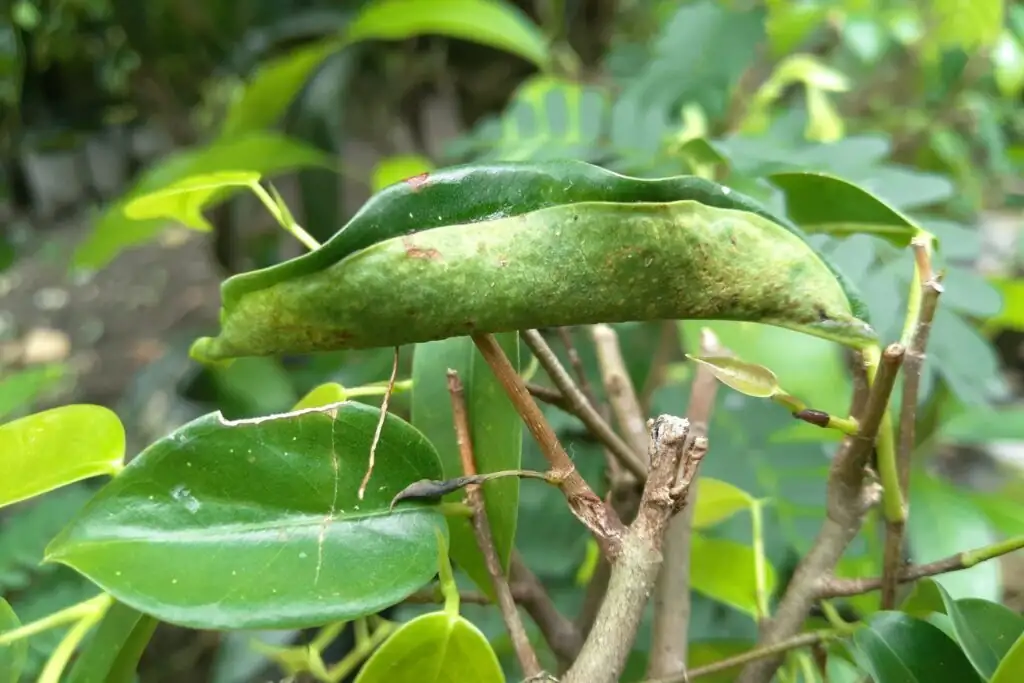
- Spider mites: Fine webbing, stippled leaves—boost humidity and treat with insecticidal soap or horticultural oil.
- Leaf spot: Tidy up watering habits, improve airflow, and treat early with a suitable copper-based or broad-spectrum fungicide.
Safety and Handling
- Sap alert: Milky latex can irritate skin and eyes—wear gloves when pruning.
- Pets: Toxic if chewed by cats or dogs (drooling, vomiting, mouth irritation). Keep out of reach.
Styling: Turn That Weep into Wow
- Train multiple stems, braid young shoots, or prune for cloud-like pads.
- Use directional light to your advantage—rotate the pot every few weeks for balanced form.
- Bonsai-style shaping is not just allowed; this species takes it in stride.
FAQ: Ficus Flowers, Fruit, and Indoor Reality
- Do weeping figs bloom? Yes—but the tiny flowers live inside the fig-like syconium. You won’t see petals.
- Will mine fruit indoors? Rarely, and without its specific pollinator wasp, viable seeds won’t form.
- Can I “encourage” flowering? Focus on light, warmth, and steady care. Mature plants may make unpollinated syconia occasionally, but foliage is the main show.
- Should I introduce fig wasps? No—indoor environments aren’t suitable for the wasp’s life cycle, and it’s unnecessary for houseplant enjoyment.
Symbolism and “Flower Language”
In modern plant gifting and decor, Ficus benjamina often symbolizes resilience and calm, thanks to its steady, sculptural presence when well cared for. Classic “flower language” traditions came from Victorian-era floriography, which mostly focused on showy blooms—not figs with hidden blossoms—so today’s meanings are contemporary interpretations rather than historical canon. Still, the idea fits: a plant that flowers in secret and thrives on consistency is an apt emblem of quiet strength.
Quick Seasonal Playbook
- Spring
- Repot if rootbound (especially 15–20 cm/5.9–7.9 in pots).
- Resume feeding every 10 days; increase watering cadence.
- Begin cuttings and air-layering.
- Summer
- Bright, filtered outdoor light is welcome; water often every 2–3 days.
- Mist for humidity; prune to shape during strong growth.
- Autumn
- Ease up on fertilizer and watering as growth slows.
- Winter
- Keep indoors above 10°C (50°F), ideally 13–16°C (55–61°F).
- Water roughly every 10 days; add humidity to prevent leaf drop.
- Park it away from cold drafts and heat blasts.
The Big Takeaway
Ficus benjamina plays botany on hard mode: its “flowers” hide inside a fig-like chamber, pollinated in the wild by a species-specific wasp. Indoors, that intricate dance mostly pauses—which is perfectly fine, because the reason to grow this plant is its graceful, glossy canopy and its willingness to be styled. Give it bright, steady conditions, keep the soil evenly moist, and it will reward you with calm, sculptural greenery—no visible petals required.