

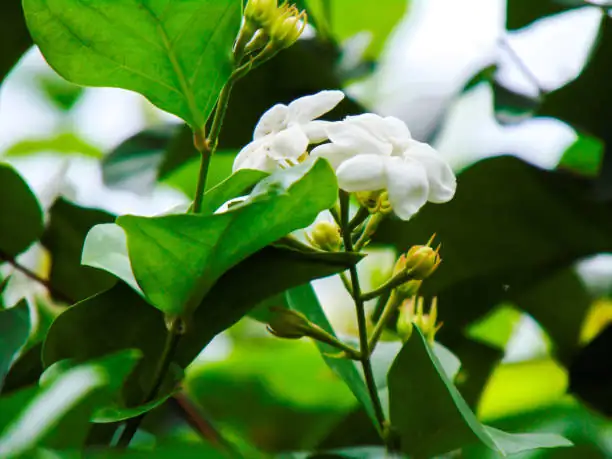
Breathe in at dusk and Arabian jasmine (Jasminum sambac) answers softly—honeyed, creamy, and calm. That quiet evening perfume, the snow–white bloom, the evergreen vigor: together they built a flower language (huayu) that travels across cultures. Purity. Fidelity. Gentle devotion. Here’s how this unassuming shrub became a global emblem of vows kept and love carried with grace.
Meet the flower behind the feelings
- Botanical identity: Jasminum sambac (Arabian jasmine), family Oleaceae; also called sampaguita (Philippines), mogra (India), pikake (Hawai‘i), Maid of Orleans, Belle of India.
- Native roots: tropical Asia—especially India and Pakistan, and the Himalayan foothills of western China—now beloved across South and Southeast Asia and warm, subtropical regions worldwide.
- Look and scent: glossy deep-green leaves set off waxy white flowers (single or double) whose rich sweetness peaks on warm evenings. In bright, warm climates, flowering can repeat over long seasons.
- Beyond beauty: the classic blossom for scenting jasmine tea and a mainstay of perfumery and festive garlands.
How a plant’s traits became a promise
Flower language often starts with what the plant is and does. Jasminum sambac writes its message with three signatures:
- White petals = purity and sincerity
The unmarred whiteness of sambac reads as moral clarity and clean intent across cultures. Small, refined blooms whisper “untainted,” not “showy.”
- Night fragrance = gentle, steadfast devotion
Buds often begin to open in the evening, releasing a deep yet tender perfume. Devotion that awakens when the world grows quiet—faithfulness that doesn’t need fanfare.
- Evergreen habit = fidelity and endurance
Through seasons, this shrub holds its leaves: an image of constancy. Given sun and a good prune, it rebounds and re-blooms—“sunshine toughness” as many gardeners like to say.
Together, these traits evolved into a shared reading: pure-hearted love, kept faithfully, expressed with grace rather than spectacle.
The Chinese huayu (花语) of 茉莉花: quiet virtue you can smell
China’s flower symbolism runs deep, from classical literature to folk song. Jasmine (茉莉花) sits in that tradition with a profile that’s elegant and approachable:
- Core meanings in modern huayu:
- Purity and simplicity (纯洁/素雅): the unadorned white bloom.
- Fidelity and constancy (贞洁/忠贞): evergreen endurance and repeat flowering.
- Gentle devotion and good will (温柔/善意): fragrance that’s soft yet pervasive.
- Everyday culture:
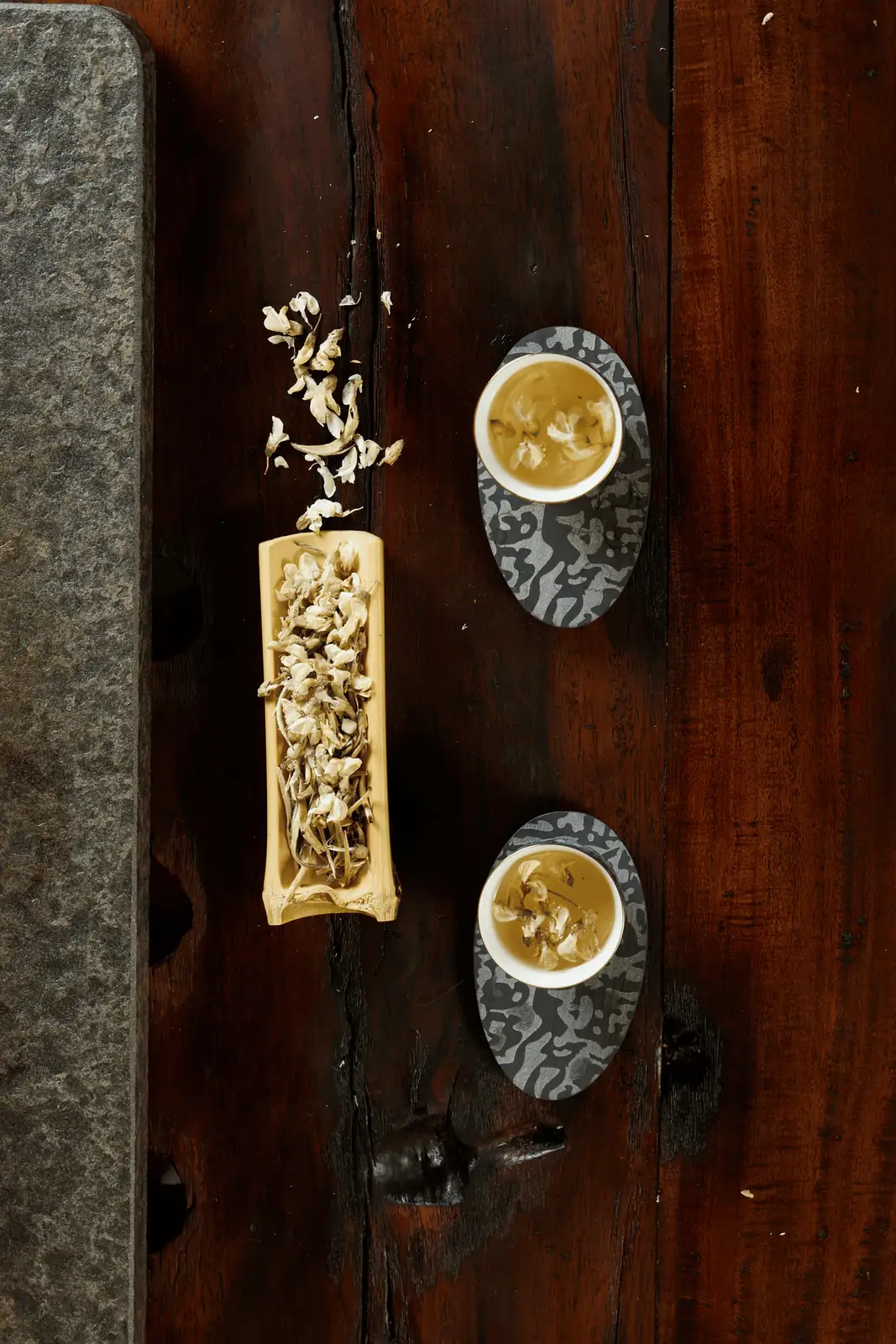
- Tea-scenting is the most familiar meeting of jasmine and daily life; sharing jasmine tea stands for warm welcome with pure intention.
- In parts of eastern and southern China, blossoms have been woven into corsages and festive ornaments—fragrance worn close to the heart.
- The beloved folk song “茉莉花” celebrates its modest beauty and elegant scent—virtue that doesn’t shout.
- Gifting in a Chinese context:
- For weddings: a nod to chaste love and faithful union.
- For elders or teachers: respect and sincere regard.
- For friends: goodwill and clean-hearted wishes.
Sampaguita vows in the Philippines: purity promised aloud
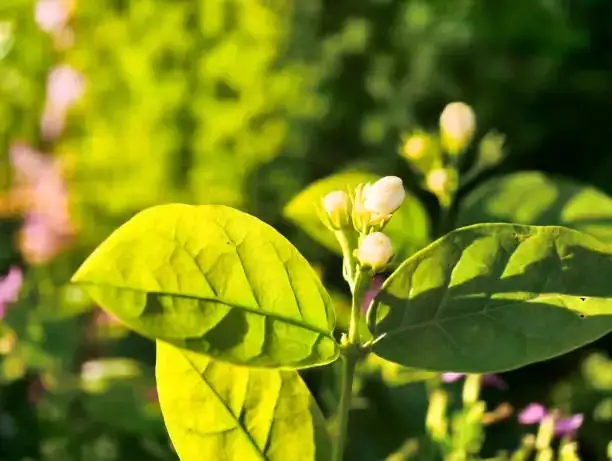
Small garlands of sampaguita—the national flower—are everywhere: at church gates, school ceremonies, welcome receptions. Their message is clear and tender.
- Meanings in daily life:
- Purity, humility, devotion to faith and family.
- Fidelity and promise; a popular folk tale links “sampaguita” to the phrase “sumpa kita” (“I vow to you”), capturing the flower’s pledge-like spirit.
- Ritual and community:
- Garland vendors string fresh buds whose perfume fully blooms at dusk—perfect for evening novenas or celebrations.
- Worn or offered, they frame honor with sweetness and sincerity.
India’s mogra: wedding garlands and divine devotion
In India, sambac (mogra) is the fragrance of both romance and reverence.
- Wedding and festival life:
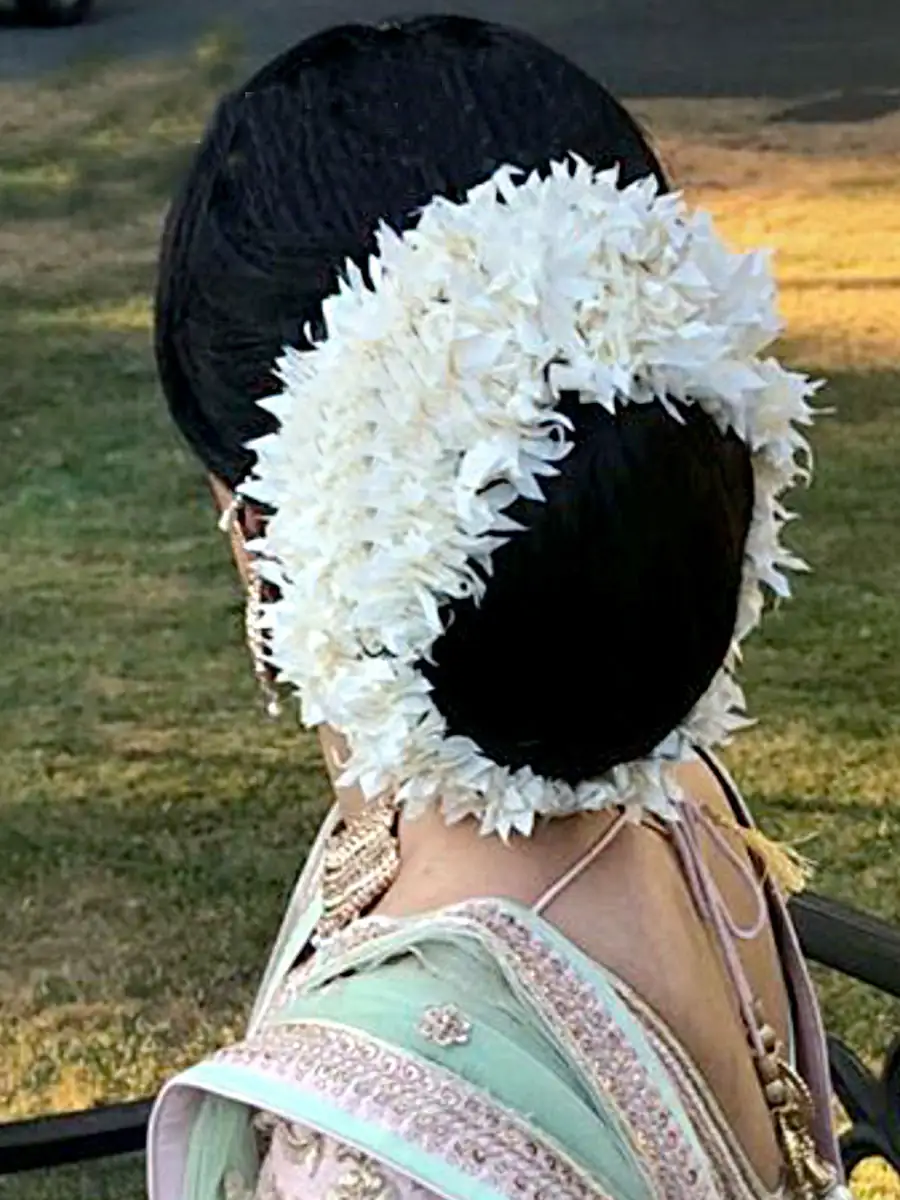
- Brides and guests wear gajra—coils of mogra buds—in hair, a crown of purity and auspiciousness.
- Wedding varmala/jaimala often include mogra for a marriage blessed with fidelity and enduring harmony.
- Sacred associations:
- Double-flowered forms like ‘Belle of India’ appear in offerings, symbolizing devotion that is pure and steadfast.
- Everyday grace:
- Evening courtyards scented with mogra are shorthand for hospitality; a few strings on the wrist or in the hair say “you are honored.”
Hawai‘i’s pikake: a lei of tender affection
In Hawai‘i, Jasminum sambac is pikake—beloved for its delicate beauty and heady evening scent.
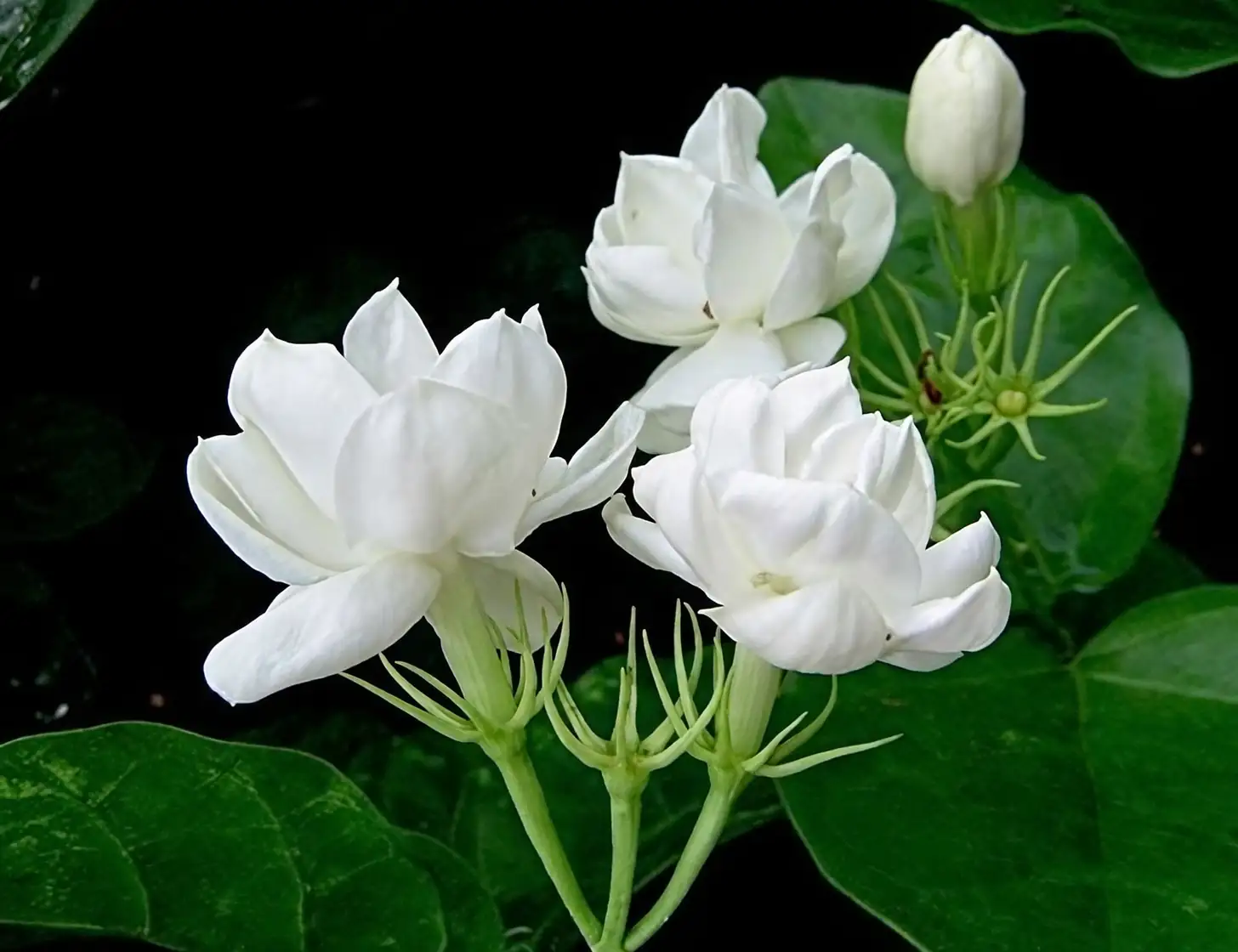
- A royal favorite:
- Princess Ka‘iulani adored both the flower and peacocks; the name “pikake” fondly bridges the two.
- Lei meanings:
- Love, welcome, respect, and gentle admiration. A pikake lei reads as close, heartfelt affection—perfect for weddings, anniversaries, and intimate celebrations.
Feng shui: where purity meets placement
Sambac brings living Wood energy (growth, renewal) with white blooms that also echo the clarity of the Metal element. Harmonize both:
- Best zones for growth and symbolism:
- East or Southeast (Wood areas): nurture growth, family harmony, and steady progress.
- West or Northwest (Metal areas): highlight the white flower’s purity and invite helpful, sincere connections.
- Practical meets auspicious:
- Place near a bright window, balcony, or patio—think 6–8+ hours of direct sun for full flowering and true fragrance.
- Let the evening perfume drift through entertaining spaces for calm, welcoming qi.
- Bedroom? Only if the scent feels soothing, not overpowering; personal comfort guides good feng shui.
Gift-giving guide: say it with sambac
Let the plant’s own habits deliver your message.
- For weddings and engagements:
- A strand of buds or a small bouquet with white ribbon: “pure love, faithfully kept.”
- Potted sambac for a new home: “may devotion take root and bloom again and again.”
- For mentors and elders:
- Simple, elegant arrangements: “sincere respect and gratitude.”
- For close friends and hosts:
- A few fresh buds or a tiny wreath: “gentle goodwill” and warm welcome.
- Tea lovers:
- Pair a potted plant with high-quality jasmine tea. The flower scents tea in tradition—an aromatic blessing for everyday life.
Etiquette tip: Present buds in late afternoon or early evening so the fragrance opens as night arrives—devotion that awakens when it matters.
The culture behind the color: a brief history of meaning
- Name and legend: “Jasmine” traces to Persian “yasmin,” often glossed as “gift from God”—apt for a bloom that feels like grace in the air.
- A traveler with staying power: Native to tropical Asia, sambac charmed South and Southeast Asia, then the wider world; everywhere it went, the white-at-dusk motif translated easily into purity and faithful affection.
- Tea, temples, and thresholds: From Chinese tea houses to Indian mandirs, Filipino church steps to Hawaiian lanais, the flower’s role is consistent—welcoming, honoring, and blessing with quiet certainty.
Keep the promise blooming: quick care notes
- Sun: Full sun to very bright light—aim for 6–8+ hours daily for abundant buds and richest scent.
- Warmth: Loves heat; protect from cold. Keep above 10°C/50°F; frost will damage or kill it.
- Water: Evenly moist, never soggy. Let the top 2–3 cm (about 1 inch) dry between waterings; steady moisture supports buds.
- Pruning and feeding: Prune after a bloom flush to spur new flowering shoots; feed regularly in the growing season, easing off in winter.
- Where it thrives: Outdoors year-round in USDA Zones 10–12 (with protection in warm Zone 9), or as a container companion on sunny balconies and windowsills.
—
Purity in white, fidelity in evergreen leaves, devotion that speaks at night—Jasminum sambac didn’t need a dictionary to teach its flower language. It grew one. Wear it, brew near it, gift it: each jasmine breath is a gentle promise kept.


